
SoccerRecap
Millwall snatch equaliser but automatic promotion hopes hit by draw at Leicester
Millwall draws 1-1 with Leicester, promotion hopes in jeopardy as Ipswich has games in hand.
Sky Sports1 min read
The 2026 NFL Draft enters Day 2 with several top prospects still available for selection. Rounds 2 and 3 will feature players who could become instant contributors, similar to last year's Defensive Rookie of the Year.
There's no shortage of top talent still waiting to be selected as the 2026 NFL Draft enters Day 2.
Round 1 featured most of the biggest names coming off the board in rapid fashion, though not necessarily in the order that many had expected. But as Rounds 2 and 3 begin on Friday, April 24, several prospects who were on the Day 1 cusp have yet to hear their names called. And with last year's Defensive Rookie of the Year in Browns linebacker Carson Schwesinger having been selected on Day 2, it's clear that more instant contributors could be up for grabs.
USA TODAY Sports will have live updates on the best players still available at each selection, so check back throughout the evening for all the latest (prospects' names are preceded by their big board rankings):
A torn anterior cruciate ligament suffered last January kept McCoy out of commission for all of last season and clouded his pre-draft process. But in a stellar pro day showing, the 6-1, 188-pound corner served up a reminder that he has all the trappings of a top-tier cover man. With superlative ball skills and ample tools to stick with receivers throughout their routes, McCoy can grow into a standout in any defensive scheme.
Some will see a 6-4, 210-pound body and assume Boston relies on pulling down jump balls in close quarters. But while tilting those throws in his favor is his best feature, it's far from his only one. Boston has impressive fluidity for a player with his physical make-up, and his tracking and midair adjustments make him an even more confounding coverage assignment.
Though he might not be an all-around coverage maven, McNeil-Warren is comfortable exerting his will from several different vantage points. He rallies to the ball in a hurry in run support, working his way through traffic to deliver big hits. And though his 6-4, 201-pound build limits his comfort zone in coverage, he can give both quarterbacks and receivers pause on attempting any throws over the middle.
The top remaining player is Jermod McCoy, a cornerback from Tennessee, among others still waiting to be selected.
Round 2 of the 2026 NFL Draft begins on Friday, April 24.
Round 1 featured many big names, although the order of selection was unexpected for some.
Last year's Defensive Rookie of the Year, Carson Schwesinger, was selected on Day 2, indicating potential for more impactful players this year.
Millwall draws 1-1 with Leicester, promotion hopes in jeopardy as Ipswich has games in hand.

Nottingham Forest's 5-0 win over Sunderland boosts relegation hopes
Nottingham Forest beats NIC Leeds Rhinos, marking their eighth defeat in a row.
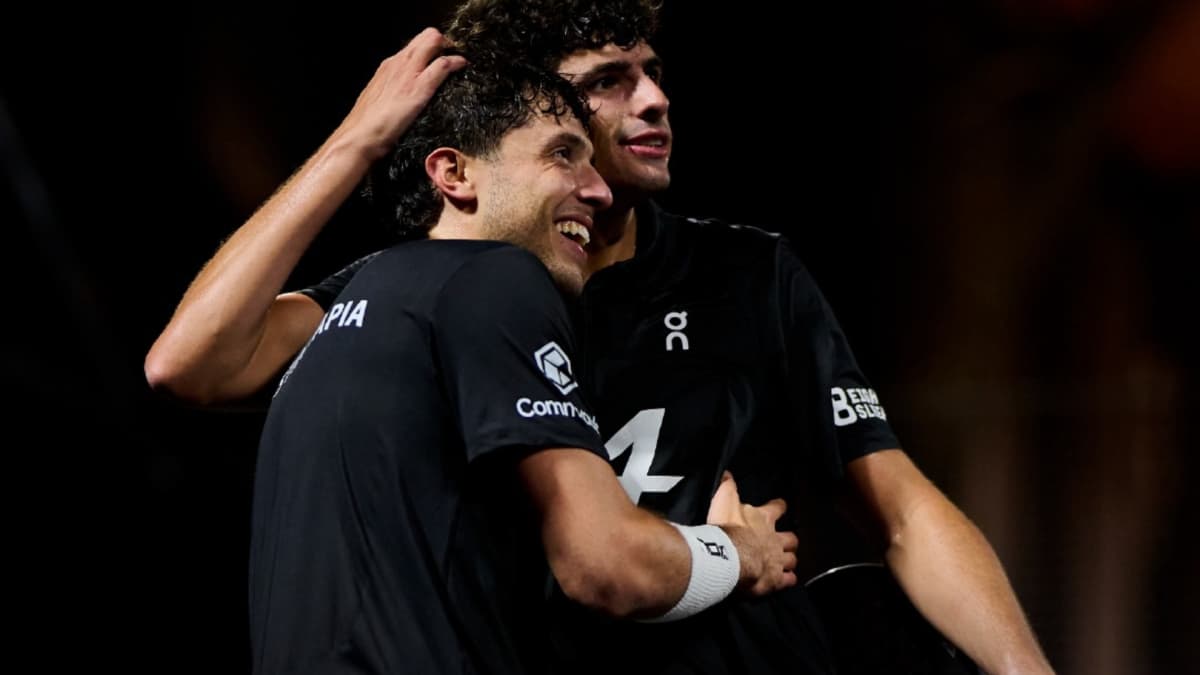
Coello y Tapia logran una victoria difícil en el P2 de Bruselas
See every story in Sports — including breaking news and analysis.
With McCoy sidelined, Hood did a commendable job of filling in as the Volunteers' primary asset in coverage. The Colorado transfer kept the competitive juices flowing in shutting down tight-window throws as well as making his presence felt against the run. He can't match McCoy in overall fluidity, but he still sizes up as a meaningful counter in man coverage for bigger receivers.
The brother of Atlanta Falcons cornerback A.J. Terrell has a preternatural feel for when to take a calculated risk to make a play, either in coverage or as a tackler. His modest physical tools mean he has to stay glued to receivers, but Terrell is typically up to the task, though there's only so much he can do to hold up against bigger-bodied targets.
The Bronko Nagurski Trophy winner was everywhere last season, and his knack for slipping opponents and finding the action should carry over to the NFL. Even if he doesn't deliver the same level of splash plays he did for the Red Raiders in 2025 (seven forced fumbles, four interceptions), he should be a mainstay for years in the middle for whatever team is drawn to his advanced instincts and nose for the ball.
Burly yet smooth and reliable, Bernard has a masterful handle on all the little things that make a receiver more effective than his traits suggest. Though he won't often pull away from anyone in the open field, the 6-0, 206-pound target gets open through refined route pacing. He's also persistent and difficult to bring down after the catch, making him a valuable figure for any young quarterback or unsettled passing attack.
While some edge rushers avoid contact at all costs, Young is happy to seek it. The 6-6, 262-pound defensive end relishes engaging with blockers before dispatching them. The next step in his development hinges on discovering more counter moves, but Young shouldn't have trouble finding a home in a league that's skewing toward rushers who can convert speed to power and set a firm edge.
A steep jump in quality of competition didn't slow the Bowling Green transfer, who became the SEC Defensive Player of the Year by consistently turning the corner on some of college football's best offensive linemen. While he's most comfortable bending around edges, Howell isn't afraid to work back inside when an offensive tackle overcommits. His short arms and lack of anchor against the run could be disqualifying for some teams, but any defensive scheme that places a premium on creating havoc should be able to find a place for him.
Seldom fooled by misdirection, Allen can be counted on to make the right calls for himself and those who stand alongside him on defense. His role might top out at finishing plays rather than making them, though, as he's merely serviceable in block deconstruction and doesn't offer much in man coverage.
Size concerns might be enough to dissuade some decision-makers from drafting a 5-9, 182-pound cornerback early on Day 2. Ponds, however, has every other tool at his disposal to follow receivers all over the field and deny them easy catches. It's easy to force a nickel role on him, but Ponds deserves a shot to show how he can hold up on the outside.
Is it possible for a former five-star recruit to be overlooked? Hill fares well firing downhill and squeezing through narrow openings to find the ball. He can also make waves as a blitzer and in coverage, though he's not as advanced in either phase as he is in making his mark against the run.
A two-time transfer from Wyoming and USC, Pregnon has continually leveled up his play. He's at least functional almost across the board and should be able to hold his own as a starter right away.
Leaving any blocker to square off against McDonald one-on-one almost assuredly will result in that player being blown back. The 6-2, 326-pounder might not regularly hold his ground against double teams, but he has a distinct aptitude for corralling any ball carriers who make their way anywhere close to his vicinity along the line.
The first round of the 2026 NFL Draft brings franchise‑defining moments as teams make their selections from the top of the board.
See how picks 1 through 32 came off the clock as the next generation of NFL talent enters the league.
1 / 32
The first round of the 2026 NFL Draft brings franchise‑defining moments as teams make their selections from the top of the board.
See how picks 1 through 32 came off the clock as the next generation of NFL talent enters the league.
1 / 32
The first round of the 2026 NFL Draft brings franchise‑defining moments as teams make their selections from the top of the board.
See how picks 1 through 32 came off the clock as the next generation of NFL talent enters the league.
2 / 32
3 / 32
4 / 32
5 / 32
6 / 32
7 / 32
8 / 32
9 / 32
10 / 32
11 / 32
12 / 32
13 / 32
14 / 32
15 / 32
16 / 32
17 / 32
18 / 32
19 / 32
20 / 32
21 / 32
22 / 32
23 / 32
24 / 32
25 / 32
26 / 32
27 / 32
28 / 32
29 / 32
30 / 32
31 / 32
32 / 32
Like several other of his former teammates, Parker saw his draft stock get dinged a bit throughout a disappointing season. His resurgence at the Senior Bowl, however, served as a reminder that he still can create pressure by pushing the pocket while also adding a good deal of value in helping shut down opposing rushing attacks.
Reducing his impact to what likely will be limited sack numbers in the NFL would be a disservice to Jacas and whatever team brings him aboard. The 6-4, 260-pound edge rusher can wear blockers down and create consistent pressure as a brawler, which will help compensate for his vanilla pass-rush approach.
Nik Bonitto's ascent augurs well for Thomas, who has frequently been likened to the similarly built fellow former Sooners edge rusher. Thomas fires off the edge in an instant and flattens his path to create quick pressures that stymy opposing passing attacks. He can be swallowed up by offensive tackles at times, but teams might tolerate the volatility given the potential payoff.
Based solely on his athleticism, it'd be hard to guess that the sixth-year senior was a former walk-on. The 6-1, 190-pound nickel dynamo thrives at getting a bead on a quarterback's intentions and arriving just in time to make an interception, pass breakup or big hit. If he properly modulates his big-play mindset, he could become an electric piece of a secondary.
A missile out of the slot, Scott created more disruption in the backfield than could be expected from any defensive back. He's likely headed for an adjustment in playing style with a heavier dose of coverage discernment necessary. Yet any scheme that embraces his attacking mentality could tap into a unique playmaking streak.
He likely won't generate as much excitement as many of the Bulldogs' other recent standouts along the defensive front, but Miller has the make-up of a stout pro. Though prolific sack or pressure totals might not ever follow, Miller can help dictate terms up front against opposing rushing attacks.
If not for the torn anterior cruciate ligament, Bell would occupy a fascinating place in discussions about the top of the pecking order for receivers. That injury late last season, however, has left a good deal of uncertainty about a player whose contributions depend on his blend of size (6-2, 222 pounds) and acceleration. Bell still has to find his stride as a route runner if he's ever to truly integrate into an offense, but he's already proven he can overwhelm defenders with the ball in his hands.
At 6-4 and 318 pounds, Hunter is a big body and even bigger personality. Despite being fairly nimble for a player of his size, he likely maxes out as a space-eater who denies opposing ground game's anything up the middle. There's a distinct value in that, however, as he'll still be a force opposing fronts have to consistently account for.
A former edge rusher at Central Arkansas, Golday is now one of the premier jumbo athletes in his class. He's much more comfortable chasing the ball than diagnosing plays, and quicker keys will be paramount to getting the most out of his linear explosiveness.
While he's one of the more impressively built corners in this class, Cisse isn't quite on par with former Gamecocks standout Nick Emmanwori in terms of athleticism. Then again, who is? Rolling with Cisse still requires a leap of faith that he'll sort out his feel for coverage, but Emmanwori's star turn in the NFL might help remind teams to focus on his former teammate's unrealized potential rather than his most recent slip-ups.
Between aggravating an abdominal injury suffered in fall camp and LSU's wider offensive failures, Nussmeier quickly became something of a draft afterthought in the fall. Yet a bit more perspective on what plagued him presents important insight into what value he still has to offer.
The son of New Orleans Saints offensive coordinator Doug Nussmeier doesn't always exhibit a playing style befitting his lineage, as the younger Nussmeier isn't afraid to uncork downfield shots. Though he might not resemble the typical gunslinger at just 6-2 and 203 pounds, Nussmeier leverages his advanced anticipation, rapid release and elastic arm into big gains in the vertical game. That proclivity for big-play hunting can prove problematic when Nussmeier refuses to dial back his aggressiveness. Without a more discerning approach, particularly when throwing over the middle, that tendency could produce heaps of turnovers for a player who doesn't truly drive the ball into tight windows. But if Nussmeier strikes a balance, he has the makeup of a potential starter.
Last year's John Mackey Award winner might soon be a tight end in name only. No matter the label, a target who's 6-4 and 239 pounds with serious wheels (4.51-second 40-yard dash) and hops (45 1/2-inch vertical) will be sure to pose problems for defenses. Stowers ultimately figures to be a supersized detached receiver in some form, though getting stronger and coming down with contested catches more often will be critical to his ongoing development.
If he's still known to some solely as Trey's younger brother, he should break out of that rather soon. The 6-3, 204-pound target dominated as a downfield weapon, recording 2,157 receiving yards and 25 scores. Lance demonstrates an appreciation for nuance that suggests his repertoire should grow, though he's still likely in for an extensive acclimation period to the NFL given the significant jump in quality of competition.
With the bulk of his experience coming at linebacker, the Maryland transfer doesn't have the same natural feel for making his way to the quarterback that other edge rushers have. Yet the combination of his explosiveness and all-gas-no-breaks style could set him up to make a significant jump once he learns to beat blocks rather than merely blow them up.
The NFL Draft regularly produces its most memorable moments off the stage, when selections end with a handshake or embrace from the commissioner.
See the moments when draft night emotions peak as Roger Goodell greets players hearing their names called.
Above, Texas Tech Red Raiders linebacker David Bailey embraces NFL commissioner Roger Goodell after he is selected by the New York Jets as the number two pick during the 2026 NFL Draft at Acrisure Stadium.
Jeremiyah Love of Notre Dame hugs NFL Commissioner Roger Goodell after being selected third overall pick by the Arizona Cardinals during Round One of the 2026 NFL Draft at Acrisure Stadium on April 23, 2026, in Pittsburgh, Pennsylvania.
Carnell Tate of Ohio State shakes hands with NFL Commissioner Roger Goodell celebrates after being selected fourth overall pick by the Tennessee Titans during Round One of the 2026 NFL Draft at Acrisure Stadium on April 23, 2026, in Pittsburgh, Pennsylvania.
Mansoor Delane of LSU hugs NFL Commissioner Roger Goodell after being selected sixth overall pick by the Kansas City Chiefs during Round One of the 2026 NFL Draft at Acrisure Stadium on April 23, 2026, in Pittsburgh, Pennsylvania.
Sonny Styles of Ohio State hugs with NFL Commissioner Roger Goodell after being selected seventh overall pick by the Washington Commanders during Round One of the 2026 NFL Draft at Acrisure Stadium on April 23, 2026, in Pittsburgh, Pennsylvania.
Jordyn Tyson of Arizona State hugs with NFL Commissioner Roger Goodell after being selected eighth overall pick by the New Orleans Saints during Round One of the 2026 NFL Draft at Acrisure Stadium on April 23, 2026, in Pittsburgh, Pennsylvania.
1 / 6
The NFL Draft regularly produces its most memorable moments off the stage, when selections end with a handshake or embrace from the commissioner.
See the moments when draft night emotions peak as Roger Goodell greets players hearing their names called.
Above, Texas Tech Red Raiders linebacker David Bailey embraces NFL commissioner Roger Goodell after he is selected by the New York Jets as the number two pick during the 2026 NFL Draft at Acrisure Stadium.
1 / 6
The NFL Draft regularly produces its most memorable moments off the stage, when selections end with a handshake or embrace from the commissioner.
See the moments when draft night emotions peak as Roger Goodell greets players hearing their names called.
Above, Texas Tech Red Raiders linebacker David Bailey embraces NFL commissioner Roger Goodell after he is selected by the New York Jets as the number two pick during the 2026 NFL Draft at Acrisure Stadium.
2 / 6
Jeremiyah Love of Notre Dame hugs NFL Commissioner Roger Goodell after being selected third overall pick by the Arizona Cardinals during Round One of the 2026 NFL Draft at Acrisure Stadium on April 23, 2026, in Pittsburgh, Pennsylvania.
3 / 6
Carnell Tate of Ohio State shakes hands with NFL Commissioner Roger Goodell celebrates after being selected fourth overall pick by the Tennessee Titans during Round One of the 2026 NFL Draft at Acrisure Stadium on April 23, 2026, in Pittsburgh, Pennsylvania.
4 / 6
Mansoor Delane of LSU hugs NFL Commissioner Roger Goodell after being selected sixth overall pick by the Kansas City Chiefs during Round One of the 2026 NFL Draft at Acrisure Stadium on April 23, 2026, in Pittsburgh, Pennsylvania.
5 / 6
Sonny Styles of Ohio State hugs with NFL Commissioner Roger Goodell after being selected seventh overall pick by the Washington Commanders during Round One of the 2026 NFL Draft at Acrisure Stadium on April 23, 2026, in Pittsburgh, Pennsylvania.
6 / 6
Jordyn Tyson of Arizona State hugs with NFL Commissioner Roger Goodell after being selected eighth overall pick by the New Orleans Saints during Round One of the 2026 NFL Draft at Acrisure Stadium on April 23, 2026, in Pittsburgh, Pennsylvania.
Don't pigeonhole him into the same box as recent Tennessee receivers. Yes, the Tulane transfer is a legitimate field stretcher. But even at 6-4 and 198 pounds with plenty of long speed, he's a more fluid and precise route runner than many of the recent Josh Heupel pass catchers who haven't fared particularly well in the pros. He might struggle early to counter receivers who challenge his play strength, but he'll punish anyone who doesn't manage to disrupt him.
With long arms and an explosive first step, Josephs is an imposing figure off the snap. While he can close in on quarterbacks in a hurry when he finds a runway, he's not bendy or strong enough to open up his own paths consistently. Bulking up and rounding out his pass-rush arsenal, however, could help him grow into a formidable threat.
A good athlete, Bisontis still falls below the desired arm length threshold for many teams even on the interior. But he brings the requisite mindset to get the job done, and a more patient approach to pass protection could make him a solid starter.
A classic tackle-to-guard convert, Dunker launches all comers out of the way whenever he gets a hand on them. Even with the position switch, however, he still has a good deal of work to do in order to become a reliable pass protector.
Slippery and unpredictable, Williams can own the underneath and middle areas of the field. His size and lack of long speed might limit him to working out of the slot, but he can lighten the load for any quarterback and add value on special teams.
The linebacker label might be affixed to the 6-0, 220-pounder somewhat liberally. Whatever you call Louis, there's little question that he's a magnet to the ball. A hybrid role that takes advantage of his coverage upside and playmaking prowess could provide substantial returns for a creative defensive coordinator, but Louis is also prone to being washed out of plays when he can't outmaneuver blockers.
With 15 interceptions in his career, Clark has established himself as one of college football's premier ballhawks. He brings an alpha attitude to every assignment, though teams can weaponize that overconfidence against him with double moves and misdirection. Still, having him on the back end could be a significant deterrent against deep shots.
Abney isn't shy about getting in the face of bigger receivers, challenging them at the line of scrimmage and on any throws made to his area. Still, his instinctual play might be best suited for a shift to the slot, where his pedestrian long speed and size likely won't be sticking points.
The vertical game will make up a good chunk of Hurst's early responsibilities, and it's not difficult to see why. Of course, those deep shots won't materialize as easily for the 6-4, 206-pound target against much more athletic and instinctual cornerbacks at the next level. Hurst should still stretch defenses and do some damage after the catch, but he must expand his route tree and learn to rely on more than pure straight-line speed if he is to avoid becoming a one-note pass catcher.
No one will confuse him for Sadiq or Sowers, but Klare still has intriguing athleticism for a tight end. The Purdue transfer can pull away from linebackers in coverage, and his determination creates consistent run-after-catch opportunities. He profiles more as a complementary piece to a passing attack than a featured target.
"Big Citrus" might not have much juice as a pass rusher, but he won't be squeezed out of the middle easily. Orange can set the tone up front for any defense that merely asks him to control the point of attack and create opportunities for his teammates.
More functional than flashy with just three career interceptions, Muhammad should have no shortage of suitors eager to add a reliable presence to their secondary. He keeps his composure against receivers all over the field and is difficult to shake.
In three years at Buffalo and one at New Mexico State, Washington posted relatively modest production. But averaging 6.4 yards per carry in his lone season at Arkansas put him firmly on the NFL radar, and his stellar combine showing – which included a 4.33-second 40-yard dash from the 6-1, 223-pounder – set him apart as one of the most physically gifted backs in this class. Washington frequently resembles a slalom skier, preferring to navigate traffic by weaving around rather than redirecting instantaneously. More often than not, that approach pays off for him, but he might have trouble shaking opponents in tight quarters at the next level. There are ball-security problems to iron out, and he might never factor heavily into the passing game, but Washington still figures to be one of the few backs in this class capable of more than committee work.
At 6-3 and 206 pounds, Payne offers the ideal build and savvy to handle matching up with tight ends at the next level. He might not be the disruptive force in the box that many would envision a safety of his size becoming, but his coverage tools and versatility should carry him a long way in the pros.
A three-year starter at Ohio State after beginning his career at Mississippi, Igbinosun is long on experience yet still has some work to do on the finer points of playing cornerback. He's made significant strides in disrupting receivers without drawing the penalties that dogged him in earlier years, but he still might be a better fit in a zone-heavy scheme that mitigates the effects of his grabby tendencies.
In taking over as the Bulldogs' next big thing at tight end after Brock Bowers, Delp never quite lived up to the billing he received as a top-tier recruit. But Georgia's offense and a hairline fracture in his foot – which he played through last season – likely obscured what the 6-5, 245-pound target can truly offer a team. Though he'll likely never become a true to-go threat, Delp can stress defenses down the seam or on deep crossers.
A late-season swell in his production – capped by a few impressive showings in the Rebels' College Football Playoff run – showcased what the 6-2, 207-pounder is capable of. Stribling isn't particularly polished in any facet of being a receiver, but he can outrun defenders with the ball in his hand or on vertical routes.
Moore is more or less what you'd expect of a 6-3, 198-pound corner. His length can help erase downfield throws and flummox receivers at the line of scrimmage, but he can be shaken by receivers in the intermediate portion of the field when forced to redirect. An extensive injury history could loom over his draft stock, but Moore could grow into an eventual starter.
As a 6-0 and 215-pound safety who's at his best operating in the box, Haulcy gives off some old-school vibes. He can be a bit wild as a tackler from depth, though, and his coverage skills might only translate to zone looks, where he can deploy his instincts and be safeguarded against matchups against speedier backs and receivers.
The 6-2, 207-pound target is squarely in the possession receiver mold, with boxing out his calling card to help combat his subpar separation skills. There might not be much more room for growth for a player who depends on his quarterback trusting him to go up and get the ball, but Sarratt can still be a consistent contributor to a passing attack given his track record of delivering in those scenarios.
Wheatley has a good handle on one of the key jobs for any safety: finding the football. Whether it's in coverage or run support, he makes his way to the action, though his finishing touch comes and goes.
The athletic traits are those of a top-50 pick, as there aren't many 6-6, 315-pound interior forces with the length to overwhelm blockers and corral ball carriers. But Jackson hasn't come anywhere close to his capacity as a player, and it's unclear if he'll reach those heights unless he can engage opposing linemen with better hand usage and leverage.
In his fourth collegiate stop, the sixth-year senior finally harnessed his considerable pass-rush potential, recording 10 sacks. Height can be an all-or-nothing edge presence given his proclivity for stalling out whenever a blocker locks onto him, but he might catch the eye of teams willing to get creative with a specialized role that only asks him to pester quarterbacks.
The raw numbers for Dennis-Sutton are impressive, who stands 6-6, 256 pounds and notched 8 ½ sacks in each of the last two seasons. Yet even though he tested well at the combine, the raw figures belie his pass-rushing potential. Dennis-Sutton's rigidity likely limits him to being a power-based presence who wins off his hustle.
It doesn't take long to see the appeal of a 6-8, 330-pound defensive lineman. Harris can dent the pocket whenever he initiates contact with opposing offensive linemen. Leverage battles predictably tend to be problematic for him, however, and he has to play with more control to be a commanding force up front.
His reputation as one of college football's speediest receivers was well-earned, as Branch stirred a special level of excitement whenever he had the ball in his hands. After transferring from USC to Georgia, however, he was relegated to the role of screen demon and still faces questions of whether he can be more than a gadget player. The 5-9, 177-pounder should at least be a special teams spark plug and occasional big-play threat, but he'll require a good deal of schemed touches to make any impact in the early going.
Versatile and discerning, Ramsey meets the demands of the modern safety with experience operating in a number of different roles. He might be seen as a jack of all trades and master of none, however, as he's not particularly dynamic in any phase.
The wrestling background is readily evident for Lew as soon as any play begins. He's not the most forceful or fleet-footed interior blocker, but he creates advantages with his hand-fighting and then refuses to cede them.
At 6-2 and 291 pounds, Proctor might be prohibitively small for some schemes that won't tolerate their defensive tackles being knocked around occasionally. But it's hard to look past his rare flair for disruption, with his explosive burst allowing him to shoot gaps and finish plays in the backfield.
Hecht won't set the bar in many areas as a blocker, but he clears pretty much all of them. Though the attributes aren't overwhelming, his play is composed and under control – exactly what teams seek from their centers.
Having only started playing football as a high school senior, Crawford still has plenty of work to do to catch up to his pass-rushing peers. More experience could go a long way toward unlocking his promise as a pliable entity off the edge, with higher variance in his approach sure to make him a more difficult player for blockers to keep at bay.
Always in a hurry to trigger downhill and dole out punishment, Trotter takes after his father – former Eagles great Jeremiah Trotter – in his play style. He's too often undone, however, by that same hyperaggressive approach to finding the ball. Trotter is also a liability in man coverage, which could inhibit his early development.
A four-year starter at Duke, Rivers offers impeccable coverage credentials, along with an aggressiveness and confidence seldom seen in 5-10, 185-pound cornerbacks. Finding a fit to limit his exposure against bigger receivers might be a delicate undertaking, but there's a significant reward to be had for the team that properly harnesses his natural feel for the job.
A three-year starter, Slaughter is yet another trustworthy figure at the pivot despite not wowing in many areas. For any team that prioritizes stability at the position, he should be a solid mid-round consideration.
Highlight-reel catches came easy to the 6-4, 200-pound target, who made a habit of snaring jump balls down the sideline. That should at least make him a significant asset in the red zone, but Lane has to learn to fight off contact from cornerbacks better if he's going to carve out a career on contested catches – which he be his ultimate path given limitations in creating separation.
Elliott can be trusted to get the job done at the second level, as he's consistently putting himself in the right spot and finishing plays. He might struggle to chase down backs in the open field or stick with them in coverage, but several teams should be drawn to adding someone with his acumen to the middle of their defense.
Lee has experience operating out of zone coverage, but operating out of man-to-man looks is where he'll leave his imprint at the next level. The 6-2, 189-pound corner finds a comfort zone in operating in close quarters with receivers, whether that's pressing them or staying in their hip pocket out of breaks. More consistency is needed, however, particularly in helping to stop the run.
Short arms might inhibit him at the next level, but refined footwork and hand usage allowed Jones to neutralize the issue. In the right zone-blocking scheme, he could continue to stave off questions about his anchor and become a potential starter.
The Virginia transfer is at somewhat of a crossroads in his career. Though he's proven highly dependable in pulling down his quarterback's downfield heaves, Fields can't subsist on contested catches alone. Without discovering more ways to get open, he could struggle to earn opportunities beyond the occasional jump balls tossed his way.
As a project for his next offensive line coach, the 6-7, 319-pound blocker has as high a payoff as any team will find in the middle-to-late rounds. With his impressive agility and substantial length, Crownover can shut down avenues to the quarterback when everything is working right for him. But he's too easily manipulated by crafty edge rushers, and he probably needs time to hone his approach before seeing significant snaps as a pro.
Derrick Moore, DE, Michigan
Travis Burke, OT, Memphis
Emmett Johnson, RB, Nebraska
Brenen Thompson, WR, Mississippi State
Justin Joly, TE, North Carolina State
Tyler Onyedim, DT, Texas A&M
Daylen Everette, CB, Georgia
Jalen Farmer, G, Kentucky
Austin Barber, OT, Florida
Gracen Halton, DT, Oklahoma
Markel Bell, OT, Miami (Fla.)
Caleb Tiernan, OT, Northwestern
Skyler Bell, WR, UConn
Trey Zuhn III, C, Texas A&M
Chris McClellan, DT, Missouri
Febechi Nwaiwu, G, Oklahoma
Tacario Davis, CB, Washington
Deion Burks, WR, Oklahoma
Sam Roush, TE, Stanford
George Gumbs Jr., DE/OLB, Florida
Jalon Kilgore, S, South Carolina
Brian Parker II, C, Duke
Genesis Smith, S, Arizona
Eli Raridon, TE, Notre Dame
Darrell Jackson Jr., DT, Florida State
Billy Schrauth, G, Notre Dame
Kaleb Elarms-Orr, LB, TCU
Mason Reiger, DE/OLB, Wisconsin
Jimmy Rolder, LB, Michigan
Nick Singleton, RB, Penn State
Jonah Coleman, RB, Washington
Julian Neal, CB, Arkansas
Charles Demmings, CB, Stephen F. Austin
Kage Casey, G, Boise State
Jadon Canady, CB, Oregon
Jude Bowry, OT, Boston College
Rayshaun Benny, DT, Michigan
Ephesians Prysock, CB, Washington
Jakobe Thomas, S, Miami (Fla.)
Hezekiah Masses, CB, Cal
Kendrick Law, WR, Kentucky
Malik Benson, WR, Oregon
Harold Perkins Jr., LB, LSU
Demond Claiborne, RB, Wake Forest
Zane Durant, DT, Penn State
Adam Randall, RB, Clemson
Keagen Trost, G, Missouri
Cyrus Allen, WR, Cincinnati
Max Llewellyn, DE, Iowa
Carson Beck, QB, Miami (Fla.)
Albert Regis, DT, Texas A&M
Jack Endries, TE, Texas
Anez Cooper, G, Miami (Fla.)
Nate Boerkircher, TE, Texas A&M
Cole Payton, QB, North Dakota State
Michael Trigg, TE, Baylor
Joe Royer, TE, Cincinnati
Drew Allar, QB, Penn State
Michael Taaffe, S, Texas
Bryce Boettcher, LB, Oregon
Taurean York, LB, Texas A&M
Josh Cameron, WR, Baylor
Dallen Bentley, TE, Utah
Diego Pounds, OT, Mississippi
Caden Curry, DE, Ohio State
Red Murdock, LB, Buffalo
Dae'Quan Wright, TE, Mississippi
Marlin Klein, TE, Michigan
LT Overton, DE, Alabama
Deontae Lawson, LB, Alabama
Will Kacmarek, TE, Ohio State
Alex Harkey, G, Oregon
Beau Stephens, G, Iowa
Drew Shelton, OT, Penn State
Parker Brailsford, C, Alabama
Logan Taylor, G, Boston College
Anthony Lucas, DE, USC
Jeff Caldwell, WR, Cincinnati
Aiden Fisher, LB, Indiana
Kaytron Allen, RB, Penn State
Eli Heidenreich, RB, Navy
Kevin Coleman Jr., WR, Missouri
Trey Moore, DE, Texas
TJ Hall, CB, Iowa
Kaden Wetjen, WR, Iowa
Lattrell McCutchin Sr., CB, Houston
Isaiah World, OT, Oregon
Thaddeus Dixon, CB, North Carolina
Wesley Williams, DE, Duke
Justin Jefferson, LB, Alabama
Tanner Koziol, TE, Houston
Collin Wright, CB, Stanford
Taylen Green, QB, Arkansas
Avery Smith, CB, Toledo
Cade Klubnik, QB, Clemson
Xavian Sorey Jr., LB, Arkansas
DeMonte Capehart, DT, Clemson
Tim Keenan III, DT, Alabama
Logan Fano, DE, Utah
J.C. Davis, OT, Illinois
This article originally appeared on USA TODAY: Ranking 2026 NFL Draft best available players live in Rounds 2 and 3