
Sports
LIV CEO: League has backing to finish '26 season
LIV Golf CEO Scott O'Neil assures financial backing for the 2026 season amid funding concerns.
ESPN News1 min read
The 2026 NFL Draft approaches with the Las Vegas Raiders likely selecting Indiana quarterback Fernando Mendoza first overall. Clarity on picks beyond No. 1 remains uncertain, especially for the New York Jets at No. 2.
The 2026 NFL Draft is nearly here, but there still isn't yet clarity about what might happen beyond the No. 1 overall pick.
The Las Vegas Raiders are expected to take Indiana quarterback Fernando Mendoza with the draft's top selection. Beyond that, it isn't exactly clear what each team will do, starting with the New York Jets at No. 2 overall.
The teams picking at the top of the 2026 NFL Draft will have plenty of options for each of their selections. With that in mind, USA TODAY Sports decided in its latest mock to outline three options for each squad – except the Raiders at No. 1 overall.
Here's a look at how that mock draft exercise turned out.
Arvell Reese, LB/DE, Ohio State
On a defense already dotted with stars, Reese rose from an occasional contributor to a bona fide star in his first full season as a starter. The 6-4, 241-pound linebacker exhibited uncommon fluidity for a player of his size, finding equal comfort dropping back in coverage as bullying his way into the backfield. His pass-rush plan is still rather rudimentary at the moment, but he has the toolkit of a double-digit sack artist. In a league where defenses are constantly taxed against the pass and run, Reese displays a unique aptitude for detonating whatever play an offense might throw at him.
Fernando Mendoza, QB, Indiana
It's a testament to Mendoza's impeccable body of work that the pre-draft vivisection of his game has largely only turned up questions of how he'll fare operating from under center rather than in the shotgun.
The Las Vegas Raiders are expected to select Indiana quarterback Fernando Mendoza as the No. 1 pick.
The options for the New York Jets at No. 2 overall are currently unclear, with multiple possibilities being considered.
The mock draft outlines three options for each team, except for the Raiders at No. 1 overall.
The teams picking at the top include the Las Vegas Raiders at No. 1 and the New York Jets at No. 2.
LIV Golf CEO Scott O'Neil assures financial backing for the 2026 season amid funding concerns.

Guardiola warns title race ends if City loses to Arsenal this weekend

Meet Dillon Brooks: The NBA's biggest antagonist beloved by teammates
Brentford's Aaron Hickey returns for Fulham match after injury
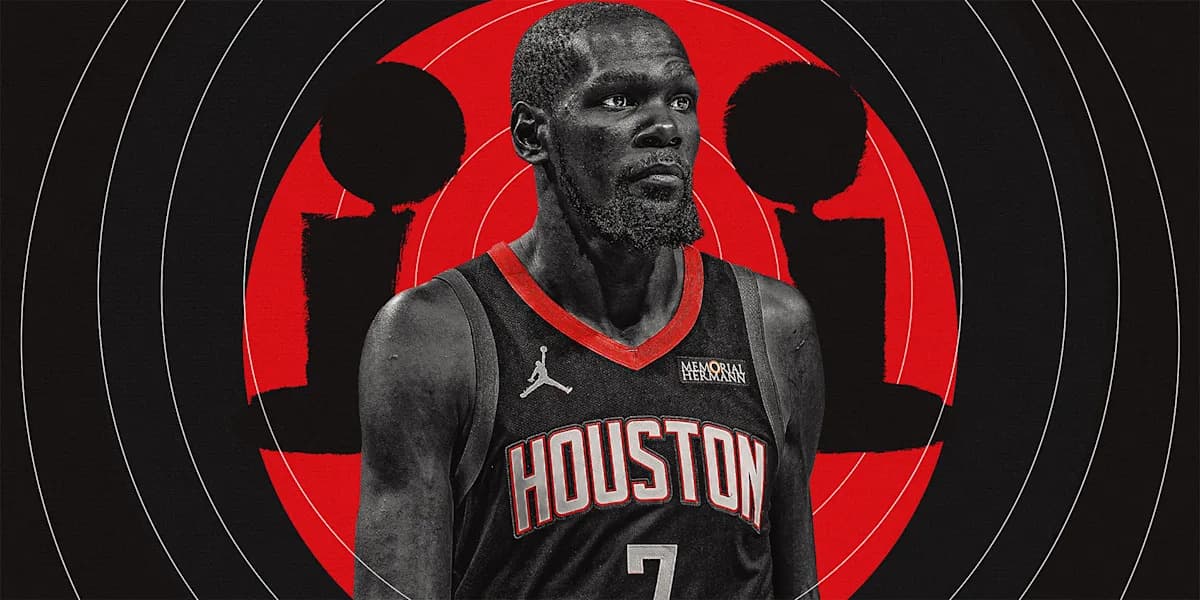
Kevin Durant's Experience is Key for the Young Rockets in 2026 Playoffs
Alshon Jeffrey, former NFL WR, arrested for insurance fraud charges.
See every story in Sports — including breaking news and analysis.
No one will confuse the 6-5, 236-pound Heisman Trophy winner with the likes of Cam Ward or Drake Maye, as he's not particularly creative or dangerous when a play breaks down. But that's about the only phase in which Mendoza comes up short. He's as precise as any passer you'll find from the college ranks, and he comfortably works through progressions and manipulates coverages. His arm strength isn't otherworldly, but he can attack every level with suitable velocity on his throws. Forcing him off his spot can throw him off his rhythm, but Mendoza rarely loses his cool under pressure and still conjures solutions when things aren't going his way. Beyond the improvisational shortcomings, he's the picture of a top-tier quarterback prospect.
Jeremiyah Love, RB, Notre Dame
The hyperbole inherent to NFL draft evaluations doesn't seem so outlandish when it's being attached to Love. For the 6-0, 213-pound Heisman Trophy finalist, everything starts with his game-breaking speed, which allows him to turn the corner with ease or jet through even the narrowest of openings on the interior. And once he has a step on the defense, he's extremely unlikely to be caught. He's far from just a linear threat, however, as his distinct creativity shines through in the open field – particularly when he unleashes his spin move or hurdle. Operating in a different gear than everyone else has created some inconsistencies in his early pacing, but it's rarely something that derails him. His elite skill set also carries over to his work as a pass catcher, where he can further vex defenses that won't likely have an answer when he lines up in the slot or out wide. It's fair to hold onto questions of positional value for running backs, but Love is unquestionably among a select few who deserve to be seen as this class' difference-makers.
Rueben Bain Jr., DE, Miami
No defender in college football broke open games last season quite like Bain, who led the Football Bowl Subdivision with 83 pressures, according to Pro Football Focus. The 6-2, 263-pounder frequently took the shortest path possible to the quarterback, uprooting anyone who stood in his way. Bain's atypical build for an edge rusher – including his short arms – invited plenty of scrutiny about how he might translate to the pro ranks, but he's already demonstrated he can mitigate the concern. If he's neutralized, it seems unlikely that it'll become a common occurrence.
Sonny Styles, LB, Ohio State
After arriving at Ohio State as an elite athlete searching for a true position, Styles departs Columbus having developed an unparalleled proficiency for the intricacies of linebacker play. The 6-5, 244-pound former safety could be counted on to be in the right place to plug the run at all times, and he still has room to grow in coverage and as a blitzer. Clean in everything he does, Styles can help be a standard-bearer for whatever defense he joins.
Caleb Downs, S, Ohio State
From his first snaps at Alabama as a five-star freshman to his final push at Ohio State, Downs put himself in a class all his own at safety. The two-time unanimous All-American repeatedly snuffed out plays before they could get started, particularly against the run or near the line of scrimmage. While he doesn't measure up as a physical marvel like Kyle Hamilton or Derwin James, he could have the same bottom-line effect for a defense, even if he doesn't match their ball production. His position might prevent him from cracking the top five, but he'll force offenses to account for him on every down.
David Bailey, OLB/DE, Texas Tech
Right off the snap, Bailey gets offensive linemen on their toes. The 6-4, 251-pound edge rusher's explosion off the ball can get blockers off balance in an instant, at which point Bailey can attack them by changing course or unleashing a spin move. Bailey's lean frame can result in him being eradicated in the run game at times, but players who can derail opposing passers with his level of efficiency can't be ignored. It shouldn't be long into his NFL transition before his pressure rate ticks up and he takes his place as one of the league's most threatening matchups off the edge.
Carnell Tate, WR, Ohio State
He was never the WR1 in the Buckeyes' loaded receiver room, but Tate stands above the rest of the pass-catching options in this class. With subtle shifts in his tempo and sudden breaks in his routes, the 6-2, 192-pound target creates separation without much strain. He settles into open spaces against zone and skies over defensive backs to haul in difficult passes down the sideline. He might not look the part of a go-to target, but he measures up to the title in almost every respect.
Mansoor Delane, CB, LSU
Not long into his foray into the Southeastern Conference, the Virginia Tech transfer made clear to opponents that he was not to be tested. Delane rapidly earned the title of shutdown corner, with teams almost universally opting to avoid throwing his way. At the next level, he figures to draw comparisons to Trent McDuffie – another cornerback who doesn't let his size or limited ball production prevent him from being recognized as a first-tier cover man.
Makai Lemon, WR, USC
In an earlier era, Lemon might have been dismissed as a slot receiver not capable of being an offensive focal point. Now, however, there shouldn't be much doubt about how much the Biletnikoff Award winner can shoulder. Lemon is a maestro when it comes to getting open underneath, and he can be counted on to vacuum up any throw that approaches his area. And teams that underestimate his downfield credentials could end up paying if they try to sit on short and intermediate throws.
Jermod McCoy, CB, Tennessee
A torn anterior cruciate ligament suffered last January kept McCoy out of commission for all of last season and clouded his pre-draft process. But in a stellar pro day showing, the 6-1, 188-pound corner served up a reminder that he has all the trappings of a top-tier cover man. With superlative ball skills and ample tools to stick with receivers throughout their routes, McCoy can grow into a standout in any defensive scheme.
Dillon Thieneman, S, Oregon
After his impressive performance at the NFL scouting combine, Thieneman rocketed into the discussion of this draft's premier defensive backs. Easy coverage instincts extend his already expansive range, and vigilance is required for any passing attack that throws to his area of the field. He can't measure up to Downs or some of the other safeties in this class when operating closer to the line of scrimmage, but he shouldn't be asked to serve in that capacity too frequently anyway.
Even with everything crumbling around him in Penn State's calamitous season, Ioane still held firm. The 6-5, 320-pound left guard is a brick wall in pass protection, but where he really shines is in his forceful displacements in the run game. Ioane will have to figure out a way to handle quick-twitch defensive tackles who will test his fluidity, but he's one of the more reliable prospects in this class.
Francis Mauigoa, OT/G, Miami
Solid to the core, the former five-star recruit holds his ground against the pass and forces opposing linemen out of the way with his strong first contact. But while there's not much mystery to the 6-6, 329-pounder's play, there are several unknowns about his projection. A move inside could be in his future to safeguard against concerns that he'll be beaten by rangy edge rushers, but the skill set is there to hang at right tackle.
Spencer Fano, OT, Utah
Smooth movements allow Fano to conjure answers for even the speediest edge rushers. He still could have trouble with rangier defenders, however, as well as ones who can convert speed to power and knock him off base. Like many offensive tackles in this class, he'll face questions of whether he belongs at the position, with some question of whether he should head to center.
Monroe Freeling, OT, Georgia
From his massive frame (6-7, 315 pounds) to his quickness, Freeling checks off some of the most notable boxes for a high-end left tackle. As a one-year starter, his technique is still a work in progress, with some bad habits sapping his efficacy. But he's clearly on an upward trajectory, and teams might be eager to buy on an ascendant blocker.
KC Concepcion, WR, Texas A&M
Few receivers are true separators at all three levels. Concepcion qualifies as just that, with more than enough quickness and speed to free himself from coverage at any point on the field. Drops have dogged him, but he could shake the issue in short order. Versatile and dynamic, Concepcion is more refined than he gets credit for, and he could become a vital part of an aerial attack with more polish.
Kenyon Sadiq, TE, Oregon
The ultimate seam threat, Sadiq accelerates in a manner not seen from 6-3, 241-pound pass catchers. Though he's proven himself after the catch, much of his value remains somewhat theoretical, as his experience and workload in the downfield passing game haven't aligned with his capabilities. But as an instant mismatch creator and aggressive run blocker, he can change the complexion of whatever offense he joins.
Denzel Boston, WR, Washington
Some will see a 6-4, 210-pound body and assume Boston relies on pulling down jump balls in close quarters. But while tilting those throws in his favor is his best feature, it's far from his only one. Boston has impressive fluidity for a player with his physical make-up, and his tracking and midair adjustments make him an even more confounding coverage assignment.
Emmanuel McNeil-Warren, S, Toledo
Though he might not be an all-around coverage maven, McNeil-Warren is comfortable exerting his will from several different vantage points. He rallies to the ball in a hurry in run support, working his way through traffic to deliver big hits. And though his 6-4, 201-pound build limits his comfort zone in coverage, he can give both quarterbacks and receivers pause on attempting any throws over the middle.
Jordyn Tyson, WR, Arizona State
Once seen as the clear-cut favorite to be the first receiver selected, Tyson now might be the most polarizing pass catcher in this class. Quick and crisp when he's dialed in, he has a robust set of maneuvers to beat man coverage from various spots. But medical concerns from various ailments muddle his draft outlook, and he can be inefficient with his footwork.
Akheem Mesidor, DE, Miami
Having just turned 25 with an extensive injury history, Mesidor enters the draft with red flags that might tank other prospects' stock. Teams that look past those issues, however, will see an advanced and unrelenting pass rusher with a deep bag of tricks to beat blockers. Mesidor might be one of the most divisive prospects in this class in his projection, but there's not much to object to with the on-field product.
Colton Hood, CB, Tennessee
With McCoy sidelined, Hood did a commendable job of filling in as the Volunteers' primary asset in coverage. The Colorado transfer kept the competitive juices flowing in shutting down tight-window throws as well as making his presence felt against the run. He can't match McCoy in overall fluidity, but he still sizes up as a meaningful counter in man coverage for bigger receivers.
Omar Cooper Jr., WR, Indiana
Other receivers are sure to be more vexing coverage matchups than the 6-0, 199-pound target. Cooper, however, has a truly distinct aptitude for slipping tacklers in the open field. His penchant for racking up yards after the catch should carry over to the NFL and endear him to his future quarterback, as should his aggressive approach to fighting through contact and operating in traffic.
Caleb Lomu, OT, Utah
In a class rife with right tackles and expected guard converts, Lomu stands out as a true blindside protector. Bulking up will be an essential step for the 6-6, 313-pounder to hold his own against more powerful edge rushers, but there's considerable room for growth on top of the enticing glimpses of his potential he's already displayed.
1 / 25
Arvell Reese, LB/DE, Ohio State
On a defense already dotted with stars, Reese rose from an occasional contributor to a bona fide star in his first full season as a starter. The 6-4, 241-pound linebacker exhibited uncommon fluidity for a player of his size, finding equal comfort dropping back in coverage as bullying his way into the backfield. His pass-rush plan is still rather rudimentary at the moment, but he has the toolkit of a double-digit sack artist. In a league where defenses are constantly taxed against the pass and run, Reese displays a unique aptitude for detonating whatever play an offense might throw at him.
1 / 25
Arvell Reese, LB/DE, Ohio State
On a defense already dotted with stars, Reese rose from an occasional contributor to a bona fide star in his first full season as a starter. The 6-4, 241-pound linebacker exhibited uncommon fluidity for a player of his size, finding equal comfort dropping back in coverage as bullying his way into the backfield. His pass-rush plan is still rather rudimentary at the moment, but he has the toolkit of a double-digit sack artist. In a league where defenses are constantly taxed against the pass and run, Reese displays a unique aptitude for detonating whatever play an offense might throw at him.
2 / 25
Fernando Mendoza, QB, Indiana
It's a testament to Mendoza's impeccable body of work that the pre-draft vivisection of his game has largely only turned up questions of how he'll fare operating from under center rather than in the shotgun.
No one will confuse the 6-5, 236-pound Heisman Trophy winner with the likes of Cam Ward or Drake Maye, as he's not particularly creative or dangerous when a play breaks down. But that's about the only phase in which Mendoza comes up short. He's as precise as any passer you'll find from the college ranks, and he comfortably works through progressions and manipulates coverages. His arm strength isn't otherworldly, but he can attack every level with suitable velocity on his throws. Forcing him off his spot can throw him off his rhythm, but Mendoza rarely loses his cool under pressure and still conjures solutions when things aren't going his way. Beyond the improvisational shortcomings, he's the picture of a top-tier quarterback prospect.
More: Why Fernando Mendoza won't be at NFL draft: Indiana QB staying home
3 / 25
Jeremiyah Love, RB, Notre Dame
The hyperbole inherent to NFL draft evaluations doesn't seem so outlandish when it's being attached to Love. For the 6-0, 213-pound Heisman Trophy finalist, everything starts with his game-breaking speed, which allows him to turn the corner with ease or jet through even the narrowest of openings on the interior. And once he has a step on the defense, he's extremely unlikely to be caught. He's far from just a linear threat, however, as his distinct creativity shines through in the open field – particularly when he unleashes his spin move or hurdle. Operating in a different gear than everyone else has created some inconsistencies in his early pacing, but it's rarely something that derails him. His elite skill set also carries over to his work as a pass catcher, where he can further vex defenses that won't likely have an answer when he lines up in the slot or out wide. It's fair to hold onto questions of positional value for running backs, but Love is unquestionably among a select few who deserve to be seen as this class' difference-makers.
4 / 25
Rueben Bain Jr., DE, Miami
No defender in college football broke open games last season quite like Bain, who led the Football Bowl Subdivision with 83 pressures, according to Pro Football Focus. The 6-2, 263-pounder frequently took the shortest path possible to the quarterback, uprooting anyone who stood in his way. Bain's atypical build for an edge rusher – including his short arms – invited plenty of scrutiny about how he might translate to the pro ranks, but he's already demonstrated he can mitigate the concern. If he's neutralized, it seems unlikely that it'll become a common occurrence.
5 / 25
Sonny Styles, LB, Ohio State
After arriving at Ohio State as an elite athlete searching for a true position, Styles departs Columbus having developed an unparalleled proficiency for the intricacies of linebacker play. The 6-5, 244-pound former safety could be counted on to be in the right place to plug the run at all times, and he still has room to grow in coverage and as a blitzer. Clean in everything he does, Styles can help be a standard-bearer for whatever defense he joins.
6 / 25
Caleb Downs, S, Ohio State
From his first snaps at Alabama as a five-star freshman to his final push at Ohio State, Downs put himself in a class all his own at safety. The two-time unanimous All-American repeatedly snuffed out plays before they could get started, particularly against the run or near the line of scrimmage. While he doesn't measure up as a physical marvel like Kyle Hamilton or Derwin James, he could have the same bottom-line effect for a defense, even if he doesn't match their ball production. His position might prevent him from cracking the top five, but he'll force offenses to account for him on every down.
7 / 25
David Bailey, OLB/DE, Texas Tech
Right off the snap, Bailey gets offensive linemen on their toes. The 6-4, 251-pound edge rusher's explosion off the ball can get blockers off balance in an instant, at which point Bailey can attack them by changing course or unleashing a spin move. Bailey's lean frame can result in him being eradicated in the run game at times, but players who can derail opposing passers with his level of efficiency can't be ignored. It shouldn't be long into his NFL transition before his pressure rate ticks up and he takes his place as one of the league's most threatening matchups off the edge.
8 / 25
Carnell Tate, WR, Ohio State
He was never the WR1 in the Buckeyes' loaded receiver room, but Tate stands above the rest of the pass-catching options in this class. With subtle shifts in his tempo and sudden breaks in his routes, the 6-2, 192-pound target creates separation without much strain. He settles into open spaces against zone and skies over defensive backs to haul in difficult passes down the sideline. He might not look the part of a go-to target, but he measures up to the title in almost every respect.
9 / 25
Mansoor Delane, CB, LSU
Not long into his foray into the Southeastern Conference, the Virginia Tech transfer made clear to opponents that he was not to be tested. Delane rapidly earned the title of shutdown corner, with teams almost universally opting to avoid throwing his way. At the next level, he figures to draw comparisons to Trent McDuffie – another cornerback who doesn't let his size or limited ball production prevent him from being recognized as a first-tier cover man.
10 / 25
Makai Lemon, WR, USC
In an earlier era, Lemon might have been dismissed as a slot receiver not capable of being an offensive focal point. Now, however, there shouldn't be much doubt about how much the Biletnikoff Award winner can shoulder. Lemon is a maestro when it comes to getting open underneath, and he can be counted on to vacuum up any throw that approaches his area. And teams that underestimate his downfield credentials could end up paying if they try to sit on short and intermediate throws.
11 / 25
Jermod McCoy, CB, Tennessee
A torn anterior cruciate ligament suffered last January kept McCoy out of commission for all of last season and clouded his pre-draft process. But in a stellar pro day showing, the 6-1, 188-pound corner served up a reminder that he has all the trappings of a top-tier cover man. With superlative ball skills and ample tools to stick with receivers throughout their routes, McCoy can grow into a standout in any defensive scheme.
12 / 25
Dillon Thieneman, S, Oregon
After his impressive performance at the NFL scouting combine, Thieneman rocketed into the discussion of this draft's premier defensive backs. Easy coverage instincts extend his already expansive range, and vigilance is required for any passing attack that throws to his area of the field. He can't measure up to Downs or some of the other safeties in this class when operating closer to the line of scrimmage, but he shouldn't be asked to serve in that capacity too frequently anyway.
13 / 25
Even with everything crumbling around him in Penn State's calamitous season, Ioane still held firm. The 6-5, 320-pound left guard is a brick wall in pass protection, but where he really shines is in his forceful displacements in the run game. Ioane will have to figure out a way to handle quick-twitch defensive tackles who will test his fluidity, but he's one of the more reliable prospects in this class.
14 / 25
Francis Mauigoa, OT/G, Miami
Solid to the core, the former five-star recruit holds his ground against the pass and forces opposing linemen out of the way with his strong first contact. But while there's not much mystery to the 6-6, 329-pounder's play, there are several unknowns about his projection. A move inside could be in his future to safeguard against concerns that he'll be beaten by rangy edge rushers, but the skill set is there to hang at right tackle.
15 / 25
Spencer Fano, OT, Utah
Smooth movements allow Fano to conjure answers for even the speediest edge rushers. He still could have trouble with rangier defenders, however, as well as ones who can convert speed to power and knock him off base. Like many offensive tackles in this class, he'll face questions of whether he belongs at the position, with some question of whether he should head to center.
16 / 25
Monroe Freeling, OT, Georgia
From his massive frame (6-7, 315 pounds) to his quickness, Freeling checks off some of the most notable boxes for a high-end left tackle. As a one-year starter, his technique is still a work in progress, with some bad habits sapping his efficacy. But he's clearly on an upward trajectory, and teams might be eager to buy on an ascendant blocker.
17 / 25
KC Concepcion, WR, Texas A&M
Few receivers are true separators at all three levels. Concepcion qualifies as just that, with more than enough quickness and speed to free himself from coverage at any point on the field. Drops have dogged him, but he could shake the issue in short order. Versatile and dynamic, Concepcion is more refined than he gets credit for, and he could become a vital part of an aerial attack with more polish.
18 / 25
Kenyon Sadiq, TE, Oregon
The ultimate seam threat, Sadiq accelerates in a manner not seen from 6-3, 241-pound pass catchers. Though he's proven himself after the catch, much of his value remains somewhat theoretical, as his experience and workload in the downfield passing game haven't aligned with his capabilities. But as an instant mismatch creator and aggressive run blocker, he can change the complexion of whatever offense he joins.
19 / 25
Denzel Boston, WR, Washington
Some will see a 6-4, 210-pound body and assume Boston relies on pulling down jump balls in close quarters. But while tilting those throws in his favor is his best feature, it's far from his only one. Boston has impressive fluidity for a player with his physical make-up, and his tracking and midair adjustments make him an even more confounding coverage assignment.
20 / 25
Emmanuel McNeil-Warren, S, Toledo
Though he might not be an all-around coverage maven, McNeil-Warren is comfortable exerting his will from several different vantage points. He rallies to the ball in a hurry in run support, working his way through traffic to deliver big hits. And though his 6-4, 201-pound build limits his comfort zone in coverage, he can give both quarterbacks and receivers pause on attempting any throws over the middle.
21 / 25
Jordyn Tyson, WR, Arizona State
Once seen as the clear-cut favorite to be the first receiver selected, Tyson now might be the most polarizing pass catcher in this class. Quick and crisp when he's dialed in, he has a robust set of maneuvers to beat man coverage from various spots. But medical concerns from various ailments muddle his draft outlook, and he can be inefficient with his footwork.
22 / 25
Akheem Mesidor, DE, Miami
Having just turned 25 with an extensive injury history, Mesidor enters the draft with red flags that might tank other prospects' stock. Teams that look past those issues, however, will see an advanced and unrelenting pass rusher with a deep bag of tricks to beat blockers. Mesidor might be one of the most divisive prospects in this class in his projection, but there's not much to object to with the on-field product.
23 / 25
Colton Hood, CB, Tennessee
With McCoy sidelined, Hood did a commendable job of filling in as the Volunteers' primary asset in coverage. The Colorado transfer kept the competitive juices flowing in shutting down tight-window throws as well as making his presence felt against the run. He can't match McCoy in overall fluidity, but he still sizes up as a meaningful counter in man coverage for bigger receivers.
24 / 25
Omar Cooper Jr., WR, Indiana
Other receivers are sure to be more vexing coverage matchups than the 6-0, 199-pound target. Cooper, however, has a truly distinct aptitude for slipping tacklers in the open field. His penchant for racking up yards after the catch should carry over to the NFL and endear him to his future quarterback, as should his aggressive approach to fighting through contact and operating in traffic.
25 / 25
Caleb Lomu, OT, Utah
In a class rife with right tackles and expected guard converts, Lomu stands out as a true blindside protector. Bulking up will be an essential step for the 6-6, 313-pounder to hold his own against more powerful edge rushers, but there's considerable room for growth on top of the enticing glimpses of his potential he's already displayed.
Barring a last-minute change of heart, the Raiders are going to make Mendoza the No. 1 overall pick in the 2026 NFL Draft. The reigning Heisman Trophy winner guided Indiana to an undefeated season and its first-ever national championship. The 23-year-old possesses the accuracy, poise and arm talent needed to quickly develop into a franchise quarterback.
The Jets figure to take their favorite pass rusher with the No. 2 overall pick. Will that be Reese, Bailey or a sleeper option like Bain?
Reese has the highest potential, but Bailey is the most pro-ready of the group. That may make the Texas Tech product – who led the FBS with 14.5 sacks and 19.5 TFL in 2025 and has the requisite speed and bend needed to wreak havoc at the NFL level – the preferred option for Aaron Glenn as he faces a pressure-packed second season in New York.
Arizona's biggest need is at right tackle, so the team could gravitate toward Mauigoa here or try to trade down and still land one of their favorite tackles in this year's class. However, if the Cardinals stick and pick, the opportunity to land a blue-chip pass rusher will be too much for Monti Ossenfort to pass up.
Reese is a hyper-athletic hybrid who can play both off-ball linebacker and on the edge. The Cardinals could benefit from his versatility and could install him as the top pass-rushing partner across from Josh Sweat. Either way, Reese will help the Cardinals front-seven greatly as Mike LaFleur looks to establish an identity during his first season in the desert.
The Titans enter the 2026 NFL Draft hoping to improve Cam Ward's supporting cast. Doing so with a player like Love or Tate would make a lot of sense, but Love – a dynamic, three-down playmaker who finished third in the Heisman Trophy voting – seemingly has an advantage at this point in the draft process.
And while offense seems most likely for Tennessee, the Titans targeting a player like Styles can't be ruled out. Robert Saleh had Fred Warner during his stints with the 49ers and could see similarities between the four-time All-Pro and the uber-athletic Styles.
2026 NFL DRAFT: Jeremiyah Love explains his simple message to NFL coaches
Any of the top-three Ohio State players on the board would be a great fit for the Giants. That said, John Harbaugh always had a quality defense with the Ravens, so targeting a playmaker for the middle of his unit makes sense.
Styles would fit the bill, as the 6-5, 244-pound linebacker was a sideline-to-sideline playmaker for the Buckeyes and showed off his elite athleticism at the 2026 NFL Scouting Combine. Downs will also draw consideration, but it's worth noting no safety has been a top-five selection since Eric Berry in 2010.
BUCKEYES MOCK DRAFT: Where Ohio State stars Reese, Styles, more could go
The Browns are widely expected to select a receiver and an offensive tackle with their two 2026 first-round picks. It's just a matter of which position they will target first. In this case, they will target a wide-out first, as Tate looks like the safest and most polished receiver in this year's class.
Cleveland would have its pick of offensive tackles if it passes on a receiver. Mauigoa looks like the consensus No. 1 tackle, but he profiles as a better fit on the right side at the NFL level. That could lead the Browns to take a gander at Proctor, who manned left tackle and Alabama and sports a massive, 6-7, 352-pound frame.
The Commanders need to add youth and talent at all three levels of their defense. They already signed a couple of edge rushers in free agency – Odafe Oweh and K'Lavon Chaisson – but adding more depth certainly wouldn't hurt. Bain's production (9.5 sacks in 2025) and relentless motor will quickly endear him to Dan Quinn despite his bottom-barrel arm length.
Washington could also take the top safety or cornerback on the board, which would be Downs and Delane respectively. But if the trio is closely rated, the Commanders will likely take the player with the most positional value, which is Bain.
The Saints lost Alontae Taylor in free agency and now need to find a running mate for Kool-Aid McKinstry. Delane and McCoy both could stake a claim toward being the top corner selected, but Delane – who allowed just a 31.2 passer rating in 2025 – may have a slight edge on McCoy, who missed all of last season while recovering from a torn ACL.
New Orleans also needs a No. 2 receiver to play across from Chris Olave. The Saints may consider Carnell Tate if he makes it to the eighth pick but could also add a quick separator like Lemon to man the slot.
Many are projecting the Chiefs to target another playmaker. They could absolutely do that, especially with an outside threat and natural separator like Tyson on the board, but the team also needs to focus on upgrading its offensive line in front of Patrick Mahomes.
Mauigoa profiles as a plug-and-play right tackle at the NFL level and could form a long-term tackle tandem with the Chiefs' first-round pick from 2025, Josh Simmons. That could go a long way toward helping Mahomes as he returns from a torn ACL. Freeling (6-7, 315 pounds) is another big-bodied tackle option for Kansas City.
Could the Bengals take Downs here? Sure, but they may have a bigger need at cornerback after signing Bryan Cook to man the safety spot in free agency. McCoy was one of the best cover men in the country in 2024 before missing all of last season with a knee injury and is a sleeper to be a top-10 selection in 2026.
The Bengals could also look at adding another piece to their pass rush. Faulk arguably has the best traits of any pass rusher still on the board, but this would be a bit early for the raw 21-year-old.
2026 NFL DRAFT BIG BOARD: Ranking the top 150 best players available
The Dolphins have needs all over their roster, but their primary focus should be supporting Malik Willis as he looks to prove himself as a starter. The team desperately needs a top wide receiver, making Tyson a popular option here, but Fano's athleticism and versatility could appeal to Miami's front office as it looks to build a cohesive blocking unit in front of Willis.
New Dolphins coach Jeff Hafley has a background in the secondary, so grabbing a top cornerback would also make sense. This would be a bit early for Terrell, but he is still the top option.
If Downs slips to 12, one would have to imagine the Cowboys would take little to no time to submit their draft card. Dallas' safety play was a problem last season, and Downs is one of the steadiest and most consistent contributors in this year's draft class.
The Cowboys could also look for an edge rusher to help replace Micah Parsons, in earnest. That would put Faulk in play here if the top six defensive players are off the board. Dallas could also consider trading up to avoid missing out on one of the sextet of Bailey, Bain, Delane, Downs, Reese and Styles.
The Rams seem ready to go all-in to try to win another Super Bowl as 38-year-old Matthew Stafford nears the end of his career. Adding Lemon – a natural slot separator – to a receiving corps already featuring Puka Nacua and Davante Adams would help in the quest, as would adding an athletic, do-it-all tight end like Sadiq.
That said, if Los Angeles looks toward a future need with this selection, adding an offensive tackle to replace Warren McClendon in 2027 would be sensible. Still, going with an offensive weapon seems more likely for Les Snead and Co.
The Ravens could use an upgrade at their No. 2 receiver position across from Zay Flowers. A case can be made that Tyson is the best receiver in this year's class, and the 6-2, 203-pound wide-out has the size needed to complement the diminutive Flowers well.
Baltimore could also look to fill its massive need along the interior offensive line with a plug-and-play left guard in Ioane. If they want to take an upside swing on a pass-rushing partner for newcomer Trey Hendrickson, Parker could draw consideration.
Buccaneers general manager Jason Licht typically values production when evaluating prospects, especially pass rushers. Mesidor (12.5 sacks in 2025) and Howell (11.5 sacks) would both fit the bill, but Mesidor gets the nod because of his better performance against the run.
Both Mesidor (25) and Howell (24) will be on the older side as rookies, so if Licht wants a younger player, the 21-year-old Allen could draw consideration as a long-term replacement for Lavonte David.
Could the Jets pull the trigger on Ty Simpson? Sure, but they also have the 33rd and 44th picks in this year's draft. That could allow them to target Simpson, or another quarterback, with those selections while further bolstering their roster with their two, first-round picks.
Instead, the Jets may find themselves in range to land a quality receiver, like Cooper Jr. or Boston. Cooper gets the nod here after being a riser throughout the draft process. He has drawn comparisons to Deebo Samuel because of his compact build and elusiveness with the ball in his hands.
The Lions have a massive need at offensive tackle after releasing Taylor Decker and seeing Dan Skipper retire. Proctor (6-7, 352 pounds) has the size and movement skills needed to develop into a quality left tackle and an elite bookend for All-Pro Penei Sewell.
Freeling is another left tackle option the Lions could consider while Miller is a tough, experienced right tackle who started 54 games at Clemson. If Detroit wants to play Sewell at left tackle, it could target Miller as a plug-and-play option on the right side of the line.
The Vikings released Harrison Smith after 14 years, a move believed to be a precursor to the 37-year-old safety's retirement. Thieneman is an elite athlete and showed off a well-rounded skill set at Oregon, making him an ideal fit for this pick unless the team prefers the sure-tackling McNeil-Warren.
Minnesota could also consider Sadiq as a long-term partner or eventual successor for T.J. Hockenson.
It's hard to imagine the Panthers passing on Sadiq if he drops to the 19th pick. Dan Morgan has made it his mission to add weapons around Bryce Young, and pairing Sadiq long-term with Offensive Rookie of the Year Tetairoa McMillan would further improve Dave Canales' offense.
The Panthers could also consider adding talent in the trenches. Freeling would provide insurance at left tackle, where Ikem Ekwonu and Rasheed Walker will both be free agents after the season, while Parker would be a high-upside option for Carolina's collection of young pass rushers.
Faulk was listed as a potential option for the Cowboys with the 12th overall pick. They will gladly take the Auburn product at 20, as the 6-6, 276-pound defensive lineman has the raw potential needed to become a threatening and versatile pass rusher.
Dallas also has a big need at cornerback and could consider pairing Terrell or Hood with Downs to give their secondary a real shot in the arm.
The Steelers lost veteran left guard Isaac Seumalo to the Cardinals in free agency. Ioane is a sturdy, pro-ready replacement who would create a stellar pairing with center Zach Frazier.
Pittsburgh could also consider Simpson but is probably more likely to target an Aaron Rodgers successor with one of its numerous mid-round picks. Banks, meanwhile, could draw consideration as the Steelers keep one eye on eventually finding a successor for Cameron Heyward.
Khalil Mack signed a one-year deal to return to the Chargers, but he may not play much longer. That could lead Jim Harbaugh and Joe Hortiz to target a replacement, and Parker has the size (6-3, 263 pounds) and physicality needed to emerge as an edge-setter for Los Angeles.
Harbaugh is a big fan of building up his run defense, so targeting a high-upside defensive tackle like Woods or a space-eater like McDonald could also be in the cards.
Freeling could be a top-10 selection, so this may represent the bottom of his range. The Eagles need an eventual successor for Lane Johnson, and Howie Roseman is always willing to address the trenches with his early-round draft picks.
If the Eagles target a more present-day need, McNeil Warren would give the team a well-rounded replacement for Reed Blankenship. As for Boston, he could step into a No. 2 receiver role if the team does eventually plan to trade A.J. Brown after June 1, when the team could spread his dead-cap hit over two seasons.
The Browns took a receiver with their first selection in this mock. They could double-up at the position and take a dynamic, open-field weapon like Concepcion, but more likely, the team will target a potential starter at left tackle.
Miller largely played right tackle at Clemson, but Andrew Berry has indicated he is comfortable with tackles flipping sides at the pro level. That could give the nasty, powerful blocker and edge over the leaner, more athletic Lomu, despite the Utah product's left-side experience.
The Bears lost four of their top five safeties during the 2026 offseason. They added Coby Bryant to serve as a starter but still need a long-term partner for him. McNeil-Warren is a tough safety with great ball production who could develop into a quality playmaker in Chicago's defense.
The Bears could also consider adding a top complement to Montez Sweat, like Howell, or adding a player like Lomu to compete for the left tackle job with Ozzy Trapilo (torn patellar tendon) facing a long road to recovery.
The Bills traded for DJ Moore during the offseason but could still use a big-bodied, outside weapon with Keon Coleman not yet panning out. Boston (6-4, 212 pounds) would fit the bill as a contested-catch threat and downfield playmaker.
Buffalo could also look to improve its run defense in Round 1 after ranking third-worst in defensive EPA against the run last season, per the NFL's Next Gen Stats. McDonald and Young are two of the better run defenders at their respective positions along the defensive line.
The 49ers spent a 2025 first-round pick on Mykel Williams, but that won't prevent them from adding a player like Howell. San Francisco had the second-lowest pressure rate last season while Howell posted 11.5 sacks during his final season at Texas A&M.
Addressing the offensive line is another option for the 49ers. Iheanachor is a raw-but-talented tackle who could be an ideal replacement for Trent Williams. Meanwhile, Pregnon would be a plug-and-play left guard option for San Francisco.
The Texans don't have many needs, so they can afford to target the best players available. Lomu's athleticism would pair well long-term with the bigger-bodied Aireontae Ersery, and the Texans can afford to sit the Utah product until he adds more strength to his frame.
Allen could also get the nod as a hyper-productive linebacker while Price has upside as a three-down running back and would pair well with David Montgomery.
After taking an offensive tackle ninth overall, the Chiefs can target a cornerback or receiver here. Kansas City's bigger need is at cornerback, so landing a playmaker with NFL bloodlines in Terrell seems like a sensible move.
Hood is another cornerback the Chiefs could consider while Concepcion – a shifty playmaker in space – would be fun to pair with Mahomes.
The Dolphins are in a similar boat to the Chiefs, left to choose between a cornerback and a receiver after taking an offensive lineman 11th overall. Miami's goal is to build around Willis, so grabbing Concepcion to be a middle-of-the-field threat would be a good move.
Miami could also look at Bernard – who was a steady playmaker at Alabama – or take a swing on Brazzell, whose 6-4, 197-pound frame and 4.37-second 40-yard dash give him enormous potential at the NFL level.
The Patriots probably need edge help more than anything else, but they also need an eventual successor for Morgan Moses at right tackle. Iheanachor has only played football for five years, but his performance at Arizona State and his athletic potential could help him develop into an NFL star.
Young would also fit the mold in New England as a tough, run-stopping edge setter. The Patriots could also take a swing on Banks' ceiling, though he played just three games due to injury in his final season at Florida.
The Seahawks need to replace Riq Woolen after losing him in free agency. Hood is the best cornerback remaining on the board, so the Seahawks could choose him here to serve as a future No. 2 starter across from Devon Witherspoon.
Seattle could also look to trade down from this spot, as the team is armed with a league-low four total draft picks. If they take that approach, targeting Johnson – who is a sleeper option with this pick – could be their endgame.
This article originally appeared on USA TODAY: 2026 NFL mock draft: Three options for (almost) every first-round pick