
Sports
Man Utd's slim CL hopes dented again by WSL draw with Brighton
Man Utd's Champions League hopes take a hit after 1-1 draw with Brighton
Sky Sports1 min read
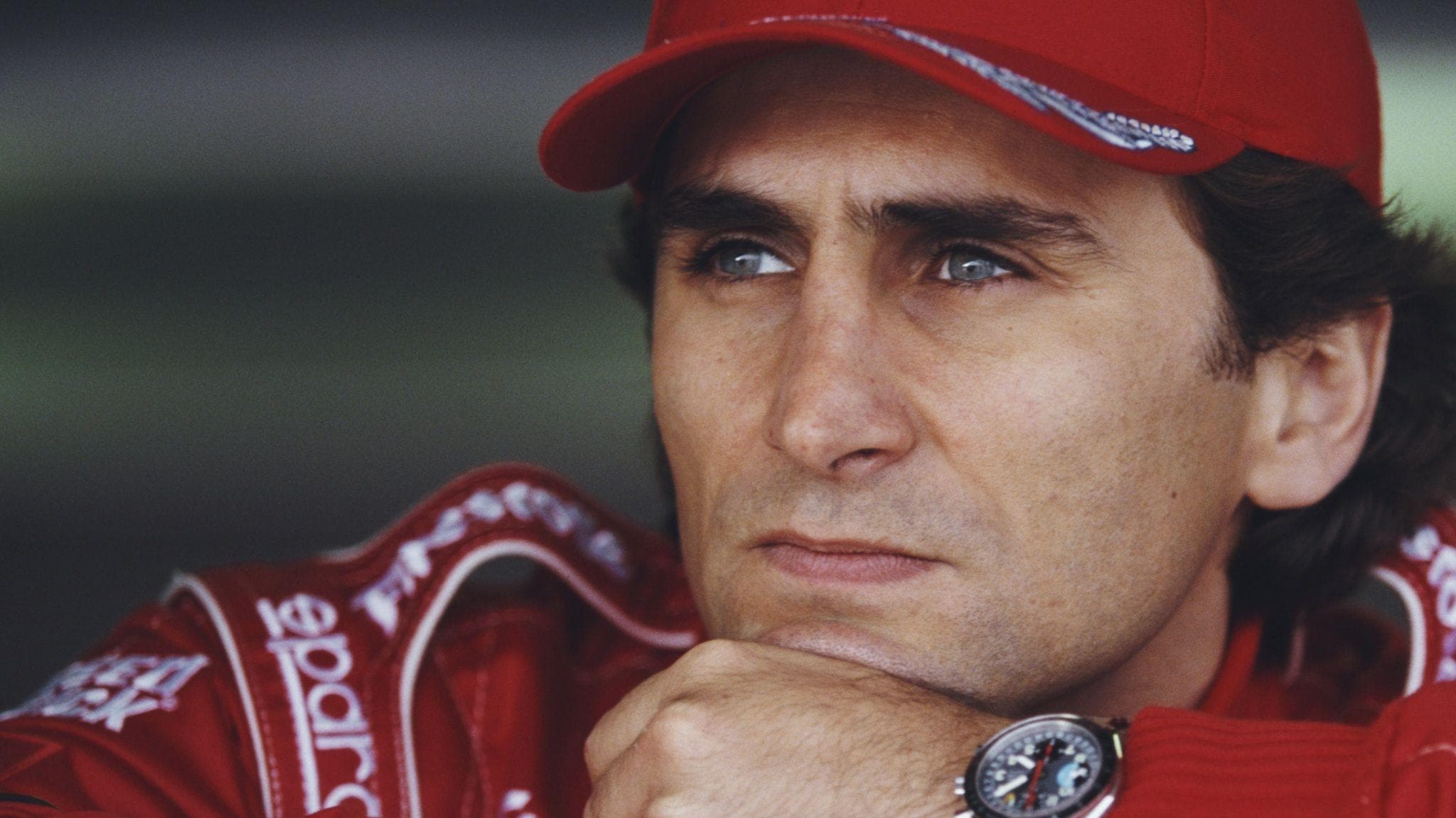
Alex Zanardi, a two-time Indycar champion and four-time Paralympic gold medallist, has died at 59 after a tragic accident. He inspired millions with his resilience and positive outlook despite facing severe adversity.
Mentioned in this story
Alex Zanardi, who has died aged 59, was a 21st century hero. A man who inspired millions through his unquenchable spirit in the face of unbelievable adversity. An icon of two different sports.
The Italian died on Friday, just under six years after suffering serious head injuries in a road accident while racing his handbike, a device with which he became a four-time Paralympic gold medallist and 12-time world champion.
That was a second chapter of sporting achievement, after a previous one in which he had considerable success as a racing driver, competing for several seasons in Formula 1, and becoming a two-time champion in American Indycar racing.
The dividing line between those two parts of his life was a horrific accident at Germany's Lausitzring, in which Zanardi lost both his legs, most of his blood, and was saved from death only by rapid and decisive medical intervention.
Zanardi was a man who experienced so much pain in his life, but whose outlook was always positive, no matter the difficulty he faced.
He was also a charming, funny, warm, charismatic, genuine and eloquent man, universally popular. His ability to express the means by which he had overcome his personal challenges brought those struggles alive, put them in perspective, and gave hope to so many around the world.
What pulled Zanardi through, and enabled him to go on to achieve at the elite sporting level again, was his remarkable force of will.
"I am very lucky," Zanardi once said. "There is a strong connection between what happened before and after, in the sense that I was able to carry on into this new life of mine. Against a lot.
"I don't feel like I am living a second life. It is the same one. I have been able to embrace and encounter things that I would never have met if what happened didn't.
"This is not necessarily a bad thing, actually. I am very comfortable in this new life of mine where I have been able to do a lot of new things, 99% of which are probably directly due to my condition. So after what happened I have been able to turn it into an opportunity."
He had fragmented three part-seasons from 1991-93 with the Jordan, Minardi and Lotus teams, showing intermittent promise, before suffering severe concussion in a huge accident at Spa's Eau Rouge corner in 1993.
By the time he returned the following year, Lotus were in severe financial trouble, and when they collapsed at the end of 1994, his F1 career seemed to be over.
Securing a seat for 1996 with the Ganassi team in the US-based Cart Championship series, the highest profile of two Indycar series at the time, turned his career around.
Zanardi won two races in his first year, before emerging as the dominant force in the series, and securing two consecutive titles in 1997 and 1998
Alex Zanardi died following serious head injuries sustained in a road accident while racing his handbike.
Zanardi lost both his legs in a horrific accident at Germany's Lausitzring during a racing incident.
Zanardi competed in Formula 1 and was a two-time champion in American Indycar racing before becoming a four-time Paralympic gold medallist.
Zanardi is known for his remarkable resilience, inspiring millions through his achievements in both racing and para-sports despite facing significant challenges.
Man Utd's Champions League hopes take a hit after 1-1 draw with Brighton
Justin Verlander continues to struggle with injury recovery, feeling frustrated with the slow progress.
Juventus Women secure a thrilling 3-2 win over Napoli in Serie A!
The Puma scratched from Kentucky Derby, leaving 19 horses in the race.
Rockets' season ends in disappointment, raising questions for the future
Levy Frauenfelder secures his first PDC Challenge Tour title in Hildesheim!
See every story in Sports — including breaking news and analysis.
His stellar performances in the States attracted renewed attention from F1, but a return with the Williams team in 1999 did not work out.
Zanardi later admitted he probably did not give it the dedication it needed, and Williams were in something of a decline. The relationship never seemed to gel, Zanardi rarely showed the performance the team expected of him, and Williams released him at the end of the year.
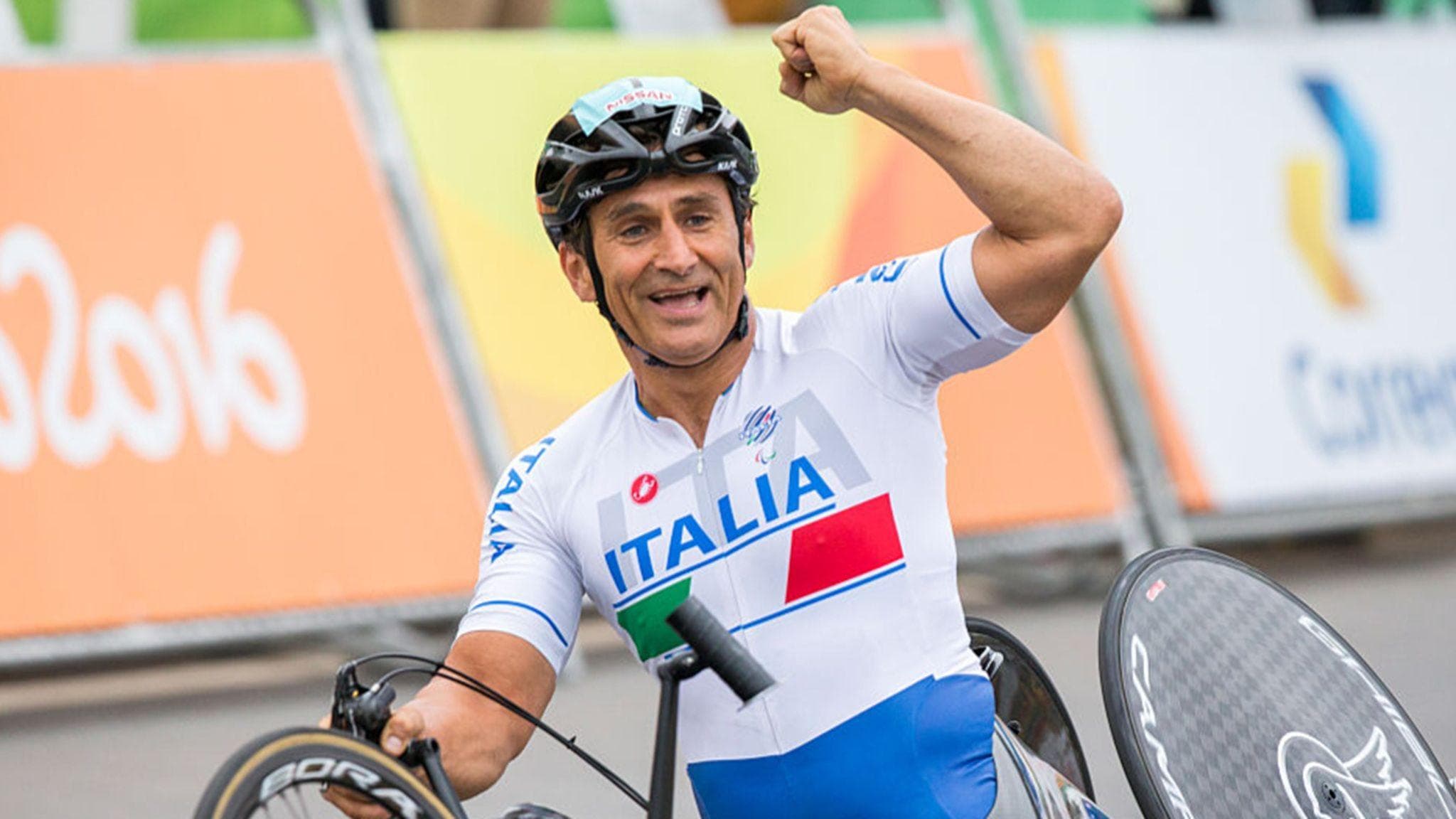
Image caption,
Alex Zanardi won won two handcycling golds in the Paralympics in London in 2012 before doing the same in Rio de Janeiro four years later
Zanardi found a seat back in Cart in 2001, driving for a team set up by his former Ganassi engineer Mo Nunn.
He was leading the race at Germany's Lausitzring oval held just four days after the 11 September attacks in the US when the accident that changed his life took place.
Exiting the pits in the closing stages of the race, Zanardi made a mistake and spun on to the track. Canadian Alex Tagliani hit Zanardi's car broadside, at close to 200mph, tearing off its nose.
The crash was like a bomb going off, and in the aftermath Zanardi's noseless car lay across the track, a river of blood flowing from it.
His heart stopped seven times. He survived for nearly an hour with less than a litre of blood. He was saved by the expert intervention of the medical team, led by Dr Steve Olvey.
Talking about regaining consciousness in hospital in Berlin eight days after the accident, Zanardi said: "I surprised myself feeling, or sensing, the highest joy I have ever had in my life. The pain was incredible. I cannot describe it. But I was alive. Who cares about my legs? I am alive. It was the most natural thing for me to focus on what I had left."
It was the end of his career in single-seater racing, but he set upon an extensive rehabilitation programme and was fitted with prosthetic limbs.
In 2003, he was given a run in a Cart car fitted with hand controls back at the Lausitzring, symbolically completing the 13 laps remaining from the race he never finished two years before.
He lapped quickly enough to qualify for the race, and that encouraged him to believe he could make a comeback to motorsport. He did a deal with BMW to provide him with a car fitted with hand controls in the World Touring Car Championship, where he competed for five seasons from 2005-9, winning four races.
Although now into his 40s, Zanardi had already embarked on another challenge that would lead to his greatest achievements.
In 2007, he finished the New York City marathon fourth in the hand-cycle class after just four weeks of training. This became Zanardi's main focus and as the years passed by, his success grew.
In 2011, he won the New York Marathon. Then, at the 2012 London Olympics, he took gold medals in the road race and the road time trial, following up with another double in Rio De Janeiro four years later, this time twinning the road time trial with the road team relay.
In effect, he dominated the sport for seven years, adding a total of 12 world championship gold medals from 2013-19.
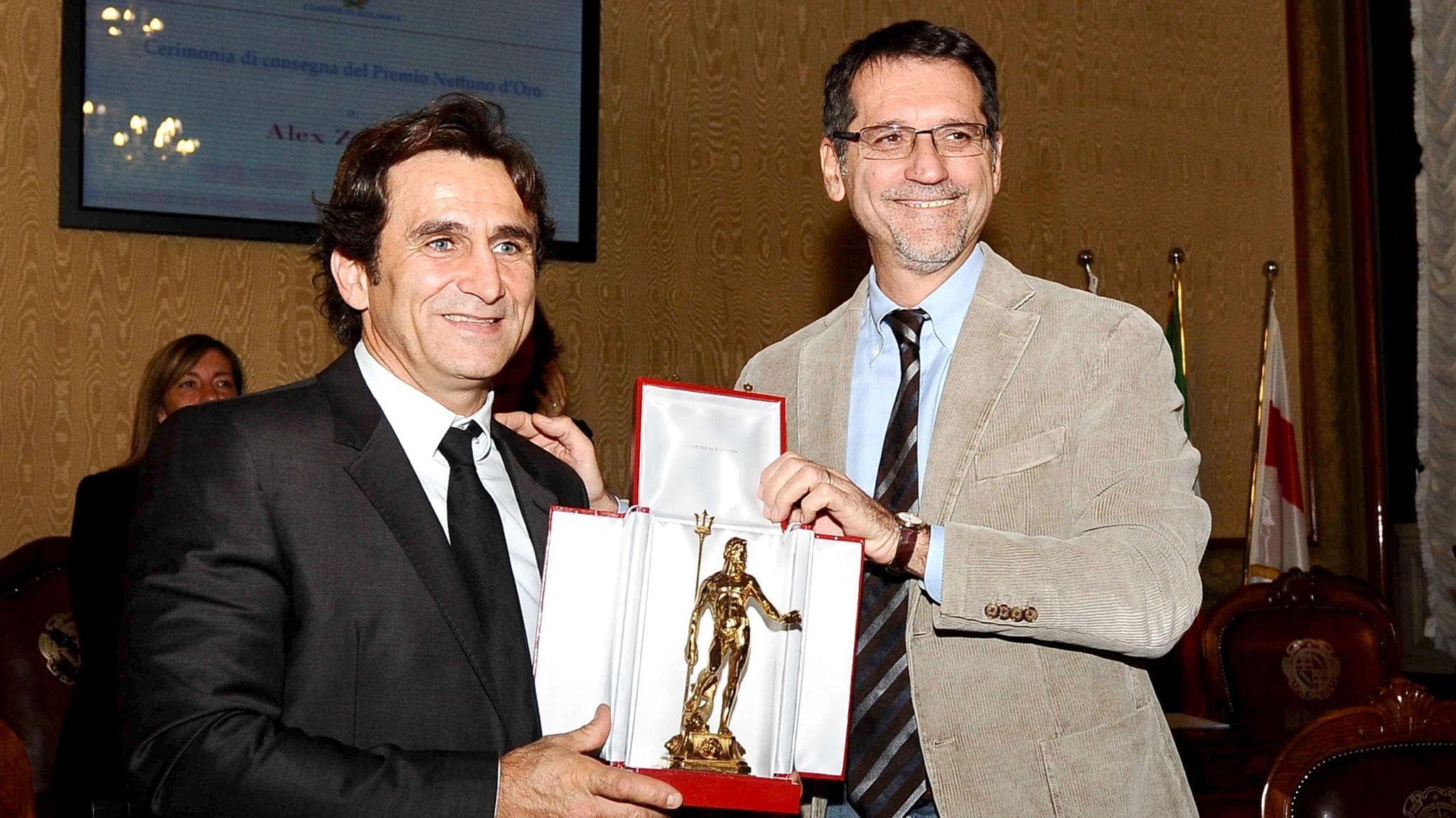
Image caption,
Alex Zanardi has won numerous awards, including the Nettuno d'Oro (Golden Neptune) in his home city of Bologna. He is pictured receiving the award from Mayor of Bologna Virginio Merola
Zanardi was now famous across the globe and a man in constant demand. In the many interviews requested of him, he refused to accept he was anything special, preferring instead to speak compellingly about the power of the human spirit.
"Sometimes we forget what we have," he said. "I know only one guy out of a thousand could have gone home alive after my accident and I'm that one. But you can't call me Superman. That's sending out the wrong message, as people might think it's not possible to achieve what I have unless they are special.
"Frankly, I don't think the accident made me a better person. What was there before is exactly the same, but my knowledge has been extended and I feel richer because I've seen the other side of the coin.
"That makes me less afraid of what lies ahead because life brings fantastic things but also bad things. That's what makes it marvellous. If it was all good or all bad, it would boring.
"I've experienced how great it is to be alive and how strong a man can be. Every time we think, 'That's it, it's over,' we surprise ourselves and find inner resources in our heart.
"This is a sign of hope I have witnessed in my own skin. Now I see the human being is an incredible machine, totally undiscovered in many ways. Everyone of us has a hidden tank of energy that just comes out when needed."
Zanardi died on 1 May, 32 years to the day after the loss of another motorsport icon, Ayrton Senna, a former on-track rival.
In one way, the symmetry is a mere coincidence, but it feels so much more. Zanardi, like Senna, was a hero to millions across the globe. And, like Senna, his legacy will long outlive him.