
Sports
End of an era in WSL as Bright, Kerr, McCabe, Mead and more move on
WSL sees legendary players like Bright and Kerr move on, marking a new chapter.
Sky Sports1 min read
The Seattle Seahawks have added Beau Stephens to their offensive line, enhancing their focus on physical linemen suited for zone-based schemes. Stephens, a developmental guard from Iowa, was recognized for his evolution and performance in college, contributing to a top offensive line unit.
Reinforcing the offensive line remains one of the top priorities for the Seattle Seahawks, and the addition of Beau Stephens fits perfectly within the front office’s continued investment in physical linemen tailored for zone-based schemes. He may not have entered the draft cycle carrying the same level of national hype as some of the bigger names in the class, but there is a very clear reason why NFL evaluators consistently viewed him as one of the more intriguing developmental guards available: Stephens steadily evolved throughout his career at Iowa until becoming a foundational piece of the offensive line unit that captured the Joe Moore Award in 2025.
Let’s dive into it.
Coming out of high school, Stephens was a four-star recruit with a multi-sport background in both basketball and wrestling — two traits that NFL offensive line coaches almost always value heavily when projecting trench players. The basketball background shows up in his body control and spatial awareness, while the wrestling experience translates directly into leverage battles, hand fighting, and understanding body positioning at the point of attack.
He was heavily recruited and received offers from programs such as LSU Tigers football, Michigan Wolverines football, and Texas A&M Aggies football before ultimately committing to Iowa Hawkeyes football because of his connection with the coaching staff and Iowa’s long-established reputation for developing NFL-caliber offensive linemen.
Note: Iowa OL in 2025:
Beau Stephens is expected to enhance the Seahawks' offensive line by bringing physicality and skills tailored for zone-based schemes.
Beau Stephens was viewed as a valuable pick due to his steady development at Iowa and his role in a successful offensive line that won the Joe Moore Award.
Beau Stephens' strengths include body control from his basketball background and leverage skills from his wrestling experience, making him effective in offensive line play.
At Iowa, Beau Stephens evolved into a foundational piece of the offensive line, contributing to the team's recognition with the Joe Moore Award in 2025.
WSL sees legendary players like Bright and Kerr move on, marking a new chapter.
Bayern Munich is eyeing De Ketelaere but prioritizes Gordon from Newcastle.
Join Manchester City for a parade and after party on May 25, 2026!
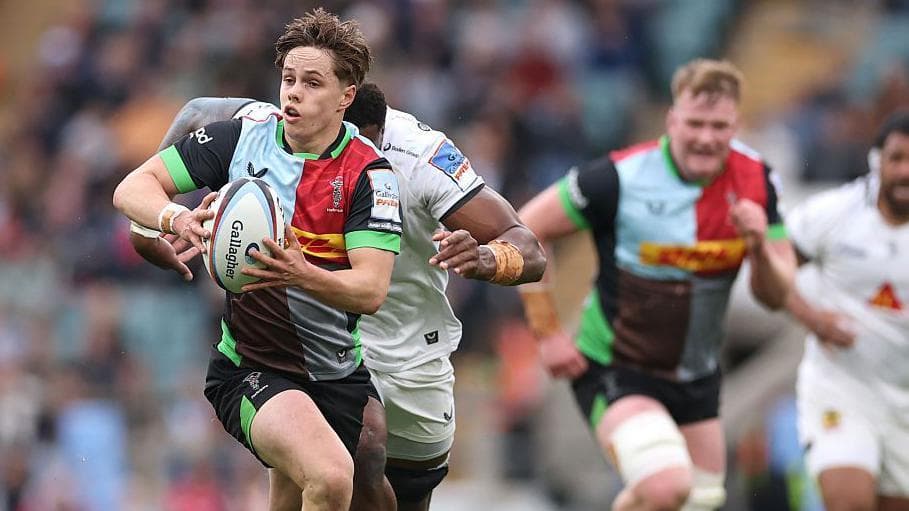
Harlequins pull off a stunning comeback to defeat Exeter 41-24, impacting their top-four hopes.
Bluebird hydroplane's speed runs hit by weather and canopy issues
Connelly Early explains his desire to pitch the 6th inning in Red Sox loss to Braves.
See every story in Sports — including breaking news and analysis.
LT: Mason Richman (7th rounder);
LG: Beau Stephens (5th rounder);
C: Logan Jones (2nd rounder);
RG: Connor Colby (7th rounder);
RT: Gennings Dunker (3rd rounder);
In 2023, Stephens missed eight games due to injury. Around the same time, he also became more open about dealing with ADHD and mental health challenges, something he later admitted completely changed the trajectory of his career after receiving support through Iowa’s program resources. The improvement in both his consistency and overall confidence became obvious over the following two seasons.
By 2025, Stephens finally put together his first fully healthy season after previously missing a combined 11 games earlier in his college career. He became a central piece of the offensive line that won the Joe Moore Award, earned First-Team All-Big Ten honors, and established himself as one of the best zone-blocking guards in the entire draft class.
The production backs it up: only four pressures allowed throughout the season, a 91.6 pass-blocking grade, and an 83.0 run-blocking grade. In advanced metrics, he finished in the 99th percentile in zone-blocking grade and the 98th percentile in overall run-blocking efficiency.
On top of that, Stephens logged extensive experience at both left guard and right guard, something Seattle values heavily when building offensive line depth. He also took snaps at center during the Senior Bowl, further increasing his positional versatility.
According to reporting from John Boyle, Seattle had Stephens graded significantly higher than the remaining prospects on their board once the fourth round ended. The organization quickly began exploring trade-up scenarios because their next scheduled selection would not come until the sixth round. Thanks to the flexibility created after moving on from players like Boye Mafe and several veteran contracts, the Seahawks felt comfortable sending away a future fourth-round pick in order to move back into the fifth round and secure Stephens before another offensive line-needy team stepped in.
If you want to simplify the asset exchange from Seattle’s perspective, you could frame it this way: the Seahawks essentially swapped Boye Mafe and a potential three-year, $60 million extension projection for Dante Fowler Jr. on a one-year, $5 million deal plus Beau Stephens. From a roster-building standpoint, that is a very reasonable piece of business.
Some draft boards viewed Stephens as a legitimate third-round talent, while others likely pushed him down because of the injury history and the absence of elite testing numbers. He is not the kind of guard who wins workouts at the NFL Combine with rare explosiveness or eye-popping agility metrics. But the tape consistently shows a player who understands angles, leverage, and processing at a very high level.
Stephens does come with some physical limitations. His arm length measured as the shortest among all guards invited to the Combine, which is obviously less than ideal for the position. He is also not an especially fluid lateral mover. Explosive defensive tackles can occasionally stress him early in reps before he fully establishes his anchor, especially against quick-developing power rushes.
He is not the type of guard who effortlessly glides through space either, and that becomes visible on some second-level assignments. Realistically, part of his ceiling may ultimately be capped because he simply lacks some of the rare athletic traits that separate high-end NFL starters from solid long-term contributors. What stands out on film, however, is the way he compensates for those athletic limitations with processing speed and awareness. On this rep, for example, he immediately recognizes he will not reach linebacker No. 4 in time and intelligently redirects toward the next available target instead of completely whiffing in space.
Stephens consistently plays like someone who spent years operating in a zone-heavy offensive structure. He takes disciplined angles, understands the geometry of the run concept, and positions himself to protect the running lane rather than simply hunting for highlight-reel pancakes.
At the second level, he is somewhat boom-or-bust because of those athletic limitations mentioned earlier. There are reps where he simply cannot recover once a linebacker wins the angle. But when he arrives on time and properly squares up the block, the rep usually ends violently for the defender.
The physicality shows up particularly well on double teams. Stephens displays excellent coordination and timing when working combination blocks, staying attached through the initial displacement before climbing with balance. And, as always, he finishes with the defender on the ground whenever the opportunity presents itself.
His hand placement and leverage technique are probably the biggest reasons he consistently creates clean rushing lanes despite not possessing overwhelming raw power. I would not classify Stephens as a dominant mauler purely from a strength perspective, but he understands leverage extremely well and knows how to maximize positioning to generate movement.
This is one of my favorite snaps from Stephens’ tape. The footwork is outstanding as he works across the face of the defensive tackle to establish the proper angle. From there, the hand placement remains controlled, and what really stands out is his ability to continuously reposition and reset during the rep in order to preserve gap integrity. He can still be vulnerable to pure power at times, but his technical refinement consistently allows him to recover and stabilize the block.
Pass protection may actually be the most underrated aspect of Stephens’ game. Technically, he is a very refined player. He consistently maintains a solid base, plays with balance through contact, and works his hands extremely well throughout the rep. The fact he did not allow a single sack over his final three collegiate seasons speaks volumes about the level of consistency he brings in protection.
Zane Durant is an excellent defensive tackle prospect, and this rep highlights Stephens’ awareness as a pass protector. He subtly alters his pass set and changes his hand positioning specifically to neutralize the bull rush — the exact type of move that would theoretically give him the most trouble given his frame and anchor profile.
Once again, another example of in-rep adjustment ability. The bull rush develops quickly, but Stephens responds with proper recovery mechanics. As he works to establish inside hand control, he subtly hops backward to absorb and decelerate the force before re-establishing leverage and finally anchoring down. That kind of recovery balance is something many college guards simply do not possess.
Pre-snap processing also stands out consistently on tape. Before the snap, Stephens identifies the potential pressure threat and immediately communicates the possibility of inside help for the left tackle, who otherwise would have likely lost the rep inside. Excellent mental processing.
On this rep, his initial responsibility is defensive tackle No. 97. Once the stunt develops and the blitzer loops across the formation, Stephens instantly recognizes the center must adjust the protection. Without hesitation, he smoothly transfers the defensive tackle back toward the left tackle and picks up the new threat crossing his face. A lot of college offensive linemen get completely caught off guard in situations like this.
The linebacker wearing No. 0 comes on the blitz here, but watch Stephens’ eyes during his kick-slide. Even while executing his kick-step, he keeps vision on No. 24, understanding there is still a possibility of a delayed pressure coming late into the protection. That level of awareness is exactly what offensive line coaches want to see from interior players transitioning into NFL protections.
One of the best technical reps on his tape comes when Stephens executes a textbook snatch-and-trap against Seahawks seventh-round pick Deven Eastern. For anyone unfamiliar with the technique, a snatch-and-trap happens when the offensive lineman intentionally pulls the defender forward by removing the resistance from the block before quickly trapping or redirecting the defender downward using their own momentum against them. It is a highly technical counter used against aggressive rushers who are overcommitting into contact. Stephens times it perfectly here, using the defender’s forward lean against him and completely taking him out of the rep.
Later on, he flashes the exact same technique against nose tackle Lee Hunter, who at one point was receiving legitimate first-round buzz during portions of the evaluation cycle.
The fit, experience, and technical profile make Stephens an excellent addition for Seattle’s offensive line room. He probably will not open Year 1 as a starter, but at minimum he significantly improves the long-term depth of the group.
A lot of Seahawks fans understandably want to see Anthony Bradford replaced immediately, but the organization clearly believed he made legitimate progress during the 2025 season despite still showing occasional mental lapses and inconsistencies. Seattle invested in him last year following a difficult season, and it is obvious they still see developmental upside there.
Stephens arrives as an experienced reinforcement for a group that lacked reliable interior depth behind the starters. Christian Haynes is unlikely to survive final roster cuts, while late-round selections Bryce Cabeldue and Mason Richman remain developmental projections.
He probably will not suddenly evolve into a radically different player at the NFL level because the physical limitations are real, but Stephens already offers a remarkably solid floor for a rookie interior offensive lineman. Add in the positional flexibility, processing, and scheme fit, and it becomes very easy to understand why Seattle valued him so highly.
It is also worth remembering that Bradford is scheduled to become a free agent after the season. At the very least, the Seahawks added a player capable of preventing the front office from entering future negotiations desperate to retain the current starting right guard at any cost.