
SoccerRecap
Russo nets double as Arsenal secure second place in WSL
Alessia Russo nets two as Arsenal secures second place in WSL!
Sky Sports1 min read
The 2026 MLB Draft is set for July 12-14, with the Cardinals holding the 13th overall pick. As the college and high school seasons conclude, speculation grows on potential targets for the Cardinals' first selection.
Mentioned in this story
MLB: Draft
The 2026 MLB Draft, where the Cardinals hold the 13th overall pick, will take place July 12-14, making it now less than two months away. With the college and high school regular seasons winding to a close, I thought now would be a good time to check in on who the Cardinals may be eyeing with their first pick. Before we run through a few player blurbs, I want to review Chaim Bloom’s strategy in Boston to see if there are any clues on how the draft may play out.
An important caveat: Chaim Bloom will not be solely (or even primarily) responsible for the top draft selection as Zach Mortimer and Randy Flores will lead the draft charge, but the POBO still sets the tone and has ultimate accountability within the organization. Two of the four top picks during Bloom’s Boston tenure were largely considered the best player available. Two were “reaches” for high school infielders that Boston signed to underslot deals to allow them to take more shots later in the draft.
In 2020, Chaim’s first year, the Red Sox drafted high school second baseman Nick Yorke (17th overall). At the time, this pick was seen as a surprise as Yorke was ranked as the 139th best draft prospect by MLB Pipeline. Yorke would ultimately be signed to an underslot deal allowing the Sox to give Blaze Jordan over $1M more than slot value. Yorke was a player the models loved (baseball models, not fashion) meaning the pick was more about his data and metrics than a pure scouting pick.
In 2021, the Sox had the fourth overall pick and spent it on Marcelo Mayer. At the time, Mayer was ranked as the best draft prospect, so I do not think there is too much to glean from the selection other than taking the best player available, but it did make two straight high school infielders in a row.
In 2022, the Red Sox again returned to the high school infielder ranks selecting Mikey Romero (24th overall), and again signed him to an underslot deal saving almost $700K. Just like in 2020, the Red Sox used savings from their first pick to sign an overslot player later in the draft when they gave a $2.5M bonus in the second round (slot of $820K).
The 2026 MLB Draft will take place from July 12 to July 14.
The Cardinals hold the 13th overall pick in the 2026 MLB Draft.
Zach Mortimer and Randy Flores will lead the draft strategy, with Chaim Bloom setting the overall tone.
Chaim Bloom's strategy included selecting the best player available and making 'reaches' for high school infielders signed to underslot deals.
Alessia Russo nets two as Arsenal secures second place in WSL!

Sam Kerr scored the winning goal in her farewell match for Chelsea, defeating Manchester United 1-0. Despite the victory, Chelsea finished third in the Women's Super League due to Arsenal's win over Liverpool.

Celtic clinches the title as Hearts' historic challenge ends in defeat

Celtic secures the Scottish Premiership title once more, overcoming challenges this season.

2026 Preakness Stakes: How much will the winner earn?
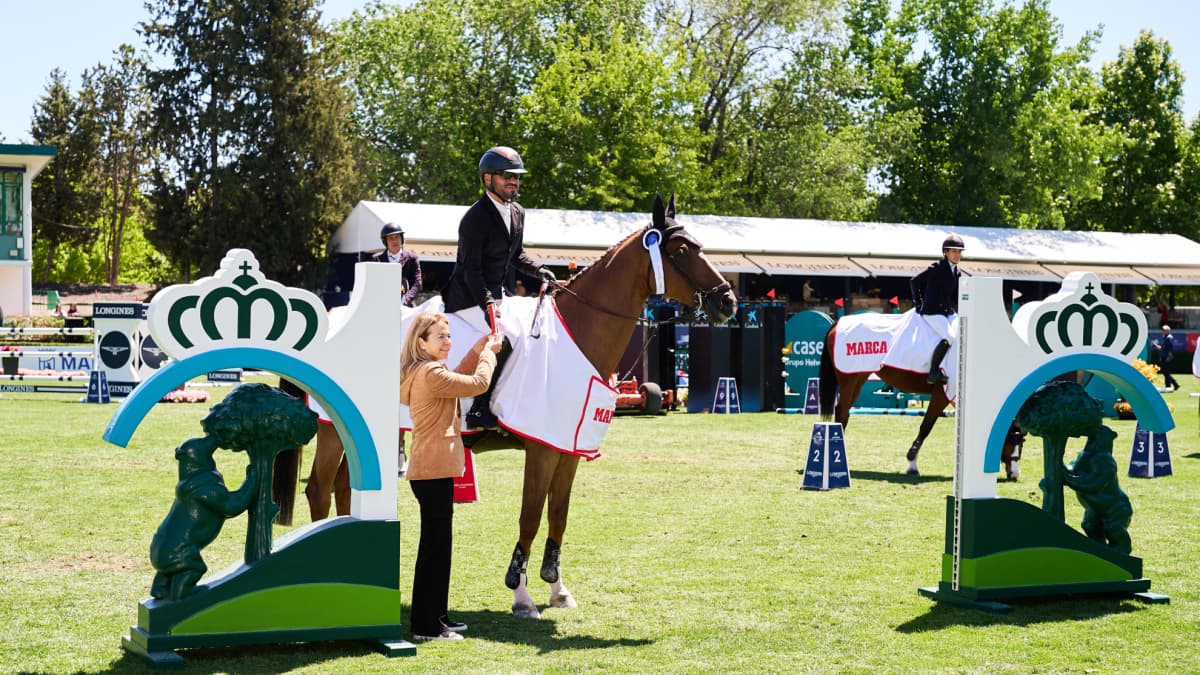
El emiratí Alí Hussain Alnowais se impone en el Trofeo MARCA y el argentino Juan Ignacio Álvarez Fermosel gana el Trofeo Caixabank.
See every story in Sports — including breaking news and analysis.
Finally in Bloom’s last draft with the Red Sox in 2023, they took a more conventional route with the 14th overall pick by selecting a college catcher, Kyle Teel. At the time of the draft, he was seen as the best player still on the board as a strong-armed catcher with a good hit tool.
The Cardinals have the sixth-largest draft pool ($16.6M) thanks to their competitive balance picks, which will give them a lot of flexibility in the strategy they deploy. They can play it straight up and take the top player on their board or even use some over their bonus pool to try to float a higher-ranked talent down the board. If they don’t feel that there is a standout player available, we could definitely see an underslot deal cut to give the Cardinals even more flexibility to court top talent with their later-round picks.
If the Cardinals do decide to play it straight and take the best player available, which players could be in play at 13?
I personally do not follow college or high school baseball religiously, but the draft is one of my favorite baseball days of the year, so I always do some last-second cramming on the top players. My annual tradition is to get overly attached to one player and then be disappointed with who the Cardinals select (JJ being the exception).
I pulled together the latest player rankings from some of the major outlets to provide what should capture the general sentiment of how the industry views the top players in the draft. If you want to do some deeper research, here are the current rankings (free) from MLB, ESPN, and the Athletic. The below list is just a weighted average from the three outlets mentioned above. I did not include Baseball America since their content is behind a paywall, but it is, of course, exceptional as well.
The consensus right now is that the top five players in this class are unlikely to slip far, but you never know, so we might as well include them.
1. Roch Cholowsky, SS, UCLA
Cholowsky has been the favorite to go number one overall for over a year, and that is still the case as most (all?) outlets have him ranked first in the class as a four or five tool shortstop. He is arguably about the same level of prospect Wetherholt was when he was drafted, which highlights how incredible it was that Wetherholt was available at seventh overall in that draft.
2. Vahn Lackey, C, Georgia Tech
Lackey has been one of the big risers in this class as he came into the season as a solid bat, good glove catcher projected to go in the mid-to-late first round. He has more than doubled his power output this year and jumped to a consensus top-five draft prospect.
3. Grady Emerson, SS, Fort Worth Christian HS (TX)
Emerson is the consensus best high school prospect in the class. Polished bat with power potential and expected to stick at shortstop. His scouting report reads like Kyle Tucker the hitter but with good infield defense! Regardless, he won’t fall to the Cardinals range.
4. Jackson Flora, RHP, UC Santa Barbara
Flora has a 60 grade fastball that has topped out at 100 mph and carries a 1.15 ERA at UCSB. He is definitely closer to the Liam Doyle tier of draft prospects than to Paul Skenes, but should be the first pitcher off the board.
5. Eric Booth Jr., CF, Oak Grove HS (MS)
Booth Jr. is described as having an “unconventional” swing by multiple outlets, but has top-of-the-scale athleticism and has 70-grade speed. His scouting reports make him sound like more of a project than you would expect with a top-five pick, but his ceiling is sky high.
After the top handful of prospects, there seems to be very little consensus on how to rank the next few tiers, making this class feel even more muddled than usual.
6. Drew Burress, CF, Georgia Tech
Burress is interesting because he is probably the first player on the list so far that has a chance of being available when the Cardinals pick at 13. He also has a wild profile. Listed at 5’9”, but supposedly shorter, he has a muscular frame and average to plus power. As a freshman at Georgia Tech, he blasted 25 home runs but has followed it up with 19 and 13 (so far) in his next two seasons. Because of his great track record, he is seen as one of the safer college bats in the draft, so he is a long shot to get to the Cardinals pick.
7. Justin Lebron, SS, Alabama
Lebron is the first real “faller” on this list as he came into the season ranked in the top three and was the favorite to go number one overall at different points in his college career. He is the classic four-tool player that has shown everything but the ability to make consistent contact. His strikeout rate has been around 20% in college, which is pretty high for a top draft prospect. Some mock drafts have him falling all the way to the middle or later first round. I prefer players with an excellent hit tool, but Lebron is one of the highest upside players in the draft and could very well be there when the Cardinals pick.
8. Liam Peterson, RHP, Florida
Peterson has some of the best stuff among the college pitching prospects, but his command has not progressed enough to push him into the elite prospect tier. He walked 6.29 batters per nine as a freshman and has been in the 4s the next two years while putting up identical 4.28 ERAs each season. The stats don’t scream first-round pick, but with a plus to double-plus slider and a fastball that reaches the upper 90s, there is plenty to like here.
9. Jacob Lombard, SS, Gulliver HS (FL)
Lombard is a toolsy player with some questions about his hit tool. This ranking seems to undersell where he is expected to go in the draft as recent mocks have him going much higher. Lombard is a 65 or 70 grade runner, super athletic, and projects to stick at shortstop.
10. Chris Hacopian, SS, Texas A&M
If you squint extremely hard, maybe you can see a little JJ Wetherholt in Hacopian’s profile. He had an electric sophomore season at Maryland posting a .375/.502/.656 stat line. He has battled injuries this season after transferring to Texas A&M in the SEC, but is still hitting .307/.401/.562, with a K/BB ratio of 1.16. He is not seen as a player that will stick at shortstop long-term, but is one of the best pure bats in the class.
11. Cameron Flukey, RHP, Coastal Carolina
Flukey was ranked as the top college pitching prospect heading into the 2026 season, but has missed most of the season with a rib injury. He is probably one of the more volatile pitchers on the board that will have his draft position impacted by his performance and health in the tournament. Flukey has a prototypical pitcher build at 6’6”, but with room to add additional weight as he matures. He has the fastball to match his frame that sits in the mid-90s with good shape.
12. Eric Becker, SS, Virginia
Becker is a tall lanky shortstop that produced impressive batting lines as a freshman and sophomore at Virginia. Scouts were hoping to see the power develop more, but his offense has backed up slightly as a junior. MLB Pipeline gives him a 60 grade hit tool. While he does seem to have a good feel for finding the barrel, his plate discipline numbers are nothing special with an 18/33 BB/K ratio this year.
13. Sawyer Strosnider, RF, TCU
Strosnider is a draft-eligible sophomore who has some of the best tools in the class. He had an impressive freshman season at TCU putting up a 138 wRC+. His batting line is down as a sophomore, but that is mostly due to his BABIP falling below .300. He has increased his walk rate from 8% to 18.4% while keeping his strikeout rate around 18% both seasons. He projects as a corner outfielder in pro ball.
14. Ryder Helfrick, C, Arkansas
Helfrick is a defense-first catcher that has impressive pull-side power. He has hit 15 home runs at Arkansas each of the last two seasons. His strikeout rate has steadily improved from 26.9% as a freshman to 17.4% as a junior, but there are still questions about his hit tool and ability to hit breaking balls. I know teams typically do not draft for need, but surely the Cardinals’ current depth at catcher would steer them away from Helfrick. It would be a troll job of epic proportions if they spent a first-round pick on another catcher.
15. A.J. Gracia, CF, Virginia
Gracia has big-time bat speed and has translated it into over 40 home runs in three seasons at Duke and Virginia. He has a good plate approach as he has walked more than he has struck out the last two seasons. Listed at 6’3” and 195 pounds, Gracia is one of the more polished hitters in the draft and may have a chance to stick in center field at the next level.
There you have it, 15 players that the Cardinals are definitely not going to pick now that I have taken the time to get to know them.