

Sports
Arsenal beware - PSG don't look like giving up their crown...
PSG's recent win over Bayern Munich raises concerns for Arsenal as they aim to avoid past mistakes.
Sky Sports1 min read

The Preakness Stakes will not feature Kentucky Derby winner Golden Tempo, raising concerns about the relevance of the race. This decision highlights ongoing issues within the Triple Crown series.
Mentioned in this story
In horse racing’s heyday, the Preakness Stakes could stand on its own as one of the biggest events in American sports.
On Wednesday, with trainer Cherie DeVaux’s decision to skip the second jewel of the Triple Crown with Kentucky Derby winner Golden Tempo, the race has never seemed more irrelevant.
For a sport that last weekend enjoyed one of the best Derby Days in a long time, buoyed by a storyline that broke out into the mainstream news cycle beyond even sports, it’s a disaster.
It’s also the answer to a question horse racing has been asking itself for much too long.
Does the Triple Crown need to change — from a three-race-in-five-week sprint to something more akin to a marathon?
“Just the way the sport has evolved, to try squeeze three tough races into five weeks is just not realistic,” two-time Derby winning trainer Doug O’Neill said last week.
We can point the finger at a bunch of different reasons why horses don’t run as often as they used to and why many trainers now believe that two weeks isn’t enough time to come back from a race as demanding as the Kentucky Derby.
It’s the commercial breeding industry’s fault for emphasizing speed and early brilliance over stamina and durability. Or it’s the medications like Lasix or Bute that allowed racehorses with physical issues to compete rather than get naturally weeded out of the gene pool, further weakening the breed when they reproduce. Or it’s the amount of money at stake in stud deals making owners too risk-averse.
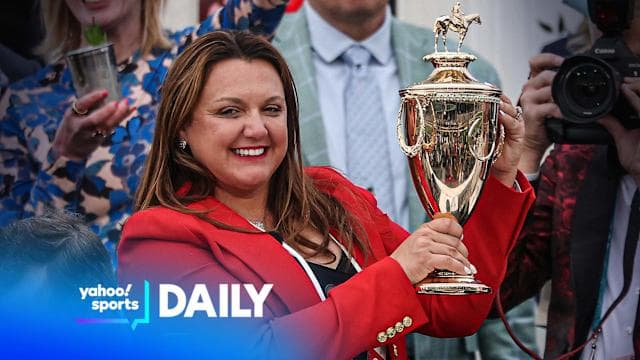
Trainer Cherie DeVaux decided to skip the Preakness Stakes with Kentucky Derby winner Golden Tempo.
The absence of the Derby winner raises concerns about the relevance and appeal of the Preakness Stakes within the Triple Crown series.
Historically, the Preakness Stakes was a major event, but recent decisions like skipping the Derby winner have diminished its significance.
This year's Preakness Stakes highlights ongoing issues in the Triple Crown series, prompting discussions about potential reforms.
PSG's recent win over Bayern Munich raises concerns for Arsenal as they aim to avoid past mistakes.

Arsenal set to hold contract talks with Mikel Arteta this summer.

Rachel Entrekin makes history as first woman to win Cocodona 250 outright!
Steve Vinson bids farewell after leading Colon basketball to success

Cubs pitcher Matthew Boyd out with meniscus injury from playing with kids
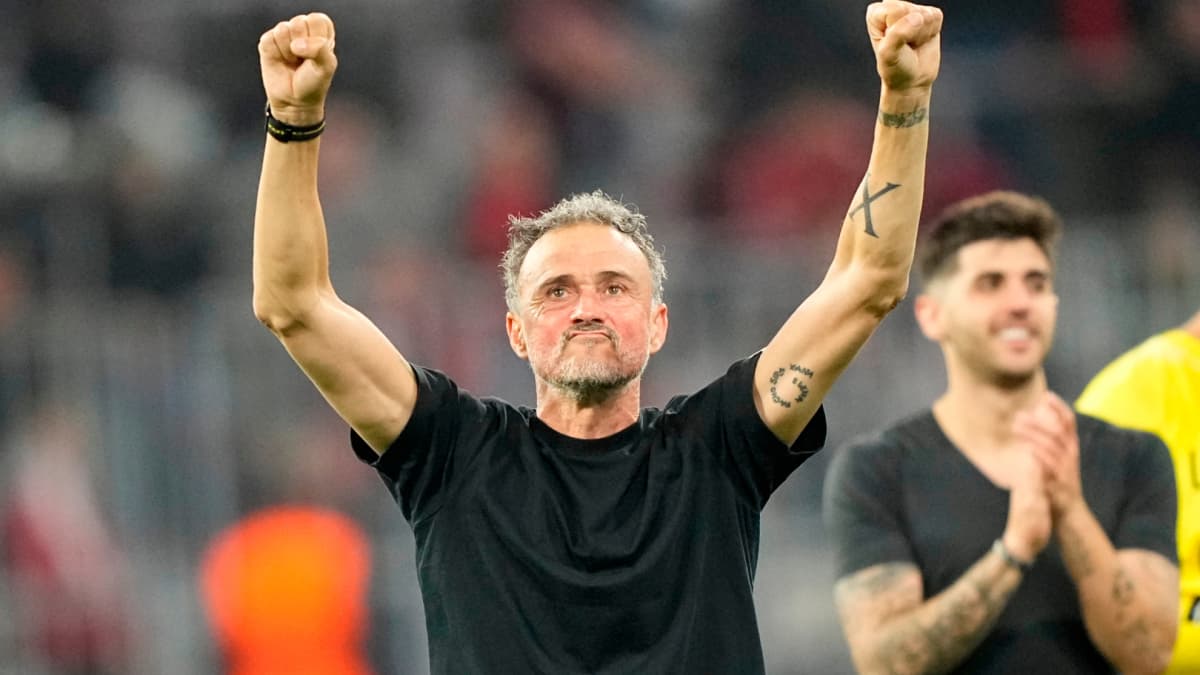
Luis Enrique: 'Hemos defendido como los ángeles' en la Champions
See every story in Sports — including breaking news and analysis.
Jockey Jose Ortiz of Golden Tempo celebrates with the Garland of Roses after winning the 152nd running of the Kentucky Derby at Churchill Downs on May 02, 2026 in Louisville, Kentucky. (Photo by Steph Chambers/Getty Images)
(Steph Chambers via Getty Images)
But at this point, the reason doesn’t matter. We are now in an era where three of the last five Kentucky Derby-winning trainers have decided that running in the Preakness is not in the best long-term interest of their horse.
And if the entities involved with Churchill Downs, Pimlico and Belmont Park can’t figure out a way to change it, they should prepare for a new reality — a world where the Triple Crown no longer matters in the American sports culture and the value of their properties withers away.
Without Golden Tempo, the brutal truth is that the Preakness becomes just another horse race and not even one of the 10 or 15 most important this year. Sure, NBC will put it on network television because they’re contractually obligated to. The winner will still get $1.2 million in purse money. The Woodlawn Vase, the trophy presented to the winner, will still sparkle.
But as a sporting event, the Preakness’ value is almost entirely tied to having the Kentucky Derby winner in the field. Without Golden Tempo, this isn’t an event that will draw new eyeballs or even bring back many of those who broke viewership records last Saturday.
And that’s quite a shame given that DeVaux spent Monday and Tuesday doing rounds of interviews with outlets that reached across the spectrum. The Today Show. Barstool Sports. CNN. Dan Patrick.
The sudden interest in DeVaux and Golden Tempo isn’t surprising given that she became the first female trainer to win the Derby. It’s a cool story, one that has engaged all kinds of people who wouldn’t regularly watch a horse race. If Golden Tempo was running in the Preakness, it would be a monumental opportunity for the sport.
Now it’s just … over.
And you can’t blame DeVaux because, at the end of the day, she knows her horse the way trainer Bill Mott knew Sovereignty last year and the way Eric Reed knew Rich Strike in 2021 when he skipped the Preakness.
When the caretakers of these animals are saying consistently that running another hard race just two weeks after the Derby isn’t viable anymore, the sport can either listen and make changes or watch these historic races lose mainstream relevance.
There’s no doubt that if DeVaux wanted to push Golden Tempo to contest the Preakness, she could. The horse appears to be completely sound and healthy.
But what many trainers will tell you is that you can only squeeze the lemon so many times before it runs out of juice, so to speak. If you run them back too quickly after a long, tiring race like the Derby, you risk depleting them to the point where they get hurt or lose interest in their work.
If trainers and owners are now deciding that a shot at the Triple Crown isn’t worth the risk, then the Triple Crown needs to change or it will fade away. It’s just that simple.
“You get horses that are a little arthritic or little back sore, they can’t run anymore,” O’Neill said. “Used to be, you just warm them up out of their little body stuff, and like human athletes, you get them back out there. But now it's just a different era.”
Cherie DeVaux made the decision not to run Golden Tempo in the Preakness Stakes. (AP Photo/Charlie Riedel)
(ASSOCIATED PRESS)
Horse racing has responded to crises before regarding the relevance of the Triple Crown. In 1985, Derby winner Spend A Buck skipped the Preakness because of a $2 million bonus that was offered if he could win the Jersey Derby. Soon after, the racetracks involved in the Triple Crown struck a deal to have Chrysler sponsor a $5 million Triple Crown bonus.
Now it’s time for another innovation.
Though it seemed in recent weeks like there was more momentum than ever to finally have a conversation about moving the Preakness back — a lot of the speculation is tied to negotiations for the TV rights to the race beginning in 2027 — it is now an immediate, break-glass-in-case-of-emergency moment.
It will require a lot of discussion and cooperation between Pimlico, which is now owned by the state of Maryland, and the New York Racing Association because moving the Preakness will force the Belmont to move as well.
But whatever calendar they come up with, they need to do it in a way that will ensure the Derby winner has enough time to contest the Preakness — and they need to get it done for next year.
If they don’t, odds are the next Derby-winning trainer will pull the same lever as DeVaux and Mott. And if horse racing lets that happen for too many more years, the Preakness and the Triple Crown itself won’t have much value left to rescue when they finally come to their senses.
