News
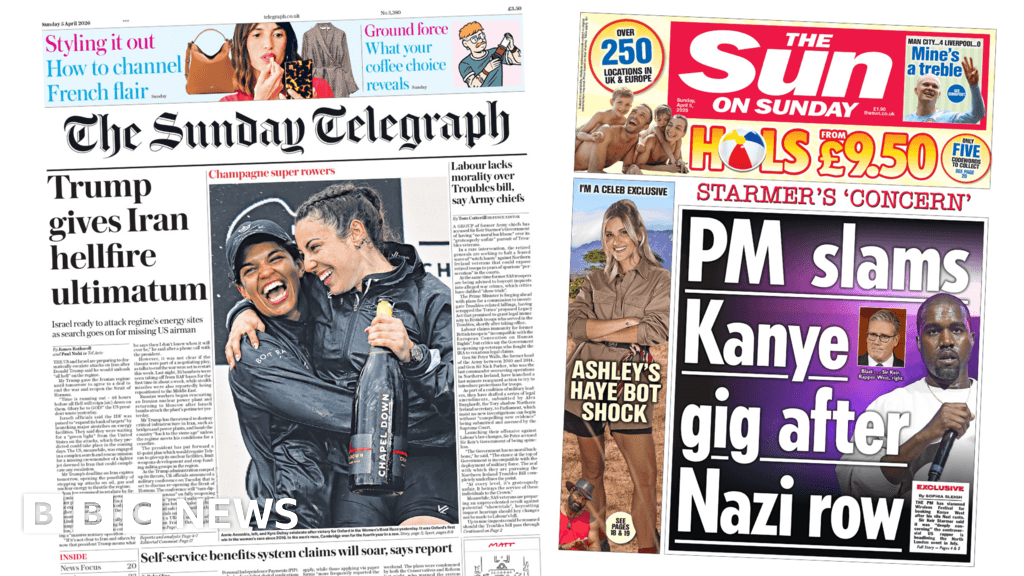
Keir Starmer 'concerned' over Kanye West UK festival dates
BBC News
Few companies have managed to define how people use technology in their everyday lives as resoundingly as Apple.
The company, which celebrated its 50th birthday this week, was started by two Steves in a San Franciscan garage. It has had some truly standout successes - and some notable flops.
These days, nearly one out of every three people on the planet owns an Apple product - a success that Emma Wall, chief investment strategist for financial services company Hargreaves Lansdown, said had as much to do with the company's marketing as it did its hardware.
"They sold a dream," she said, and they added something that was "quite new at the time - the idea that branding was as important as the product line".
Apple's string of hits has arguably slowed since the death of its visionary co-founder Steve Jobs, as the company focuses more on refining its existing technology.
Ken Segall, Jobs's creative director for 12 years, told the BBC that Apple's current chief executive, Tim Cook, had done an "amazing job" at changing with the times and keeping the company profitable.
But he added that many Apple purists still do not feel as excited by the company's current phase because "they remember that older Apple was Steve Jobs".
As the company pushes past its half-century, we asked technology analysts and experts to take a look at some of the significant ways the company changed the tech world, and some of the ways it arguably missed the mark.
While by no means the first portable digital music player when it was released in 2001, the iPod is one of "Apple's most iconic products" argued Craig Pickerell of The Apple Geek. Not just because of what it was, but "because of what it changed".
"MP3 players were clunky, storage was limited, and managing your music library felt like a chore," he said.
"The iPod changed all of that almost overnight."
The click-wheel design distinguished the device and introduced the iTunes library, paving the way for legal digital music downloading to hit the mainstream.
Released in 2007, the iPod Touch was designed by the same team, who later invented the iPhone - which quickly overshadowed the iPod.
"Without the iPod, Apple would likely have lacked both the financial strength and the operational maturity required to take on the complexity of the smartphone industry," said Francisco Jeronimo, technology analyst at market research firm IDC.
More than 200 million iPhones are sold each year - with roughly one purchased somewhere in the world every seven seconds.
To Ben Wood of CCS Insight, a market research firm, it is the "Hotel California of smartphones" - once you have one, you are "very unlikely to leave" the Apple ecosystem for a rival Android-powered device.
"An iPod, a phone, and an internet communicator. These are not three separate devices, this is one device," said a beaming Steve Jobs holding up the first edition of the phone at its unveiling to the world in 2007.
Like many revolutionary Apple products, the iPhone was not the first example of its kind - other phones had internet capabilities, or touchscreens.
But tech journalist Kara Swisher argues its "gorgeous marketing" helped catapult it into the mainstream.
"It made you think of it not as a tech device, but a device of romance," she said.
By the time the wearable Apple Watch launched in 2015, Jobs had died from cancer.
But his successor Tim Cook came with an aim befitting of his innovative predecessor - to make the best watch in the world.
In terms of revenue generated for Apple - roughly $15bn (£11.3bn) - it's hard to argue that the world's best-selling smartwatch has not succeeded in that aim.
"As a standalone business, Apple Watch would sit comfortably among the top 250 to 300 largest companies in America," said Wood.
While the first prototype was relatively basic, its future models also pioneered wearable health tech with features like ECG monitoring and fall detection, making it a key driver of health and fitness technology.
The device now reportedly shifts more units annually than the entire traditional Swiss watch industry.
In some ways the Apple Lisa, a personal computer released in 1983 at the pricey sum of nearly $10,000 (approximately £6,600 then), was groundbreaking.
It was one of the first PCs to feature a graphical user interface (GUI) and a mouse.
But tech analyst Paolo Pescatore said the computer, targeted at business users, was "far too costly", unable to succeed commercially.
The failure, he said, demonstrated "being ahead of the curve is not enough if the product is poorly positioned".
Apple would learn from its mistakes when they released the original Macintosh a year later, with a relatively more consumer friendly price tag of $2,495 (approximately £1,900 in 1984).
Apple's "butterfly" keyboard design - a mechanism introduced in 2015 for laptop keyboards - was a "rare misstep in reliability", said Pickerell.
The design for devices such as the MacBook Air saw keyboards fitted with a two-sided hinged keyboard switch, which somewhat resembled butterfly wings.
But it divided opinion, with some saying the mechanism made keyboards less easy to type on, making it feel as though Apple was "prioritising thinness over durability", said Pickerell.
By 2019, the company unveiled a new16in MacBook Pro - without the butterfly keyboard.
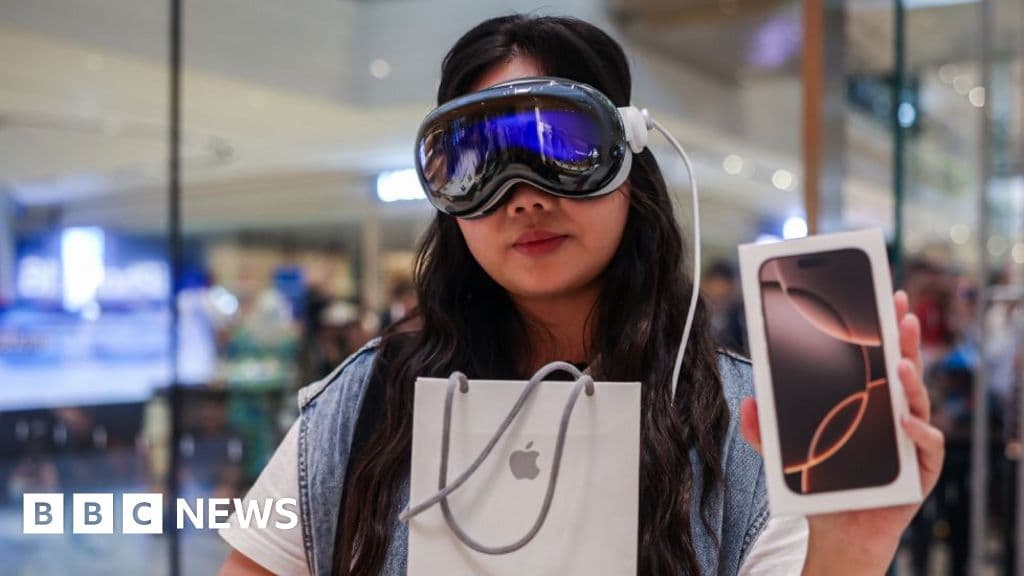
A far more recent notable miss for Apple has been the Vision Pro headset, argued Wood.
The first major new product to be released by the firm since the Apple Watch, Wood said Apple's big bet on mixed reality was ultimately too "cumbersome" and lacking in content to match the success of Apple's other products.
According to tech news site The Information, the company scaled back production of the $3,500 (£2,600) headset just a few months after launching, due to low demand and a high amount of unsold stock.
The misstep means Apple will "likely be cautious about moving quickly into related areas such as smart glasses", said Wood.
Sign up for our Tech Decoded newsletter to follow the world's top tech stories and trends. Outside the UK? Sign up here.
Share this article


See every story in News — including breaking news and analysis.