Sports
West Virginia bolsters 2027 class with commitment from QB Andre Phillip
West Virginia secures commitment from QB Andre Phillip for 2027 class!
Yahoo Sports1 min read
Basketball programs benefit from $300 million in new revenue due to NCAA's expansion, while smaller sports like tennis and golf face cuts. Schools are exploring new revenue streams, but the financial divide in college sports is growing.
Mentioned in this story
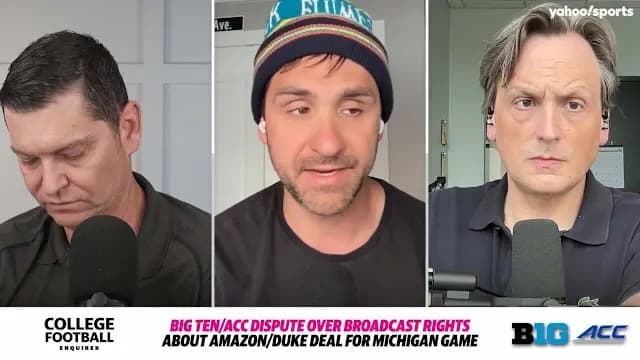
The NCAA's expansion of March Madness is projected to generate $300 million in extra revenue, with $131 million distributed to conferences participating in the tournament.
Tennis programs at Arkansas, North Dakota, Saint Louis, and Illinois State, along with golf teams at Wichita State, are among those recently disbanded.
Colleges are exploring various strategies, including streaming deals like Duke's agreement with Amazon and tapping into private equity for financial support.
The future appears uncertain, as financial pressures continue to threaten the viability of smaller sports programs, particularly Olympic sports.
West Virginia secures commitment from QB Andre Phillip for 2027 class!
Pat Riley confirms he won't retire as Miami Heat president and hints at roster changes.
In a thrilling match, Manchester United U21s defeated Manchester City U21s 4-3 to reach the Premier League 2 finals.

La clasificación del Indy GP se aplaza a mañana por la lluvia.
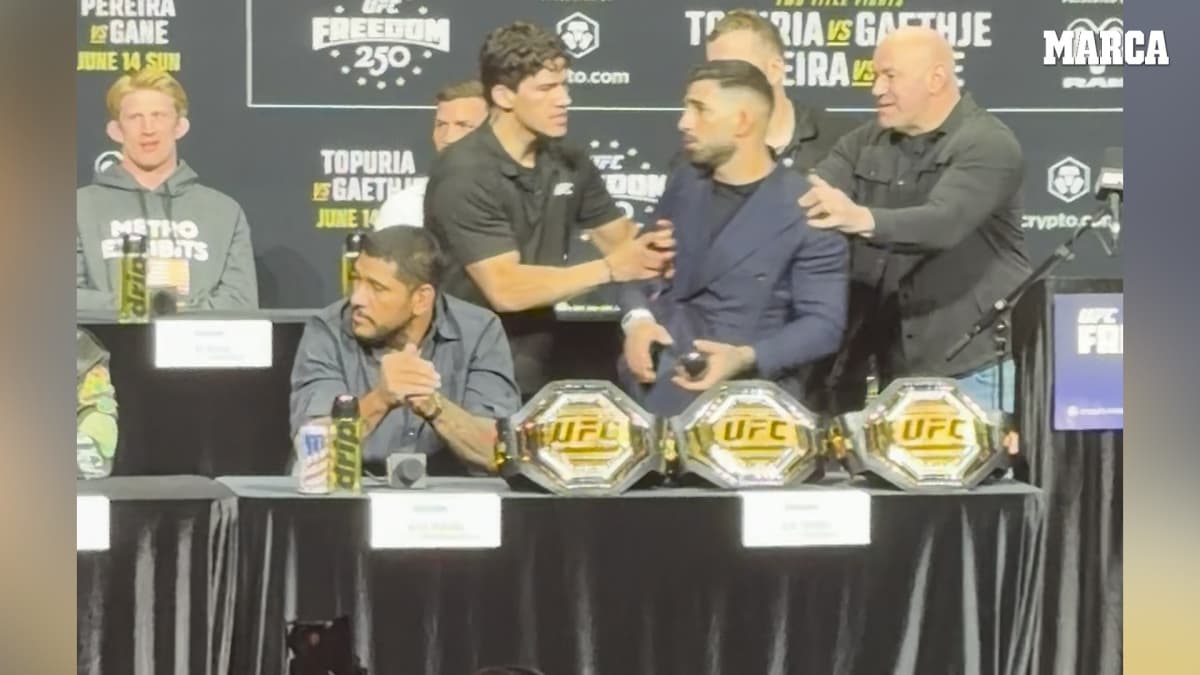
Locura en UFC: Topuria se encara con Hokit tras defensa a Pereira
Arne Slot addresses Salah's leadership worries at Liverpool.
See every story in Sports — including breaking news and analysis.
One of the most trenchant questions sports attorney Gabe Feldman asked North Carolina athletic director Bubba Cunningham during a recent podcast was if Arkansas, after cutting its tennis programs, “can't find a way to make it work, how can Arkansas State and everybody else?” Cunningham's basic answer was that the ultimate solution will involve a system in which the money flows in both directions. “One is you will be paid to play your game and other is you’ll have to pay if you’re going to play your game,” he said. If recent headlines are any indication, tennis and golf players will be among those who will be paying to play. The tennis programs at Arkansas joined those at North Dakota, Saint Louis and Illinois State (men's only) that were discontinued this season. The cuts at Arkansas stood out because this involves a team in the Southeastern Conference, the second-richest conference in college sports behind the Big Ten. The Razorbacks' tennis programs cost about $2.5 million — around the cost to sign a high-profile wide receiver — men's coach Jay Udwadia told Front Office Sports. “My initial reaction was, ‘That’s funny. April fools, right?'" Udwadia said of his reaction upon hearing the news. Turns out, his was one of about 20 programs eliminated this year across all college sports — a cutback that figures to hit Olympic sports, and the U.S. Olympic pipeline, the hardest. “You want to see Olympic sports survive and thrive,” said Paia LaPalombara, a former college administrator who is now partner at the Church, Church, Hittle and Antrim law firm specializing on college sports deals. “But those are going to be the ones generally on the chopping block.”
Schools and conferences are showing an endless willingness to discover new ways to make ends meet. Last week, Duke signed a landmark deal to stream three of its basketball games on Amazon — a deal believed to be worth millions and one that could be a sign of things to come. When Georgia and Florida State abruptly canceled their home-and-home football series set for 2027 and ‘28, they said they were seeking to reschedule a neutral-site game. Reporting emerged that the schools were looking to cut a deal with a streamer, as Duke had done. It’s the sort of arrangement a smaller school could never make, and one that further separates the haves from the have-nots in college sports. “Ultimately, it’s about revenue generation,” said James Strode, a professor of sport management at Ohio University who focuses on changes in college sports. “We're now in a situation where the separation and divide between big programs, Power Four programs, and Group of Six programs is even getting wider." In another move that felt novel a mere three years ago but now seems like business-as-usual, the Big 12 inked a deal with private equity firms that availed its 16 schools of up to $30 million each in a line of credit. Texas Tech was among the Big 12 schools not interested. The school's regent chair, Cody Campbell, is a billionaire who last year said equity deals were not a permanent solution and basically amounted to a “payday loan.”
Who's keeping track of it all? That's supposed to be the College Sports Commission — the entity formed out of the House settlement that is tasked with vetting most of the payments going from schools and their affiliates to the players. The CSC has introduced an approach that LaPalombara said “has growing pains at the moment.” The difficulty comes in two places: — Schools' reluctance to sign a “participation agreement” that was intended to cement the CSC's status as the main regulator when it comes to NIL compensation. — Arbitration cases stemming from deals the CSC has rejected. The most important one involves 18 football players at Nebraska over whether the CSC can exercise oversight over third-party NIL deals cut through schools' multimedia-rights holders, the likes of which are an increasingly popular way to execute the deals. A ruling in favor of the CSC could trigger litigation. “That's the true test of the efficacy of the CSC as an actual governing body,” LaPalombara said. “If an institution or a student-athlete doesn't receive the outcome they desire, it's whether they sue and what the outcome of the lawsuits will be. That will be the true test of whether the CSC can continue in its current form.” \\\_ AP March Madness: