Sports
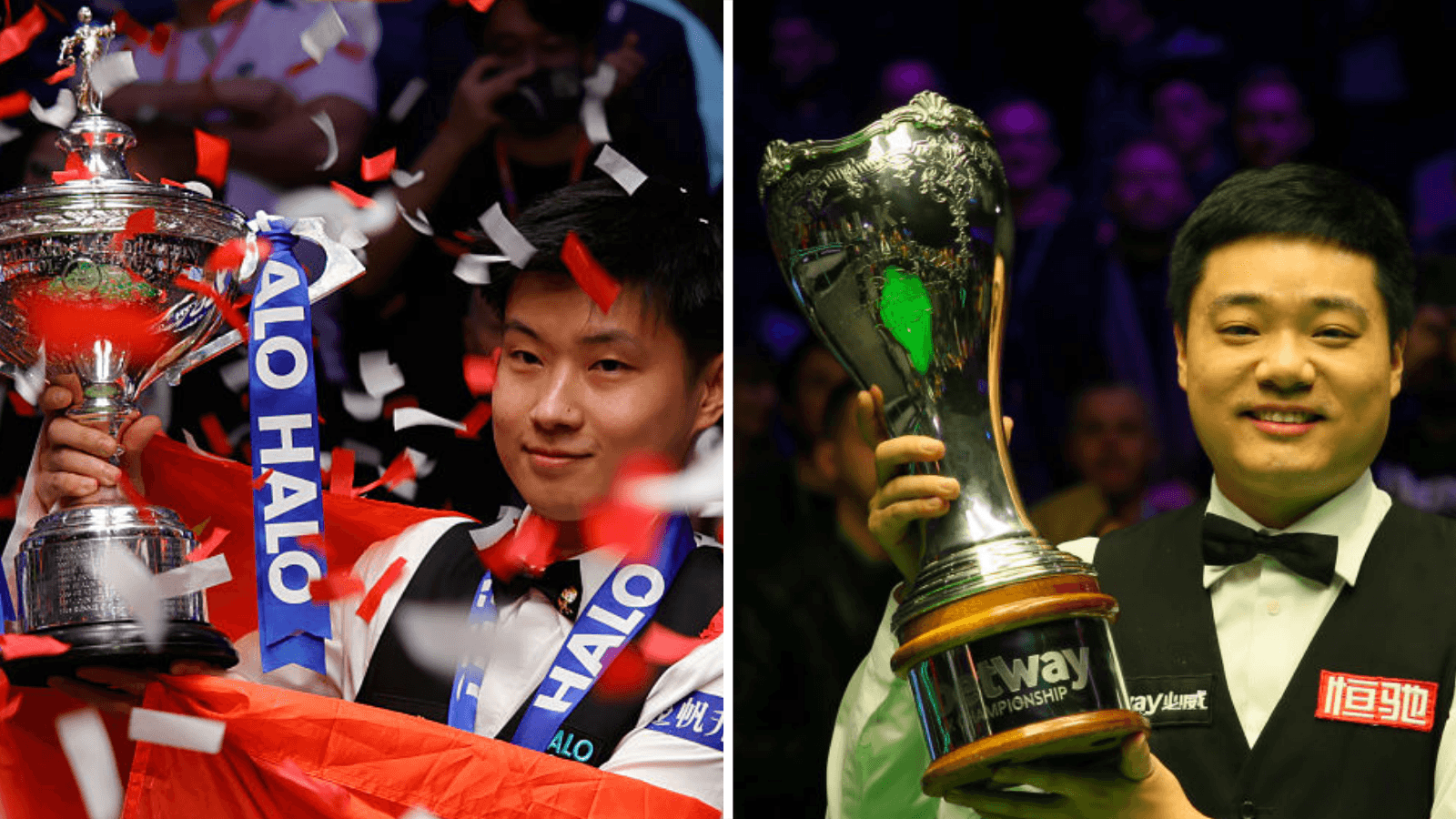
Will Zhao v Ding draw the biggest TV audience in snooker history?
Could Ding Junhui vs Zhao Xintong set a snooker TV audience record?
BBC Sport1 min read
Understanding the sports card market requires recognizing early signals of performance before they become widely acknowledged. This approach mirrors the strategies used by the Oakland A's in *Moneyball*.
Cardboard and Capital: How to Actually Read the Card Market Before It Moves
In my last article we reframed the problem.
The market does not reward performance on its own. It rewards the moment performance becomes visible, understood, and widely believed.
The next step is knowing how to identify that moment before it happens. It’s a similar instinct to how the Oakland A’s approached player evaluation in Moneyball, identifying early signals that pointed to future production before traditional results reflected it. But the sports card market rewards a different part of that process.
This requires a different way of evaluating players. Not as static assets, but as moving through a sequence the market reacts to unevenly.
Performance does not translate directly into price.
It moves through stages.
A player improves. That improvement appears in subtle ways. Opportunity expands. Visibility follows. Only then does demand form.
Most participants enter at the final stage, when the story is already clear.
The advantage exists earlier, before that clarity forms.
Every player can be evaluated through three factors.
Is the player actually improving?
This shows up beneath the surface:
These changes often appear before results stabilize.
Is the player being given more responsibility?
This is determined by how teams deploy them:
Opportunity reflects internal belief. It often shifts before the public narrative does.
Is the market starting to recognize the change?
This is where visibility forms:
Narrative converts performance into demand.
Each factor can exist on its own.
A player can have skill without opportunity. Opportunity without narrative. Narrative without stable performance.
Price moves when all three begin to align.
The closest parallel in sports is how teams evaluate players before results fully show up. In Moneyball, the Oakland A’s acted on early indicators of future production before traditional results reflected it. The market behaves differently. It does not act on those signals directly. It waits until they become simple enough to form a clear narrative. By that point, prices have already begun to adjust.
Most participants do not evaluate all three factors together.
They react to narrative.
By the time a player:
the underlying alignment has already taken place.
Demand forms quickly at that point because the story is easy to understand.
The opportunity existed earlier, when the story was still forming.
Early stages are difficult to act on.
Skill changes are not obvious without context. Opportunity shifts require attention to usage patterns. Narrative has not yet simplified the situation.
There is less agreement, less visibility, and less reinforcement.
That uncertainty keeps most participants on the sidelines.
By the time those conditions disappear, the market has already adjusted.
This sequence plays out repeatedly.
These are not different types of players yet. They are different points within the same process.
A practical approach:
Identify skill changes
Confirm opportunity
Assess narrative
The goal is to determine where a player sits within this sequence.
Not early or late in absolute terms, but early or late relative to market recognition.
Early alignment rarely feels clear.
There is less visibility, less consensus, and more uncertainty. That discomfort is part of the opportunity.
Later stages feel safer because the story is established. They are also where competition is highest and pricing is most efficient.
The advantage comes from recognizing alignment before it becomes obvious to everyone else.
The market does not move randomly. It responds to a sequence that unfolds over time.
Skill changes first. Opportunity expands. Narrative forms last.
Most participants react at the final step.
The market does not reward the signal itself. It rewards the moment the signal becomes obvious.
Understanding that sequence is what allows you to act earlier.
In Part 3, we’ll apply this structure across different types of players, because this process does not behave the same way at every stage of a career.
Key signals include player performance trends, media coverage, and market sentiment that indicate potential future value.
The sports card market often rewards visibility and public belief in performance rather than performance alone, making timing crucial.
Investors can apply analytical methods to identify undervalued cards based on early performance indicators, similar to how the Oakland A's evaluated players.
Reading the market early allows investors to capitalize on rising values before they become widely recognized, maximizing potential returns.
Could Ding Junhui vs Zhao Xintong set a snooker TV audience record?
Lamine Yamal confirms season-ending injury, expresses deep disappointment
In 2007, the Raiders chose JaMarcus Russell over Calvin Johnson, a decision now seen as a major draft blunder.
Are the Patriots set to trade for A.J. Brown or consider alternatives?

Yordan Alvarez defies norms with his stellar performance against left-handed pitchers in 2026.
JR Ritchie shines in MLB debut as Braves beat Nationals 7-2
See every story in Sports — including breaking news and analysis.