Sports
Former Vol retires from coaching basketball
Former Tennessee player Aaron Green retires after 16 seasons coaching
Yahoo Sports1 min read
Duke's recent streaming deal with Amazon highlights the commercialization of college sports, showing that the market dictates operations rather than university leadership. This raises questions about the future of other programs like Ohio State.
Mentioned in this story
If you didn’t believe it by now, Duke removed all doubt late last week by announcing a new streaming deal with Amazon.
College sports isn’t run by universities and their presidents and conference commissioners, or any of the hundreds of athletic directors.
College sports is run — and constantly fueled — by the free market.
Coaches, players, programs. All available to the highest bidder.
No price too steep, no deal too unseemly.
The big bluff? SEC will blow up college football as we know it before sharing revenue | Opinion
Think about the unusual machinations of what just officially transpired in the ACC, which not long ago was rearranging deck chairs on a sinking ship while its two largest football properties (Florida State and Clemson) were actively trying to A.) sue the league, and B.) leave the league.
The ACC put out that fire by changing the way media rights funds are paid, allowing high achievers to earn more and those at the lower end get less. But that was football, the head of the snake.
This is Duke basketball, one of a handful of true blueblood programs who could write its own deal with a streaming site. But the three-game deal with Amazon — which the ACC and its television partner ESPN allowed with some quid pro quo of their own (future neutral site, ESPN-owned games) — isn’t the problem.
The problem is Duke basketball is no different than every coach and player in college sports using the free market to cash in while leveraging one program off another.
Like Miami quarterback Darian Mensah, who knew a few months that he was the only quarterback left on the board, and knew Miami needed an elite player at the most important position on the field. So he hopped in the transfer portal at the 11th hour — and Miami eventually paid Mensah’s buyout from Duke and made him the highest-paid player in college football.
Duke announced a new streaming deal with Amazon.
Duke's deal underscores the commercialization of college sports, indicating that market forces now drive decisions rather than university leadership.
The deal suggests that other programs, such as Ohio State, may also be influenced by market dynamics and could pursue similar commercial opportunities.
The article argues that college sports are controlled by the free market rather than universities, presidents, or athletic directors.
Former Tennessee player Aaron Green retires after 16 seasons coaching
Real Madrid's Raul Asencio trains on off-days to turn his situation around amid defense changes.
Mumbai Indians captain Hardik Pandya missed the IPL 2026 match against Lucknow Super Giants due to back spasms. Ryan Rickelton provided an update, expressing uncertainty about Pandya's recovery timeline but remaining hopeful for his return.
Thousands Gather for Alex Zanardi's Funeral in Padua, Italy
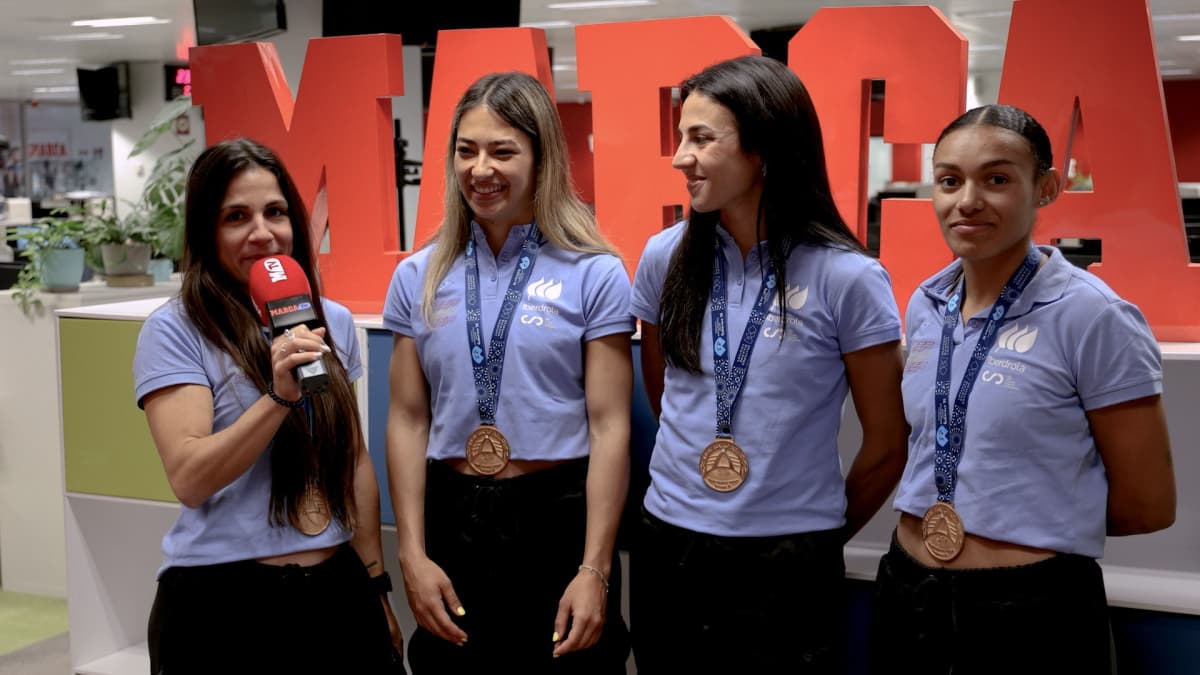
Los relevos españoles aspiran a ganar medallas en el Europeo de Birmingham.
Lucknow Super Giants' playoff hopes are nearly gone after a sixth straight loss in IPL 2026.
See every story in Sports — including breaking news and analysis.
Moment like no other: Forget frolicking in the sun, SEC set for rare spring meetings
One Power conference coach told USA TODAY Sports that Miami paid “in excess” of $12 million to compete that deal ― both the buyout and the new deal.
But players aren’t the boogeyman, everyone. Check out Nebraska coach Matt Rhule, the latest in a long line of coaches who preach undying love — only to have their agents pitch the idea they might leave for the right offer.
Rhule allegedly had Penn State kicking the tires last fall with the idea of bringing him home to his alma mater to replace James Franklin. So Nebraska responded by adding more money and years to his contract.
Rhule is 19-18 in three seasons at Nebraska, including 0-8 vs. ranked teams. If the Huskers in 2026 continue to resemble the first three seasons under Rhuile, it would cost $63.36 million to fire him without cause.
Why wouldn’t Duke basketball jump in on this action? And here’s the scary part for the rest of college sports: When does Ohio State football make a move?
When do Alabama or USC or Texas or Michigan say, screw it, we’re tired of Mississippi State and Rutgers and Vanderbilt and Maryland riding our coattails. We’re going to take our media rights and find out just how much someone is willing to pay.
Don’t kid yourselves, Amazon, Netflix, Hulu, Apple — or any streaming service worth its weight in dragging, commercial-filled garbage — will throw millions upon millions upon millions for seven Ohio State home games.
Live sports is the only guaranteed winner in broadcast television and streaming. Live sports with Ohio State? A revenue-driving king.
And what’s the Big Ten going to do? Tell Ohio State you’re either with us, or you’re out of the league?
Four words: There will be suitors.
Ohio State's value in this environment is probably three times the $91.5 million the Big Ten paid the Buckeyes in fiscal 2024-25. The Ohio State-Michigan game alone is worth $100 million annually.
It would be fiscally reckless for the Big Ten to push Ohio State out of the conference when the current media rights deal ends after the 2029-30 season. So the next logical step would be a deal.
Welcome, everyone, to leverage in the free market.
A deal to keep Ohio State (or Alabama, Texas, Michigan, USC, etc.) would look something like this for the Big Ten and SEC: the bluebloods get significantly more money, the lollygaggers in the rear get significantly less.
It’s no different than player salaries in the new transfer portal and free player movement era, or coaching salaries over the past three decades — where a nine-win season translates to a ridiculous contract extension.
This money grab began with coaches and moved to players, who were finally rewarded for their critical role in the game. It will eventually move to universities, who can no longer carry the load for those who can’t carry for themselves.
Why should Ohio State’s brand and power be used to supplement the Minnesotas of the world? If you don’t think this is happening — and a lot sooner than you think — you’re the same person who thinks the player movement toothpaste can be put back in the tube.
That guy will be gone in two years. Ohio State football will be around — and thriving — decades after that.
Duke did the smart thing, the prudent thing. Then opened the door for every other university to follow suit.
No price too steep, no deal too unseemly.
Matt Hayes is the senior national college football writer for USA TODAY Sports Network. Follow him on X at @MattHayesCFB.
This article originally appeared on USA TODAY: Duke, Amazon deal doesn't compare to Ohio State hitting open market