
Sports
Blackstenius: Arsenal always a team to count on as OL Lyonnes rematch beckons
Arsenal's women's team meets OL Lyonnes again in Champions League semis, with Stina Blackstenius aiming for victory.
Sky Sports1 min read

Oscar De La Hoya warned U.S. senators that a new boxing reform bill could exploit fighters by allowing Unified Boxing Organizations to combine roles prohibited by a 2000 law. The Muhammad Ali American Boxing Revival Act passed the House on March 24 and aims to create boxing leagues.
Mentioned in this story

Oscar De La Hoya told U.S. senators this week that a bill the House passed would empower Zuffa Boxing, co-founded by Saudi Arabian official Turki Alalshikh and UFC CEO Dana White, to exploit fighters like they were before a 2000 law. File Photo by Mario Guzman/EPA
WASHINGTON, April 24 (UPI) -- Hall of Fame boxer Oscar De La Hoya told U.S. senators during a hearing this week that a House of Representatives-generated boxing reform bill would exploit fighters and create boxing leagues.
The Muhammad Ali American Boxing Revival Act, which passed the House on March 24, creates major structural changes to existing law, especially in creating Unified Boxing Organizations that did not exist under the original 2000 Muhammad Ali Boxing Reform Act. In fact, they were prohibited by it.
Under the 2000 law, managers, promoters, sanctioning organizations and ranking agencies had to stay separate to prevent conflicts of interest. The proposed law authorizes Unified Boxing Organizations to combine functions the original law kept apart -- promotion, rankings and championship administration -- into a single regulated entity.
Critics argue this could enable a de‑facto monopoly, but the bill does not explicitly grant one to Saudi Arabia. Rather, it creates a framework that many believe TKO Group (UFC/WWE/Zuffa Boxing), which is Saudi‑funded, is positioned to dominate.
The bill, H.R. 4624, was sponsored by Rep. Brian Jack, R-Ga. , with 13 bipartisan cosponsors.
The Muhammad Ali American Boxing Revival Act is a proposed boxing reform bill that aims to create Unified Boxing Organizations, allowing functions like promotion and rankings to be combined, which were previously separated by the 2000 law.
The new law could potentially exploit fighters by allowing organizations to combine roles that were previously kept separate, leading to conflicts of interest and reduced protections for the athletes.
Zuffa Boxing was co-founded by UFC CEO Dana White and Saudi Arabian official Turki Alalshikh, and they are positioned to benefit from the changes proposed in the new boxing law.
The House passed the Muhammad Ali American Boxing Revival Act on March 24.
Arsenal's women's team meets OL Lyonnes again in Champions League semis, with Stina Blackstenius aiming for victory.
Italian Football's Financial Issues Contribute to World Cup Failures
Former KKR coach admits they missed Shreyas Iyer after IPL title win.
Liverpool alerted by Fabrizio Romano about £60m forward Rafael Leao.
Shohei Ohtani's dual-threat role is vital for the Dodgers' success this season.
Kansas freshman Darryn Peterson declares for the NBA draft, projected as a top-3 pick.
See every story in Sports — including breaking news and analysis.
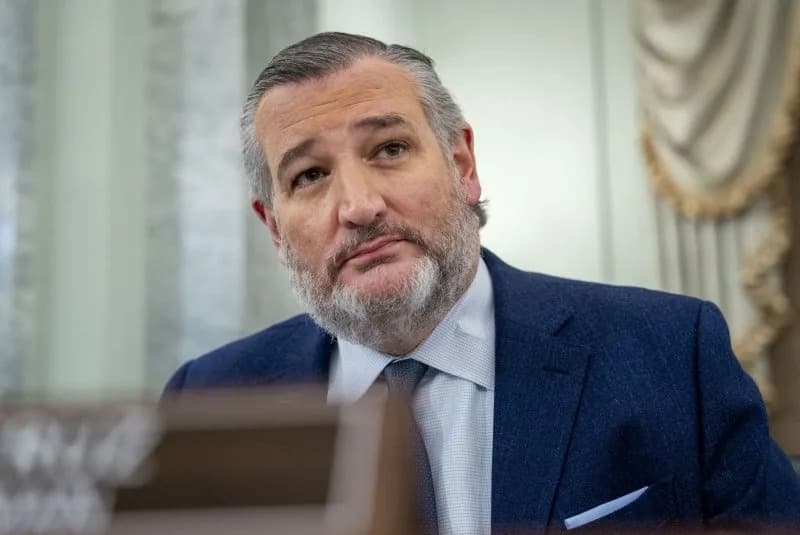
Sen. Ted Crus, R-Texas, chairman of the Commerce, Science and Transportation Committees aid reforms are needed to restore boxing's place in American culture, and that he believes the House bill is a good start. File Photo by Bonnie Cash/UPI
De La Hoya, a boxing promoter who won 11 world titles across six weight classes, said the new bill would empower Zuffa Boxing, co-founded by Saudi Arabian official Turki Alalshikh and UFC CEO Dana White, to exploit fighters like they were before the 2000 law.
"Zuffa boxing is fully funded by the Saudis," De La Hoya testified aa a key witness at a Commerce, Science and Transportation Committee's hearing called "Return to Your Corners: Have Federal Boxing Laws Gone Gone the Distance or Slipped the Jab?"
Sen. Ted Crus, R-Texas, the committee chairman said reforms are needed to restore boxing's place in American culture, and he believes that the House bill is a good start.
"I do think there's a need for Congress to act here, and I think if there is a possibility to generate significantly more revenue for the sport, that will benefit, in my judgment, the boxers and everyone participating," he said.
"You think back to when we were kids and boxing enjoyed a much more prominent place in American culture and society. The champions of the world dominated the news and entertainment in a way that they don't today."
But De La Hoya remained skeptical about greater Saudi involvement in boxing.
"We've already seen how that kind of funding reshaped another sport through LIV Golf, so we should be honest about what is happening here," the boxing champion said.
LIV Golf, a professional league named for the Roman numeral 54 and created to compete with the PGA Tour, launched with 54‑hole events but is switching to a 72‑hole format this season.
"That was sports washing, a clear effort to use sports to reshape reputation, De La Hoya said. "Now, players who were drawn in by the money are trying to come back to the PGA tour since the league will lose $5 billion in funding."
LIV Golf is losing its Saudi funding because the Public Investment Fund is under financial pressure from the Iran‑related events, decreased oil exports and a new strategy that focused on domestic ventures.
The General Entertainment Authority of Saudi Arabia, of which Alalshikh is chairman, invested a great deal of money in golf and boxing since 2021.
On the other side of the ring, Nick Khan, a board member for Zuffa parent company TKO and president of WWE, testified Wednesday that the House's reform bill would improve competition and preserve existing federal boxing laws.
"The Muhammad Ali Boxing Revival Act is built on a simple premise. Give boxers the freedom to choose a better system," he said. "The act as it currently stands would remain in place. The system as it currently stands would remain in place."
Stakeholders from all corners of the boxing industry have expressed mixed opinions on the bill.
Bob Arum, CEO of Top Rank and a former promoter for Muhammad Ali, called the new House bill "a disgrace" in an interview Tuesday with Medill News Service. He said it "eviscerates" the Ali Act and was designed to benefit Zuffa due to White's close relationship with President Donald Trump.
"We are all used to the protections the [Ali] Act sets forth for the fighters, and, we live with it with no real problem," Arum said, referring to promoters like himself.
"But now there's new legislation that takes away all the protections from the fighters, and is designed really to benefit one company, which is obviously very influential with the administration."
Nico Ali Walsh, a professional boxer and Muhammad Ali's grandson, echoed Arum's sentiments during his testimony Wednesday.
"If this bill passes in its current form, it should not have my grandfather's name on it," Ali Walsh said.
Despite criticisms from promoters and fighters, boxing state regulators throughout the country largely favor the proposed legislation.
In October, the California State Athletic Commission unanimously voted to support the House bill.
Andy Foster, executive officer of the California State Athletic Commission, told Medill News Service that the commission chose to support the bill because it would force the rest of the country to raise its fighter safety and pay standards to meet those California has already put in place.
"This does more to help entry level boxers and low income boxers that don't have management, that don't have promoters, that don't have anybody to protect them," he said. "This bill does more to protect them than anything we've ever put forward."
At the conclusion of Wednesday's hearing, Sen. Ted Cruz, R-Texas, asked witnesses to help the Senate draft its own version of a boxing reform bill.
After the hearing, De La Hoya told Medill News Service that he hopes the Senate's upcoming boxing reform bill would close "loopholes" the House bill that would force fighters to pay deductibles on medical insurance.
However, he added that he was "open" to working on the Senate bill.
"I'm open to any suggestions, especially on medicals," he said. "The safety of the fighters is the most important part."