
Sports
Join Chelsea or wait for 'dream' Liverpool job? Alonso's big dilemma
Xabi Alonso faces a tough choice between Chelsea and his dream job at Liverpool.
Sky Sports1 min read
IndyCar has revised its caution policy following a dangerous incident involving Alexander Rossi during the Sonsio Grand Prix. The new rule will close the pits during caution flags, potentially disadvantaging some drivers during races.
Mentioned in this story
Alexander Rossi's disable Chevrolet IndyCar is on the hook about to be towed off the track after it stopped in the middle of the front straight in the May 8 Sonsio Grand Prix at Indianapolis Motor Speedway.
INDYCAR Photo
A controversy that left NTT IndyCar Series driver Alexander Rossi and his No. 20 Chevrolet at risk in Saturday’s Sonsio Grand Prix at the Indianapolis Motor Speedway has led IndyCar Officiating to make a change on its full course caution policy.
While the move may come in the interest of safety, which is a good thing, the decision to close the pits in the middle of green flag pit stops should a caution flag be enforced will create a competitive disadvantage by splitting the field.
Effective immediately, IndyCar Officiating will no longer take into consideration pit windows and the running order of cars on track before deploying a FCY (Full Course Yellow). While there is no change to local yellow procedures, initiation of a FCY will be based primarily on: driver status, vehicle position and condition, the location and readiness of safety personnel, recovery access, and the speed differential between affected cars and approaching traffic.
The controversy began on Lap 21, when Rossi’s ECR Chevrolet lost power and stopped on the front straightaway on drivers’ right of the track – off the racing line. Course marshals followed standard flagging protocol and deployed a standing yellow condition at Marshal Panel 14, with a corresponding waving yellow condition at Marshal Panel S/F (start-finish) to alert competitors to the stationary car. The escalation to a full course yellow (FCY) was made on Lap 22 as the driver began to exit the race car.
Rossi was furious believing IndyCar left him in a dangerous position.
That “local yellow” instead of a “full course yellow” played a decisive moment in the race.
Rossi’s car was positioned in an area that every car coming out of Turn 14 could clearly see and that may have been the reason to wait until the pit stop sequence was completed for all cars on the track.
But it confused the two lead drivers in the race including the leader, Alex Palou, and second-place Kyle Kirkwood, who was ready to pull into the pit lane for his stop before pulling back on track because he thought pit lane may be closed and didn’t want to be penalized.
A dangerous situation involving Alexander Rossi's disabled car during the Sonsio Grand Prix led to the policy change.
The new policy will close the pits during caution flags, which may split the field and create competitive disadvantages.
Closing the pits can lead to uneven competition, as some drivers may miss the opportunity to pit while others benefit from the caution.
The new caution policy was implemented following the Sonsio Grand Prix on May 8, 2026.
Xabi Alonso faces a tough choice between Chelsea and his dream job at Liverpool.

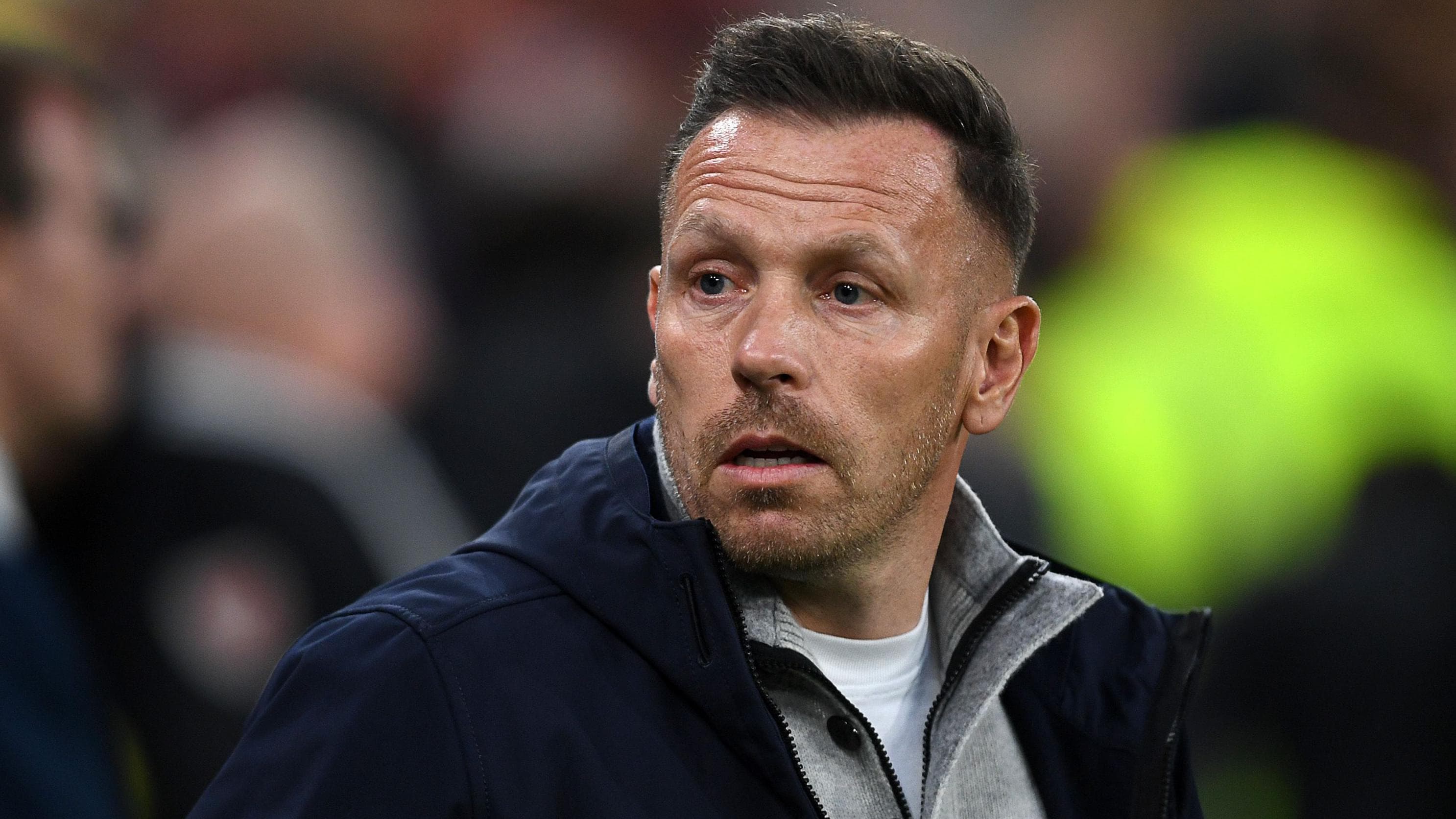
Wales FA is confident that Craig Bellamy will remain as head coach despite Burnley's interest in him for their managerial vacancy. Bellamy, who has ties to Burnley, is believed to have been informally approached by the club.
See every story in Sports — including breaking news and analysis.
If Palou and Kirkwood had pitted during the local yellow, they would have been in the same sequence with the other cars that made green flag stops. But instead, they waited until it went full course yellow.
The pits were closed and when the pits opened and Palou and Kirkwood made their stops, it put them at the tail end of the field.
Both Rossi and team owner Ed Carpenter were furious IndyCar Race Control’s decision to wait before a full course caution was implemented.
“Well, it’s pretty annoying to have failures on the car because of a product we didn’t ask for that doesn’t improve the racing,” Rossi said, referring to the Hybrid Assist Unit. “That’s frustrating.
“Second of all, the fact it took that long to throw a full course yellow when a car is on the front straight and cars are going by at 170 miles an hour seems insane when they don’t let us drive in the wet yesterday.
“I don’t know where their priorities lie. I’m pretty frustrated.”
Alexander Rossi storms off pit lane during Saturday's Sonsio Grand Prix at the Indianapolis Motor Speedway.
INDYCAR Photo
It was also frustrating for both Palou and Kirkwood. It’s likely if the track had been a full-course yellow, both drivers would have been fighting out for the win at the end of the race.
Instead, Palou had to drive his way through traffic and finished fifth in a race won by Christian Lundgaard of Arrow McLaren Racing.
“We just made a mistake, made a bad call during that yellow, we stayed out when I don’t know what really happened, but anyway, that put us in a really, really bad spot,” Palou said after the race. “Then I thought we're going to crash there with, I don't know who was involved, I think Felix and Kyffin, but yeah, anyway, p5 really, really good.
“We were only able to do it because the car was so fast.”
As for Kirkwood, he had little to say about the entire situation.
“I don’t really know what to say after today,” the Andretti Global driver said. “We gave ourselves the opportunity to win the race but got caught out by a couple of things.
“On to Indy.”
Following race control practice, the assessment of whether and when to escalate a local yellow to a FCY included the weighing of the following standard factors: driver egress, vehicle position, recovery vehicle access, safety team locations, laps remaining and the timing of approaching traffic to the incident. Additional factors on timing of a FCY also included pit windows and the running order of cars on track.
“The Lap 21 incident on Saturday made clear that there needs to be a cleaner standard for how race control moves from a local to a full course yellow,” IndyCar Officiating’s Independent Officiating Board chair Raj Nair said. “IndyCar Officiating, with IndyCar’s full support, has made this change of approach to ensure that the only inputs to the full course yellow escalation are safety ones. Streamlining the assessment will also save time as competitive considerations are no longer a factor.”
Added INDYCAR President J. Douglas Boles: “The most important job in race control is to ensure the safety of our drivers, crews, safety workers and fans. Saturday highlighted that we must not waver from that central mission and aligning everyone on that philosophy was critical to discuss over the last 48 hours. The Independent Officiating Board, the new managing director of officiating, race director and INDYCAR are all in agreement and the metrics used to determine when to initiate a full course yellow will now ensure that when there is any risk to driver safety that race control will initiate a full course yellow.”
The race result from Saturday’s race on the IMS road course stands as posted. The updated flag escalation standard has been communicated to teams and drivers.
One driver who minimized the impact of Rossi’s Chevrolet on track with a local yellow instead of a full course yellow was Team Penske’s Josef Newgarden. He believed the other drivers could see Rossi, similar to when a car is involved in a local yellow on a more traditional road course.
“He was out of the way,” Newgarden said of Rossi. “They were throwing a yellow here, he’s in a yellow section, so it's not green where he is.
“I think they are trying to give people a chance to pit. I don’t know why everyone didn't, because that's what I was shocked about. So, what you saw is the precedent that IndyCar has set. They've been doing this consistently, where they're trying to be fair to everybody.
“People that didn't take it. It's kind of on them. They are giving you a chance to pit before they call the caution.”
This article was originally published on Forbes.com