
SoccerTransfer
Mainoo signs new Man Utd contract
Kobbie Mainoo signs new five-year deal with Manchester United until 2031.
Sky Sports1 min read
The European Court of Justice stated that a no-poaching agreement among Portuguese football clubs may align with EU law, as it aims to stabilize player rosters despite having anticompetitive elements.
Mentioned in this story
An exterior view of the Court of Justice of the European Union (Cour de justice de l'Union europeenne) in Luxembourg. Arne Immanuel Bänsch/dpa
A no-poach agreement by Portuguese first and second division football clubs during the coronavirus pandemic "can potentially be compatible" with European Union law, the European Court of Justice (ECJ) said on Thursday.
The Luxembourg-based ECJ said that "whilst pursuing an objectively anticompetitive aim in recruitment, the agreement at issue also pursued an aim objectively favourable to competition: that of ensuring stability of player rosters playing in the First
and Second Divisions."
The 2019-20 season was suspended in March 2020 and completed from June onwards behind closed doors.
In April 2020, the Portuguese league and the top flight and second division clubs reached an agreement not to sign players who had unilaterally terminated their contracts due to exceptional circumstances in connection with the pandemic.
The Portuguese competition body rated this a violation of competition law in 2022 to which the clubs objected. The case went to Portugal's Competition, Regulation and Supervision Court which referred questions on the matter to the ECJ.
The ECJ judges said that the agreement "constitutes a manifest restriction of a competitive parameter which plays an essential role in high-level sport." and may also have "an indirect, potential impact on the ‘purchase price’ of players, who are the clubs’ human resources."
But they also said that "the agreement at issue occurred in the very specific context brought on by the COVID-19 pandemic, which had a fundamental impact on the functioning of the professional football sector, where the competitive functioning presents numerous specific characteristics.
"Although the occurrence of the pandemic is not per se such as to justify making an exception to the prohibition of anticompetitive conduct, even in the field of sport, the Portuguese court will have to take account of those circumstances for the purpose of determining whether that agreement has as its object the prevention, restriction or distortion of competition.
It said that the agreement was designed to help ensure "the regularity of sporting competitions" which was "a legitimate objective in the public interest which holds particular importance in the case of football and which may justify, in principle and without prejudice to their actual content, the rules implemented by the agreement at issue.
The ECJ indicated that the no-poaching agreement could potentially be compatible with EU law, despite its anticompetitive nature.
The agreement was implemented during the coronavirus pandemic to ensure stability in player rosters amid the suspension of the 2019-20 season.
The ruling suggests that agreements like the no-poaching clause can be evaluated for their competitive benefits, potentially influencing future regulations in European football.
Kobbie Mainoo signs new five-year deal with Manchester United until 2031.
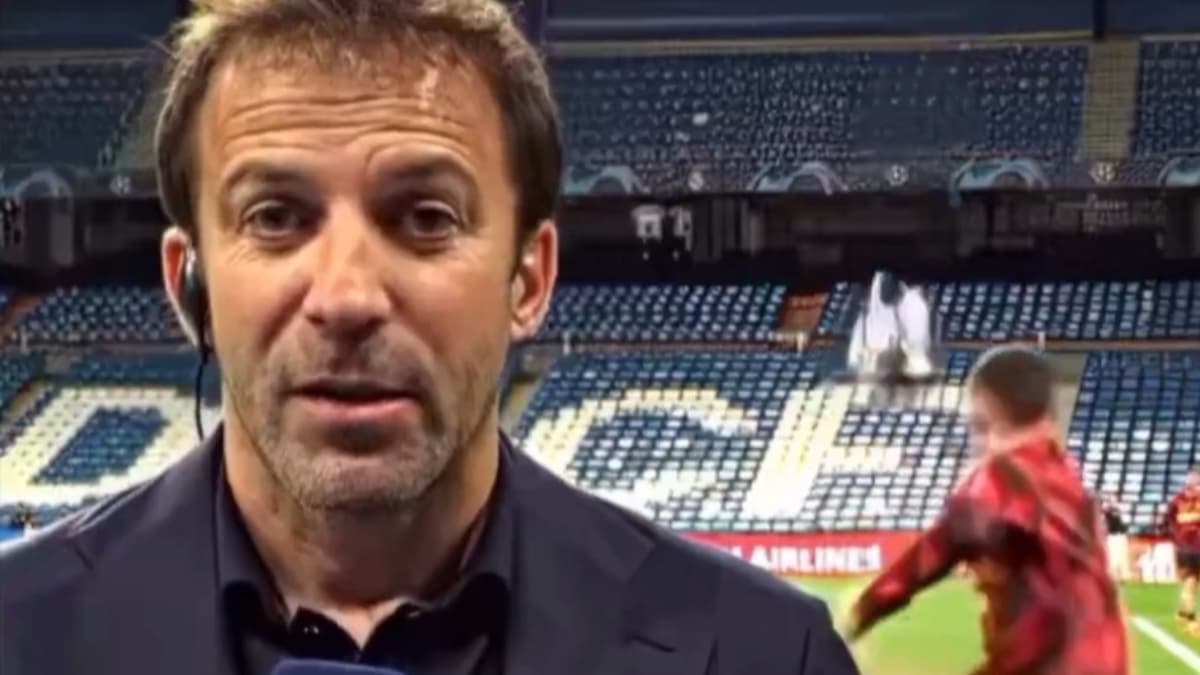
Del Piero, impresionado por la atmósfera del Metropolitano: 'El suelo temblaba'
Diego Pavia signs with Baltimore Ravens, a perfect fit for his NFL journey.
Declan Rice says Atletico Madrid fans provoked referee to overturn penalty for Arsenal
Jack Della Maddalena and Carlos Prates engage in a fierce staredown at UFC Perth!
Auston Matthews of the Maple Leafs is facing trade rumors as the team seeks improvement.
See every story in Sports — including breaking news and analysis.
"It holds, however, that it is for the Portuguese court to carry out an in-depth examination of the suitability, necessity and proportionality, in the strict sense of the term, of that agreement," the ECJ said.