
Sports
Yamal to miss rest of season but 'expected to be available' for World Cup
Sky Sports
Former Premier League star Chris Sutton criticized Liverpool midfielder Florian Wirtz as 'terrible' following their win over Everton. Sutton's comments highlight ongoing concerns about Liverpool's performance consistency this season.
Mentioned in this story
Former Premier League star slams ‘terrible’ Liverpool midfielder after win over Everton
Liverpool’s season has developed into a curious blend of results that flatter and performances that frustrate, and it is within that tension that Chris Sutton has delivered his most cutting assessment yet. Speaking recently, the former striker did not hold back when discussing Florian Wirtz, branding the German’s recent displays as “terrible, terrible”.
That blunt verdict cuts through the usual hedging that surrounds a young player in his debut campaign. Sutton’s comments were not delivered in isolation either. They came as part of a broader evaluation of Liverpool’s attacking options, including Mohamed Salah, Cody Gakpo and Alexander Isak, but it was Wirtz who absorbed the sharpest criticism.
In a season where Liverpool have often relied on moments rather than sustained dominance, Sutton’s view reflects a growing impatience. Wirtz arrived with a reputation as a transformative creative force. Instead, he has delivered flashes rather than full control.
Chris Sutton described Florian Wirtz's recent displays as 'terrible, terrible' in a critical assessment.
Liverpool's season has been marked by a mix of flattering results and frustrating performances.
Other Liverpool players mentioned include Mohamed Salah, Cody Gakpo, and Alexander Isak.
Sutton's harsh critique raises questions about Wirtz's consistency and future contributions to Liverpool's attacking options.
Coco Gauff confirms her return to the Berlin Open as she gears up for Wimbledon!
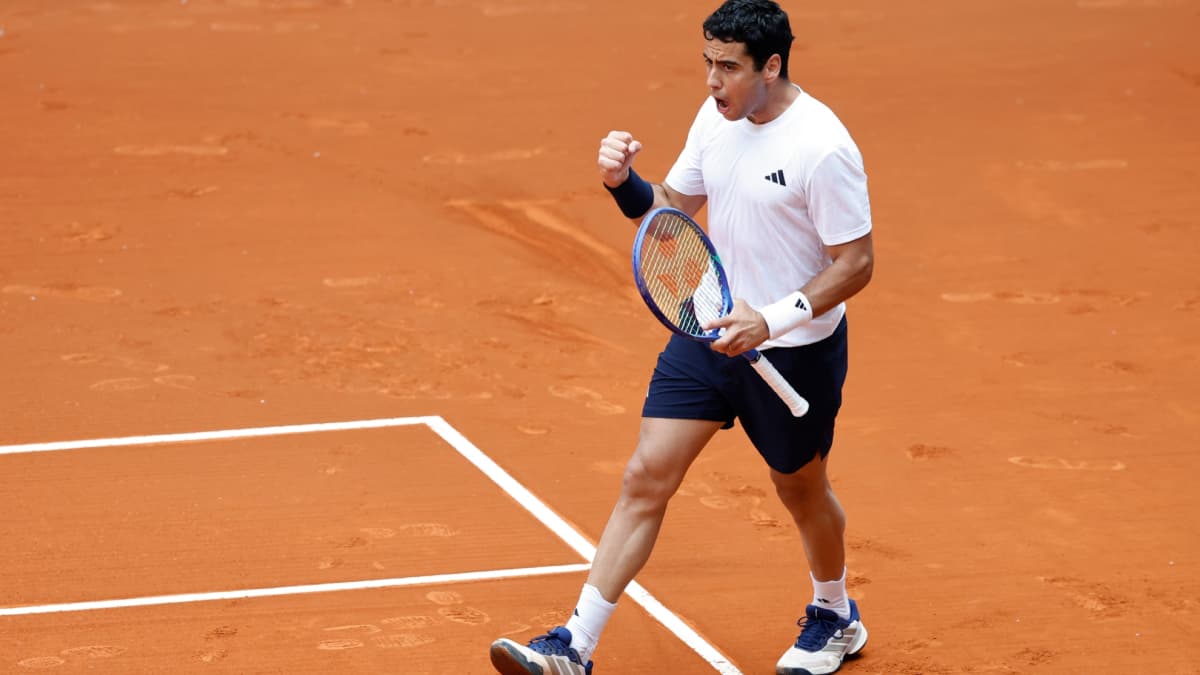
Jaume Munar avanza a la segunda ronda y se enfrentará a Casper Ruud en el Mutua Madrid Open.
See every story in Sports — including breaking news and analysis.
Photo: IMAGO
There is a tactical layer to this conversation that goes beyond individual form. Liverpool’s forward line has struggled to find cohesion, with roles and responsibilities often appearing fluid rather than defined. Salah continues to offer cutting edge, while Gakpo has shown signs of progression, particularly in recent outings.
By contrast, Wirtz has drifted in and out of games. His numbers, six goals and eight assists in 45 appearances, are respectable for a first season in English football. Yet statistics alone do not capture influence. The eye test, particularly in high tempo Premier League matches, suggests a player still adjusting to the physical and tactical demands.
Sutton’s reluctance to endorse Wirtz for Fantasy Premier League managers underscores that perception. “I wouldn’t touch Isak. And Wirtz, terrible, terrible,” he said, doubling down on his critique. It is a remark designed to provoke, but it also highlights a wider concern about reliability in Liverpool’s attacking structure.
Adapting to a new league is rarely linear, especially for an attacking midfielder expected to dictate tempo and unlock defences. Wirtz has been tasked with knitting together phases of play in a side that has itself lacked rhythm. That context matters.
Liverpool have not consistently controlled matches, which places additional burden on creative players. When the midfield platform is unstable, attacking contributions can appear sporadic. Wirtz has shown glimpses of intelligence in movement and passing, but confidence appears fragile, particularly in recent weeks.
There is also the psychological dimension. High profile arrivals carry expectation, and when early performances do not immediately justify the hype, scrutiny intensifies. Sutton’s remarks, while harsh, echo a sentiment shared by sections of the fanbase who expected more immediate impact.
It would be simplistic to isolate Wirtz as the root of Liverpool’s uneven campaign. The broader narrative is one of transition, with structural and stylistic adjustments still bedding in. That said, individual accountability remains part of elite football.
Sutton’s critique lands because it taps into visible inconsistencies. Liverpool have been capable of strong results, including derby success, yet rarely look fully convincing across ninety minutes. In that environment, players like Wirtz become focal points for analysis.
Whether Sutton’s assessment proves fair will ultimately depend on what follows. The final weeks of the season offer an opportunity for Wirtz to reassert himself and reshape perception. More importantly, the next campaign will be decisive. If he can translate flashes into sustained influence, the narrative will shift quickly.
For now, however, Sutton’s words linger. They are sharp, arguably unforgiving, but not entirely disconnected from what has been seen on the pitch. Liverpool’s trajectory, and Wirtz’s place within it, remains one of the more compelling subplots heading into the next phase.