Soccer
Nahuel se hace fuerte
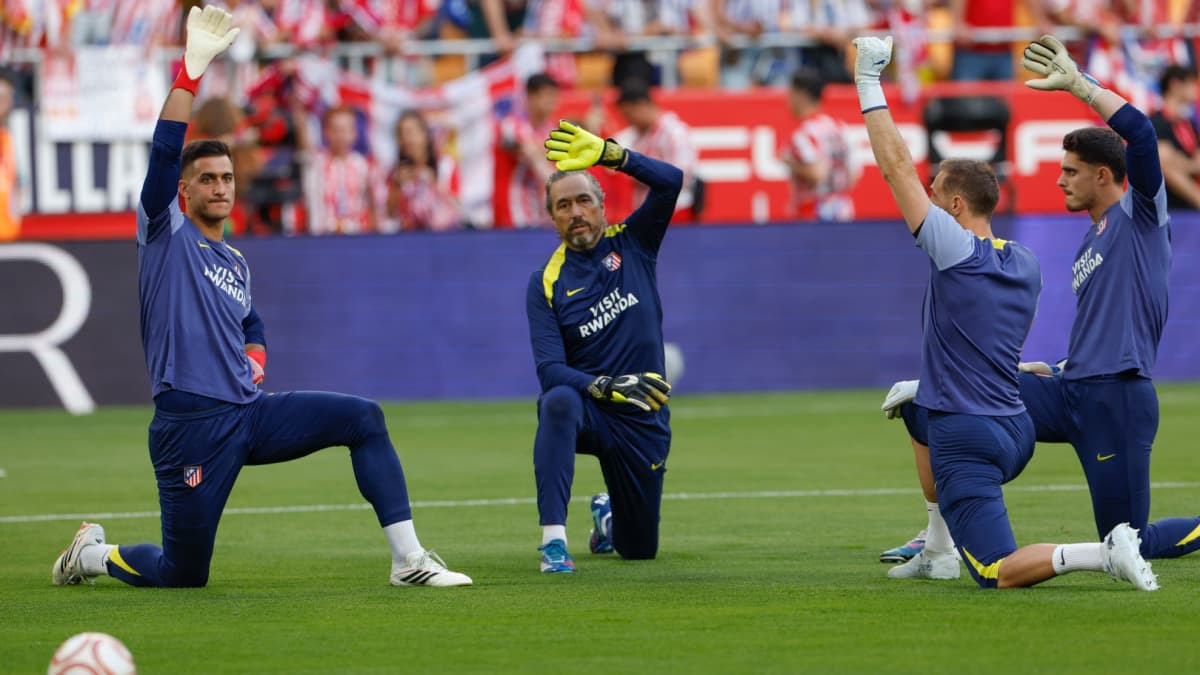
El Atlético de Madrid analiza su actuación en la final de la Copa del Rey contra la Real Sociedad.
Marca1 min read
Jack Karasinski, a 6-foot-7 grad transfer from Bellarmine, is Northwestern's first transfer of the cycle, averaging 21.7 points per game last season. He brings strong offensive skills but faces defensive concerns.
Mentioned in this story
Northwestern’s first transfer of the cycle was forward Jack Karasinski. Karasinski is a 6-foot-7 grad transfer from Bellarmine who led the ASUN in scoring at 21.7 points per game as a senior. He shot 56.1% from the field and 41.5% from three on 5.7 attempts per game. Karasinski added 4.7 rebounds (one offensive) and 1.2 assists a night, starting all 30 games he played in. He earned FirsNorthwestern’s first transfer of the cycle was forward Jack Karasinski. Karasinski is a 6-foot-7 grad transfer from Bellarmine who led the ASUN in scoring at 21.7 points per game as a senior. He shot 56.1% from the field and 41.5% from three on 5.7 attempts per game. Karasinski added 4.7 rebounds (one offensive) and 1.2 assists a night, starting all 30 games he played in. He earned First Team All-ASUN for his play.
Karasinski should be a meaningful contributor for the Wildcats this season with his size and shooting ability. He’s talented offensively and will provide Northwestern the spacing that it desperately lacked last season. However, there are major defensive concerns that may limit Karasinski’s night-to-night impact.
Let’s jump in.
All stats sourced from College Basketball Reference and Hoop Explorer unless otherwise noted. All film pulled from Bellarmine vs. Kentucky from O__BALL__O on YouTube.
Offense is the side of the ball that earned Karasinski First Team honors and brought the sharpshooter to Evanston. Karasinski ranked 49th in Hoop Explorer’s adjusted offensive rating, which adjusts for strength of schedule, usage and luck factors. He was two spots below Pryce Sandfort and nine spots above Braden Smith in the all-encompassing metric.
His combination of size, shooting and on-ball skills is quite unique. Only 49 players in the country who stand taller than 6-foot-6 shot 40% or better from three and took at least 40% of their shots from beyond the arc. Of those 49, Karasinski had by far the highest usage rate at 30.4% (the next highest is 24.6%), meaning he showcased talent with the ball in his hands in addition to being an elite shooter.
Jack Karasinski averaged 21.7 points, 4.7 rebounds, and 1.2 assists per game while shooting 56.1% from the field and 41.5% from three.
Karasinski is expected to be a significant contributor for Northwestern, providing much-needed offensive spacing and shooting ability.
Karasinski earned First Team All-ASUN honors for his performance during his senior season at Bellarmine.
There are major defensive concerns that may limit Karasinski's impact on a night-to-night basis for Northwestern.
El Atlético de Madrid analiza su actuación en la final de la Copa del Rey contra la Real Sociedad.
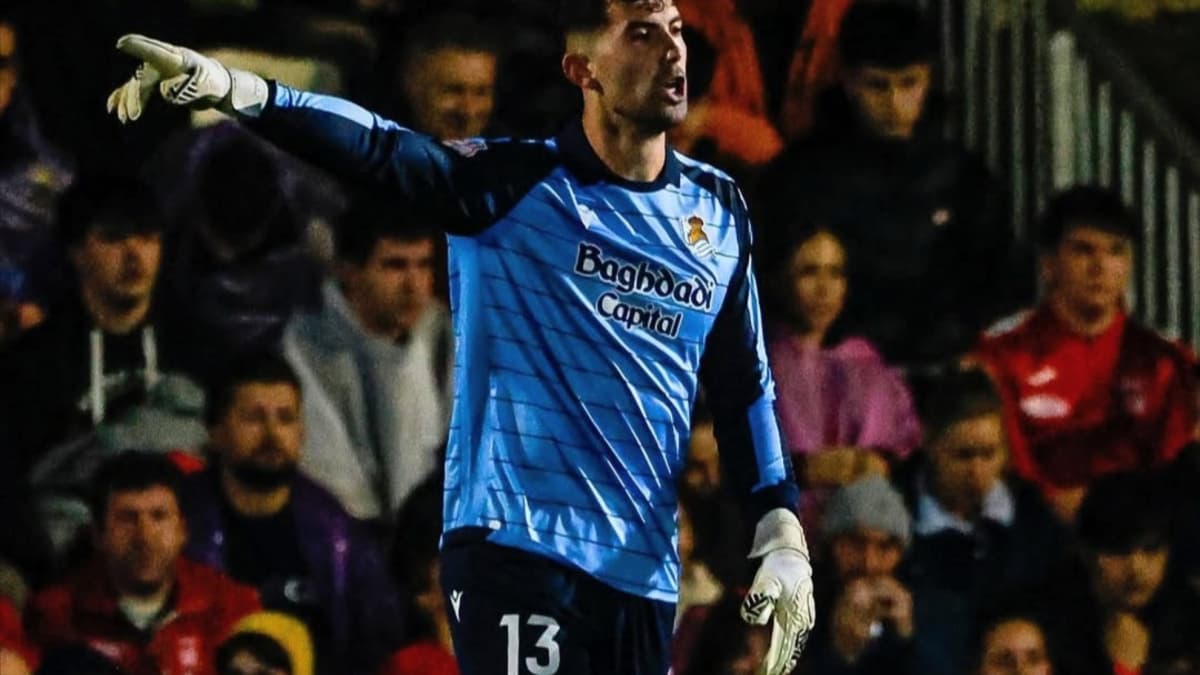
Matarazzo no se baja del carro de Marrero en la final de la Copa del Rey

Tottenham's relegation fears deepen after Brighton's late equalizer.
RB Leipzig takes a big step towards Champions League with 3-1 win over Eintracht Frankfurt!
Roma's Massara insists there's no problem between Gasperini and Ranieri ahead of Atalanta match.
See every story in Sports — including breaking news and analysis.
Karasinski is one of 39 players who played 40% or more of their team’s minutes, took at least 40% of their shots at the rim, and made above 70% of their attempts at the cup. It feels convoluted, but these are the sport’s elite high-volume finishers. Most of the players on the list are big men who are rollers, cutters and finishers (guys like Aday Mara, Morez Johnson Jr. and Coen Carr are Big Ten players on the list; Tre Singleton also falls into this grouping). Only 4 players, including Karasinski, on this list also have a 40% or higher 3-point rate, and the only other one who shoots as well as Karasinski from deep is former Belmont wing Sam Orme, who is headed to Nebraska.
If all of these numbers are overwhelming, here’s the simple version: Karasinski shot like Sandfort and finished at the rim like Mara while having the ball in his hands more than either one.
Karasinski was often used as a pick-and-pop threat for Bellarmine in the flow of their offense. He’s very dangerous in this role: if Karasinski’s man sags in the lane to help off the driver, he’ll be wide open for three, and if the defender stays tight, that opens up driving lanes. Without switching the action (something Kentucky didn’t do much of in this game), opponents are vulnerable.
Karasinski’s strength as a shooter is twofold. One, his release is lightning quick. Two, he has a super high release point, making him even harder to block than his height would suggest. Combine the two, and you have a player who can get his shot off from anywhere, over anyone, no matter how tight the defense. Max Green was billed as last year’s incoming transfer sniper, but his slow, low shot release made it difficult to use him in screening or pindown actions. That’s not Karasinski.
Inside the arc, Karasinski isn’t the quickest or the craftiest player, but he uses his size and physicality to get to his spots. Because of his offensive versatility, he can usually take advantage of a bigger matchup by turning the corner or a smaller defender by backing him down. Bellarmine ran him off a lot of cross screens to set him up for post touches, something Northwestern often did to free Nick Martinelli in the high post. Karasinski is a fine passer out of the post but can almost always get to the rim or elevate for a short jumper, depending on the situation.
His best trait in driving is his ability to stay in control. He doesn’t have a great handle, but it’s serviceable and he rarely tries to do too much off the bounce. As a result, Karasinski boasts an elite turnover rate. He lacks some athleticism, but his body control allows him to play off two feet and finish in tight windows. He also draws fouls at an above-average clip because of his ability to pump fake and maneuver his body positioning on the way up.
Overall, Karasinski is a dynamic offensive talent who should give Northwestern a multi-level scoring threat capable of being used in a variety of roles and situations.
For all the praise I heaped on Karasinski offensively, his impact for Northwestern depends entirely on the defense. Karasinski was, putting it nicely, terrible on defense last season for Bellarmine. The Knights ranked dead last in defensive rating/efficiency according to KenPom, Bart Torvik and CBBAnalytics. Amongst Bellarmine’s top 10 players in minutes, Karasinski had the fourth-worst defensive rating (which jumps to third-worst when filtered for top-half competition) and the second-worst on/off splits, adjusted for lineup balance (his unadjusted on/off splits are the worst on the team).
Bellarmine ran only a zone defense in this game (I don’t have season-long data, unfortunately), and Karasinski mostly hid from the ball, which makes this a tough evaluation for its translatability to Northwestern’s exclusively man-to-man defensive profile.
Whenever Karasinski was involved in the play, he showed disturbingly poor instincts, whether that was in help defense or on weak-side contain. Any time he got matched onto a big, he allowed them to gain inside position without any fight, even when his corner was empty and the correct play would be to prevent the inside pass. Karasinski was often flat-footed and didn’t have any sort of active hands to get deflections (he averaged just 0.6 steals and 0.3 blocks). He didn’t engage physically and, overall, seemed largely uninterested in the concept of defense.
Zeroing in on the first two plays, Karasinski completely turned his back on the man closest to him, allowing a backdoor cut in each scenario. In the first clip, he not only gets backdoored but also doesn’t provide any help, even though he’s completely facing the Kentucky postman. His decision-making is slow on defense, and he’s too often caught ball-watching or jumping for fakes.
His one redeeming quality is solid rebounding numbers on both ends of the floor. But overall, this will be a major project for Chris Collins and Chris Lowery.
It’s hard to say exactly where he fits in Northwestern’s lineup, given the lack of players currently on the roster. However, given his offensive chops and defensive ineptitude, he feels primed for a high-usage, medium-volume bench role. He’ll be a guy who can come in for 15-20 minutes a game and carry the load offensively, playing in situations where he can guard weaker offensive players.
According to Hoop Explorer, Karasinski played 85% of his minutes at center for Bellarmine (who didn’t have any player taller than 6-foot-8), but the site profiles him as a wing/forward. For Northwestern, he probably slots in at the three or the four, depending on the other pieces on the floor. I can confidently say he will play zero minutes at center, except perhaps in special teams situations (think the last two minutes of a game in a full-court press or the final offensive possession when NU needs a three).
Overall, this is a high-upside pickup for Chris Collins, but it comes with significant risk. The best-case scenario sees Karasinski as the team’s leading scorer, where his shooting and finishing ability translate to the Big Ten level and Northwestern’s defensive scheme protects him. The worst-case scenario is that Karasinski becomes unplayable because of his defense and limited athleticism. The 50th percentile outcome seems to be a bench player or a lower-minute starter who can carry the offensive load for stretches but holds the team back at times on defense.