Sports
Guardians News and Notes: Cleveland Loses and Wins
Cleveland Guardians face a tough loss but call up Travis Bazzana to boost the lineup.
Yahoo Sports1 min read
Bob MacIntyre, hailing from Oban, Scotland, has made a name for himself in professional golf, winning two Ryder Cups and breaking into the world top 10. He values his roots and has chosen to return home over accepting lucrative offers from LIV Golf.
Mentioned in this story
Bob MacIntyre is not the product of an academy, a swing coach’s masterwork or a carefully constructed brand. He is from Oban, Scotland, population 8,000, where the Atlantic comes in hard off the Firth of Lorn and the golf course plays to a par of 62. He learned to compete not on pristine fairways but in shinty—the ancient contact sport played with a stick and without apology. And in that education he found something that has proven durable against the best golfers on earth: the absolute refusal to be beaten by the moment.
His growing résumé reflects it. He has cracked the world top 10, won on the PGA Tour, won his national open, won two Ryder Cups—the second on American soil, in an atmosphere that tested every member of the European team. The only box left unchecked is a major and after the 2025 U.S. Open at Oakmont, where he sank a putt on the last hole thinking he might’ve won, that goal feels less like an ambition and more like an appointment.
/content/dam/images/golfdigest/fullset/2026/4/GD0526_COVER_NO UPC.jpg
In the height of professional golf’s civil war, MacIntyre declined LIV money, left Florida and returned to the West Highlands—to his parents, to his sisters and nieces, to a girlfriend—because home, however much it cost him, was the only thing that made sense. He keeps a small circle, earns trust slowly and has never once pretended the country club world is his natural habitat. As pro golf is still sorting out what it wants to be, MacIntyre has navigated by a single fixed point: the dream he had as a boy, and whether the next decision takes him closer to it or further away.
We met at Taymouth Castle, baronial stone and ancient timber rising from the mist of Perthshire, about as far from a par-62 municipal links as Scotland allows. What follows is a conversation about pressure and identity, about isolation and belonging, about the game’s politics and its deeper pleasures. About what it actually costs to rise, and what a pro golfer decides, at every turn, to pay for.
GOLF DIGEST: Your peers, almost unanimously, say you perform your best when it matters most. Where does that come from?
MACINTYRE: To be honest, I’ve never seen myself that way. I’ve always just done what I do. So far, the pressure has come when things are going right for me. The most nerves I’ve ever had was at Oakmont those last three holes, when I said to my caddie, Mike [Burrow] on 16, “Mate, I can hardly feel my hands.” Then I proceeded to play three of the best holes I possibly could. There’s so many things that go through my head—I sing songs. I’ll tell myself, . At the end of the day, you just have to go hit it.
Bob MacIntyre has cracked the world top 10, won on the PGA Tour, claimed his national open title, and won two Ryder Cups.
MacIntyre declined LIV Golf money to return to his hometown in the West Highlands, prioritizing his family and roots over financial gain.
Shinty, an ancient contact sport, played a crucial role in MacIntyre's upbringing, teaching him resilience and a competitive spirit that he carries into golf.
MacIntyre aims to win a major championship, with the 2025 U.S. Open at Oakmont being a significant focus after nearly winning it.
Cleveland Guardians face a tough loss but call up Travis Bazzana to boost the lineup.
Five-star QB Elijah Haven announces commitment to Alabama over Georgia
Antrim hurlers demand clarity on manager Davy Fitzgerald's position after confusion over his status.
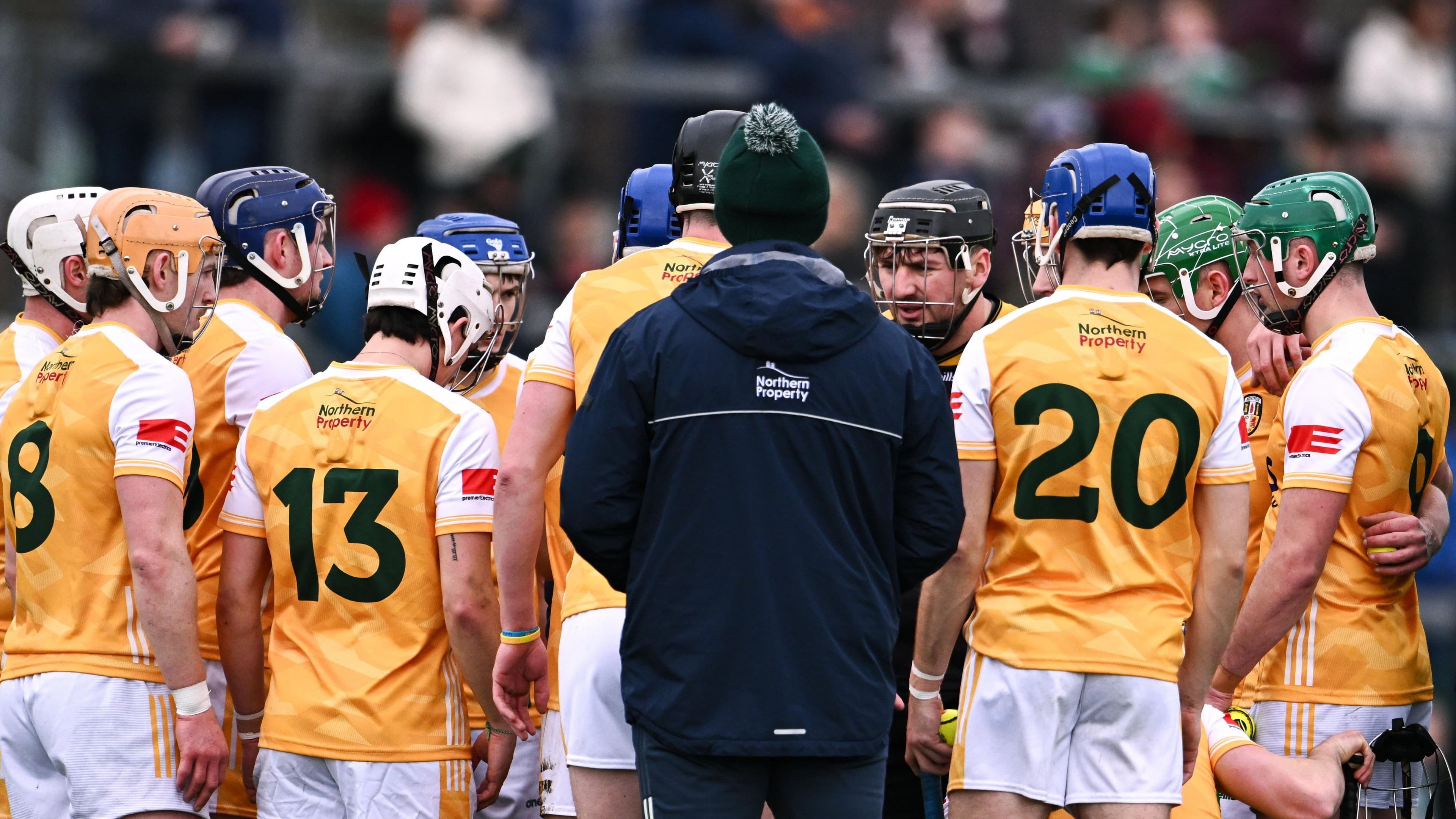
Antrim hurlers demand clarity on manager Davy Fitzgerald's position amid confusion.
Carolina Panthers' 2026 NFL Draft class achieves a GPA of 3.34, ranking ninth in the league.
Más de 30 porteros de La Fábrica se reúnen en el Real Madrid
See every story in Sports — including breaking news and analysis.
How did those last three holes at Oakmont compare to your first tee shot at Rome in 2023?
Massively different. Rome was more a realization of a dream, making a Ryder Cup team. I knew everything about that opening tee shot. Winning a golf tournament is a different pressure. Had it been a putt to win the Ryder Cup, that might have felt like those last three holes at Oakmont.
Do you think your game is built for majors more than regular tour events?
I can do both, but yes, my game is more suited to the dogfight. I like tournaments like Bay Hill or the Players, where you have to hit the fairway, then hit the green, and pars aren’t bad scores. At some courses, make a run of four pars and you’re sinking down the leaderboard. When you shoot level par and you’re jumping up 25, 30 places, that’s when I enjoy it most.
/content/dam/images/golfdigest/fullset/2026/2/GD0526_FEAT_BOB_02.jpg
Photo by Pip Bourdillon
The mythology around you, this kid from a short course in Oban, how much does that origin story still inform who you are?
People are going to like you or dislike you, no matter who you are. The reason I left the U.S. is because I realized everything I care about, everyone I love, is home in Scotland. There might come a time when I need to move back over, if it became easier on family logistics, and I’d suck it up and learn to deal with it. But right now, I don’t need to. My sister has three little ones, my mum and dad are in Oban, my girlfriend is working for the National Health Service in Glasgow. When I was in the States, the time difference made it hard. When I’m home in Scotland, I hardly play golf. I’ll do the odd thing in the simulator, putt indoors. For me, I’ve realized the mental side of the game is far more important than the physical. My swing technique doesn’t really change—I’ve got my basics. What does change is my mental attitude. When I’m in a good headspace at home, seeing friends and family, everything’s fine and there are no worries when I get to the golf course. I can perform.
Then why do you think so many tour pros find Florida to be the perfect environment for their profession?
Yeah, from a practice standpoint, it’s hard to beat the facilities and weather. But that doesn’t factor in what happens away from golf. Florida was too lonely, too business-like for me. Practice, golf, practice, eat, sleep. There needs to be a work-life balance. It’s really the same issue when we’re on the road, too, in America. There’s not as much chatting, socializing. When I play in Europe or Asia there’s this idea that we’re all in this together, experiencing new cultures together. This job is too hard to focus on all the time. I love what I do, but if I can’t do it with friends and family to come along for the ride, you question what it’s all for. Florida might be better for my game, but Scotland is better for my life, and I think that mind-set will help me have a better and more fulfilling career.
More From Golf Digest
What does a day off look like for you?
Up around 8, 8:30, cup of coffee to start. After that it varies. If my nieces are off school or it’s the weekend, I spend a lot of time with them. It all revolves around family and friends. If I’m at home and I’m not with Shannon, I’m with my mum and dad or one of my sisters with the little ones. I’ve gotten to a point where I don’t really do things to please people outside that small circle.
What has shinty given you that golf hasn’t?
I don’t know if it teaches me something different so much as it’s made me the golfer I am. There’s a lot of aggression in the way I play and in my reactions to shots. Shinty has maybe helped me with discipline, with acceptance and with shaping the ball. You’ve got one stick—different lofts through different positions—and you might be hitting a pass 10 yards or trying to launch one 50 yards, so you’re constantly manipulating. But more than the technical stuff, I think it’s the team mentality and the never-give-up spirit. If you go one down, you’ve got to get it back. You’re always chasing, always trying your best. You never stop playing.
What’s the worst injury you’ve ever had in a game?
A broken toe. My Uncle Gordon lost his eye. I’ve always worn a helmet with metal guards and a glove on my right hand. I try to limit the risk. You can still get injured, I know that, but I do everything I can to prevent it. It’s something that’s been passed down through the generations of my family—and I just love it.
'My game is more suited to the dogfight. … When you shoot level par and you're jumping up 25, 30 places. That's when I enjoy it most.'
Do the boys give you preferential treatment now?
Potentially a little at training but that happens in any contact sport. Where people aren’t going full in the tackle. In games, there’s none of that. The thing is, if you go in 50 percent on a tackle, that’s when you get hurt. You’re better going in full tilt. If two players are both going 100 percent, there’s less chance of injury because they’re in close with less room for the stick to make contact. Within the team, the biggest thing is that you’ve got each others’ backs. I feel that in my golf team, too, with coaches, trainers, everyone. You look after each other and you don’t expose each other at the wrong times.
/content/dam/images/golfdigest/fullset/2026/2/GD0526_FEAT_BOB_03.jpg
Photo by Pip Bourdillon
That communal spirit must still seem like quite a contrast with professional golf, which can be isolating.
Life on the road can be hard. It’s something I’ve had to learn. I remember in 2021 during COVID—we went to America for about 12 weeks. I played all my events, came back to Europe, and I was just having room service every night. I started struggling mentally. I didn’t enjoy it anymore, didn’t know if I wanted to keep doing it.
Nobody prepares you for the hours between rounds, do they?
Should be the easy part, yeah? People think touring is glamorous—you’re traveling the world, seeing everything, but a lot of times it’s house, airport, golf course, back to the house. The biggest thing I’ve learned is, be comfortable where you’re staying, eat where you want to eat, enjoy yourself and have the right people around you. For me, that’s my agent, my coach, my family and friends, all of whom were with me well before I was famous.
What’s something about professional golf that would genuinely surprise most fans?
Probably the amount of attention that falls on certain people. I look at some of the biggest players in the world and think I’d take the golf career, absolutely, but I wouldn’t swap any of their lives for mine. Go out for dinner and they get mobbed, photos constantly, videos. That’s not comfortable for me. I’m a quiet person who likes to go about my business.
Not even to the pub?
I won’t go to pubs anymore. I was never a big drinker. Only every now and then I’d go with mates for a few beers. I won’t entertain it now and yet part of me thinks, Why not just go? But I feel so uncomfortable. You say the wrong thing, someone catches it on camera, and you think you’re speaking to a friend and you’ve just gone viral.
‘Florida might be better for my game, but Scotland is better for my life, and I think that mindset will help me have a better and more fulfilling career.’
You’re the most visible Scottish golfer in the world now. What type of responsibility comes with that?
It’s less responsibility and more wanting to show people that it doesn’t matter where you’re from. I was lucky I had parents who worked incredibly hard. My mum had three jobs, my dad had two for a long time, including as the greenskeeper at my club. It’s how I was able to play the game. My family sacrificed a lot. My dad was a talented athlete—great golfer, good footballer—but he never had the financial backing to chase a dream. The biggest thing he wanted was to give his children better than what he had. That’s what my parents did for me, and I was just lucky for that.
This is the birthplace of golf. Why aren’t there more Scots in the world’s top 150?
There’s so much that goes into it. The Scottish guys on tour now are all very different—different coaches, different backgrounds, different parts of the country. In the past there were brilliant amateurs coming through but it was mostly a one-size-fits-all approach. That didn’t work. When I turned pro, my management company struck a deal with Scottish Golf and Scottish Hydro so that for the first two years on the Challenge Tour, the finances were covered. I played a full season without worrying about money. I still see it happening now—talented young guys turning pro or about to turn pro, going down paths where they’re just being told yes, yes, yes, instead of hearing hard truths. The most important thing is building a small, tight team of people who care about what you want to achieve and aren’t scared to be honest. I once asked Mike what he wanted to achieve in caddieing. He said, “I want to caddie for a Ryder Cup win and a major.” I just said, “So do I.” Alignment is everything. A lot of people in golf are in it for the money, and if you throw enough at the wall, something sticks. I’ve only got one career and I want to give it everything I can. I’d love to sit down with young Scottish guys coming through and try to guide them.
There’s the belief that part of Team Europe’s success in the Ryder Cup is the camaraderie in the locker room. How real is that brotherhood beyond the biennial event?
Week to week on tour, you’re not that close. But you’re close enough that guys will go to dinner together when they’re traveling alone. Last August, Shane Lowry didn’t have his family with him and I didn’t have my team, so we rented a house at Memphis during the FedEx. Europeans will do that with anyone in the group. I feel like Americans have more defined cliques. When I go into the players’ lounge and there are no Europeans, I’ll sit on my own because I’m not as comfortable. If a European is there, it doesn’t matter who it is, Rory, anyone, I’ll go and sit with him. It’s a different culture, and I think that cultural difference is what makes our team gel.
2237707883
Harry How
How did you manage to play the way you did at the Ryder Cup at Bethpage with all that was going on outside the ropes?
The golf the European team played on Friday and Saturday and the putts we holed were outrageous. That Saturday afternoon walking up 18, there was hardly an American fan in sight. We’d been told we couldn’t win, and then it felt like a home event. The only thing I wished for—me and the whole team—was that someone had come out at some point on Sunday and said, enough. Let’s respect the game and respect the players. I’ve never seen so many players in the European team turn around and swear back at the crowd. Shane and Tyrrell [Hatton] and me are probably the kings of shouting and swearing on the golf course, but it’s at ourselves, not at anybody. I never realized there were only 37 European golfers who had won a Ryder Cup away from home before that. Now there are 47. I get goosebumps thinking about what we managed to achieve over there.
Did that week change how you see Rory?
On Saturday on the sixth hole, Rory and Shane’s group stopped and didn’t hit a shot for about 10 minutes. I was in the team room doing some physio and I said, “We need to go out there.” I rounded up about 10 of us—players, caddies, staff, so that Rory and Shane weren’t just seeing hostile fans everywhere they looked. Honestly, it was Erica who amazed me most. She was sitting in the back of that buggy like an absolute trooper, not flinching. If she reacted, Rory would have reacted—and if the two of them reacted, the crowd would have won. She was unbelievable.
‘My dad was a talented athlete—great golfer, good footballer—but he never had the financial backing to chase a dream.'
How has rising during the LIV split, one of the most chaotic periods in the sport’s history, shaped you?
I voiced my opinion early on, that the money was obscene. How much does a human need? But the more I’ve sat back and thought, I understand why certain guys went. Some timed it beautifully. Some guys I still think made crazy decisions. To each his own.
Why didn’t you jump?
Didn’t want to compromise my dream. My dream was to play Ryder Cups. I’ve done that. I’ve only got one dream left, and that’s winning a major. Once I do that, I could happily walk away the next day. The money we’re playing for on the PGA Tour is still extraordinary. I still have a great relationship with the DP World Tour. Tyrrell is someone I could call right now and ask anything. At the end of the day, the good people are still good people whether they went to LIV or stayed. There are guys on the PGA Tour I don’t particularly like, either. I’m not on any boards; I’m not getting involved. I’m just going to get the ball in the hole in as few shots as I can every week and go back to Scotland.
Golf has more country club DNA in America. You grew up in a very different golf world than the one you’re competing in now. Do you ever still feel like an outsider?
I still feel it sometimes in certain places, like I’m walking on eggshells. The country club atmosphere isn’t comfortable for me. As long as you’re not wearing football tops and causing havoc, I think you should be able to do roughly what you want within the etiquette of the game. I really mean it when I say being an ambassador for Discovery Land Company is a good fit. Their properties are some of the most opulent and luxurious in the world, like this castle, but you can pitch up in gym shorts to the bar if you want. I played golf with the founder, Mike Meldman, at The American Express Pro-Am a few years ago and we hit it off. The atmosphere he promotes appeals to me.
/content/dam/images/golfdigest/fullset/2026/2/GD0526_FEAT_BOB_04.jpg
Photo by Pip Bourdillon
As your profile grows, how do you protect what matters to you?
Again, the relationships with the sponsors I have are honest—it’s not just black and white on paper. If I’m home for a week, I’m probably not doing a sponsor appearance, and they’re not going to ask me unless it was planned well in advance. Elijah Craig [bourbon brand] has been brilliant. I’ve genuinely enjoyed learning about the family history and the story of the distillery burning down. When their people came up to Oban and my mum made them rolls it didn’t feel like an obligation, it just felt like a good day. For media, I don’t do too much. I’ll do things with people who actually go to events, travel and follow the sport properly. If someone pops up out of nowhere wanting your time, there needs to be investment on their end. And the social-media stuff I manage myself. I just have a laugh with it.
‘There are guys on the PGA Tour I don't particularly like, either. I'm not on any boards; I'm not getting involved. I'm just going to get the ball in the hole in as few shots as I can every week and go back to Scotland.’
What have the successes of the past few years taught you about yourself?
I still don’t know how good I can get. What Scottie [Scheffler] is doing right now is outrageous. How good is that guy? We can all shoot eight, nine under on our day. But the consistency, the work ethic, the structure of what he and Ted [Scott, his caddie] have built—that’s a different level. I’ve learned so much from watching the best, but not in the sense of copying what they do. Whenever I’m on the range with someone better than me, I ask myself, Why are they better? What are they doing? The last two years have accelerated that because I’ve been playing against the best in the world every single week.
Circling back to Oakmont and that viral clip of you clapping for J.J. Spaun as he makes the 65-footer to beat you. What was going through your mind?
When I finished, I felt I’d done everything I could. My thinking was, if you shoot level par for four days, you win this golf tournament, hands down. We were lucky there was no wind and it was wet—if that place had stayed firm with a bit of breeze, 10 over par was going to win. Standing over that 2½-, three-foot putt on 18, in my head was I think this is to win the U.S. Open. Then I just waited to see what unfolded. J.J. was having a nightmare of a day until the rain. There were so many water balls—the place was flooded. When I was in the middle of the fairway on 18 I couldn’t get a ruling, so I just hit the 7-iron. I thought I’d chunked it 30 yards but watched it fly to the middle of the green. When Viktor hit his approach just outside J.J.’s, I knew J.J. would get a read and use it to help—and he did. He holes it. If I’d hit my target, I still wouldn’t have won. If I’ve made a mess of things, I go crazy. You might see me on TV shouting, swearing, smashing my bag—that’s because I’m annoyed at myself, not at anyone else. But when someone outperforms you, you take your hat off and say well done. I’ll also say, there’s a recipe to winning majors and I feel like I’ve started to work it out. You don’t have to be brilliant from the start. You hang around, stay in it with five holes to go—and then it’s anyone’s because the pressure just builds. You need a bit of luck, too. I’m confident I’ve got the game. I want to go out and win one, but if the door opens, I’ll be happy to walk through it.
Thirty years from now, what do you want people to say about you?
That he won a major. If I’ve won one major, won the Scottish Open, won two Ryder Cups—from a golf standpoint, that’s a career you’d look back on and say he was a great golfer. But more than that, I’d hope people say he was a good person. He was passionate on the course but away from it he was decent. He gave back to the people who helped him and to the community he came from. Selfishly though, I don’t really worry about what other people think. I just want a happy life, a healthy family and to have achieved my dreams.
More From Golf Digest
Well Played The special way Robert MacIntyre and his dad got to relive last year's Canadian Open win