
SoccerRecap
Celtic waiting on Maeda fitness as attacking issues nearly prove costly at Hibs
Celtic's Daizen Maeda limps off after scoring, raising fitness concerns before Old Firm match.
Sky Sports1 min read
Daronte Jones has been appointed as the new defensive coordinator for the Washington Commanders, aiming to improve a struggling secondary. Despite fan expectations for more draft picks and free agent signings, the team plans to rely on its current roster this season.
Mentioned in this story
washington commanders
Following last year’s disastrous defensive performance, Washington fans have been clamoring for a total overhaul. They were rewarded with a new defensive mind in Daronte Jones and upgrades to the front seven, including Odafe Oweh, Sonny Styles, Tim Settle, K’Lavon Chaisson, and Leo Chenal. Free agent additions to the secondary were not as plentiful, but Amik Robertson and Ahkello Witherspoon provide help for the cornerback room, as does Nick Cross for the safeties. Still, given the poor performance, the release of starting cornerback Marshon Lattimore, and the departure of Noah Igbinoghene and Jonathan Jones, more reinforcements were expected in the draft. To the surprise of many, Saturday evening arrived without a single addition to the secondary. Incensed, fans waited for an explanation from the Commanders administration and received it in Lance Newmark’s post-draft :
Daronte Jones is the new defensive coordinator for the Washington Commanders, tasked with improving the team's secondary performance.
The Commanders made upgrades to the front seven and added cornerbacks Amik Robertson and Ahkello Witherspoon, but did not draft any new secondary players.
The Commanders felt confident in their current secondary players and believed that the available options during the draft did not fit their needs.
Daronte Jones's defensive scheme aims to maximize the potential of the existing secondary personnel, focusing on their strengths to improve overall performance.
Celtic's Daizen Maeda limps off after scoring, raising fitness concerns before Old Firm match.

Bournemouth secured a 3-0 victory against Crystal Palace, moving into sixth place and closer to European football for the first time. The win featured a controversial penalty decision and a goal from former player Jefferson Lerma.
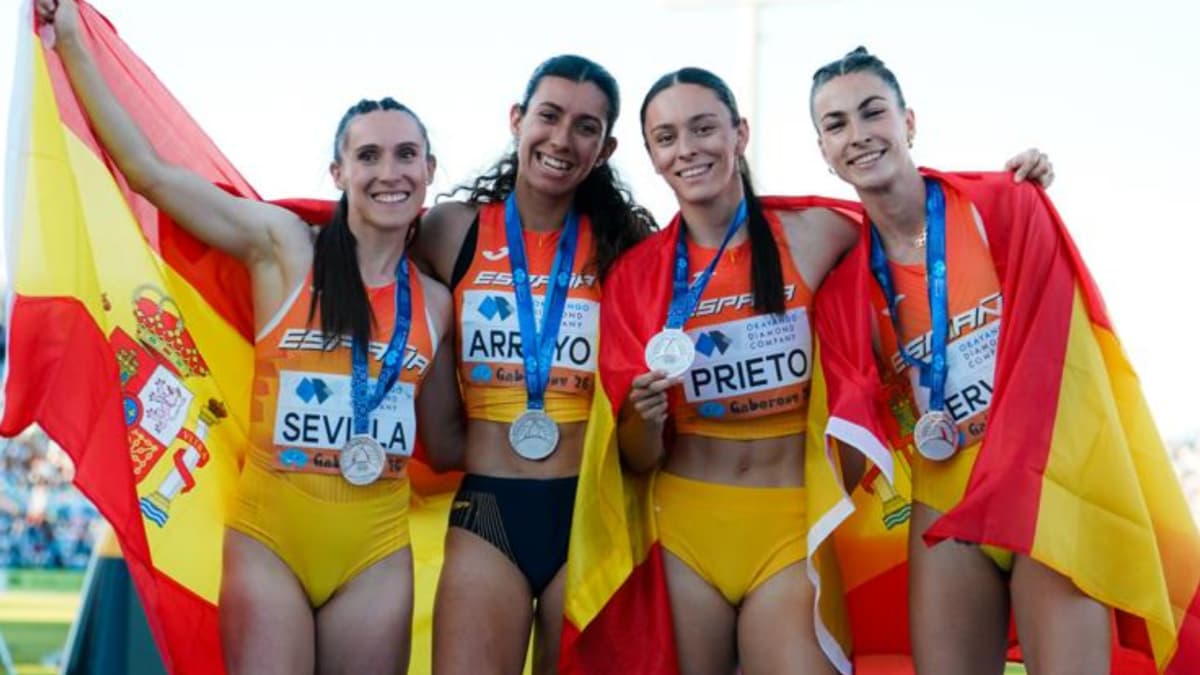
Las 'Golden Bubbles' logran plata y bronce en los Relevos Mundiales
Sunrisers Hyderabad choose to bat first against KKR with lineup changes
Jamie Carragher criticized Liverpool's performance, highlighting a pivotal moment in the 14th minute against Manchester United that encapsulated their struggles this season. Liverpool fell behind early, conceding two goals in quick succession.
Liverpool's Alexander Isak sidelined with groin injury but expected to return soon.
See every story in Sports — including breaking news and analysis.
“I think we feel good about those rooms,” Newmark said. “We feel like we have good players in there. We have good competition in there, and it wasn’t a situation where we went into the draft to not address them. It was just, the way that I think you go into the draft, like we talked about earlier, with great flexibility to do whatever’s best, and it just was a situation where we were picking and what was available, those rooms just didn’t make sense at that time.”
While misleading the media is common practice before the draft, it is less utilized once the selections have been made. Washington also hasn’t rushed to secure any free agents either, and while there is still time for signings, it all adds up to one thing. The Washington Commanders are planning to roll with their current secondary this season. In this two-part series, we will explore how Daronte Jones could actually make this plan work. Part one will focus on the defensive scheme, with the second focusing on how the current personnel fit within it.
Does anyone know exactly what Jones’ defense will look like in week one? No, but given the investment in the position, or more to the point, the lack of investment, we can theorize some likely strategies based on past history. Jones entered the NFL under defensive coordinator Vance Joseph, serving as the assistant defensive backs coach as the Dolphins went 10-6, making Vance the second-most successful defensive coordinator in Miami Dolphins history. In 2018, he joined the Cincinnati Bengals, and after a one-year stop with Mike Zimmer he moved back to the college level in 2021 as the defensive coordinator for LSU. He returned to the NFL under Ed Donatell in 2022 and helped the Vikings to a 13-4 record.
Brian Flores took over the following year and implemented several defensive strategies that Jones, promoted to the position of passing game coordinator, is expected to emulate. Jones himself has been understandably tight-lipped on the subject but has indicated he will take influences from all the different philosophies. The final product will most likely include heavy use of disguised blitzes and Cover-2, Cover-4, and Cover-0 with zone and match-man principles. Zimmer relies heavily on man-to-man coverage, but I think Jones will actually take a different lesson from Mike and match his coverage to his current talent.
The most important aspect I want to focus on for the secondary is the preference for two deep, interchangeable safeties that are versatile and can rotate both before and after the snap. Given the struggles in the secondary last season, this is the look I think Jones will prefer, with players predominantly in a Cover-4, also called Quarters. This seems to be Flores’ preferred look as well.
Middle open coverage is defined of two players deep, without a defender lined up between the hashes, and is associated with Cover-2, Cover-4, and Cover-0. Based on statistics from Sharp Football Analysis the Vikings lead the league in middle open coverage with a 64.2% rate in 2025. The next closest team were the Saints with a 53.9% middle open rate. Coverage schemes can be either man or zone in this look, but I think Jones will gravitate towards more zone coverage based on his personnel and the fact the Vikings’ secondary used zone at a rate of 77.1% last season. For Cover shell type, I will reference a 2024 article from Warren Ludford of SB Nation sister site Daily Norseman, detailing how Brian Flores’ coverage schemes work. The article is excellent and I will lean on it heavily going forward including associated clips from James Foster, formerly of the 33rd team.
Ludford’s article confirms Flores’ preference for a two-deep safety look, citing a rate of 62%, but also breaks down the cover shells from the first four weeks of the season:
As noted previously, the two highest cover schemes involve middle field open looks or two-deep safeties. While a Cover 4 helps prevent big plays and allows for run support, it also offers a lot of versatility. Traditionally a zone-heavy scheme, coordinators also use man-match principles that allow defenders to pass off routes and transition to man-to-man coverage depending on the route they are facing. In traditional Quarters coverage, the two outside cornerbacks cover the outside quarters of the field, while the two deep safeties cover the two inside quarters of the field. The outside cornerbacks read the #1 or furthest outside receiver on their side, while the safeties read the #2 or second-most outside receiver on their side. Based on the route patterns, the defenders will play or switch off receivers as they enter their zone. While effective, Quarters is susceptible to the short/intermediate passing game, as deep routes can clear openings in the flat and dig routes attack the intermediate. That is where Flores’ scheme variations come into play, variations that I believe Daronte Jones will also continue to use in his new defense.
One effective Cover-4 variation, and a staple of the Flores defense, is “Palms” or “2-Read” coverage. This offers the same alignment as Quarters, but this time both the cornerback and the safety read the #2 wide receiver. The route that the wide receiver runs keys the coverage. If it is a vertical route the corner covers the #1 wide receiver; a flat route, the corner covers the #2 and hands the #1 receiver off to the safety. Both coverage schemes show the same look, so the quarterback is left trying to determine which wide receivers might be open on any given play; this slows his progression and allows the blitzes to get home. To make life even more difficult, it is entirely possible for the defensive coordinator to have the secondary use Quarters on one side of the field and Palms on the other. As noted above, Flores uses the Cover-4 with variations frequently.
Another common scheme, the Tampa-2 variation of Cover 2 is run by most teams to varying degrees. However, there are many lesser-known variations that Jones may utilize as well. Let’s look at a few with the help of James Foster.
Invert Cover-2 (Tampa-2 Robber): Again, the defense starts out in a two-high look, but instead of the corners covering the flat, they drop back and cover the deep portion of the field, while the safeties move into position in the middle. This provides good coverage deep and allows typically better tackling safeties to react quickly to snuff out checkdowns or screen plays, which makes it a good scheme for third-and-long situations.
Cover-2 Roll: In this variation, the defense starts out in Cover-1 before the snap, with one corner moving to the deep safety role and the safety moving over to complete the Cover-2 look. Typically the safety moves or “rolls” towards the strength of the pass rush or blitz. This provides coverage for hot route options while still providing deep coverage and a safety in the box for run support and is favored by Flores on early downs.
This distinctive man-to-man scheme is closely associated with Flores and Vance Joseph, and is easily recognizable with zero safeties in coverage and 6 or more players at the line of scrimmage. Flores usually stacks a player on every single blocker with Harrison in overhang. The secondary plays pure man-to-man with coverage being passed off by the cornerbacks as needed. While this is a signature look and calling card of Flores’ defense you can see he doesn’t run it all that often, but just enough that he is able to use it as disguised look pre-snap before dropping defenders into a more standard coverage. I expect Flores to run very little of this look to start, but possibly ramping up as the players get more comfortable in his system.
Included below is an excellent break-down of all of the schemes we just discussed. Ludford linked it in his article and I would recommend it as well.
How Jones is expected to use frequent and disguised blitzes to pressure the quarterback warrants an article unto itself, but at least touching on it when discussing how to improve Washington’s secondary is a requirement. Joseph, Zimmer, and Flores all run aggressive, blitz heavy schemes with Zimmer running more pressure through the A-gaps on later downs, and Flores varying his rushes and cadence. According to Sharp Football Analysis, the Vikings utilized blitzes at a league-leading rate of 48.0% last season. In comparison, the Commanders ranked in the middle with a rate of 26.6%. More importantly, with the injuries at the Edge position Dan Quinn’s squad was not particularly effective at hurrying the quarterback. Sharp Football assigned them a 35.6% pressure rate in comparison to the Vikings’ league-leading 44.5% rate. Frequent and effective pressure would help the secondary by forcing unbalanced or ill-advised throws and less pass attempts to defend.
It all sounds great, but how would Daronte Jones make it work for the Commanders in 2026? There are three keys for success.
The first, communication, has been an Achilles heel for the Washington secondary for as long as many of us care to remember. Joe Whitt Jr., and later Dan Quinn, tried to shift to several of these coverage schemes to fix the issues in the secondary, but communication errors resulted in continued coverage busts.
The second is tackling. While always important for any defense, the suggested coverages tend to funnel passing attempts to the flats and short parts of the field. Effective tackling can limit additional yards and help get the offense in 3rd-and-long situations and also create more opportunities for the quarterback to make a mistake.
Finally, you need versatile, high IQ players to execute the first two. In the second installment, we will look at the current roster for Washington’s secondary and how they might fit in the proposed defensive schemes.