Sports
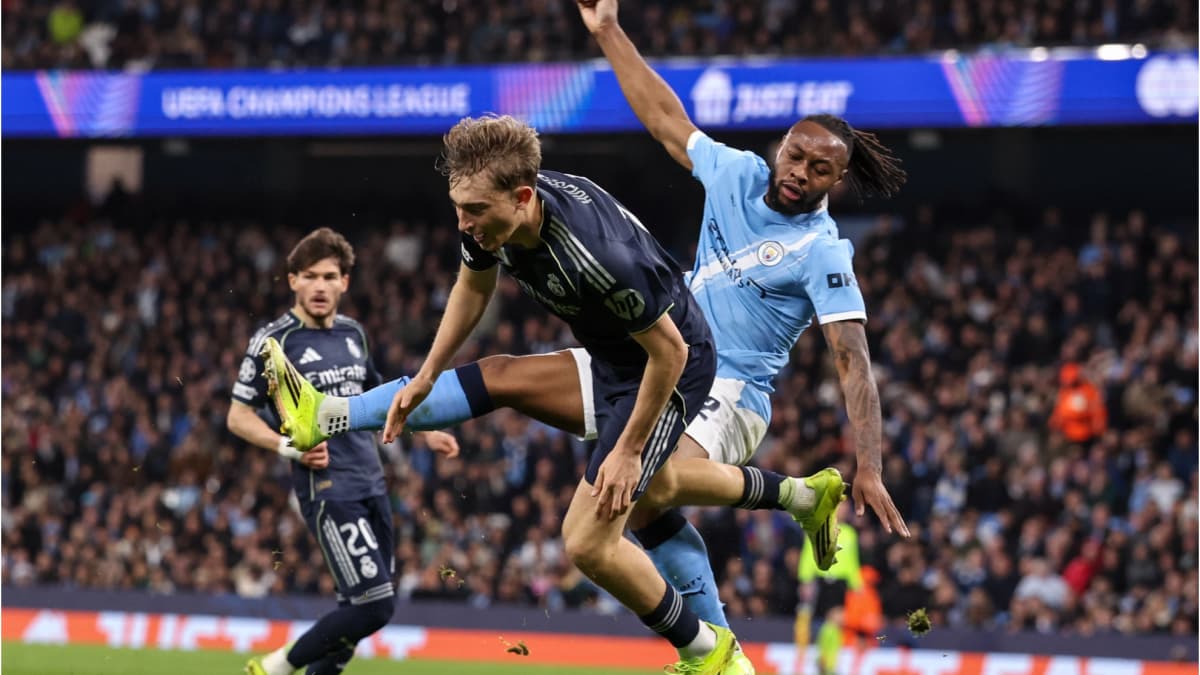
El vacile de Semenyo a Huijsen: "Tranquilo, colega, ya sabemos que estás en el Madrid"
Marca
The IPL is significantly reshaping India's cricket talent landscape by providing a major platform for emerging players. Many uncapped talents from the tournament are advancing to represent the national team.
Prashant Veer, 20, is one of the breakthrough players in this year's IPL [Reuters]
"Where talent meets opportunity."
The motto engraved on the Indian Premier League (IPL) trophy neatly captures its wider impact.
Beyond transforming the sport's economics and global appeal, the tournament has become the most significant pathway for emerging cricketers in India. Each season, it throws up new uncapped players, many of whom go on to represent the national team.
The ongoing iteration is no different. Among the breakout names are Kartik Sharma and Prashant Veer, two youngsters with minimal first-class experience who were both signed for £1.15m, making them the most expensive uncapped players in the league's history.
Kartik's journey began in a small village in Rajasthan. His father, a local cricketer who ran a modest business, was determined his son would achieve what he could not.
"Kartik is from a poor family. His father used to run a small private job in a school, but when Kartik started playing, he left his job and used to bring him to the ground and train with him all day," his early coach Shatrughan Tiwari says.
Despite limited means, Kartik stood out early. His coaches deliberately shaped his game around a distinct strength.
"Kartik had a rare ability to hit sixes from the very start, so we decided instead of the usual approach, we will make him a hard-hitter and a bottom-handed player," Shatrughan said. "We wanted him to become a player who goes out and hits it big." .
The 19-year-old delivered on that promise, building a reputation as a powerful hitter in domestic cricket and attracting the attention of IPL scouts.
"In a trial match for RCB, he hit 18 sixes, some of which hit the roof of Chinnaswamy Stadium. He did similar in CSK trials as well, which is why there was a bidding war for him at the auction," Shatrughan adds.
Prashant Veer's journey follows a similarly difficult path. Growing up in Uttar Pradesh (UP), his father worked as a village teacher and struggled to fund his cricketing ambitions. His coach, Rajiv Goyal, stepped in to support him.
Prashant's breakthrough came in the UP T20 League, a state-level competition that has increasingly become a scouting ground for IPL franchises.
"In the UPT20 League, he performed really well. I think that is where people started talking about him. These leagues have played a big role. They help players come forward and get noticed," Goyal says.
The IPL serves as a crucial platform for emerging cricketers, allowing them to showcase their skills and potentially earn a place on the national team.
Prashant Veer is highlighted as one of the breakthrough players in the 2026 IPL season.
The motto 'Where talent meets opportunity' reflects the IPL's role in providing opportunities for young cricketers to excel and gain recognition.
The IPL has transformed cricket's economics by increasing its global appeal and creating lucrative opportunities for players and franchises.

Catch the Texas A&M vs UTSA baseball game live! Here are the details.
Adam Schefter reveals Panthers' focus on offensive line for 2026 NFL Draft.
Cowboys make Aubrey the highest-paid kicker; draft hinges on OL demand.
New York Giants make unexpected selections in latest mock draft.
See every story in Sports — including breaking news and analysis.
"Scouts now go everywhere, to leagues and domestic cricket, so it is always in the mind of the player that someone is watching."
Traditionally, players would progress through age-group cricket and the Ranji Trophy before gaining recognition. The IPL has accelerated that pathway - both in terms of exposure and financial reward.
"What baseball, basketball and boxing were for an African-American living in America - it offered him a ladder to come up the social hierarchy, financial hierarchy - the same thing is what cricket is doing for India. It gives them a reason to dream," says Bijou George, head of talent scouting at Kolkata Knight Riders.
"People grow up on stories of Hardik Pandya living off biscuits and now flaunting an expensive watch. So everybody aspires to be Hardik Pandya, Sanju Samson and Ishan Kishan. People with that fire in their belly, knowing that this is probably the only option for me, they are ready to give it a go."
The IPL's influence has also led to the rise of multiple state-run T20 leagues across India, further widening the talent pool.
"Right now, there are 18 state leagues going on, with a minimum of six teams per league. Six teams, 15 players, just imagine the pool," George says.
"In most of the state associations, sadly, the selections are not that transparent. So you see players who have not been in the state team coming up and doing very well for their respective franchises. That is why the state franchise tournaments are very important and help us identify talent."
As a result, more players are now emerging from non-traditional centres.
"Talent in India is concentrated in places like UP, Rajasthan and Delhi," said George. "That's why franchises focus a lot on these leagues. UP, in particular, has a very strong league, and many players who have done well there, like Prashant Veer and Kartik Sharma.
"Kashmir is another region we focus on because a lot of good fast bowlers and hard-hitters are coming from there."
The data also reflects how the talent pool has spread across India. In the inaugural IPL in 2008, most players came from traditional centres such as Maharashtra (21), Delhi (14), Tamil Nadu (11) and Karnataka (10).
By 2026, the landscape has broadened significantly. Uttar Pradesh now matches Maharashtra with 21 players, while Rajasthan (13) and Madhya Pradesh (10) have also emerged as key contributors.
Talent from far-off regions is coming through as well. Jammu and Kashmir, which has just seen its first-class team win the Ranji Trophy for the first time in its history, has gone from zero representation in 2008 to six players in 2026, while Bihar has grown from two to six.
This expanding base of talent is reflected in India's recent success in T20 cricket, including back-to-back World Cup titles.
"India's talent pool is so big that you could field two strong teams, India A and India B, and both would reach the latter stages of a world tournament," George says.
"In the last decade, almost all new Indian players have come through the IPL ecosystem. IPL is like a blessing for Indian cricket."