
Sports
Newcastle's European hopes take another hit with Bournemouth defeat
Newcastle's hopes for Europe take a blow with 2-1 loss to Bournemouth.
Sky Sports1 min read
Show Racism the Red Card marks 30 years of combating racism in sports. The charity's impact is highlighted by personal experiences, including a frightening encounter shared by former player Shaka Hislop.
Mentioned in this story
'In an ideal world, Show Racism the Red Card wouldn't exist' - 30 years of pioneering charity
“They started chanting my name and wanted to cross the road for an autograph” Hislop tells newcastleunited.com. “I just got in my car and left. It was scary. The thing is, at times you think about how you’d react when you’re confronted with, or subjected to, different circumstances, and usually it’s with a sense of bravado, I’d say.
“But then when all of a sudden that's a reality, it feels so different. It was frightening. It really was. I mean, I'm a big guy, I'm fit and these are youths. But it’s…” Hislop pauses. “It's dehumanising.
“My wife was in the car, and I'm supposed to be her protector. My primary concern is her, and I just get in my car and leave. It was one of those incidents that I wish I was never subjected to.”
The Hislops journeyed home in silence, each passing yard morphing fear into anger. “Once you’ve put a safe distance between yourself and that situation, you get angry, you want to lash out and then you wonder why you didn’t do that at the time,” Hislop says.
“Again, if you think about being confronted in this way, there is a sense of bravado as to what you will do and how you will confront the perpetrators. But when you find yourself in it, it’s anything but that. It went quite quickly from fright to anger. You want to do something about it, but the moment is gone.”
The night Hislop is speaking of was in December 1995 and it is now, in January 2026, the 30th anniversary of Show Racism the Red Card, an anti-racism educational charity Hislop has been vital to. The organisation’s work should be wholly redundant but is sadly entirely necessary.
In 1995, prior to the abuse Hislop describes above, Ged Grebby, had contacted northeast football clubs as part of his work with Youth Against Racism in Europe. His team had produced a magazine covering topics like the black history of Newcastle and immigration, and he was hoping for some support from within the game.
The late Russell Cushing responded on Newcastle’s behalf, while Hislop sent a £50 cheque – the equivalent of 10 copies of the magazine - and promised his backing. Grebby still has Hislop’s hand-written letter, the ink fast fading, on his wall.
Show Racism the Red Card aims to combat racism in sports and promote equality through education and awareness.
Shaka Hislop is a former football player who shared a frightening experience of being confronted by youths wanting his autograph, highlighting the dehumanizing effects of racism.
Show Racism the Red Card has been active for 30 years, working to address and eliminate racism in sports.
The charity engages in educational programs, workshops, and campaigns to raise awareness about racism and promote inclusivity in sports.
Newcastle's hopes for Europe take a blow with 2-1 loss to Bournemouth.

Bromley achieves historic promotion to League One for the first time!

Leeds secures vital 3-0 win over Wolves, pushing them towards relegation.

LeBron James and Kevin Durant's playoff rivalry could reach its climax this Saturday.
Arsenal and Manchester United battle for £52m midfielder Eduardo Camavinga.
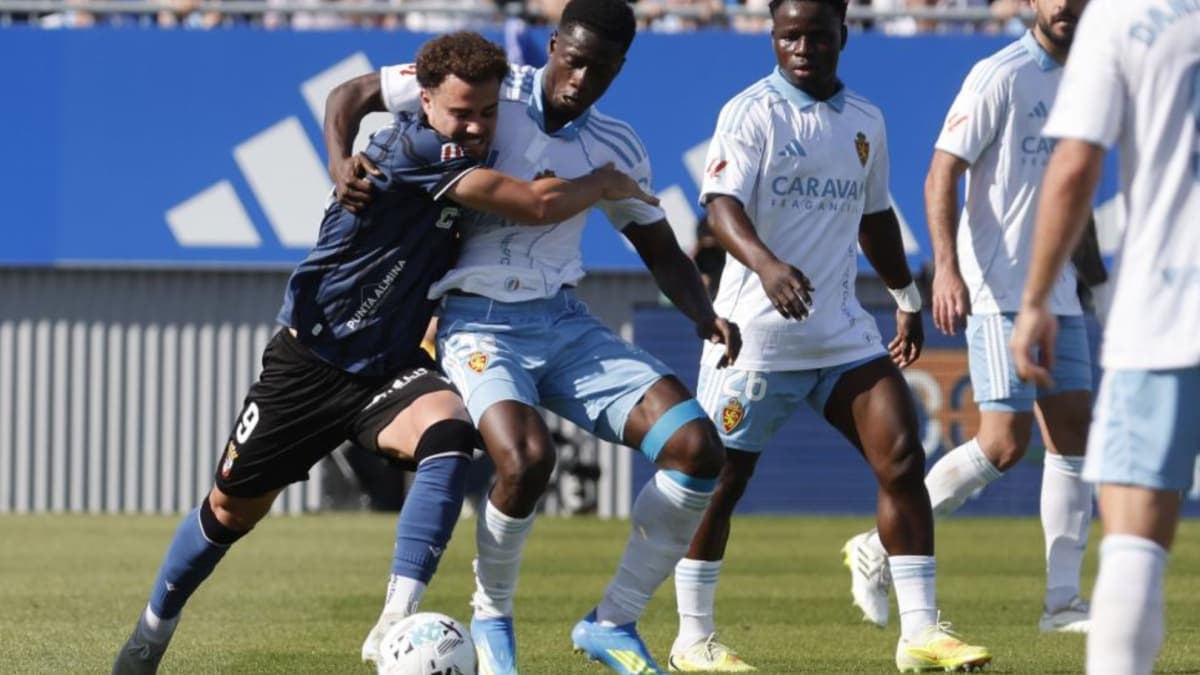
Zaragoza empata 2-2 contra Ceuta, que jugó con 10. Marcos anotó en el 89'.
See every story in Sports — including breaking news and analysis.
What has now become a multi-office organisation engaging with over a million people, began with an event at Westgate Community College in January 1996. Hislop attended alongside then United teammate John Beresford, with the latter’s presence as vital as the former’s.
Beresford grew up a Sheffield United fan, was involved in youth gangs and would join in terrace songs containing racial abuse without an understanding of the words leaving his mouth.
As his football progressed, Beresford played with black players. One of his closest friends at Manchester City and England youth level was Darren Beckford, the pair rooming together on international duty.
“We were messing around, throwing stuff around, being stupid kids and he said, ‘you little sh*t’ to me. I burst out laughing but when I replied I said you ‘black’ something and he just froze. I didn’t have a clue. And he said, ‘you do realise it’s different?’ and I asked him to tell me why. He said, ‘you don’t have to cross the road coming home from school because you’re small. I have to stay away from certain people because of the colour of my skin, I’ve been beaten up for it.’ That really hit me. I apologised. That was the first bit of education I’d had.”
“John was able to appreciate the error of those ways,” Hislop says. “In so many ways he mirrored the experiences of those youths that shouted racial abuse at me in Newcastle and the kids sitting in that school. I’m sure many of them, white kids in the northeast school had adults, probably family members, using similar language flippantly. It was impactful.”
The next event was at Gosforth High School with Les Ferdinand joining Hislop on the panel. Grebby grins when recalling a packed room waiting on a tardy Ferdinand. “When he walked in, the room rose – it was as if Les had levitated in,” Geddy says. “He said, ‘sorry, Kevin Keegan insisted I played squash, and apologies to the people on the panel…I’ve not showered yet!’”
SRtRC was up and running, with Newcastle, Sunderland and Middlesbrough, and the likes of Peter Reid, Viv Anderson, Bryan Robson, all offering support. The now famous name followed soon after.
“1997 was European year against racism so we went beyond being a north-east campaign,” Grebby recalls. “We needed a name and we had landed on ‘Give Racism the Red Card’. But our chair at the time, who was grammar school educated, said you don’t ‘give’ a red card, you ‘show’ it. That was that. I still think our name is one of our big strengths.”
The other anti-racism organisation well-known to the footballing public is Kick It Out. The two work together closely, ensuring that there is no duplication. When resources are finite, they must be stretched as far as possible.
In England, if there is a racist incident in football, Kick It Out responds. SRtRC’s role is educational. However, in Scotland and Wales, SRtRC also runs the campaign against racism directly in the game.
SRtRC now has over 30 full-time staff, as well as plenty part-time session workers. Around 50,000 children and young people are educated annually, while circa. 20,000 adults also benefit from the charity’s work (up from around 6,000 pre-pandemic). Across its lifetime, SRtRC has delivered face-to-face sessions to over 1.5 million children.
Naturally, over time the internet has become prevalent in SRtRC’s work. What started with videos wheeled into classrooms to be played on VHS, became CDs and now an online education hub offers free resources to UK schools. When Grebby last counted there were 41,000 subscribers, with north of 3 million children having viewed the materials."
***
SRtRC’s Newcastle connections are strong. Managers like Keegan, Sir Bobby Robson, Alan Pardew and Chris Hughton have all been heavily involved when at the club, likewise scores of players, from Shola Ameobi to Mike Williamson to Fitz Hall, Tino Asprilla, Yohan Cabaye and Danny Simpson.
French left-back Olivier Bernard is a sessional worker with the charity and recalls arriving at United first in 2000. He was a teenager then and remembers driving in his French car when he noticed what he thought was a Police tail. After a time, he twice circled a roundabout for confirmation. Soon he was stopped and a knock at the window led to requests for paperwork and enquiries as to what he was doing in Newcastle. At that point, Bernard’s English was limited.
“It was scary,” Bernard tells newcastleunited.com. “I only had simple words – I told them I was French and played football. They said, ‘hang on because we are looking for someone’”.
While one officer returned to his vehicle to run a check, the other became aggressive towards Bernard, asking why he couldn’t talk more English. “I froze. I looked at him and it was dead awkward. I was very scared. A few minutes later the other officer returned and said, ‘you didn’t say you played for Newcastle!’. They then wanted autographs.”
It was eerily similar to Hislop’s petrol station experience, only this time the racism came from authority figures. “This was most painful for me. I thought they were going to take me away.”
Another regular visitor to schools is Richard Offiong, a former striker who came through United’s youth set-up and spent several seasons as a professional without making a first team appearance. He now works for SRtRC full-time having first spoken to Grebby in 2011.
Offiong was playing for Blyth Spartans at that point when “an opponent made a couple of racial comments towards me,” he explains. “I'll not repeat what was said. I spoke to the player myself, to the referee, to the opposing manager because he was an ex-teammate of mine and the story went viral. He denied it and it ended up being my word against his. One of his teammates did hear what was said at the time but just said that I must have misheard.” The offender ultimately faced no consequences.
Grebby heard about the incident and contacted Offiong, who had previously attended an event in the early 00s when on United’s books. Grebby asked if he wanted to come along again and that swiftly turned into Offiong volunteering and then becoming a sessional worker, delivering football coaching to children ahead of their classroom workshop. Typically, school sessions are split between time on the field and the education element. Offiong stepped in when the education worker was ill once and has been doing both ever since.
“In primary schools, we give an understanding of what racism is,” he says. “We describe what racism is, we give them tools to combat racism if they see it in school, outside of school, how to identify racism and what the foundations of what racism are. So, it is explaining concepts like judging people without getting to know them and believing negative stereotypes.
“We never tell the children what to think, but we give them the tools to think, ‘you know what I’m going to question what I’ve heard from X or Y, or in a newspaper or on the street, or from a family member.’ We're only there for a short period of time so don't want to say, ‘you have to listen’. We give them the tools to think for themselves, and that tends to stick with young people.”
***
“In an ideal world, Show Racism the Red Card wouldn’t exist,” Offiong says. “Kick it Out wouldn’t exist and we’d all be doing something else. I’d love to be made redundant for that reason. But it’s wishful thinking to think we can end racism full stop.”
According to Kick It Out’s end of season report, within the professional game reports of racism rose by 10% in 2024/25. There were 151 reports made at grassroots level, while a further 268 incidents occurred on social media.
“I feel a real sense of paternal pride around Show Racism the Red Card. I wish there was no need for it,” Hislop concludes. “I jokingly say that all of our staff and volunteers wake up trying to put themselves out of a job.
“We also have to recognise we’re continuing and building on the work of so many who have gone before us, people like Viv Anderson and Cyril Regis. There are so many who have endured far worse than me in order that I could live out my boyhood dreams and be a professional footballer.
“We have a responsibility to do the same, do what we can to, to make not just football, but society a more welcoming place, one where equality does truly exist. I'm fairly certain, we will never experience that true equality, but I want to feel that we are making a difference. We are making an impact.
“We have a responsibility to, as I put it, plant that seed for someone else to live under a shade. And that's what we continue to try to do to the best of our efforts, every single day. Maybe one day somebody will discover a magic pill that cures racism, but until then we'll continue to do what we can, how we can.”