
SoccerPreview
Hearts, Celtic & Rangers fans discuss title race and what winning league would mean
Hearts, Celtic & Rangers Fans Weigh In on Title Race Dynamics
Sky Sports1 min read

LIV Golf faces uncertainty as Saudi Arabia's Public Investment Fund will stop funding after 2026. The decision, influenced by changing investment priorities, raises concerns about the future of the breakaway circuit.
Mentioned in this story
LIV Golf’s race to secure at least a watered down future is formally under way after Saudi Arabia’s Public Investment Fund (PIF) confirmed it will cease to fund the breakaway circuit at the end of this year. Fears over LIV’s existence are inescapable given the PIF has bestowed in excess of $5bn on the tour since 2021. Tournaments started in the following year; there is a very real chance the 2026 season will prove LIV’s last.
LIV had already confirmed appointment of new board members, aimed with the specific task of raising finance, by the time the PIF stipulated its position on Thursday. “PIF has made the decision to fund LIV Golf only for the remainder of the 2026 season,” read a statement. “The substantial investment required by LIV Golf over a longer term is no longer consistent with the current phase of PIF’s investment strategy. This decision has been made in light of PIF’s investment priorities and current macro dynamics.
“PIF remains committed to deploying capital internationally in line with its investment strategy, including its substantial current and future investments in various sports as a priority sector.”
The PIF’s abrupt switch in strategy caught LIV’s executives completely off guard in the immediate aftermath of Rory McIlroy’s win at last month’s Masters. Scott O’Neil was hired as LIV’s chief executive in early 2025 with the remit of growing the business rather than sourcing necessary, external moneys. The order to end LIV involvement is understood to have come directly from Saudi Arabia’s crown prince, Mohammed bin Salman, having been at least partly influenced by the impact of the Iran war.
As their statement was released, the governor of the PIF, Yasir al-Rumayyan was in the north-east of England holding discussions relating to Newcastle United. Rumayyan, once front and centre of LIV, now effectively has nothing to do with that business. As recently as February, Rumayyan had declared in a meeting with leading players on LIV that funding was secure until at least 2032. One key, unanswered question is whether or not Saudi Arabia attaches value to its LIV involvement or whether it will gladly step away without any form of recompense.
Gene Davis and Jon Zinman have become LIV directors. Davis said: “The executive leadership team, along with Jon and I, see a clear opportunity to help the league formalise its structure, attract and secure long-term capital, and position the business for growth while continuing to promote the game across the world. We look forward to positioning LIV Golf for future success.”
O’Neil has presided over increased revenues and has attracted some marquee sponsors. Yet there is widespread acknowledgment that very best scenario for LIV involves significantly reduced tournament numbers – the schedule is 14 at present – and prize funds vastly reduced from the $30m currently on offer. It is highly questionable to whom a LIV light model would appeal.
LIV Golf is losing funding because the Public Investment Fund has decided that its substantial investment is no longer consistent with its current investment strategy.
After 2026, LIV Golf may cease to exist unless it secures alternative funding, as the current financial support from Saudi Arabia will end.
The funding decision affecting LIV Golf was made by Saudi Arabia's crown prince, Mohammed bin Salman, and communicated through the Public Investment Fund.
Saudi Arabia's Public Investment Fund has invested over $5 billion in LIV Golf since its launch in 2021.
Hearts, Celtic & Rangers Fans Weigh In on Title Race Dynamics
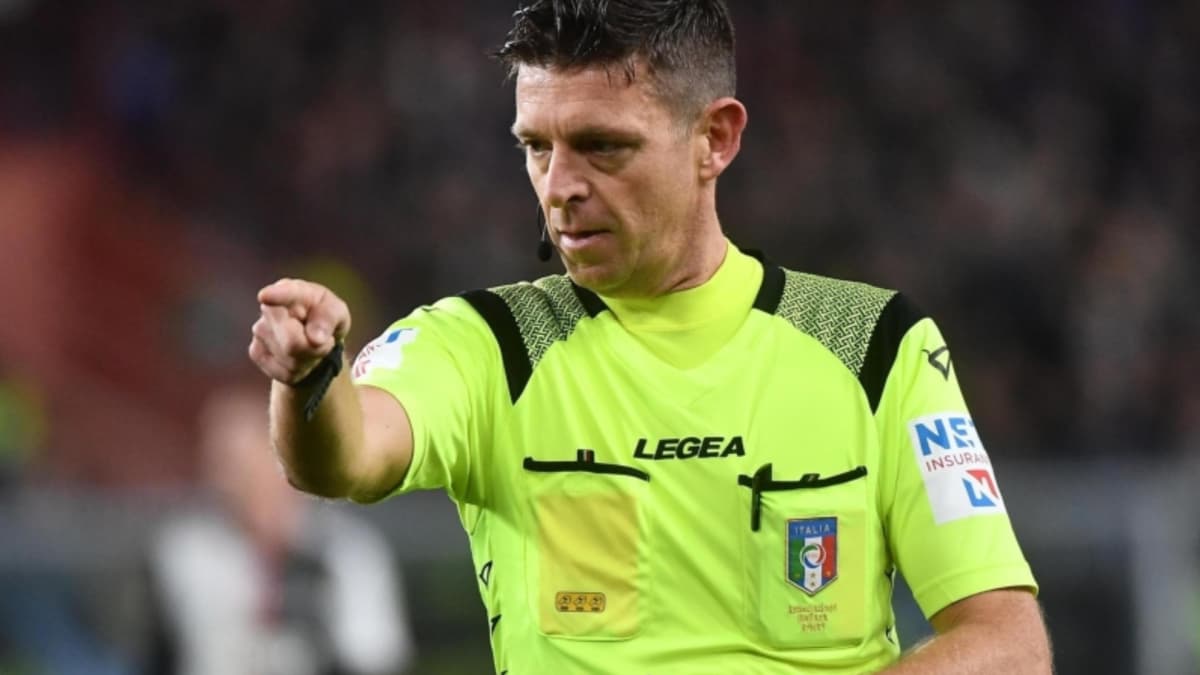
Revelan un sistema de designaciones arbitrales en el 'Caso Negreira' italiano
See every story in Sports — including breaking news and analysis.
A number of leading names in golf now find themselves in a state of flux. Jon Rahm, Bryson DeChambeau, Cameron Smith and others are contracted as LIV golfers. The conditions attached to those hugely lucrative deals mean the players are highly unlikely to criticise LIV, especially as it actively seeks a fiscal lifeline. Instead, some LIV golfers will naturally ask their management to ascertain potential paths back towards other tours and to clarify the terms on which contracts can be annulled. Without DeChambeau and Rahm especially, LIV will struggle to command attention.
The PGA Tour smoothed the passage for Brooks Koepka and Patrick Reed to return but, with the battle against a disruptor seemingly won, will drive a harder bargain in future. The appetite of certain players for a return to the PGA Tour is a further, intriguing point.
As if to prove nothing in this sport happens in isolation, the PGA Tour’s enhanced prize funds – established in part to stave off the LIV threat – will now come under severe scrutiny. LIV distorted the financial model throughout golf. As the former European Ryder Cup captain Paul McGinley put it: “Tours now left with huge overheads, driven by LIV and then used as leverage against them.”
The DP World Tour has allowed LIV players to play in its tournaments in recent times; it would be no surprise to see a development of that theme. An added complication, though, is the strategic alliance which keeps the PGA Tour and DP World Tour as formal partners.
LIV’s season is scheduled to continue at a Donald Trump-owned venue in Washington DC next week. It is due in South Korea, Spain and England before concluding back in the United States in late August. O’Neil’s mammoth task is to prevent that ending being for good.