
NFL
Jefferson blunt on McCarthy with Kyler a Viking
Justin Jefferson discusses the Vikings' QB competition between J.J. McCarthy and Kyler Murray.
ESPN News1 min read

The Knicks are relying on Jalen Brunson and Karl-Anthony Towns in their playoff strategy. Their synergy was evident in Game 1 against the Hawks, showcasing their potential for high-percentage scoring opportunities.
NEW YORK — Teams can spend months, years, lifetimes searching for that one perfect possession: the play where everything the front office envisioned in the offseason, everything the coaches drew up on the whiteboard, and everything the players run through in the install comes together to create the high-percentage scoring chance that everybody’s hunting for at this time of year.
For a New York Knicks team that has moved heaven and earth — not to mention Julius Randle, Donte DiVincenzo, Immanuel Quickley, RJ Barrett, a handful of first-round draft picks and about $820 million — over the past two years, the wait ended about five minutes into Saturday’s Game 1.
With the Knicks leading the visiting Atlanta Hawks 14-13 in the early going, Jalen Brunson dribbled across half-court and around a high ball screen from Karl-Anthony Towns. Two Atlanta Hawks defenders — Dyson Daniels and Nickeil Alexander-Walker — tracked Brunson as he dribbled to his left, unwilling to give the All-NBA point guard any daylight after he’d already made his first five shots of the 2026 NBA playoffs.
That left Towns, who had slid to his right after setting the screen, wide open above the break of the 3-point arc — an area where the 7-foot marksman has routinely knocked down more than 40% of his attempts over the course of his career. The Hawks didn’t want to give him any daylight, either; when Brunson calmly made a behind-the-back pass to Towns, Atlanta guard , the nearest defender, quickly shifted over, closing out to prevent a clean 3-point look.
The Brunson-Towns duo has shown effectiveness, particularly in creating high-percentage scoring chances during the playoffs.
The Knicks led the Hawks 14-13 early in Game 1, highlighting their competitive start in the playoffs.
The Knicks utilized high ball screens and quick ball movement to create open shots, particularly for Towns beyond the arc.
The Hawks struggled with closeout situations against the Knicks, particularly with Towns' height and shooting ability, making it difficult to defend effectively.
Justin Jefferson discusses the Vikings' QB competition between J.J. McCarthy and Kyler Murray.
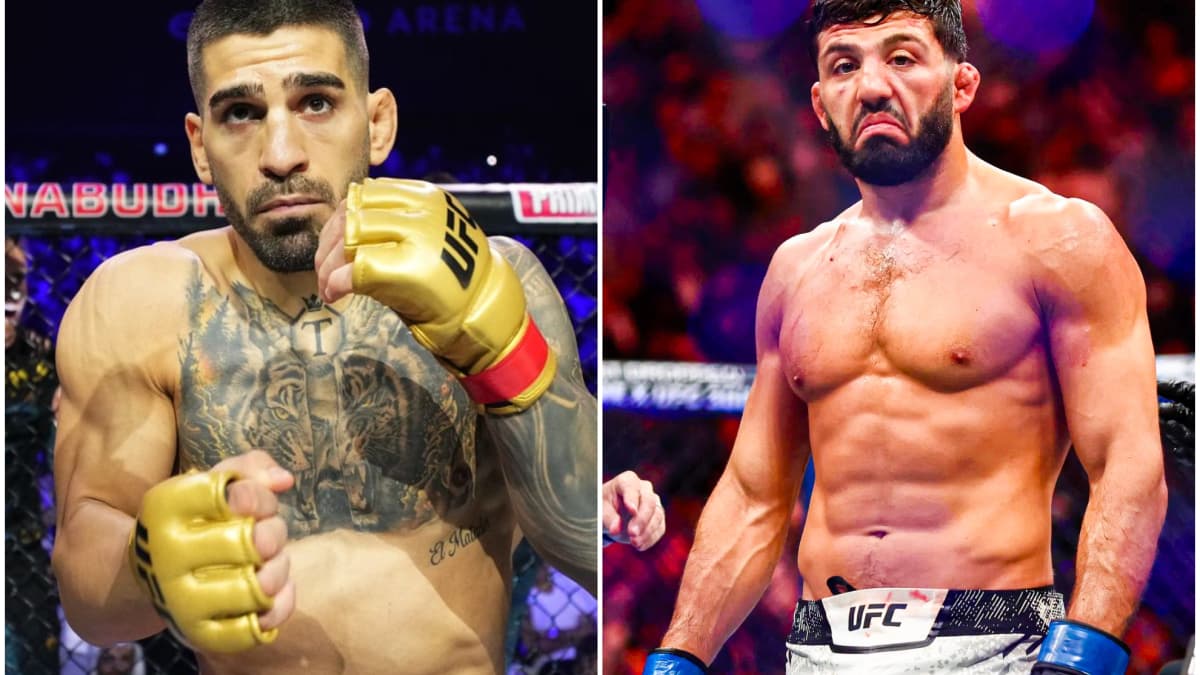
Ilia Topuria explota contra Tsarukyan: 'Es estúpido como la mierda'

Londres será la sede de una contrarreloj por equipos en el Tour de Francia femenino de 2027. La carrera comenzará en Leeds y pasará por Manchester y Sheffield antes de llegar a la capital británica.
OU stays No. 1 in college softball rankings after beating Arkansas. Coach Gasso calls for faster starts.
Phillies' rough start in 2026 raises concerns about World Series hopes.
Chicago White Sox face challenges with bullpen and offense despite Murakami's power.
See every story in Sports — including breaking news and analysis.
“Those closeout situations — if they're long, you know, you think you're on him, and he’s 7 feet tall, and you’re not,” Hawks head coach Quin Snyder said before Game 1. “Then, you think you've done a good job of that, and he makes a quick read.”
On this play, Towns read McCollum, who was guarding Josh Hart, who was reading everything.
As soon as Brunson threw that behind-the-back pass, Hart saw the dominoes falling; knowing that McCollum’s going to have to rotate to KAT, he began to cut from the slot. With only one Hawks defender left on the weak side of the floor, Hart knew his cut would force center Onyeka Okongwu into a choice: stay at home on Mikal Bridges in the corner and potentially give Hart an open layup, or rotate to pick up Hart and leave Bridges — who made the third-most corner 3s in the NBA this season — wide open to catch and shoot.
McCollum shifted. Hart cut. Towns passed. Okongwu rotated. Hart immediately kicked it to the corner. And Bridges cashed out.
That’s something close to the Platonic ideal of an offensive possession for these Knicks: one that leverages the threat of the offensive firepower and collective playmaking IQ they bring to bear across the starting lineup to create a no-muss, no-fuss three points. And it all started with the Brunson-Towns pick-and-roll — an action that looked devastating in the early stages of their partnership last season, and that wound up largely mothballed as defenses shifted their coverages to put their centers on Hart and wings on Towns.
As the Knicks neared the end of their first regular season under Brown, they started placing a greater emphasis on reviving the Brunson-Towns two-man game. Sometimes, that’s meant Towns operating from the top of the floor while Brunson runs off the ball, like a quarterback waiting for his receiver to get open; the Knicks got several buckets out of that look in Game 1, but also committed several turnovers.
Primarily, though, it’s meant Brunson more frequently looking for Towns. With a renewed focus on finding him, and the big man shooting a scorching 62.5% on those feeds after the All-Star break, their pick-and-roll pairing became one of the NBA’s most potent offensive actions over the final two months of the season.
“The situations that [Towns is] in are a little different — especially pick-and-roll with Brunson,” Snyder said after the game. “That's a layer that you really … it’s hard to deal with, when you have two players that are that gifted individually, and, then, you know, when they're connected, as well. It presents more problems.
The Hawks had their fair share of problems with it in Game 1, as the Knicks scored 1.46 points per possession on 15 possessions that saw Towns set a screen for Brunson, according to Second Spectrum tracking data — a monster number that helped propel New York to a 113-102 win.
“I’ve said this before, but the longer, obviously, we’re on the court together, our chemistry is better,” Brunson said after the win. “I think we’ve grown as teammates, we’ve grown as friends, and it’s contributing to the way we’re playing.”
(At this, Towns joked that he’s “not at the Josh [Hart] level [of friend] yet, but we’re working.” To which Brunson quickly deadpanned, “Josh is not a friend.”)
Brunson said at Knicks practice on Sunday that, after nearly two full seasons together, finding his flow with Towns has “just become easier.” One thing that made it easier in Game 1: the Hawks continuing their regular-season trend of spending the bulk of the game defending Towns with their centers, Okongwu and Mouhamed Gueye.
In the final four minutes of Game 1, though, Snyder dialed up an adjustment we covered in our series preview, switching the matchups by putting Daniels on Towns, sliding Okongwu over to Hart, and having Alexander-Walker check Brunson. The cross-match paid immediate dividends.
Brunson mostly chose to bring Hart and Bridges into the action to set the screen while Towns spaced the floor. The result was a hail of missed jumpers, as the Knicks scored just seven points on 1-for-5 shooting with a turnover over those final four minutes.
Those misses allowed the Hawks to push the pace in transition, make some 3-pointers and rip off an 11-0 run to make it an eight-point game heading into the final minute.
The main benefit of the cross-match? New York didn’t run a single Brunson-Towns pick-and-roll down the stretch, and Towns did not attempt a shot when Daniels was guarding him, according to NBA Advanced Stats matchup data. Until a runout layup after New York broke an Atlanta press with 48 seconds left, he barely touched the ball down the stretch.
“I liked the way that we came back at the end of the game,” Snyder said. “We were resilient in that situation. It was just, you know, too little, too late.”
Expect Snyder to flip that particular switch a lot earlier in Game 2, given how successfully New York generated scoring chances when Towns was guarded by a big man and how much Atlanta was able to gum up the Knicks’ offense late.
Two other things to keep an eye on in Monday’s Game 2:
During their 20-6 sprint from the All-Star break through the end of the regular season, the Hawks averaged 118.3 points per 100 possessions, tied for 10th-best in the NBA in that span. In the second half of Game 1, though, the Hawks scored just 47 points in 49 possessions — a 95.9 offensive rating, the equivalent of a league-worst attack, and nowhere near effective enough to get the job done against a team capable of scoring like New York.
“We can play better offensively,” Snyder said. “I think the physicality of the game, Game 1, just kind of … I thought we responded well to that. There’s points when we need to — the formula for us, and our identity, has been to run and move the ball. It’s not like we didn’t do that. But we need to do more of it.”
After reorienting its team in January by trading away former franchise centerpiece Trae Young, Atlanta pivoted toward an attack predicated on speed and movement. In Game 1, particularly after halftime, New York grounded the Hawks, who threw fewer passes, dished fewer assists, moved at a slower average speed and went deeper into their possessions before taking a shot than they did during the regular season.
Snyder attributed some of those drop-offs to the Hawks needing to stay committed to hunting opportunities for the kind of hit-ahead passes that can get them into early offense and get the Knicks defense scrambling. Some of it, though, was the Knicks doing a good job of being intentional about limiting those runouts and of preventing Atlanta from generating second chances on the offensive glass.
“You can see it on the tape — they want to play fast,” Brown said Sunday. “You can see it. As soon as the ball goes through the net, you can see Nickeil Alexander-Walker and CJ McCollum, they’re going like, ‘Get it in, get it in, get it in.’ So we have to do a better job in transition, and you see it on tape again that they’re crashing [for offensive rebounds]. They’re crashing. They’re coming. And we’ve got to keep putting bodies on bodies, and not allow them to be able to impact the game in those two areas.”
After the Young trade, the Hawks were 11th in the NBA in offensive rebounding rate, pulling in nearly 31% of their own misses; in Game 1, that rate dropped to 23.2%, which would’ve been dead last in the NBA during the regular season. Nearly 17% of Atlanta’s offensive plays came in transition during the regular season, fourth most in the NBA, producing a mammoth 1.34 points per possession on those transition plays, according to Cleaning the Glass. In Game 1, though, the Hawks ran on just 13.4% of their offensive plays and scored only 1.18 points per possession on them — bottom-of-the-league-level stuff — as the much more plodding Knicks outscored them 22-13 on the fast break.
If the Hawks don’t generate easy buckets on the break or extra possessions on the glass, they’re going to find themselves in a grind-it-out contest where they’ll need to execute at a high level in a matchup where the Knicks can put Bridges’ length on Alexander-Walker, task the burly Hart with making life uncomfortable on Jalen Johnson and cross-match OG Anunoby onto Okongwu while Towns sags off the non-shooting Daniels. That makes for tough sledding for Atlanta, who, as NBA.com’s John Schuhmann noted, “shot below 50% (21-for-43) in the paint [in Game 1] for just the 15th time this season. The last two occasions have come against the Knicks.”
Atlanta can generate good looks against this New York defense. Multiple Knicks referenced the need for New York to be more attentive, physical and connected on Atlanta’s guard-guard screening actions, which led to a number of open shots in Game 1:
The Hawks will need to continue stress-testing the Knicks’ communication on coverages, the cleanliness of their switches and the physicality of their on- and off-ball defense to get off on the right foot in Game 2 and build the confidence that they can stay connected against the favored hosts.
“Defining what a good shot is is really difficult, especially in a playoff situation,” Snyder said. “Guys need to have the confidence that they can attack and make plays, and not every shot you’re going to get is going to be wide open. That makes it easy. What you can do is continue to work to get the best shots you can. And we know how to do that, and we’ve got to keep doing it, and do everything a little better.”
The 25-year-old Okongwu is a critical piece for Atlanta on both ends of the floor — the Hawks’ biggest interior defender, closest like-sized defensive matchup for Towns and Mitchell Robinson, best weak-side shot-blocker and best pick-and-pop big. After a Game 1 that saw him chip in 19 points, eight rebounds, two assists, one blocked shot and four 3-pointers, Snyder called Okongwu’s aggressiveness on shooting trail and pick-and-pop triples “important for us,” especially given how quickly New York can close space on the defensive end.
So it was notable when the Hawks announced Sunday that Okongwu had been downgraded to questionable for Game 2 with right knee inflammation.
While Atlanta lost Okongwu’s 37 minutes by 12 points in Game 1, the most important part of that figure is the 37 minutes. With backup center Jock Landale sidelined by a right high ankle sprain, the Hawks’ only other healthy big men are Gueye, an active and athletic but thin and reedy 210-pound power forward masquerading as a 5, and Tony Bradley, whom Atlanta signed in the final week of the season after Landale went down, and in whose limited floor time the Hawks have been outscored by a point per minute.
If Okongwu can’t go, a Hawks team relying on its starting five for heavy minutes gets even thinner. Without him to battle Towns and Robinson, those reserve bigs figure to have their hands full replicating the defensive effort that limited the Knicks to just six offensive rebounds in Game 1 — one of just seven times this season they’d had that few — and holding the glass-eating Robinson without an offensive board for just the third time all season. And without a stretch big to space the floor, the already tough task of creating clean looks against this Knicks defense would likely get even tougher — potentially prompting Snyder to need to downsize all the way to putting Johnson at the 5 to goose the offense.