CricketRecap
IPL 2026: Vaibhav Sooryavanshi back on top, overtakes Abhishek Sharma in Orange Cap race
IPL 2026: Vaibhav Sooryavanshi overtakes Abhishek Sharma in Orange Cap race!
Yahoo Sports1 min read
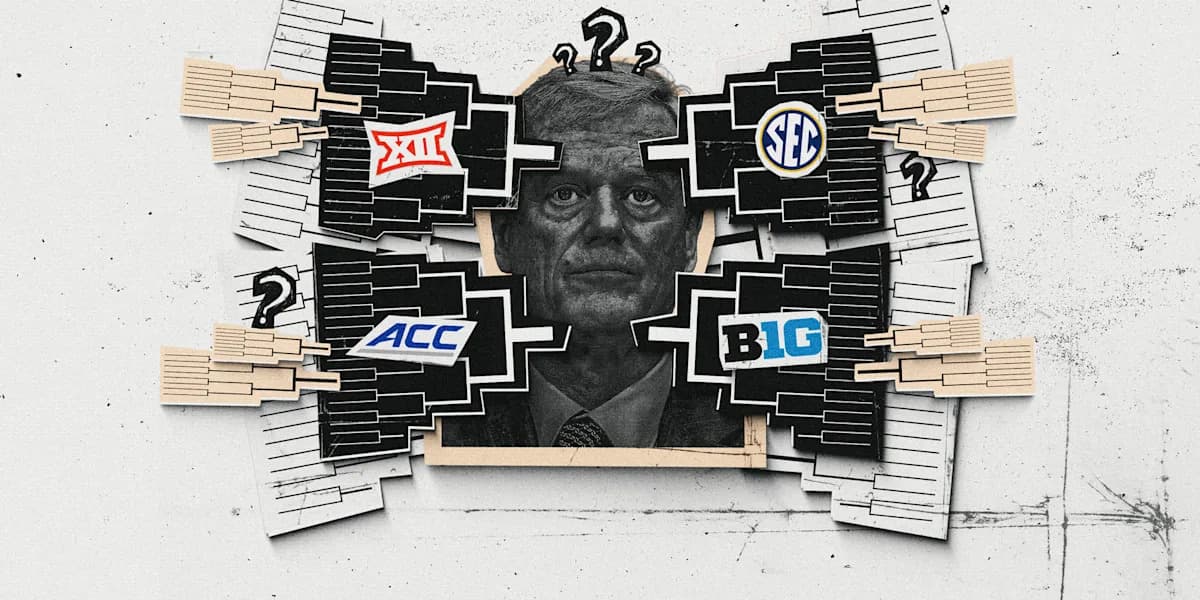
NCAA tournament expansion is imminent as power leagues aim to boost access and revenue amid financial pressures. The current television contract expires in five years, prompting this strategic move.
In the most financially stressful time in college athletics history, the power leagues see NCAA tournament expansion as a key path to increasing access and revenue. (Dillon Minshall/Yahoo Sports)
An expanded NCAA tournament is on the horizon — that much we’ve known for some time.
The end of the event’s television contract is a mere five years away; and the gap between the haves and have-nots — attributed mostly to conference realignment, athlete compensation and transfer movement — has never existed in such a significant way as it does today.
In the most financially stressful time in college athletics history and considering their success in these events in general, the power leagues are aggressively seeking more access and revenue in NCAA championships.
NCAA leadership and members of the association’s basketball committees — both the selection and oversight groups — are expected to finalize an expansion of the men’s and women’s tournaments to 76 teams.
Barring something unforeseen, “it will happen,” says one high-placed source.
According to a proposal socialized with members last year, eight games would be added to the current “First Four” played over Tuesday and Wednesday of the first week of the event. This new “opening round” — the verbiage used to describe it — would feature 24 teams playing in 12 games over the two days at two sites (Dayton and another). Those involved in the negotiations caution that plenty of this could change through the course of continuing talks with TV partners Warner Bros. Discovery and CBS.
The 12 winners of the opening-round games — likely six games pitting lower-seeded automatic qualifiers and six pitting at-large teams — advance to an awaiting 52 teams in the original bracket. Under this concept, eight teams are extracted from the main bracket, plus the eight new at-large selections from expansion.
NCAA tournament expansion is seen as essential due to the financial stress in college athletics and the growing disparity between power leagues and others.
The current NCAA tournament television contract expires in five years, prompting discussions about expansion.
Factors include conference realignment, athlete compensation, and transfer movement, which have widened the gap between different college programs.
Expanding the NCAA tournament is expected to increase access and revenue for the power leagues, addressing financial challenges in college athletics.
IPL 2026: Vaibhav Sooryavanshi overtakes Abhishek Sharma in Orange Cap race!
Casey Mize leaves game against Braves with an unknown injury
Is J.J. McCarthy's Future with the Vikings at Risk?
Who leads the early odds for the No. 1 pick in the 2027 NFL Draft?

Simeon Powell looks to recover at PFL Sioux Falls against Emiliano Sordi
Isaiah Stewart sees himself as the X-Factor for the Pistons as they face elimination against the Magic.
See every story in Sports — including breaking news and analysis.
Leaders at the Big 12 and ACC, perhaps more than others, have aggressively pushed for the expansion of the tournament.
But so has NCAA president Charlie Baker, who views it as a way for deserving bubble teams to extend their seasons — and potentially win a game, too. Two of this tournament’s last teams in, 11 seeds Texas and Miami of Ohio, won a combined three games.
“There are every year some really good teams that don’t get to the tournament for a bunch of reasons,” Baker said last fall. “One of the reasons is we have 32 automatic qualifiers [for conference champions]. I love that and think it’s great and never want that to change, but that means there’s only 36 slots left for everybody else.”
However, there is an unsaid reason for expansion: paving the way for more access for power league programs that likely control the future of the event. Over the last five years, 15 of 20 teams that the selection committee deemed as the “last four out” of the tournament have been from the power conferences.
“I want to see the best teams competing for a national championship, no different than [the Big Ten and SEC] want to see in football,” Big 12 commissioner Brett Yormark said in a 2024 interview. “I’m not sure that is currently happening.”
In the past, ACC commissioner Jim Phillips called for a “holistic review” of the tournament that more considered a league’s “value and contribution.”
The inevitable expansion of the NCAA tournament is only one piece of a larger conversation about the future of the event.
Keeping the NCAA intact — all 350 plus Division I schools operating under one national association — has been a central goal for industry stakeholders for the last decade. Financial disparities, splintering not just Division I but the 137-school FBS and even the 68-member power football group, is making it more difficult.
It’s been top of mind, most notably, for Baker, who agreed to the landmark 10-year settlement of three antitrust cases (House), in part to secure Division I unity for another decade. The NCAA office and non-power leagues are footing 60% of about $2.8 billion of backpay to athletes, most of whom formerly played in the power leagues.
But nothing works as better glue to bind Division I than the NCAA tournament. In fact, the event has emerged over the years as a deterrent for a breakaway of the power football conferences whose executives either cherish the event (Sankey has said this publicly), fear political backlash, or both. One of the hurdles, for instance, in the SEC and Big Ten’s ongoing but separate discussions over governing themselves is none other than March Madness.
In five years, that hurdle disappears.
The NCAA’s contract with TV partners CBS and Warner Bros. Discovery expires after the 2031 tournament. Negotiations over any new tournament fall amid a key stretch of years — 2029-2032 – when many within the college athletics industry expect significant change, including conference realignment and alterations to postseason events.
Existing media rights agreements in the Big 12 (Fox and ESPN) and Big Ten (NBC and CBS) expire over that stretch as well (however, the Big Ten’s deal with Fox runs through 2036). The SEC is likely to enter into an early renegotiation window with ESPN, and the ACC’s exit fees drop below $100 million during that span.
“The NCAA tournament is maximized, but all the other championship events probably have a lot of other opportunities they are missing,” said Jason Belzer, a venture partner with Sequence Equity and a sports attorney who has negotiated more than $80 million in NIL contracts. “If you’re a business, you can’t really monetize any sponsorship and media rights of other championships.”
Could the negotiations over expanding the tournament also involve the amending of a clause costing the organization millions of dollars?
NCAA officials do not comment on active negotiations. But those with knowledge of the negotiations point to such a change as another reason for expansion.
There are more reasons to expand the event, too. In fact, there are 10.3 million reasons to do so. That’s the number of viewers who watched the NCAA tournament through the Elite Eight round — the highest ratings since 1993.
“I’m not backing off what I’ve stated previously: Basketball is undervalued,” Yormark said this week. “It’s playing out just the way I thought it would, with increased ratings and increased engagement and viewership starting with the regular season and continuing into the tournament.”
(Editor’s Note: This story was originally published on April 3 during the NCAA tournament.)