
Crypto
Appeals court blocks New Jersey from shutting down Kalshi's sports markets
CoinDesk

A threat actor known as “Jinkusu” is allegedly selling cybercrime tools designed to bypass Know Your Customer (KYC) checks at banks and crypto platforms.
The tool uses deepfakes and voice manipulation to trick KYC verification systems on finance platforms, cybercrime tracker Dark Web Informer wrote in a Sunday X post.
Cybersecurity company Vecert Analyzer added that Jinkusu uses AI for real-time face swaps via InsightFace for “fluid gesture transfers,” along with voice modulation to evade biometrics.
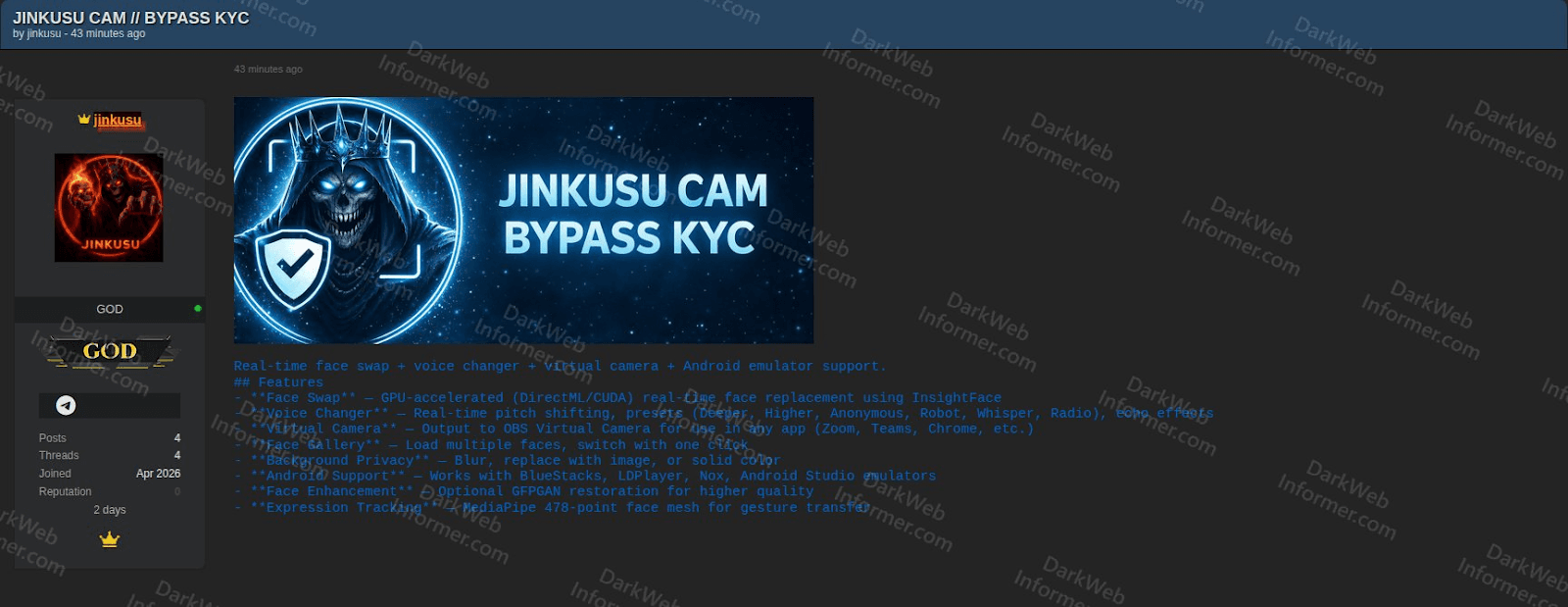
Source: Dark Web Informer
The emergence of deepfake tools is a “wake-up call” for the industry, as it highlights the shortcomings of KYC verification systems, according to Deddy Lavid, CEO of blockchain security platform Cyvers.
“As AI lowers the barriers to synthetic identity fraud, the front door will always remain vulnerable,” Lavid told Cointelegraph, urging platforms to adopt a layered security approach combining identity verification with real-time AI monitoring.
Binance chief security officer Jimmy Su highlighted the growing threat of deepfake technology back in May 2023.
He warned that improving AI algorithms will be able to crack KYC identity systems by using a single picture of the victim.
Related: Revolut confirms ex-employee threatened to leak KYC data for crypto ransom
The new fraud kit also enables scammers to run romance scams, such as “pig butchering,” with no technical knowledge.
Crypto investors lost $5.5 billion to 200,000 flagged pig butchering cases in 2024.
The author of the new fraud package, Jinkusu, is suspected to be the same threat actor who released the phishing kit Starkiller in February 2026.
Unlike traditional, HTML-based phishing kits, Starkiller creates a real-time reverse proxy by creating a headless Chrome browser inside a Docker container, loading the genuine login page of the target brand and relaying all user input, including login and passwords, to the threat actor, explained cybersecurity platform Abnormal, in a Feb. 19 report.
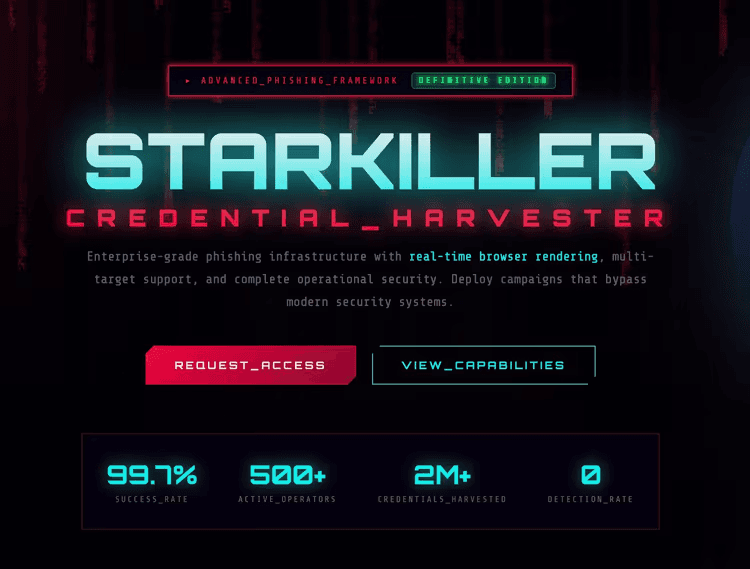
Starkiller phishing-as-a-service malware. Source: Abnormal.ai
While losses to crypto phishing attacks fell 83% in 2025, malicious crypto wallet drainer scripts remained active and new malware continued to emerge, Scam Sniffer said in a January report.
Magazine: Everybody hates GPT-5, AI shows social media can’t be fixed
Share this article
The tool is allegedly designed to bypass Know Your Customer, or KYC, checks at banks and crypto platforms. It uses deepfakes and voice manipulation to fool identity verification systems. Cybercrime tracker Dark Web Informer said the tool is being sold by a threat actor known as Jinkusu.
It uses real-time face swaps and voice modulation to evade biometric checks. Vecert Analyzer said Jinkusu uses AI with InsightFace for “fluid gesture transfers,” which helps make the fake identity look more convincing. The goal is to trick finance platforms during customer verification.
Experts say deepfake fraud exposes weaknesses in KYC systems. Deddy Lavid of Cyvers called it a “wake-up call” and said AI lowers the barrier to synthetic identity fraud. He urged platforms to use layered security that combines identity checks with real-time AI monitoring.
Yes, that is a concern raised by Binance chief security officer Jimmy Su. He warned in May 2023 that improving AI could crack KYC identity systems using only a single picture of a victim. The article says this risk is growing as AI algorithms improve.
It can also be used for romance scams, including pig butchering, without requiring technical knowledge. The article says crypto investors lost $5.5 billion to 200,000 flagged pig butchering cases in 2024. That makes scam-as-a-service tools a serious threat to crypto users.




See every story in Crypto — including breaking news and analysis.