
SoccerRecap
De Zerbi: Referee was not calm, he was feeling the pressure
De Zerbi: Referee Gillett Wasn't Calm During Tottenham's Draw
Sky Sports1 min read
The PGA Championship returns to Aronimink in Philadelphia after 64 years, with past performance data from the 2011 and 2012 AT&T National tournaments providing insights into player trends. Historical data from the previous PGA Championship won by Gary Player is limited but relevant.
Mentioned in this story
B.F. Skinner, the American psychologist and behaviorist, once said “the best predictor of future behavior is past behavior.” Therefore, if you’re trying to predict who will play well at the PGA Championship this week, you might be best served looking back.
The event returns to the Aronimink, in eastern Philadelphia, for the first time in 64 years. While performance data from that PGA Championship, won by Gary Player, is understandably limited, there is recent data from the course that could serve to suggest some trends.
In 2011 and 2012 Aronimink hosted the AT&T National tournament on the PGA Tour. The event, originally at Congressional, had to be moved as it prepared for the 2011 U.S. Open, so this year’s PGA Championship host stepped in for two years. Positioned between the U.S. Open and Open Championship, it hosted strong fields both years.
2230886335
Scott Taetsch/PGA of America
Seven years later, the tour returned to Aronimink again, this time for the BMW Championship, the penultimate event of the FedEx Cup Playoffs.
Thanks to DataGolf, we’re able to look at the details of those three events, how the course played and the players that performed best.
Here’s what it suggests.
Putting is the most important skill
While it may be naive to look at results from an event and note that the players high on the leaderboard putted well, it does seem a key factor in performing at Aronimink.
In 2018, Keegan Bradley led the BMW Championship field in strokes gained/putting (+7.2) and won the tournament. In 2011, Nick Watney led the field in strokes gained/putting (+10.6) and won. In 2012, Ryan Moore was first in strokes gained/putting (+8.6) and missed winning by a shot to Justin Rose, who gained over seven shots on the greens and ranked fourth.
118946243
Nick Watney celebrates on 18 at Aronimink after winning the AT&T National event in 2011.
Aronimink Golf Club hosted the PGA Championship in the past and the AT&T National tournament in 2011 and 2012.
The last PGA Championship at Aronimink was won by Gary Player.
Past performance data helps identify trends and potential player success based on historical results at the course.
Aronimink last hosted a major golf tournament 64 years ago, during the PGA Championship.
De Zerbi: Referee Gillett Wasn't Calm During Tottenham's Draw

Jakirovic calls Hull's Wembley trip the best moment in his football career.
Bixby Coach Loren Montgomery Honored with Hall of Fame Induction
Detroit Lions announce new jersey numbers for 27 players ahead of 2026 season.
Paulo Costa's shocking comments on Khamzat Chimaev's defeat anger fans.
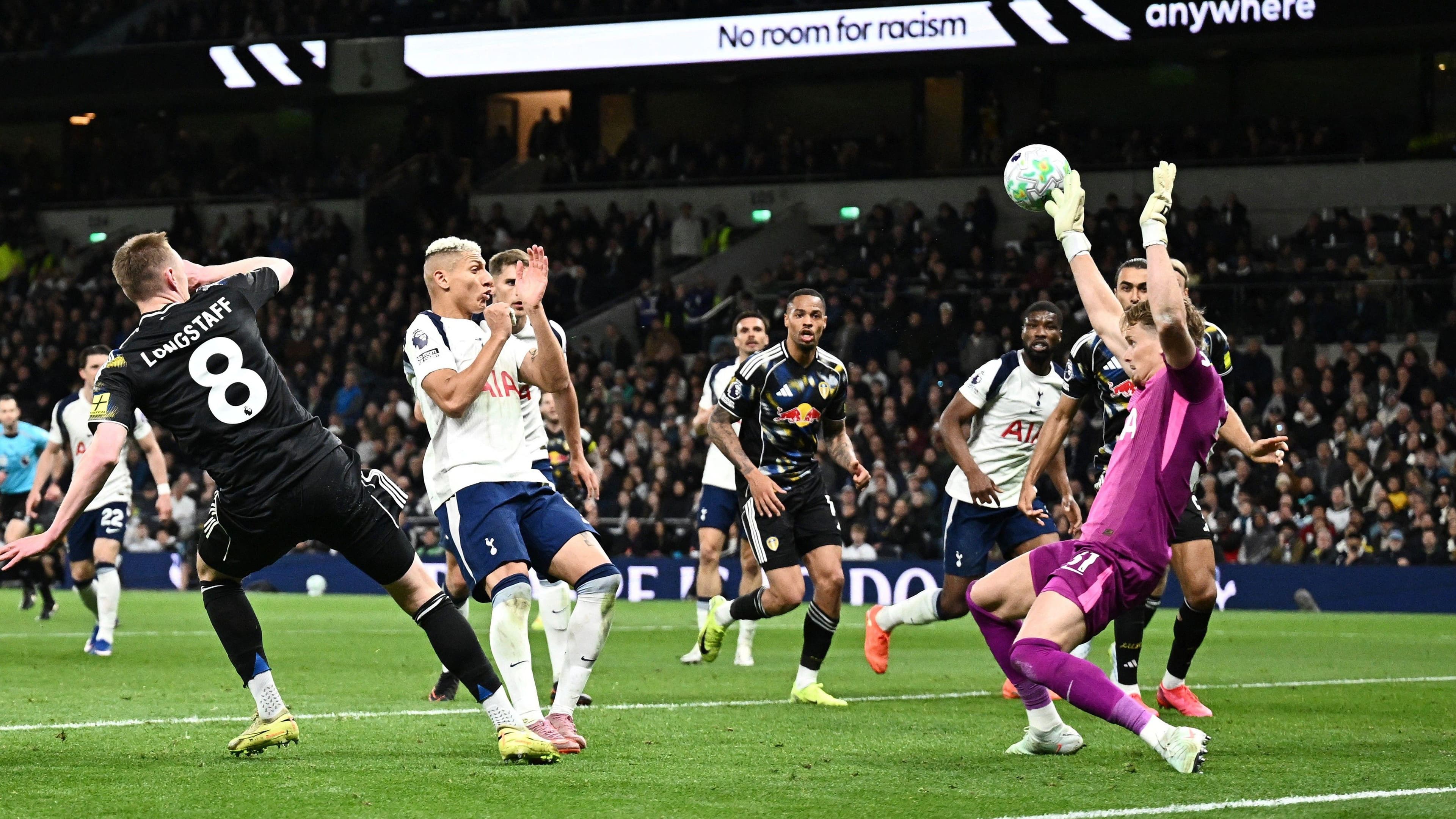
Kinsky's crucial save helps Tottenham earn a point against Leeds.
See every story in Sports — including breaking news and analysis.
Carlos M. Saavedra
Again, that may seem obvious. The players that won holed a lot of putts. That is common at most events. However, if you look deeper, you’ll find it is a notable indictor of success at Aronimink.
Take the most recent event, the 2018 BMW Championship. The top four players on the leaderboard that week were Bradley, Rose, Xander Schauffele and Billy Horschel. They were all among the top 10 best putters that week. Of the 44 shots by which they collectively beat the field average, more than half (23.1) came on the greens.
/content/dam/images/golfdigest/fullset/kennedy/BMWBreakdown.jpg
In fact, eight players in the top 10 on the leaderboard that week also finished inside the top 10 in strokes gained/putting.
When Nick Watney won the AT&T National in 2011, the top five players on the leaderboard were among the top 15 best putters. None ranked inside the top 10 in driving distance and only one featured in the top 25 in strokes gained/approach, typically a strong measure of success at majors.
Approach play is (oddly) unimportant
To that last point above, the data suggests that Aronimink doesn’t reward strong iron play.
In 2010, when Rose and Moore battled for the AT&T National title, neither ranked inside the top 40 in strokes gained/approach. Furthermore, two of the six best players in that category actually missed the cut that week (Shaun Micheel and Greg Owen).
We know that was a similar storyline in 2011, and again in 2018, the data suggests victory isn’t found in approach. Rose actually lost strokes in approach (-0.2 per round) that week and still found himself in a playoff.
102722584
Fred Vuich
With greens that average around 8,300 square feet, known for their sweeping movement and size, it appears that players can easily find the putting surfaces but it’s how quickly they can hole out when they do that correlates to success.
In 2018, players hit greens 11 percent more often than at a typical PGA Tour event. Yes, it was very soft that week due to heavy rain in the lead up to the tournament, but that same tendency appeared in both 2011 and 2012 when weather wasn’t an issue.
Practice wedges, not mid-irons
One of the most interesting metrics that DataGolf tracks at courses is the relative volume of approach shots based on distance. At this year’s Masters for example, players hit noticeably less shots from 75 to 100 yards, 100 to 125 yards and 125 to 150 yards, versus a regular PGA Tour course. The year’s first major is usually a battle of mid and long irons, especially given the challenging contours and speeds of the greens.
If you look at Aromimink, it’s the opposite. In all three tour events it has hosted, players hit fewer shot from 150 to 200 yards and considerably more shots from 100 to 150 yards.
/content/dam/images/golfdigest/fullset/kennedy/YardageChart.jpg
The layout, tipping out at 7,200 yards, isn’t long by modern standards, especially for a major championship. It is well bunkered—with more than double the number of bunkers this year than it had before the 2017 renovation by Gil Hanse and Jim Wagner—but it isn’t long. Players can take on doglegs, pick and choose which bunkers to carry off the tee and find themselves with more wedges and less mid and long irons than they might be used to.
Remember also, this week will play to a par of 70. There are only two par 5s. Those players that typically have an edge with distance, often going into par 5s with long irons, could find that advantage limited at Aronimink.
That is what the past tells us. How the future and the 108th PGA Championship will play out is ahead of us. Will those trends and tendencies help someone claim the Wanamaker Trophy? I’ll be watching to find out. With my spreadsheets open.