Sports
Robinson one of best bowlers in the world - Key
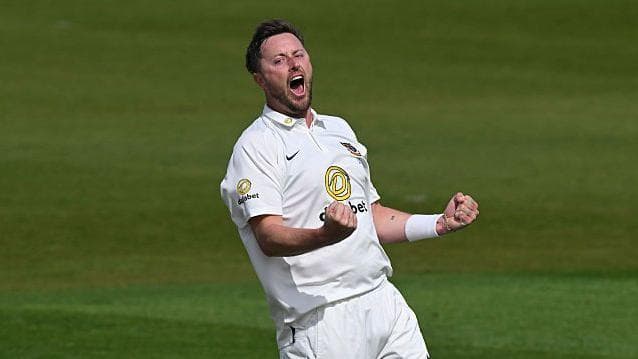
Ollie Robinson hailed as one of the world's best bowlers after recall
Yahoo Sports1 min read
The PGA Championship 2026 at Aronimink has sparked controversy over extensive tree removal, impacting course strategy. Players like Rory McIlroy and Xander Schauffele express concerns that the lack of trees makes the course too forgiving for long hitters.
Mentioned in this story
NEWTOWN SQUARE, Pa. — Aronimink is beautiful. Pastoral, bucolic, a Donald Ross design that sits on 300 acres of rolling Pennsylvania countryside as though the land willed it into existence. The kind of place where you post up under some old trees to let the real world recede, and feel the noise beyond the gates go quiet.
Metaphorically, that is, because the trees are largely gone now. Cleared over two decades of work amid a trend of Golden Age architecture rebirth, the argument that Ross never intended them to be there, that the canopy that defined the place was a postwar imposition. However, there's been a vocal counter this week about what that decision will cost.
Rory McIlroy said there's no strategy off the tee. Xander Schauffele and Jon Rahm echoed the sentiment, both pointing to the property's aggressive tree removal as having left the course naked and exposed. The prevailing conversation among players and caddies this week isn't about the rough or the greens or the bunkers. It's about width and how open the corridors are. How forgiving a layout becomes when the trees that once compressed it have been cleared away. For a century, those trees were the ballast, keeping the elite ball-strikers honest. Without them, what remains is a masterpiece that is gorgeous to look at, meticulously restored, and quite possibly ready to be dismantled by a field that hits it 340 yards and hasn't feared a tight tee shot in years.
"It's basically bash driver down there and then figure it out," McIlroy said. "When these traditional golf courses take a lot of trees out, it makes strategy not as much of a concern off the tee. I think about Oak Hill in 2023, here—same kind of thing." Schauffele was more pointed. "When I hear certain designers say they're restoring a course to 1915, I'm like, 'It probably takes a hundred years for a nice tree to grow—and now you're pulling it out just to say it was there before,'" he said. "People keep talking about distance, but just put trees on a course."
2275357173
Icon Sportswire
They're not wrong. The trees served a purpose, and their absence is a real architectural concession to a game that already asks too little of its best players off the tee. That critique deserves to be taken seriously ... and then separated from what this week actually is.
The trees-as-storyline development is a very PGA Championship thing. This is the major that has produced more genuine oddities than the other three combined. We needn't travel far back to recall a certain World No. 1 departing a golf course in handcuffs. Strange things happen here, and the strangeness tends to stick. So yes, panic about 20-under winning scores is entirely real this week, the collective anxiety already forming before a single shot has been struck. To that, the appropriate response is: relax. Low scoring is a symptom, not a disease, and the PGA Championship has survived weirder.
The controversy centers on the extensive clearing of trees, which players believe has altered the course's strategic challenge, making it easier for long hitters.
Players like Rory McIlroy and Xander Schauffele have criticized the tree removal, stating it diminishes the strategic elements of the course.
The trees were considered integral to the course's design by Donald Ross, providing strategic challenges that have been lost due to their removal.
Similar to Oak Hill, the removal of trees at Aronimink has led to concerns about reduced strategic complexity, allowing players to drive more freely.
Ollie Robinson hailed as one of the world's best bowlers after recall
BYU's offensive line coach sees a promising season ahead for the team, especially with strong performances from players like Bear Bachmeier.
Following Brandon Clarke's death, a Memphis nonprofit, ARISE2Read, experienced a significant increase in donations. Clarke had recently participated in a community event supporting literacy at KIPP Collegiate K-8 School.
Warner Bros. Discovery outlines sports plans as Paramount deal approaches.
With Craig Berube gone, will Auston Matthews stay with the Maple Leafs?
See every story in Sports — including breaking news and analysis.
Each major carries its own identity, its own unspoken contract with the viewer. The Masters is about tradition—the azaleas, the murmur, the sense that nothing changes and nothing should (even if that sentiment is now under attack). The U.S. Open asks you to root for the course. The Open promises a purity that American golf cannot produce. The PGA Championship makes no such grand claim. It just wants the best tournament it can put on. That sounds modest. It isn't. Freed from the obligation of mythology, the PGA has quietly become the most reliably entertaining major on the schedule. The one least interested in its own symbolism and most interested in the actual golf.
Credit Kerry Haigh, the PGA's chief championships officer, who controls the course setups. There is no chasing a sacred number with him, no circling a winning score on a clipboard and then bullying a golf course into submission to reach it. He reads what the course gives him and goes with it. He let Oak Hill, Southern Hills, and the Ocean Course lean into the beasts they are. He let Quail Hollow and Harding Park speak for themselves. He looked at Valhalla, recognized it for the scoring festival it was always going to be, and stepped aside. The results are hard to argue: Scottie Scheffler, Xander Schauffele, Brooks Koepka, Justin Thomas, Phil Mickelson, Collin Morikawa. You'd put that winner's list against any major's.
"What separates the PGA from the others is they have no agenda," Keegan Bradley said Monday. "The winning score could be three under or 15 under. They just want to host a great tournament. And I think they do an incredible job of that."
As for the oddities: every major has its raps. The weather at the Open is a recurring protagonist. The USGA spent years treating its own championship as an opponent. Both criticisms have merit, though perhaps more weight has been assigned to them than deserved. And what some call an oddity, others call character.
So yes, the field might go very low this week. It may well be a blinking neon argument for the rollback, a reminder of what happens when distance and open fairways share a zip code. But that's a conversation better directed at the USGA next month at Shinnecock, where the setup will be punishing and the rough will be the story and everyone will complain about that instead. For decades, the PGA Championship sold itself on borrowed credibility—"Glory's Last Shot," "This is Major"—slogans that arrived pre-packaged with the insecurity baked in. They have been mercifully retired. The moment a major has to explain its own importance is the moment the argument is already lost. The PGA Championship has stopped shouting, which is beautiful in itself.