
SoccerRecap
Utterly ridiculous! PSG beat Bayern in NINE-goal Champions League epic
In an epic Champions League clash, PSG beats Bayern 5-4 in a nine-goal semi-final!
Sky Sports1 min read
The New York Jets' draft has received a mix of positive and critical feedback. General manager Darren Mougey expressed a holistic vision for the team's draft strategy, which showed promise but included some questionable decisions.
Mentioned in this story
INDIANAPOLIS, INDIANA - FEBRUARY 24: General manager Darren Mougey of the New York Jets speaks to the media during the 2026 NFL Scouting Combine at Lucas Oil Stadium on February 24, 2026 in Indianapolis, Indiana. (Photo by Justin Casterline/Getty Images) | Getty Images
You may remember last week, right before the draft, I laid out a more holistic vision for what I wanted to see from the Jets. Fast forward a week, and the draft has come and gone.
For the most part, I walked away encouraged.
Bits and pieces have come out about how the Jets prepared and approached the draft, and a lot of it points in a direction I like. That said, it wasn’t perfect. There were decisions I agreed with, and others I probably wouldn’t have made myself.
So here, I want to break it all down: the pros, the cons, and what stood out most. What gave me confidence, and what gave me pause.
Before diving in, it’s worth saying this upfront: we won’t truly know how this class turns out for a few years.
Like everyone else, I’ve been wrong on prospects before….a lot. So at the end of the day, this is just my read on it right now.
This was easily my biggest takeaway.
Now, it’s hard to know exactly how heavily the Jets leaned into analytics, but from the outside looking in, a lot of their decisions feel rooted in data.
Take the decision to draft David Bailey over Arvell Reese. That’s one most data-driven analysts would back. Albert Breer even mentioned in his mailbag that “advanced analytics” factored into the choice. Rich Cimini had also reported a couple of weeks prior that Bailey was a strong possibility largely because the Jets lean on analytics in their evaluation process.
Honestly, I’m not sure Bailey is the pick if this were a purely traditional scouting approach.
The Jets made several decisions that reflected their strategic vision, though not all were universally praised.
Darren Mougey is the general manager of the New York Jets during the 2026 draft.
The overall sentiment is mixed, with some encouraging aspects and others that raised concerns.
The Jets' preparation involved a holistic approach that aimed to align with their long-term vision for the team.
In an epic Champions League clash, PSG beats Bayern 5-4 in a nine-goal semi-final!

Ipswich's comeback draws with Southampton, sending the race for promotion to the final day!
Punjab Kings wore black armbands during their IPL 2026 match against Rajasthan Royals to honor teammate Azmatullah Omarzai's late mother. The gesture reflects the team's solidarity and support for Omarzai during his personal loss.
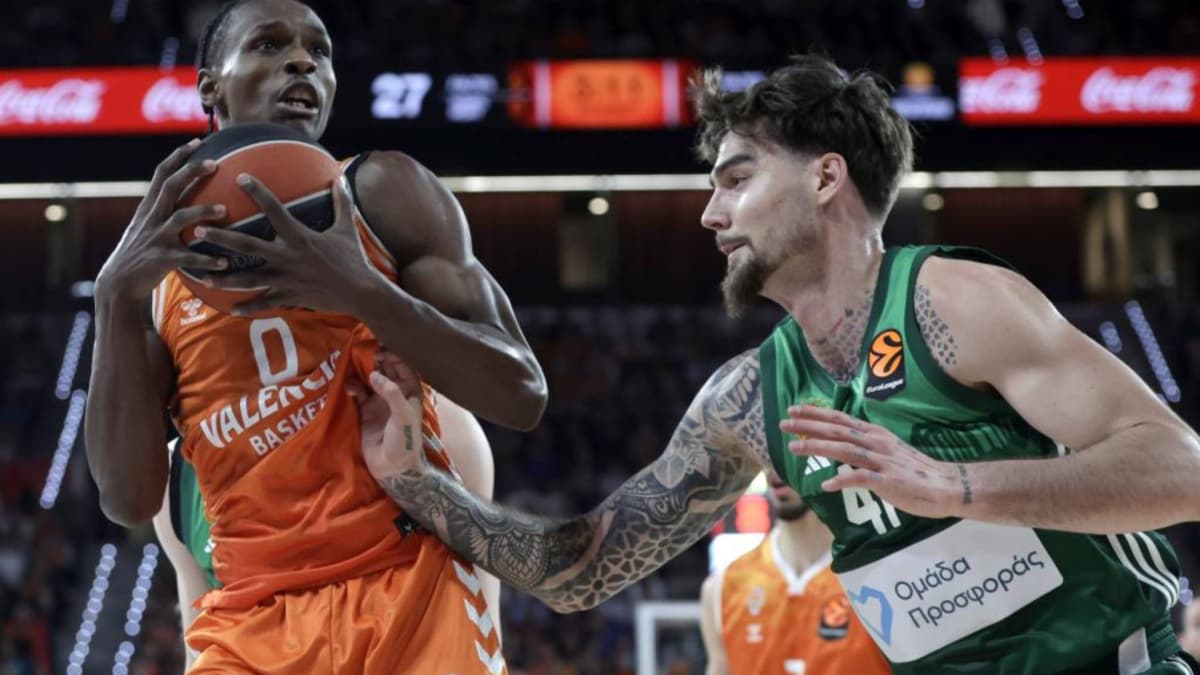
El Valencia Basket pierde 67-68 contra el Panathinaikos en un final emocionante.
Mets' Luis Robert Jr. is day-to-day due to lower back tightness.
Josh Mauro, former NFL defensive end for the Giants, Raiders, and Cardinals, has died at 35.
See every story in Sports — including breaking news and analysis.
It was the same thing with D’Angelo Ponds. From a conventional standpoint, he doesn’t check the typical boxes. He’s undersized, listed at just 5’9”. But when you look at the numbers, it’s a completely different story. Over the past 2–3 seasons, Ponds has been one of the most productive and consistent corners in college football.
He’s another player who ranked significantly higher on analytically driven boards compared to traditional ones.
Zooming out a bit, it’s clear the Jets made a conscious effort to target players who were analytically productive. Guys with strong production profiles paired with measurable athletic traits.
That doesn’t guarantee anything, of course. But it does suggest a process that, at least in theory, gives you a better shot at finding value.
Add in that their analytic department was visually featured in the draft war room, it seems like the Jets are leaning more into the data than ever before from a decision stand-point. To me, that’s a positive.
This was something I specifically called out last week as an area I wanted the Jets to avoid messing with.
And to their credit, they largely stuck to it.
Now, I’m not saying blindly following consensus boards is some magic formula for success. It isn’t. But one of my concerns with the Jets over the years has been this underlying tendency to operate like they’re consistently outsmarting the rest of the league.
This draft felt different in that regard.
For the most part, the Jets didn’t reach on players. The only selection that went meaningfully earlier than expected was Cade Klubnik. And even that one is a bit more defensible given the positional value of quarterback.
Outside of that, guys like Sadiq, Anez Cooper, and Jackson more or less came off the board around their expected range, or even slightly later than where they were projected. Payne, Omar Cooper, and Ponds in particular went later than anticipated.
To put some data behind this, here’s a look at where the Jets ranked in Draft Capital Over Expected, based on work from Benjamin Robinson:
Again, this doesn’t guarantee anything. Drafting in line with consensus doesn’t automatically translate to a good class. And this year was also a bit unusual in general as there wasn’t a strong unified consensus, especially once you got into the later rounds.
There’s also some evidence that NFL teams tend to outperform consensus boards on Day 3 anyway, so it’s not as simple as “follow the board = good.”
Still, it matters in context. The Jets have burned themselves in the past with noticeable reaches. Off the top of my head players like Arian Smith, Will McDonald, and Christian Hackenberg come to mind and those swings for the most part were disasters.
So in that sense, it’s at least encouraging to see a more disciplined approach this year.
Outside of the Sadiq pick, I thought the Jets were very sharp with how they approached positional value throughout the draft.
At pick #2, they went with an edge rusher, a position that historically makes a ton of sense to prioritize early. The hit rates at the top of the draft for edge defenders tend to justify the investment.
They also targeted wide receiver in the first round, which, given the state of the roster, is arguably the biggest offensive need they had going into the draft. From there, they followed it up by addressing cornerback in the second round. That’s a pretty logical allocation of resources when you zoom out.
There was likely some temptation to attack positions like safety earlier than they did, especially given how thin those groups can look on paper. But for the most part, they resisted that urge and stayed disciplined in prioritizing higher-value positions early.
Kevin Cole of Unexpected Points has done excellent work in this area, specifically around how teams extract value from positional investment. His framework is a useful way to evaluate whether teams are actually maximizing their draft capital based on positional importance.
Here’s how the Jets stack up from a positional value standpoint, along with their performance relative to consensus boards:
As you see the Jets graded positively here.
They also shrewdly attacked positions of need in quarterback, interior offensive line, and safety on day-3 too. Guard and safety are two of the positions that teams tend to find starters on day-3 more than normally so it was good to see the Jets take chances there late on day-3.
Now let’s get to the points I would have done differently:
Again, I’m not against trading up in general. There are absolutely spots in the draft where it makes sense, especially when you’re targeting a player you’re clearly high on at a position of need.
The Omar Cooper trade-up, for example, I can live with. The Jets identified a receiver they liked at a premium position, and he was slipping relative to consensus. Moving a late 5th in a weak draft class to secure him in the first round isn’t something I’d lose sleep over. That said, I do get the argument against it. I think there’s a fair argument that patience might’ve worked just as well here. There was at least a realistic path where he falls to 33. And even beyond Cooper, there was another receiver in Denzel Boston who was also sliding relative to big boards and would’ve made sense in that same range. On paper due to his size, he filled a similar need so I think you can make a valid argument they could have waited.
The Klubnik trade, though, is the one I really struggled with. And to be clear, I generally like the idea of trading up for a quarterback. If there’s one position where it’s easiest to justify being aggressive, it’s quarterback.
But the execution here didn’t make a lot of sense to me.
The Jets moved up a few spots in the 4th round, sending two 4ths to make it happen, and got a 6th back in return. Even with that small return, I’m still not really sure what the urgency was.
Klubnik was projected anywhere from the 4th to 6th rounds across different boards, so there was a very real chance he simply makes it to them anyway. Even if they felt another team might have snatched him, they also had pick #103 just prior where they could’ve just taken him outright and preserved both 4th-round selections.
That’s what makes it confusing. If they valued him enough to trade up, why not just take him earlier and keep the extra darts in a draft where roster depth still matters?
I actually like Klubnik more than most evaluators do. I just didn’t understand the process that led to acquiring him in that specific way.
This is probably the most polarizing decision within the fanbase in the entire draft.
From a pure consensus standpoint, the Jets didn’t technically “reach” on Sadiq. You can make a strong argument he was the best player available when they picked. However my issue with the pick goes a bit deeper than that.
This felt like a high-risk selection for a team that’s still very much in the early-to-middle stages of a rebuild. Tight end is one of the most difficult positions to project from college to the NFL. Unlike edge rusher or wide receiver where production tends to translate more cleanly, tight end evaluations are far more volatile.
Sadiq’s profile reflects that risk. The production isn’t overwhelming, and that naturally raises questions.
To me, this feels less like a foundational “build the roster” type of pick and more like something a contender might take as a luxury swing.
I won’t lie, there are things to like and reasons to see why some in the fanbase are high and why the Jets are high as well.
Sadiq is big, strong, and legitimately elite from an athletic standpoint. His testing profile is outstanding, and even analytically there’s a pathway to believing in him. His separation metrics were elite for a college tight end, and when you combine that with his raw athleticism, you can absolutely see the upside as a dynamic pass-catching weapon.
But the reality is that tight ends taken in the first round don’t always return that value.
It’s very possible we look back in a couple of years and this is a home run pick. One where the Jets were ahead of the curve and identified a true mismatch problem.
It’s also possible we’re talking about a player who never fully puts it together at the NFL level. That’s the range of outcomes here, and it’s wide. It just makes me uncomfortable knowing how important it is for the Jets to grab valuable players.
Overall, I think the Jets operated in a more disciplined and modern way than we’ve seen in the past.
They largely stayed within consensus ranges, targeted positions of value, and leaned into a more data-driven process. That alone is a step in the right direction compared to some of their previous drafts.
The trade-ups weren’t my favorite part of the process, and I do think a couple of these selections carry real question marks. But for the most part, this was a draft that felt structured, intentional, and defensible.
And for this franchise, that’s not something you can always say.
As always, none of this will be truly answerable for a few years. But right now, it’s fair for Jets fans to feel at least optimistic about what this class could become.