
Sports
GM Fitzgerald out as Devils set to miss playoffs
ESPN News
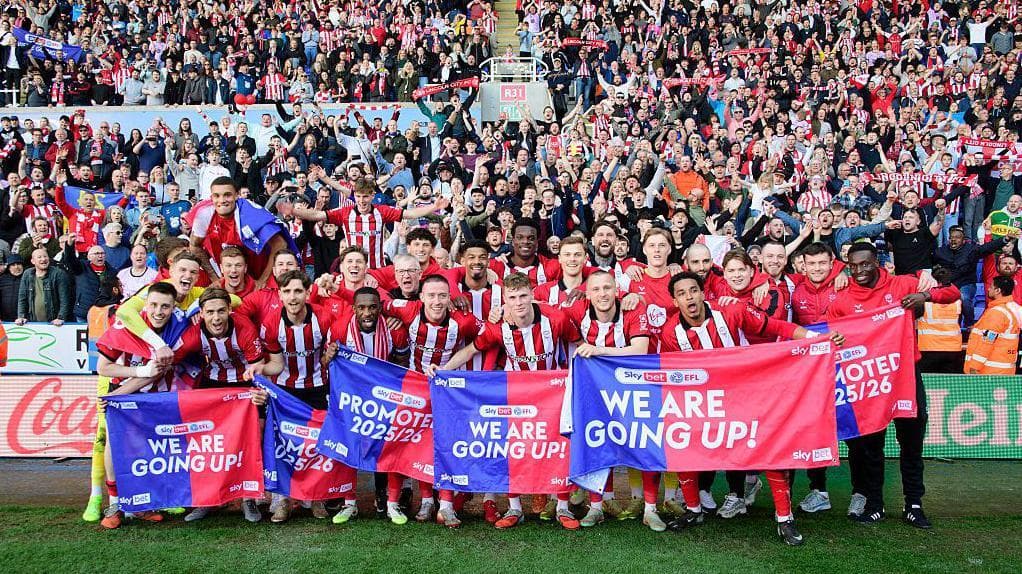
How has a club with one of the smallest budgets in League One won promotion to the Championship?
When just a solitary point was needed, Jack Moylan scored a 96th-minute winner to secure a 2-1 victory at Reading and seal promotion in style, clinching a place in the second tier for the first time in 65 years.
With five matches remaining, Lincoln's next job will be to win the League One title and complete a historic campaign at Sincil Bank.
It has been a journey about more than just recent seasons. To explain it fully, John Pakey - a former sports editor of the Lincolnshire Echo - caught up with his former colleagues to reflect on a success story that has been 20 years in the making.
"We look at Lincoln City as a sleeping giant, is that fair?"
This question was being put to me by Danny Cowley, it was just after 17:00 on Wednesday, 11 May, 2016.
I remember the time and date very clearly as I had just pressed send on the back page of the Lincolnshire Echo. The headline declaring - "It's a Dan deal: Cowley to be new Imps boss".
It was my first conversation with the man who, alongside his brother Nicky, would go on to dramatically change the fortunes of the club.
I had secured my story through sources, not from him direct, so to hear him on the phone was a relief as that back page was now whirling around a press.
"Nicky and I really think that if we can get the city behind us, if we can connect, then it has real potential," said Danny. I agreed, but we had to go back another 10 years to really see when it had last felt like that.
Lincoln City won promotion by beating Reading 2-1 with a 96th-minute winner from Jack Moylan after needing just a point. That result secured their place in the second tier for the first time in 65 years. They still have five matches left and can also aim for the League One title.
The article highlights several key figures, especially Keith Alexander, Bob Dorrian, Clive Nates, and the Cowley brothers. Alexander helped rebuild the club after administration, Dorrian kept it alive financially, and Nates backed the Cowleys, who transformed the team. More recently, Michael Skubala has continued the club's steady progress.
Keith Alexander helped save Lincoln City after administration and led them to back-to-back League Two play-off campaigns. He was also praised for spotting talented players from non-league, including Gareth McAuley and Gary Taylor-Fletcher. His teams were known for strong team spirit and being hard to beat.
Danny and Nicky Cowley brought energy, belief, and smart recruitment back to the club. They helped Lincoln achieve two promotions, an FA Cup quarter-final, and a Wembley trophy in four seasons. Their work also left a lasting impact on the club's identity and connection with fans.
Lincoln City's approach is to build quietly, steadily, and thoughtfully through smart investment and recruitment. The club has focused on infrastructure, player development, and bringing in experience alongside raw talent. According to the article, that method has become known as the Lincoln way.
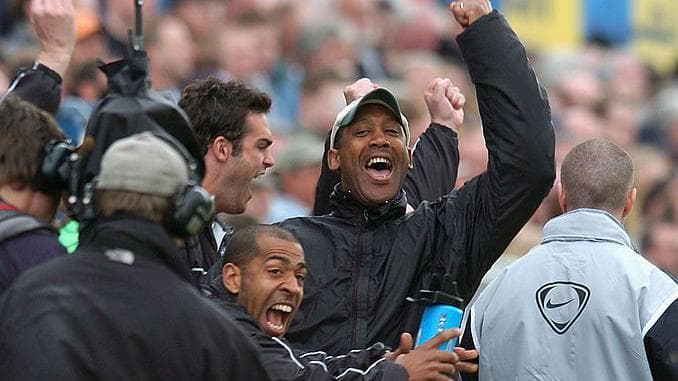
Image caption,
Keith Alexander was in charge at Sincil Bank for 213 games from 2002-2006
That was under the management of Keith Alexander, a man who would cement his place in the club's history, bringing it out of the ashes of administration to back-to-back play-off campaigns in League Two.
"Before Keith, the gates were bad, 2,500 people turning up," said Leigh Curtis, who took over coverage of Lincoln City for the Echo back in 2005.
"Off the pitch, the ITV digital crash left the club out of pocket and it went into administration. What Keith did saved the club."
And what Alexander did was recruit well. Several players he found came out of non-league and in some cases went on to play in the Premier League - Gareth McAuley and Gary Taylor-Fletcher being the two main examples.
"His eye for a player was amazing, and that was his great strength," added Curtis. "But he also knew he had to get the team spirit right.
"He encouraged them to go out and socialise, build that spirit. His saying was that team spirit was worth 50 points in a season.
"What that did on the pitch was create a very hard-working team, players who would graft for each other. Critics would say it was a long-ball team, I think Keith just made a team that was hard to beat."
Alexander left to join Peterborough United in the summer of 2006 and died aged just 53 in 2010. Such was the mark he made his funeral was held in the cathedral in the city.
"Until recently, no manager after Keith recruited as well as he did," said Curtis. "That was part of the downfall really."
That downfall culminated in Steve Tilson in charge of the club as they dropped out of the Football League in 2011. A day Curtis described as "horrific".
"After that, the one man that really kept the club alive was the chairman Bob Dorrian. Dorrian doesn't get enough credit for what he did," said Curtis.
Dorrian was someone I would spend a lot of time talking finances with. I had taken over coverage from Leigh and by now was enduring life in non-league.
Dorrian did not just back the club with money, he was also seeking out investment and restructured the ownership to make any sale easier.
After several false dawns, Dorrian's patience paid off when Clive Nates came on board in 2016 – eventually taking over as chairman in 2018.
A South African businessman so unassuming you would struggle to pick him out in the directors' box – not that he sat in it much.
He would often quietly, almost anonymously, mingle among the fans on the terraces on away trips.
I asked Nates "why?" when he got involved.
"I have friends who spend money on paintings, on cars," he said. "But I like football and that's what I want to put my money in."
His first job – get the Cowleys, a pair of up-and-coming non-league managers who had taken Essex side Concord Rangers up the divisions.
Their arrival came on the same day as my departure from the Echo. Mark Whiley was to take over. He covered an FA Cup run where the Imps set a new record, the first non-league club to reach the quarter-finals, promotion back to the Football League, promotion to League One, a Wembley final victory. All in four years.
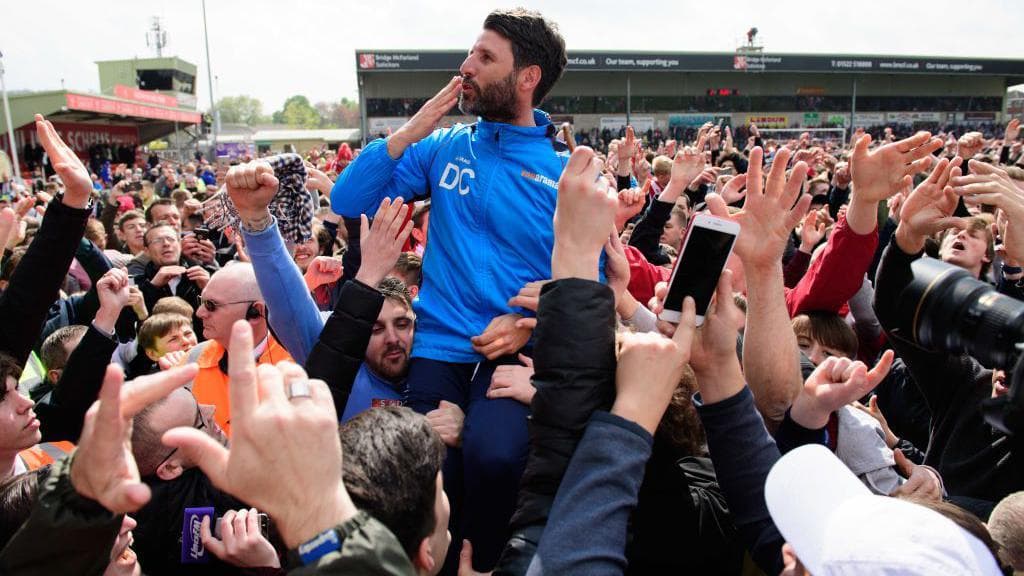
Image caption,
Danny Cowley won 98 of his 184 games in charge of Lincoln
"The Cowleys were different as after years of bargain basement managers we actually went out and did the research and found them," said Whiley.
"The excitement was there and I remember the event where they first met the fans they were cheered into the room.
"We can look at this season and see promotion to the Championship as the best thing the club has done, but those three seasons, two promotions, FA Cup quarter-final, winning a trophy at Wembley. That changed it all.
"They brought a buzz back that we hadn't seen since Keith, and they were like Keith in that they would find players on the way up, scour non-league and find the future stars.
"The fact is, that even after the Cowleys left to join Huddersfield, the energy stayed.
"It sticks with me that Danny said to me he didn't want to see kids in Lincoln wearing the shirts of Premier League clubs, he wanted to see them kicking a ball in the park wearing a Lincoln City shirt.
"The success, the work that was done means that is a reality. I see it all the time when I go round the city, people wear their colours with pride."
While Mark, Leigh and myself have covered parts of Lincoln's recent history, one man who has been the stalwart has been BBC Radio Lincolnshire's Michael Hortin.
His first game was in 1999, and he was there in the commentary box as Lincoln gained promotion to the Championship.
"This promotion is the culmination of a long-term plan," said Hortin. "This is about a chairman and board who have been thoughtful with their investment.
"Lincoln's FA Cup run earned them a lot of money and they did not spend it on players, they spent it on a whole new training set-up.
"The Cowleys were the start of a transition from the old way of doing things, to a set-up that is very much part of the modern game.
"Under them a sporting director was brought in to support recruitment and player development and now we really do have a true 'head coach' in Michael Skubala.
"It is about finding those raw players, developing them, selling them, and it is paying off as it has allowed them to secure players on better deals."
Lincoln have, as Hortin describes, recruited 'experience' to the squad. Their head coach, though, is a man who had limited time in the professional game, but Hortin said Skubala's ability to learn and adapt has been impressive.
"I remember the first game Skubala took was against Stevenage, and it was a bit of a shock, but he was quite cool and his reaction was more 'huh, this is what it is about', and he learned," said Hortin.
"The way the team has adapted and what Skubala has done is create a team that is hard to beat."
A team that is hard to beat. A club that has been learning, developing, recruiting, all building up to where Lincoln are now. But what next?
Hortin is confident that the club will remain realistic. "The first goal will be survival, but the thing is they had a plan to become an established League One club, and now they will be working on another plan for what comes next.
"The one thing is that new owner Ron Fowler will likely go about it the same as Clive Nates. It will be done in a quiet, steady, thoughtful way. That has become the Lincoln way."
Share this article




See every story in Sports — including breaking news and analysis.