Sports
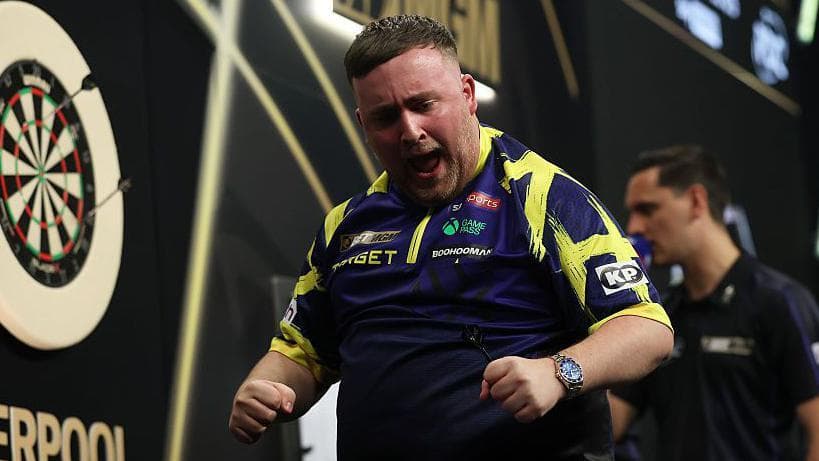
Littler beats Clayton in Liverpool to move closer to play-offs
BBC Sport
The Dallas Cowboys are considering trading up in the first round of the NFL draft to select a top defensive player, potentially marking their first trade-up since 2012. They have traded first-round picks seven times since 2007, with varying degrees of success.
Since 2007, the Cowboys have traded first-round picks seven times, with notable trades including the selection of Morris Claiborne in 2012.
The Cowboys are rumored to be targeting Caleb Downs, Sonny Styles, or Mansoor Delane if they trade up in the first round.
The last time the Cowboys traded up in the first round was in 2012 when they selected Morris Claiborne.
The impact of past trades has been mixed, with some selections like Morris Claiborne being viewed as failures, raising concerns about future trade-up decisions.
Dodgers avoid sweep with 3-0 win over Giants, Glasnow dominates
Eagles reportedly close to trading for $76M Vikings defender
Oklahoma appoints Jared Boyd as the first GM for women's basketball
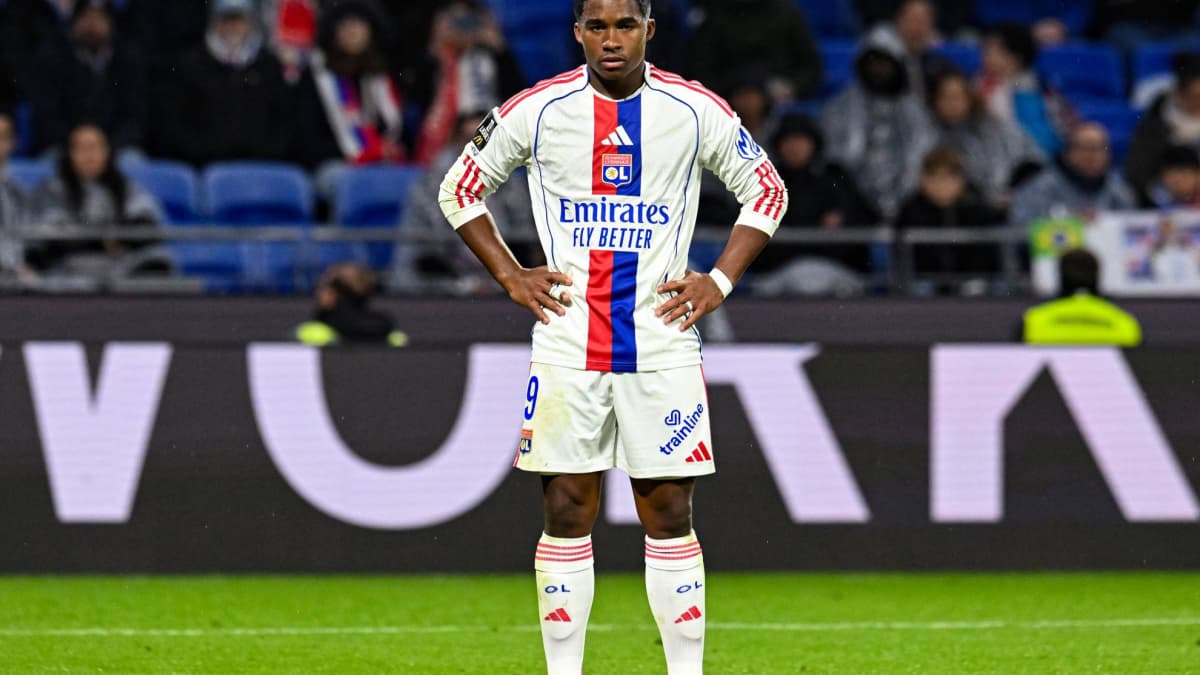
Endrick brilla contra el PSG y suma 14 goles con el Lyon.
The Dallas Cowboys are facing challenges in negotiations with George Pickens, who has been franchise tagged at $27 million. The situation mirrors past dealings with Micah Parsons, as the front office has opted against long-term contract discussions.
See every story in Sports — including breaking news and analysis.
There’s no way we can make a list about first-round trades and not mention the ‘What If?’ trade for Paxton Lynch. The Cowboys were aiming for the heir apparent to Tony Romo after he missed most of the 2015 season with a collarbone injury, tanking another shot at the postseason. His body was starting to break down, and the Cowboys needed to find their next franchise quarterback. Dallas had the fourth overall pick in the draft, so they did a ton of research on the top quarterbacks in the class. All three of the top prospects were brought in for a 30-visit—Jared Goff, Carson Wentz, and Paxton Lynch. Goff and Wentz went first and second overall, and Dallas selected Ezekiel Elliott instead of Jalen Ramsey. But Dallas wanted another swing for the fences in the first round and tried trading back into the mix for Lynch. The Cowboys were competing with the Denver Broncos for Lynch and lost out because they were unwilling to offer more valuable picks in the trade. Instead, Dallas was forced to pivot to plan C after missing out on Connor Cook and selecting Dak Prescott in the fourth round. There’s no telling how Lynch’s career would have gone having been in Dallas instead of Denver. The shadow of Tony Romo would not have been as big as the one Peyton Manning left with the Broncos, forcing Lynch to live up to those expectations. But given how their careers have played out, the Cowboys lucked out in having Prescott fall into their laps. The last decade of the franchise would look vastly different if this trade had been pulled off.
Unfortunately, Jerry Jones’ biggest move over the last two decades on draft night might be his worst. The Cowboys were aggressive and went after one of the draft’s premier defenders (sound familiar?) in Claiborne to be a modern-day Deion Sanders. Claiborne’s start in Dallas could almost summarize the rest of his career with the team, needing surgery on his wrist before even taking a single snap after he was drafted. From there, Claibrone would only be available for 47 out of the 85 regular-season games over five years. To make things worse, for a player who was supposed to be a ballhawking cornerback, Claiborne had a total of four interceptions. Dallas’ aggression was applauded in 2012, but it is the reason why some are scared to see the Cowboys move up in this year’s draft. To potentially select another cornerback from LSU, no less. You would hope Jerry Jones has learned from his past mistake and makes sure whoever they trade up for is a more sure thing than the return they got with Claiborne.
The Cowboys were looking for help along their offensive line after they decided not to re-sign Tyron Smith and Tyler Biadasz in the same offseason. While on the clock in the first round, Dallas got the offer to move back with the Detroit Lions, who were coming up for cornerback Terrion Arnold. Dallas felt comfortable moving back and still landing a player they would have taken at No. 24. Then Jordan Morgan and Graham Barton went to the Green Bay Packers and the Tampa Bay Buccaneers, both of whom Dallas showed significant interest in. They were still happy to land Tyler Guyton at pick 29 with the hope he could be their future left tackle. There was no question Guyton was going to need some room to grow as a rookie being new to left tackle. The Cowboys’ first-round pick did get the start right away, and his first professional game was against Myles Garrett and the Cleveland Browns. Guyton has shown flashes over two years of becoming the player Dallas hoped he would be, but his health and penalty issues raise bigger questions about where the Cowboys might go at the position in the future. If Guyton can put things together this year and show signs of being a franchise left tackle, then there’s a chance he can be much higher on this list in the future. But for right now, it’s wait and see.
After already selecting Felix Jones in the first round (originally the Cleveland Browns’ pick), Dallas wanted to get a lockdown cornerback on the outside to pair with Terence Newman and give the defense an A-plus secondary. After a solid rookie season, Jenkins turned on the heat in his sophomore season, made a Pro Bowl, and looked like he would become a future All-Pro. Unfortunately, Jenkins will always be a one-hit wonder, and his career never matched what he showed in 2009. He was with the Cowboys for just three more seasons before he moved on to the then-Oakland Raiders. Outside of David Irving, Jenkins will remain one of the biggest what-if players in team history.
The Cowboys gave up the 22nd overall pick to the Cleveland Browns so they could draft their next franchise quarterback in Brady Quinn. From a value standpoint, this is one of Dallas’ more favorable moves, considering they got a future first-round pick out of the deal and got enough capital to trade back into the first round and take Anthony Spencer at 26th overall. 2007 ended up being one of the best seasons in franchise history since the 90’s Cowboys, but Spencer didn’t have to do much as a rookie stepping into an already stacked defense ready to go. Headlined by DeMarcus Ware and an aging Greg Ellis, Spencer fell into the perfect situation to learn from the best. Over the years in Dallas, Spencer never became a household name as a defensive end/outside linebacker, but was as consistent a player as you could hope for at that position. Spencer was also famous for being the first player in franchise history to receive the franchise tag twice. Spencer spent his entire eight-year career with the Cowboys and finished with 33 career sacks, the 15th-best in team history.
A common theme among many of these players is how much higher they would rank on the list if they had a decade-long stint with the Cowboys. Micah Parsons will forever fall into that category. The front office doesn’t deserve all the credit for this pick. When they selected Parsons, no one knew he would become the generational pass rusher he is now. In fact, if Dallas knew he would become that type of player, they wouldn’t have traded away from their 10th overall pick with the Philadelphia Eagles to fall back to No. 12. Instead, like how Dak Prescott became the starting quarterback his rookie season, it took an injury to vault Parsons into the lineup as an edge rusher as a rookie. DeMarcus Lawrence broke a bone in his foot, forcing Dan Quinn to think outside the box and execute his vision for Parsons: a movable piece on defense, rushing the passer. It was an immediate success. Looking back at the 2021 season, how Dallas was able to maximize Parsons as a rookie and squeeze whatever talent was left out of Randy Gregory was a true compliment to Quinn as a coach. If the Cowboys had found a way to sign Parsons long-term instead of trading him away last year, there’s a very good chance he would have landed the No. 1 spot on this list. Not many teams can say they fell backward into a future Hall of Fame-level player. But instead, he will remain on just the outside looking in for the amazing, brief career he had in Dallas.
Let’s all hop in the DeLorean for a moment and go back to night one of the NFL draft in 2013. When the Cowboys traded down from the 18th pick all the way to No. 31, and all they got in return was an extra third-round pick, it might have been the most lopsided first-round trade in value of all time. Luckily, Matt Elam never turned out to be anything for the San Francisco 49ers, and Dallas showed off their evaluation skills with offensive linemen. Travis Frederick was a player who many saw as a mid-to-late round pick, but someone Dallas viewed as a cornerstone player. His football intelligence was off the charts, and his play demeanor and surprising athleticism led Frederick to become one of the best centers of his generation. The Cowboys center would start the trend of Dallas building in the trenches to weaponize the offensive line. Frederick battled Guillain-Barré syndrome, which threatened to end his career permanently before the 2018 season. But somehow, Frederick found the strength to return the following year and go out on his terms, earning his fifth and final Pro Bowl nomination. Shortened career aside, Frederick will go down as one of the best centers in franchise history. The fact that Dallas was able to see the player no one else saw at the time was the start of the Cowboys’ reputation as one of the better teams at drafting players.
Trading up for a franchise star at wide receiver does not always pan out the way teams hope for. The Buffalo Bills traded up for Sammy Watkins in 2014 and gave up a future first-round pick for him. He was with Buffalo for three seasons and then was shipped off to Los Angeles. Well, what about Travis Hunter? A do-it-all cornerback and wide receiver product that was supposed to be the next breed in football evolution? The Jacksonville Jaguars might be making him a full-time cornerback after his rookie season. Sometimes it can work out, like when the Atlanta Falcons traded up for Julio Jones, and he became their best receiver in franchise history. In general, it’s not always peaches and cream when trading up for any player because a front office is putting themselves in the cross hairs the moment the player slips up. Luckily for Dallas, off-field concerns led to Dez Bryant falling in the first round and right within striking distance for a trade they didn’t have to give up much to pull off. After an up-and-down rookie season due to injury, Bryant would hit the ground running the following year and blossom into the franchise star Jerry Jones was hoping for. The third generation of the 88 Club had a stretch from 2012 to 2014, where he was considered the best red zone wide receiver in the NFL. Even after Tony Romo, Bryant was a huge help to Dak Prescott’s success as a rookie and early on in his career. A falling-out with the Cowboys led to Bryant being cut from the team in 2018, but that does not take away from what he meant to the franchise and its fans over eight seasons. Any time a Cowboys fan sees the letter/symbol “x,” they immediately make the gesture Bryant made famous.