
NFLTransfer
Bengals extend Lawrence after blockbuster trade
Cincinnati Bengals extend Dexter Lawrence II for $28 million after trade from Giants
ESPN News1 min read
Rick Monday saved an American flag from being burned during a 1976 game at Dodger Stadium. He recalls the incident and its lasting impact on his life.
Rick Monday reaches to rescue an American flag as two men attempt to set it on fire during a game at Dodger Stadium on April 25, 1976. (Bettmann / Bettmann Archive)
Fifty years ago, Rick Monday was minding his own business, tending to center field for the Chicago Cubs in a game at Dodger Stadium. What happened in the fourth inning of a Sunday afternoon game on April 25, 1976, and what impression those events left on him and on America, have defined his life in a way the back of a baseball card never could.
Rick Monday, in his own words:
On what happened in that fourth inning:
There had already been one or two pitches thrown in the bottom of the fourth inning. From center field, there is a rhythm to the game. Well, there was a sound that did not match the rhythm of the moment. That sound was to my right, down the left-field line.
Read more: Shaikin: Rick Monday saved an American flag in 1976. Why the moment resonates 50 years later
I turned, and I saw there were two guys on the field. They were running in my general direction, somewhere from the left-field foul pole. I don’t know where they get on the field from, but somewhere in that area.
Rick Monday rescued an American flag from two men attempting to set it on fire during a game on April 25, 1976.
The men were reportedly protesting the treatment of American Indians.
The incident has defined Rick Monday's life significantly, as he receives letters about it every week.
The flag-saving incident occurred on April 25, 1976.
Cincinnati Bengals extend Dexter Lawrence II for $28 million after trade from Giants
John Schneider's 4-Word Message After Blue Jays' Loss to Diamondbacks
Germany's Serge Gnabry faces World Cup uncertainty due to injury.
Stanford athletics celebrates 50 years of national championships!
Washington secures NC State transfer Tilda Trygger, a top forward!
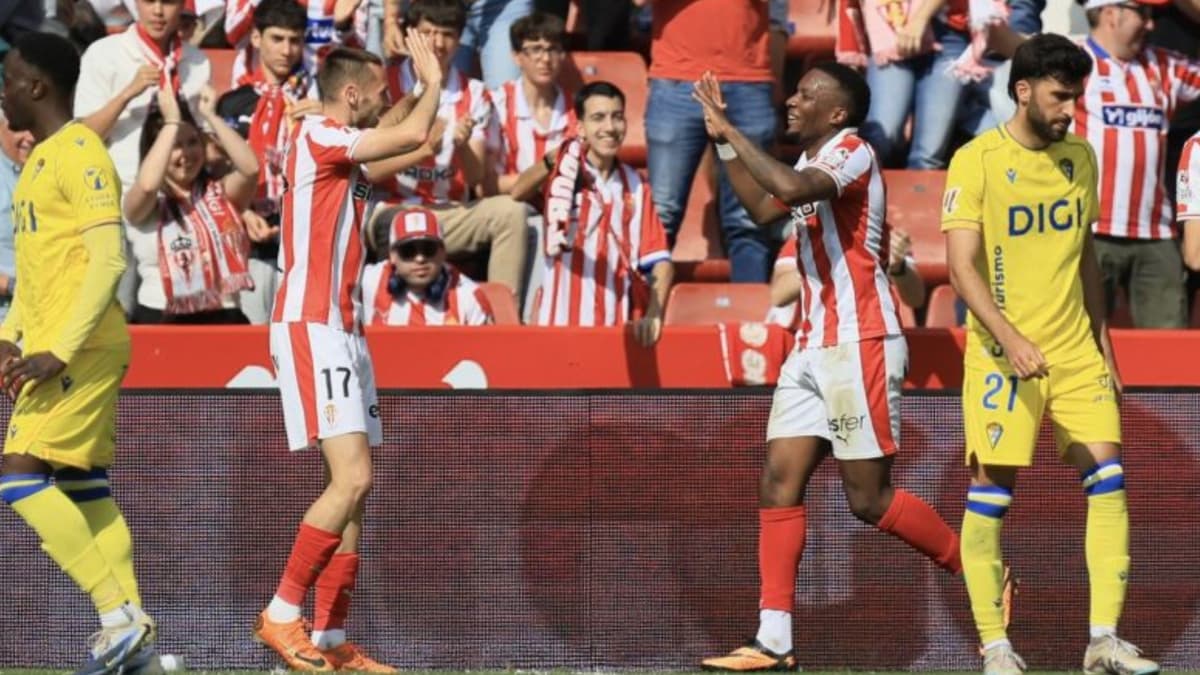
El Cádiz no reacciona y pierde 3-0 contra el Sporting en El Molinón.
See every story in Sports — including breaking news and analysis.
I saw that one of them had something under his arm. I couldn’t see what it was. And they ran past José Cardenal, who was playing left field that day.
They went to shallow left-center. I was irritated to begin with because they stopped the game. They shouldn’t be on the field.
Are they on the field because they are trying to get with somebody? Because they had too much to drink? Do they not like a certain player? Are they going to make some kind of a statement? Don’t know. At that point, didn’t care. Because, now, they are in my office.
I’d seen other people run onto the field over the years, for whatever reason. People run out and shake your hand and continue running.
But I saw these guys. When they came to stop, one guy pulled out an American flag.
They put it down on the ground. I can see the guy pull out something real shiny. It turned out to be one of those gigantic cans of lighter fluid. They were dousing it.
The wind blew the first match out, I believe, or it went out on its own. The guy struck the second match about the same time I got there. In retrospect, I may have been thinking about bowling them over.
But, if they don’t have the flag, they cannot burn it. So I scooped down and got the flag.
I ran in, and I saw the can of lighter fluid go by — not really close, but the guy threw it at me.
I brought it in to [pitcher] Doug Rau, who came out of the dugout. Tommy Lasorda, who was then the third-base coach, ran past me, yelling everything a longshoreman would utter on a bad day at these two guys.
On joining the Marine Corps in 1965, three months after he was the first pick in the first-ever baseball draft:
I had an interest in what was going on. A lot of my high school buddies — and college guys, too — were joining.
So Dave Duncan and I joined when we were in Eugene, Ore. It was September ‘65. We both went to MCRD (Marine Corps Recruiting Depot) San Diego. One row over from us, in a different platoon, was Bob Watson.
I very proudly served six years in the reserves.
(Monday, Duncan and Watson all earned All-Star honors as players, and each remained in the game for decades: Monday as a broadcaster, Duncan as a pitching coach, Watson as a general manager.)
On whether he would have reacted the same way that day at Dodger Stadium if he had not served in the military:
Yes. I’ve thought about it a lot. I think it comes down to, decisions are relatively easy to make when you believe it is the right decision to begin with. Without sounding corny, I am really proud to be a citizen of this country. It’s not perfect. But we can help make it better than what it is.
Traveling around the world, it’s nice to be home when you come back. So it was an easy decision for me.
I respected the military ahead of time. I did not like what these guys were trying to do, for a lot of different reasons. They were in my office to begin with, and with an American flag, and I was extremely irritated by it.
On being remembered less for an outstanding 19-year career and more for that one day on which he rescued the American flag:
I’m proud of the fact that it drew attention, and still does. I get letters every week. A great number of the letters are from people that were not even born at the time, which to me is encouraging. I’m also embarrassed by the attention that has been put upon me because I don’t know anyone that would not have done the same thing.
Rick Monday speaks while standing near a flag he rescued from being burnt at Dodger Stadium on Capitol Hill on June 14, 2006 in Washington. The news conference was held on Flag Day to support the proposed Flag Protection Amendment. (Mark Wilson / Getty Images)
On not knowing why the two trespassers wanted to burn the flag:
I’ve never tried to focus on those two people. I have tried to focus on the flag and what it means. A couple of years ago, I was grand marshal of a parade in Charlotte. On the parade route, at least half a dozen times, there would be someone who would hold up a shadow box with a folded American flag and say, ‘This is my father.’ ‘This is my husband.’ ‘This is my son.’
On whether he thought the flag rescue would be so prominently remembered 50 years later:
No. I’m proud of the fact that people think enough of this country and what that flag represents to the people that have protected our rights and freedoms over the years. It still catches a glimmer of attention for our country. Not for me. I was just a spokesman that afternoon for thousands and thousands, if not millions, of people in this country.
On a divided country in the aftermath of the Vietnam War:
It was still kind of a healing process from ‘65, when I first went into the Marine Corps reserves. Fortunately, now, we honor our military.
During and right after the war, for a number of years, there were a lot of Vietnam veterans that were very scarred when they came back home, from the way that they were received, which was unconscionable. Many took a long time getting over it. Some still haven't. And I’ve seen both sides of it, in visiting military hospitals and veterans over the years.
On one of visits he and his wife, Barbaralee**, have made to Walter Reed Army Medical Center**:
There was a young lieutenant. His wife was right there with him. The lieutenant said, ‘I understand you have the flag that you took away from those guys a number of years ago.’ And Barbaralee said, ‘Yes. We have it right here.’ He said, ‘Can I have a photo taken with it?’
And, in the process, he began to bleed from one of his wounds. Almost in a panic, he asked Barbaralee, ‘Please, Mrs. Monday, please take the flag.’ And she said, ‘Lieutenant, it’s OK if you get some blood on the flag.’
And he said, ‘I will die protecting what it means, but I will not bleed on the flag.’
This story originally appeared in Los Angeles Times.