

Sports
Egan Bernal, el campeón está de vuelta: “El podio lo miro de otra manera”
Egan Bernal está de vuelta en el Giro de Italia y comparte su nueva perspectiva sobre el podio.
Marca1 min read

The College Sports Commission achieved a significant arbitration victory during the ACC spring meetings, but the organization still faces uncertainty. CEO Bryan Seeley emphasized the effectiveness of the arbitration system following the announcement.
Mentioned in this story
Risky business: College sports' new enforcement entity remains on shaky ground despite a costly arbitration victory
AMELIA ISLAND, Fla. — On Monday afternoon, as the first day of annual ACC spring meetings concluded here, the College Sports Commission got a sweeping victory in its first serious challenge in this new era of college athletics.
And it just so happened that moments after news broke of the big win, the commission’s own CEO, Bryan Seeley, was here speaking before coaches and athletic directors. Around 6:30 p.m. Monday, minutes after the news emerged, he rounded the corner of a hallway in this beachside resort hotel glowing as he approached a group of reporters.
“Today’s decision shows the arbitration system works,” he told the group.
If you’re confused, it’s OK. There’s a lot to learn about this new era of college athletics, where schools can directly compensate athletes — as long as they play within rules agreed upon in the NCAA and power leagues’ landmark House settlement.
Let’s explain exactly what happened in the most simple terms: A group of 18 Nebraska football players, having $1 million-plus of NIL deals rejected by the commission, challenged the move in arbitration. And lost.
The neutral arbitrator declared a resounding victory for the CSC. One person who's seen the full arbitration ruling described it as “a beatdown.”
The arbitrator ruled that the CSC was in the right in rejecting these deals as they violate terms of the settlement, which, while granting schools the right to pay players in a capped system, made it more difficult for athletes to earn third-party NIL compensation. All such NIL deals, like those submitted by the Nebraska players, are required to be approved by the CSC, which is charged with determining if deals are legitimate.
The CSC deemed these Nebraska NIL deals as not meeting the benchmarks of legitimacy, most notably because the deals included high money figures for no listed athlete assignments made with Nebraska’s multi-media rights partner, Playfly Sports, which the CSC views as an “associated entity” of the university (deals with associated entities, i.e. boosters, are more scrutinized).
So, what does this all mean?
“It feels validating to have an arbitrator agree with your decision,” Seeley said here Monday. “I think we have hopefully instilled some faith in this system.”
But the commission’s challenges are far from over.
The College Sports Commission won a significant arbitration case, marking a major victory for the organization.
The CEO of the College Sports Commission is Bryan Seeley.
Despite the arbitration victory, the College Sports Commission remains on shaky ground and faces ongoing uncertainties in the college sports industry.
The College Sports Commission announced its arbitration victory during the ACC spring meetings on Monday afternoon.
Egan Bernal está de vuelta en el Giro de Italia y comparte su nueva perspectiva sobre el podio.
New Boston Huron girls soccer secures third straight Huron League title!
Wild one game from elimination after 5-2 loss to Avalanche in Game 4
Check out the Cincinnati and Northern Kentucky high school sports scores from May 11-17!
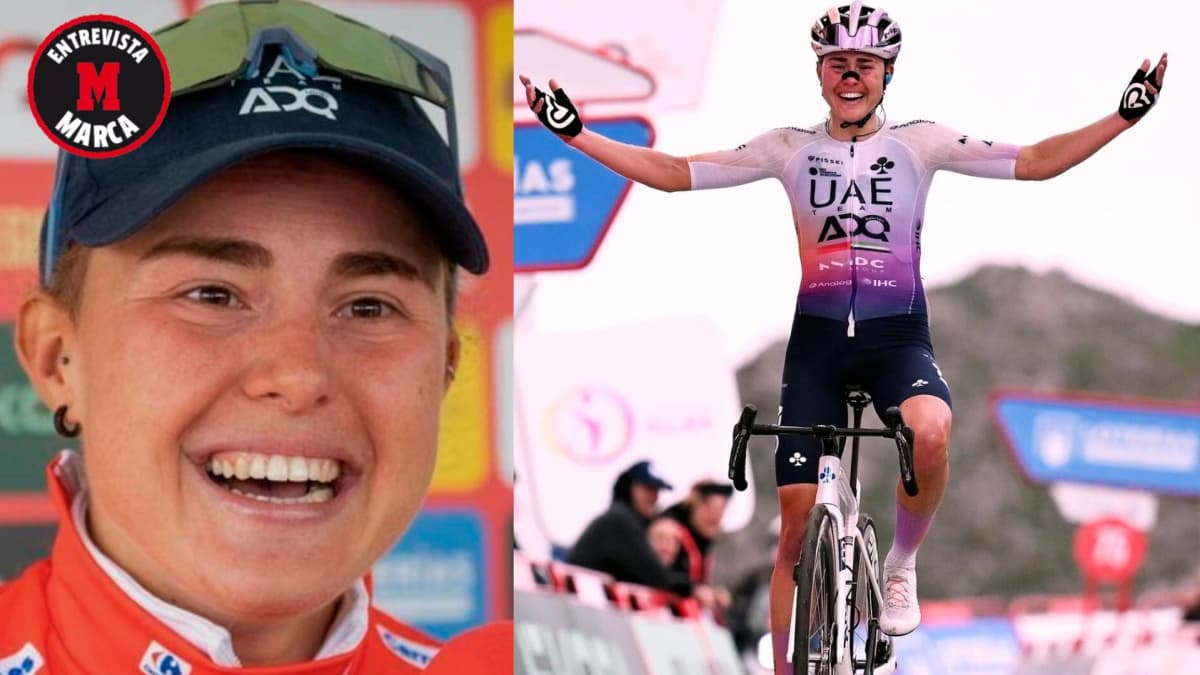
Paula Blasi, la pionera del ciclismo, busca ganar el Tour o el Mundial.
See every story in Sports — including breaking news and analysis.
Already, at least two more schools (Georgia and an unknown second university) are pursuing similar challenges against the system for rejected deals. More than a dozen universities are exploring whether to begin the arbitration process, too.
Separately, the plaintiff attorneys in the House case, most notably Jeffrey Kessler and Steve Berman, are challenging the CSC in a motion that will be heard at the end of the month in front of the House settlement magistrate judge over the “associated entity” concept.
The CSC claimed the first battle. But will it win the war?
“This is just one deal decided by one arbitrator,” Kessler said in a statement to Yahoo Sports.
While Seeley himself even insists the ruling sets no precedent, the decision cannot be ignored: Those wanting to challenge the CSC may soon learn the hard way.
This could be a real, real big problem.
Let us explain.
There are two underlying issues going on right now across the landscape:
(1) Schools are operating in a market that they themselves inflated last spring by frontloading compensation to athletes before the CSC got cranked up last July.
(2) Schools, this January and April, made guarantees of third-party NIL compensation to athletes despite those guarantees not meeting CSC thresholds.
Big Ten and SEC schools, because of their big budgets and array of corporate sponsors, are the most guilty parties. In fact, at some point earlier this spring, SEC and Big Ten schools combined to have submitted into the CSC more than six times the amount of NIL deals as ACC and Big 12 schools.
The goal of these third-party deals is simple: Exceed the revenue-share cap in a hotly competitive recruiting environment, where football rosters are routinely climbing over $30 million and men’s basketball rosters over $15 million, all while the school cap this coming year is $21.3 million per school for all of an athletic departments athletes.
Many school administrators and university partners — sponsors, boosters, etc. — have poured endless hours and resources into learning how to crack the code, so to speak: how to arrange third-party deals so they’ll slip through the system.
But even those with the most savviness are struggling to get deals approved as cash amounts from the January football portal and April basketball portal climb. It’s growing tougher to justify hundreds of thousands of dollars or millions for a player to do a few autograph sessions, send a few tweets and appear on some podcasts.
This means millions of dollars promised to athletes are at risk if CSC rejections and arbitration wins continue.
The long-term sustainability of the system is in jeopardy because of that, for starters. The very schools that voted to adopt and build the CSC are partly responsible for its battered existence through their inflation of the market and risky compensation promises.
“What are we supposed to do?” quipped one power conference athletic director.
“If we don’t win,” he continued, “we get fired — the coach, the athletic director and eventually the president.”
If they don’t pay, they miss out on players in recruiting. If they miss out on players, they lose.
Can the system continue operating this way?
The Nebraska arbitration case cost the CSC roughly $1.5 million in legal fees, according to those briefed on the matter. Dozens of arbitrations may be on the way, which is why Seeley, in private conversations with high-level administrators, is requesting more dough.
The impact nationally is one thing. But, locally in Lincoln, what will happen?
The 18 Nebraska football players are in the process of resubmitting revised NIL deals based on what was learned in the arbitration process. While it does not eliminate any future legal action from the state's attorneys general (he had threatened to sue if the CSC won), the first step in this situation is a resubmission.
In all likelihood, the players — or Nebraska on behalf of the players — will resubmit the deals for lower amounts but in greater quantity with actual assigned deliverables/actions for earning the money. The players will get their money, if CSC approves these resubmissions.
But if the players are to eventually get the money that had originally been rejected, why all of these unnecessary hoops to jump through?
“This case was never about whether these student-athletes could get paid,” Seeley said here Monday. “It was about whether they could get paid in this way.”
Seeley and his commission struck down the first dart tossed their way.
Many more are en route.