Sports
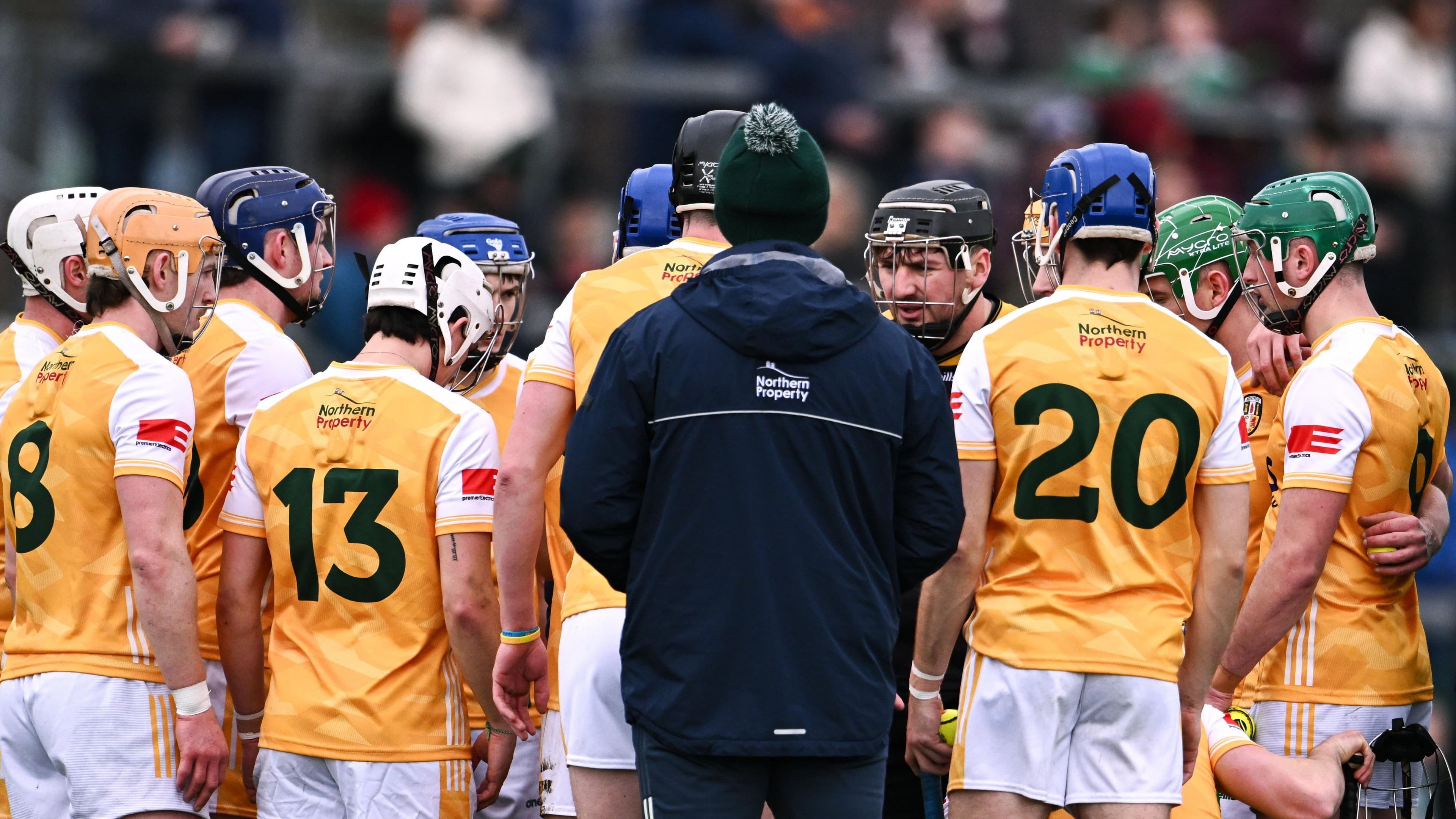
Antrim hurlers demand clarity over Fitzgerald position
BBC Sport
Mary Cain, a former teenage running prodigy, exposed the abusive practices she faced in Nike's Oregon Project, leading to significant consequences for the program and its coach, Alberto Salazar.
Mentioned in this story
Mary Cain’s Story Is Bigger Than RunningCourtesy of Mary Cain/Mariner Books
"Hearst Magazines and Yahoo may earn commission or revenue on some items through these links."
Mary Cain was a teenage running prodigy. By the time she was 17 years old, the Bronxville, New York, native had shattered countless high school middle-distance records, competed in the 2012 Olympic Trials, and become the youngest female athlete ever to represent the United States at the World Championships in track and field, in 2013. The records kept falling, and her running dreams came true later that year when the legendary coach Alberto Salazar invited her to join Nike’s Oregon Project. That’s when things began to go terribly wrong.
Six years later, in 2019, Cain went public in an opinion video for The New York Times about the verbal and physical abuse she endured while a member of the Oregon Project, and the breakdown of her body that resulted from harsh coaching practices. The video went viral. Nike began an investigation, eventually shutting down the Oregon Project; Salazar, who by that time was already under a four-year doping ban, would go on to receive a permanent lifetime ban from the sport in 2021.
Mary Cain reported verbal and physical abuse from her coaches, which contributed to her physical breakdown.
Alberto Salazar was investigated by Nike, leading to the shutdown of the Oregon Project and his eventual lifetime ban from the sport in 2021.
Cain's public disclosure of her experiences prompted discussions about athlete welfare and led to changes in coaching practices within the sport.
By age 17, Mary Cain had broken numerous high school middle-distance records and became the youngest female athlete to represent the U.S. at the World Championships in 2013.
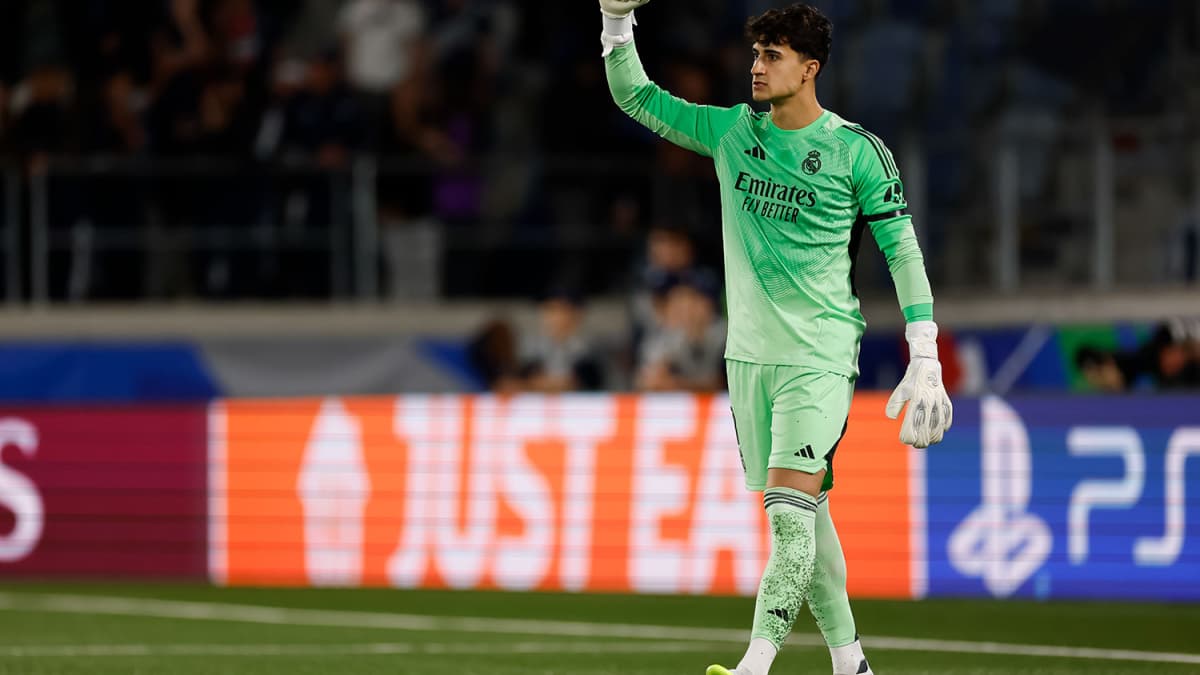
Más de 30 porteros de La Fábrica se reúnen en el Real Madrid
Phillies part ways with manager Rob Thomson after 9-19 start in 2026.
Cole Davies clinches the 2026 250 East Supercross title after a stressful season!
Rising star Rafael Jodar faces Jannik Sinner in Madrid Open quarter-finals!
Key Miami Hurricanes Players to Watch for the 2027 NFL Draft
See every story in Sports — including breaking news and analysis.
Cain became an advocate for mental health in sports and founded Atalanta NYC, a nonprofit that mentors girls in the Bronx through running. Although she’d always been a writer—throughout her teenage years, she kept heartfelt diaries about her experiences—she wasn’t sure she wanted to publish a book about what she’d been through. But Cain kept seeing the power of her words in every room where she shared her story.
Now 29, Cain is a second-year medical student at the Stanford University School of Medicine. Her new book, This Is Not About Running, is a brave, blisteringly honest memoir about a young girl who loved running, and about the systems, policies, and people who placed winning at all costs above her well-being. Fearless on the page, Cain tells hard truths with the hope that her story can help others.
In a conversation over Zoom, she was buoyant, funny, and sharply intelligent; we talked about how writing can be cathartic, how she found joy in running again, and what we as a society and as individuals owe to our girls.
The culture in the U.S. of having to be “all in” to be committed to something—it’s such a fallacy. Truly the only people who can do that are those who have endless means, privilege, and resources. Even though I didn’t have the words back then as a young person, I understood my privilege was that my mom was making my lunch. It is interesting to look back because, as I was going through the system, very few people seemed happy. Very few were people I really wanted to be in the long term. Now that I look back on it, I wonder how many of those people who were “all in” were on drugs, say, or unhappy in their marriages and relationships, for that sport.
Cain racing in the 1500 meters at the USATF Junior Outdoor Championships, June 2011.Courtesy of Mary Cain
Writing and publishing are two different things. Writing 100,000 words is not hard for me. My sisters and I, we’ve always worked with one another on our writing. But there’s also the trauma. I always thought it would be a cathartic process. I thought about it during my lawsuit with Nike, when I was doing this intensive therapy. It was only in 2021, when Alberto was banned for life because of sexual abuse, that I began to consider publication. I would never write a book for money; I would write it because I had something to say. I had had therapy to a degree that I was like, OK, I understand to the best of my knowledge my story, and that someone else could benefit from hearing it. I started writing a first draft in January 2024, before medical school. I sold it right before I started my first year.
For the last few years I’ve been doing active advocacy work to prevent abuse in sports, especially with Athlete Survivors’ Assist, in New York, which does it in a multi-targeted way. I’ve noticed over and over that it’s not until the audience hears a lived experience that they say, “Wow.” It can really change your perspective of what someone’s going through. Putting policies across the table is great, but having someone say, “This is what happened and this is what it felt like”—that makes the biggest difference.
There were two types of entries that really stuck with me. The first: I would be so honest with how bad I was doing, and yet there was this undercurrent that was like, But I know I am the problem and I’m failing and I’m so sorry. Those were the hardest to read; it was so twisted. I did not equate those experiences to abuse until much later.
The second: I’m looking in the mirror, I’m seeing what’s happening to my body is a pretty severe eating disorder, but my training logs show that I’m gaslighting myself. Those little moments were so fascinating.
Cain at the 2011 New York State Cross Country Championships.Courtesy of Mary Cain
Nothing I was scared of. I have the perspective that if you are made uncomfortable by my story, you should be. It’s an uncomfortable way to live. In sports or in life, entering the threshold of discomfort is how you grow. I don’t think any of the chapters specifically gave me relief, but the writing was a catharsis. I do view this book as more for others than for myself. So if there’s a policy I believe in, or a caution about not being a helicopter parent, or how to look for warning signs or fake advocacy, I tried my best to be purposeful about those conversations.
The crux of the story is: What is a systemic problem, and what is an individual problem? At the end of the day, abuse is prevented when systems change. Abusers are individuals who want to do these actions whether or not there are policies in place. But I am very cognizant that policies can help. Athlete Survivors’ Assist has great resources online—we’ve designed one especially for sports, about the power dynamics in play. If an athlete is overly showered with gifts and praise, that can sometimes be problematic; or if there’s an isolation pattern, where a coach is saying, “Don’t tell your parents,” or, “I’m mad because you told the other coach.” There should always be more than one adult.
I also feel very strongly that there should be more rules in place policing parents in youth sports. Harassment of other children on a team is not OK. Recently someone told me that their kid had gotten screamed at by the other coach. This stuff happens all the time, and it’s 2026. Policies help; that’s how you prevent stuff. But adults have to say ‘stop.’ In my head, I was saying ‘stop.’ But because no one said ‘stop’ for so long, it got normalized.
Cain exploring Moscow while at the 2013 World Championships in Russia.Courtesy of Mary Cain
Therapy is amazing; it’s why I’m where I am today. In the three years prior to the New York Times piece, it was like, I am a big fat failure. It wasn’t that I was scared to touch the trauma in general—more an internalization that I was at fault. And then, afterwards…you see this a lot in advocacy work and volunteering, when you yourself are not fully well, and you are trying to help someone with the same trauma you had, it’s incredibly re-traumatizing.
If it weren’t for my patient experience, I wouldn’t be at Stanford Med. It took me seven years to get this condition diagnosed. They could see it in my chart; there was an illness script. I remember my first appointment with Dr. Lee, I was trying not to cry. But I did, recounting how upsetting this whole process had been. And I immediately started to apologize. Sucking it right back down. And he was like, “Why are you apologizing? You had a career. You don’t know if you will be able to function at a normal ambulatory level, let alone have a career. This is hard stuff.”
When I flew out to have my surgery, my dad—he’s an anesthesiologist—he came with me, and it was so fun to be on campus. We had these incredibly positive experiences with folks working at the hospital. I was so used to being unhappy. But I aspire to happiness! So I applied to the medical school at Stanford, and I was really excited to be accepted. It was all because of that patient experience. I thought, I think I could become a great doctor here.
I have. I’ve gone through different experiences, a mix of getting back into running, respecting the body I have now, figuring out how that works in my life now. How do I fix some of the kinks that developed along the way, the compensations, how do we hit them really hard in PT, so that I really enjoy running as much as I can? And acknowledging that I’m in med school. We’ll see what happens. People want the Cinderella story. But if I start running competitively again, it’s its own thing. The ending for me was really this book.
This is about a young girl who had a lot of joy and a lot of hope—and a lot of people who tried to knock that out of her. The idea of being a young person who dreams is a ubiquitous experience. You could want to be a cellist, or a doctor, and systems pigeonhole you into a place where your joy and curiosity are taken away. This is for parents to read even if their kid is not in sports—how to navigate academia, or any passion. Or for med students! In medicine, the culture of sacrificing your life to go all in is widespread. But I don’t think that having someone who is on the edge of their ability and sleeplessness is the surgeon you want. There are things up against doctoring that are beyond the individual doctor, and I hope people do question the system. That they say, This is how I want to be, and this is how I want to do it. How do I talk my colleagues, or how do I respond if I witness this at my kids’ sports event? Sometimes reading uncomfortable things can help us grow.
This interview has been edited and condensed for clarity.
You Might Also Like