
NHLPreview
Avs favored, but Sabres storyline tempts bettors
Avalanche lead Stanley Cup odds, but Sabres intrigue bettors
ESPN News1 min read
Serie A clubs are facing a crisis, with no teams reaching the semifinals in any European competitions this season. This decline reflects broader issues within Italian football and calls for significant changes.
Mentioned in this story
Serie A struggles mirror Italy’s crisis: worrying numbers and calls for change
The crisis of the Italian national team is mirrored by the poor results of Serie A clubs in European competitions this season, with no representative in the semifinals of the Champions League, Europa League, or Conference League.
The Italian football crisis equally involves the national team and Serie A sides, as confirmed by recent results in European club competitions.
{rsn-smspc-splitter}
Bologna and Fiorentina were eliminated from the Europa League and the Conference League quarter-finals, respectively, leaving Serie A with no representative in the semifinals of any of the three European club competitions.
This season’s Champions League campaign has been particularly depressing for Serie A fans, who saw Napoli eliminated after the group stage, Inter and Juventus unable to get past the knockout play-offs, and Atalanta reach the Round of 16, where they were knocked out by Bayern Munich.
Today’s edition of Gazzetta dello Sport sums up pretty well the worrying numbers behind the Italian football crisis in Europe, which clearly doesn’t involve only the national team.
Serie A clubs are struggling due to poor performances, resulting in no teams reaching the semifinals of the Champions League, Europa League, or Conference League this season.
The crisis in Serie A indicates a broader decline in Italian football, affecting both club and national team performances.
No Italian teams reached the semifinals of the Champions League, Europa League, or Conference League this season.
There are calls for significant changes in Italian football to address the ongoing crisis and improve the performance of both Serie A clubs and the national team.
Avalanche lead Stanley Cup odds, but Sabres intrigue bettors
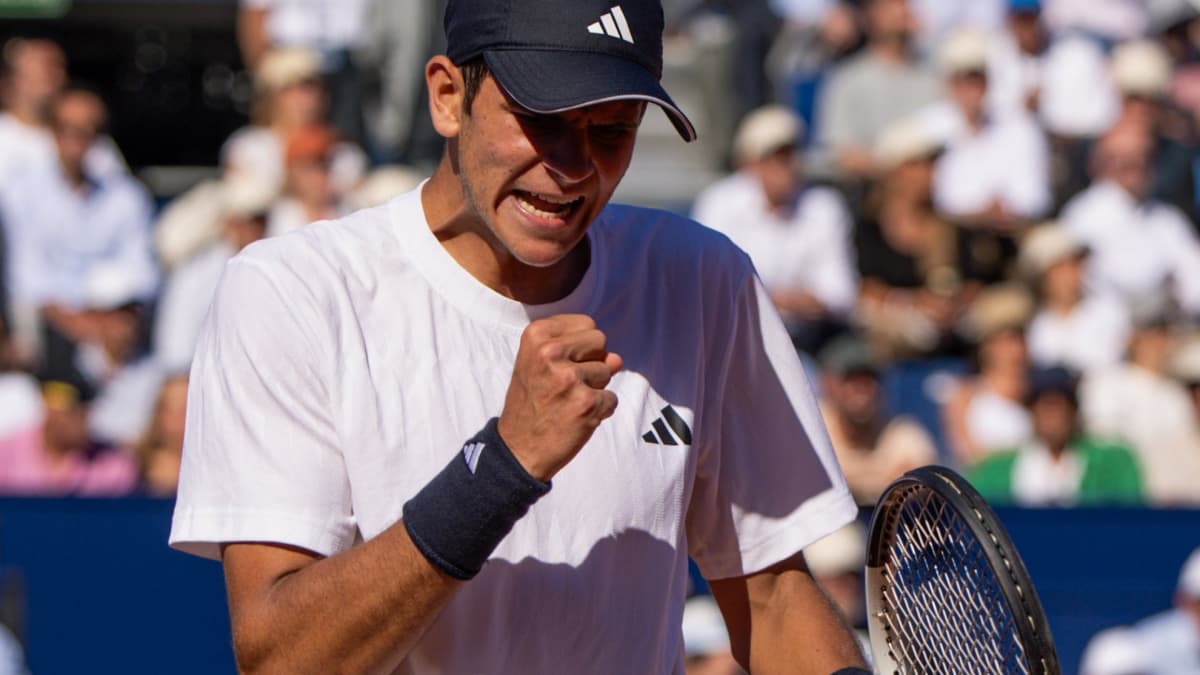
Rafa Jódar avanza a semifinales del Conde de Godó, ¡histórico!

Is Mike Trout back? Analyzing his recent performance and fantasy impact.
Carlos Vicens, former Guardiola assistant, takes SC Braga to Europa League semi-finals!
Moisés Caicedo signs new long-term contract with Chelsea, extending until 2033.
Texas Rangers face Seattle Mariners in crucial AL West series starting April 17.
See every story in Sports — including breaking news and analysis.
Since Juventus’ Champions League victory in 1996, 30 years ago, Serie A clubs have won the Champions League only three times, Milan in 2003 and 2007 and Inter in 2010.
José Mourinho’s Inter was the last Italian team to lift the coveted cup in 2009-10, marking a 16-year drought since, something that had only happened once before, between Milan’s 1969 triumph and Juventus’ victory in 1985.
In four of the last six Champions League campaigns, Serie A clubs have gone out in the round of 16. In the previous ten years, aside from Juventus’ two finals, only Roma reached the semis in 2018.
epa12147516 UEFA Champions League trophy on display at the Allianz Arena before the UEFA Champions League final between Paris Saint-Germain and Internazionale Milano in Munich, Germany 31 May 2025. EPA-EFE/RONALD WITTEK
Things are even worse in the Europa League, formerly UEFA Cup, with 25 years between Parma’s victory in 1999 and Atalanta’s in 2024. In between, Inter and Roma each reached the Final once but lost it in 2020 and 2023, respectively.
Roma won the Conference League in 2022, Fiorentina reached the Final in 2023 and 2024.
To sum it up, in the last 30 years, Italian football has won the Champions League four times, three Europa Leagues (formerly UEFA Cup), one Cup Winners’ Cup, and one Conference League.
Italy somehow managed to earn an extra Champions League spot for 2024-25, which, based on recent results, seems now more than ever ‘just a coincidence,’ wrote Gazzetta.
The pink paper added that the new formats of European competitions leave ‘less room for tactics and game management,’ making Serie A sides struggle when facing opponents who play with high intensity.
It’s not a coincidence that the Italian national team is experiencing the same challenge, among other issues. Furthermore, being overly reliant on tactics has surely affected Serie A and the Italian national team alike, often sacrificing the players’ talent for rigid tactical demands.
Gazzetta called for fewer sideways passes among defenders (“We’ve had enough!”) and noted sarcastically: “We are certain that Serie A has the highest percentage of passes completed. None of them is risky.”
Former Italian coach Fabio Capello’s analysis was even more bitter, as he predicted that the Italian football crisis is “destined to last for quite some time.”
MADRID, SPAIN – APRIL 20: Fabio Capello attends the Sporting Mixed Zone ahead of Laureus World Sports Awards Madrid 2025 at Palacio De Cibeles on April 20, 2025 in Madrid, Spain. (Photo by Angel Martinez/Getty Images for Laureus)
The 1993-94 Milan Champions League winner identified two main issues in Serie A: referees who “blow the whistle too often,” affecting the flow of games, and a “lack of talent.”
“We need to go back to prioritising technique over tactics, possibly increasing the tempo, because others play at twice the speed and move the ball twice as fast,” he added.
Capello argued that many players who were not top stars in the Premier League, such as Scott McTominay, Rasmus Hojlund and Donyell Malen, have had an immediate impact in Serie A, meaning they “move into contexts where things are easier for them.”
Coincidentally, Capello echoed his compatriot Carlo Ancelotti, who had just released an interview about the crisis of Italian football, mentioning the new way of defending as one of the problems of Serie A and the Azzurri.
“Once, when Italian teams suffered a quality gap compared to others, they made up for it with the art of defending,” Capello said.
“We were the masters in Europe and in the World. Today, we focus on building up from the back with our centre-backs, but we mostly end up hurting ourselves. We no longer produce real defenders. Just go back and look at the goals Bologna conceded last night in Birmingham.”