NFLFeature
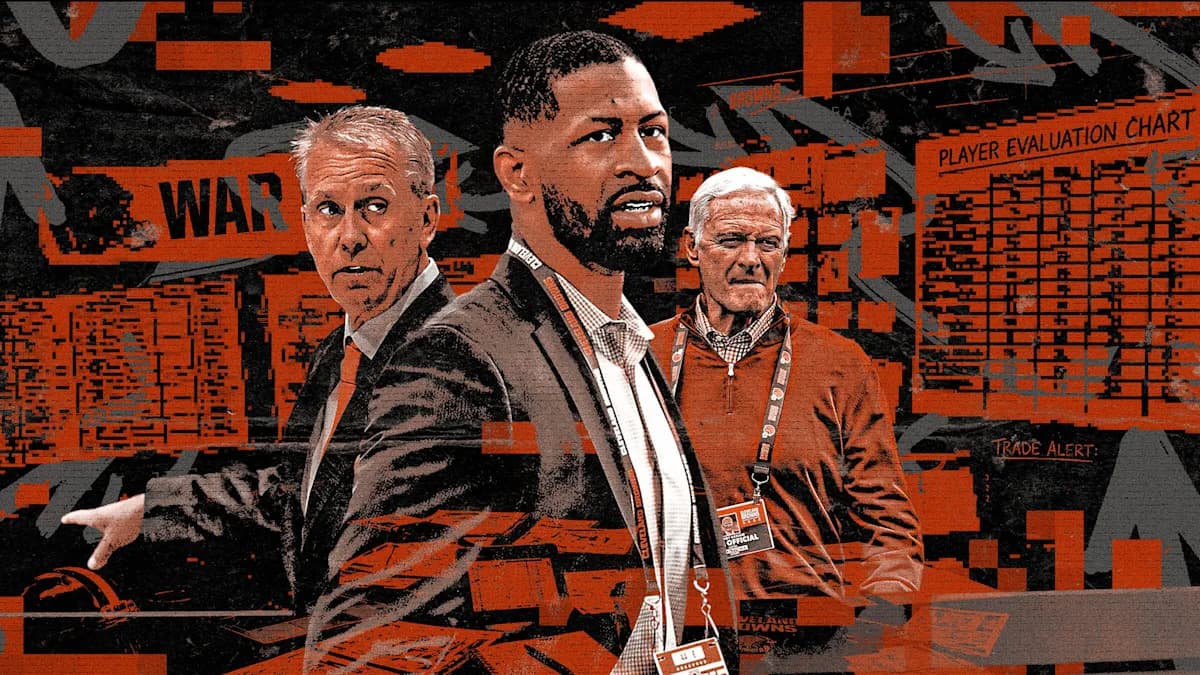
Inside Cleveland Browns’ NFL Draft room, where trade calls keep ringing and high-speed databases whir
Explore the Cleveland Browns' dynamic NFL Draft room and their trade strategies.
Yahoo Sports1 min read
Studio shows are increasingly irrelevant for sports fans, as they shift away from serious sports coverage. The trend reflects a broader change in how sports content is consumed.
Edit via Matt Yoder
Let me share a story from my rock radio days.
I used to be part of a wacky morning zoo-style show on 96 Rock (RIP) in Raleigh, NC. Part of my duties, when the show first launched, were to do the top-of-the-hour sports updates. They weren’t serious, structured things. They were banter, designed to fit the show’s general vibe.
One morning, while rattling off some scores from the night before, I mentioned that the Carolina Hurricanes had won and threw in that the Charlotte Bobcats (this tells you how long ago it was) had lost, except I didn’t say Charlotte. I said the “Carolina Bobcats” because I was only half paying attention and had already mentally moved on to the next conversation.
When the show ended, my boss’s boss’s boss popped his head in and told me I made a terrible mistake. People in Raleigh didn’t want to be associated with the Bobcats. Calling them “Carolina” instead of “Charlotte” is evidence that I am not really “from here” and don’t “get it.” He told me I had just made it harder for this new show to win fans over.
I’ll remind you, this was rock radio. My job was to tell fart and dick jokes. I didn’t make the move to sports until more than a decade later.
But I was 24 at the time, so I really believed this was a big deal and that I had done lasting damage to my career, when in reality, no one noticed, and the people who did likely knew exactly what had happened. I was talking too fast and tripped over my words.
Now, contrast that with what you saw in the NFL Draft, where Mike Greenberg was making up family connections and completely missed a draft-day trade.
In another time, my old boss’s boss’s boss would have made it a point to stop by the studio and give Greenberg a talking to. Now, though, Greeny’s are minor sins compared to many studio shows.
There is a prevailing attitude that fans who know the games and players and want to hear intelligent conversation about those things are losers. Everything is instead geared towards the casual viewer.
The focus on shoulder coverage for games began to expand as I watched WWE take over all of ESPN a couple of weeks ago. Then I noticed how little actual football talk there was on the last day of the NFL Draft, and it hit me that maybe this is an epidemic affecting all studio shows.
Why do sports talk shows seem to hate sports fans so much?
Maybe this is one of the unforeseen results of podcasting’s growth. In a world where I can find content narrowly focused on my favorite team or even on a specific aspect of it, general talk shows tend to struggle by targeting only sports fans. It could also be a result of ambition, as personalities like Stephen A. Smith, Charles Barkley, and Pat McAfee set their sights on gaining an audience that does not currently know who they are or what they do.
Whatever the reason, there are three approaches to studio shows in 2026 that all send the same message: casuals welcome, educated fans tolerated. Sometimes it’s more, but there’s always at least one element present.
One of my favorite things Prime Video did this season with its NBA studio coverage was that segment where John Wall rattled off several players’ alma maters. It was more than just a silly time filler. It was a message: Do you like basketball? That’s cool. We do too.
It was refreshing after decades of first TNT and then ESPN putting contempt for the players and fans front and center on Inside the NBA. I think Charles Barkley and Shaquille O’Neal are endlessly entertaining, but man, do they hate the sport they cover and the people watching them.
This approach shows up on College GameDay, too. In fact, it takes multiple forms on GameDay. We have seen Kirk Herbstreit get petulant and loud whenever he or any of his colleagues are criticized. We have also seen Nick Saban go unchecked when he reveals he is living in a totally different reality than the one the rest of us do.
2. We’re unprepared! Ain’t it funny?
Remember when I said some shows fall into multiple categories? Well, you can put both Inside the NBA and College GameDay in here, too. Highlighting what Pat McAfee didn’t know was pretty common when he first joined College GameDay. Fortunately, the show has mostly backed off from that now.
For Inside the NBA, it’s become a meme. Not only wasn’t Shaq really familiar with Christian Wood’s game, but we’ve been conditioned to accept that it’s a miracle if Charles Barkley even knows who Wood is. Barkley has turned his lack of knowledge into a schtick, and Shaq routinely admits he doesn’t know who plays or coaches in the league today. It’s even worse when the NBA guys try to talk about college basketball for three weeks every year.
This also showed up last week during ESPN’s coverage of the Stanley Cup Playoffs. In a truly embarrassing segment, Mark Messier and PK Subban struggled to say Sabres’ goalie Ukko-Pekka Luukkonen’s name.
If the two really don’t know how to say Luukkonen’s name, that’s pretty bad. I don’t believe that’s really the case. The Sabres may not be the odds-on favorite to represent the East in the Stanley Cup Finals, but they finished on top of the Atlantic Division. That means it’s a realistic possibility. Am I really supposed to believe that ESPN’s marquee hockey analysts cannot pronounce that team’s starting goalie’s name? Get the hell out of here. This was a lazy attempt at comedy – not offensive, just stupid.
Shout out to College GameDay for hitting the trifecta! Now, to be fair, there are three hours of airtime to fill. Headgear is now a thing of the past, though. That means the show’s climax is the celebrity guest picker.
I’ve written before about the bad habit so many of these shows have of giving a celebrity a microphone, a camera crew, and zero direction, then expecting gold. It’s literally all Netflix had to offer when it came to the streaming giant’s coverage of the first Major League Baseball game of the season. At least when Frank Caliendo first made comedy on pregame shows a thing on Fox NFL Sunday, it was geared towards football fans.
Oz the Mentalist has appeared on nearly every modern-day sports studio show. He is a favorite of Adam Schefter and Sunday NFL Countdown and has appeared on College GameDay. Unfortunately for SportsCenter, they could only draw Phil the Magic Man. Oz has also made multiple appearances on CBS and TNT’s NCAA Tournament coverage, which was particularly dreadful this year, offeringnothing to actual college basketball fans.
But there has never been a more egregious example of sports TV in sell mode than ESPN’s treatment of WWE. The company’s events are shoved down my throat when I want to watch real sports.
From college football halftime shows telling me that none of this matters because Survivor Series is on tonight to SportsCenter showing me Wrestlemania highlights to various people, who, as someone who doesn’t watch wrestling, mean nothing to me, being offered a microphone on the NFL Network the morning of the draft to do a staged fake fight, Disney seems all too happy to turn its networks into the world’s most expensive infomercial.
It costs a lot to get into business with any major sports league, pro or college, in this country. I totally get why these networks would want to make their programming more mass appeal. They need to attract as many viewers as possible and justify the exorbitant cost to advertise during games. Unfortunately, that evolution seems to be coming at the expense of people like you and me.
Sports fans are smarter than we usually get credit for. We don’t mind that other people are being invited to our party. It’s just insulting that the party organizer is acting like we are losers for wanting to be here at all.
The post Studio shows aren’t for sports fans anymore appeared first on Awful Announcing.
Studio shows are losing relevance as they fail to provide serious sports analysis and cater more to entertainment than actual sports coverage.
Sports content consumption is shifting towards more engaging and interactive formats, moving away from traditional studio shows.
The author shared a personal anecdote from their radio days to illustrate how casual and less structured sports updates were once acceptable, contrasting with today's expectations.
This trend may lead to a decline in viewership for traditional sports broadcasts, pushing networks to innovate and adapt their programming.
Explore the Cleveland Browns' dynamic NFL Draft room and their trade strategies.
Texas A&M baseball ranked No. 21 after series win against Florida
Northwestern struggles, loses all three games to Minnesota in weekend series.

See every story in Sports — including breaking news and analysis.