
Sports
Sara Ouzande se baña en oro en la Copa del Mundo de Szeged
Sara Ouzande se lleva el oro en la Copa del Mundo de Szeged
Marca1 min read
Bobby Cox, the Hall of Fame manager, was known for his friendly demeanor but was tight-lipped about the Atlanta Braves. Reporters found him insightful on various topics, except when discussing his own team.
Mentioned in this story
PHILADELPHIA - MAY 29: Manager Bobby Cox #6 of the Atlanta Braves watches the game against the Philadelphia Phillies on May 29, 2004 at Citizens Bank Park in Philadelphia, Pennsylvania. (Photo by Jamie Squire/Getty Images)
Getty Images
The overwhelming majority of reporters who met Bobby Cox viewed the Baseball Hall of Fame manager as cooperative, friendly and highly insightful regarding all things, you know, that didn’t involve his Atlanta Braves.
Once the subject switched to the Major League Baseball franchise that Cox helped sprint to eighth on Forbes’ team valuations list at $3.35 billion – with an MLB record 14 consecutive division titles through 2005 – those same media folks complained that he rarely said anything worth mentioning.
That he was tight-lipped.
OK, boring.
Well . . .
Cox told me a bunch of things.
Here’s some quick Cox history: Soon after he was fired by Braves owner Ted Turner after Cox managed the Braves from 1978 to 1981, Turner admitted that it was the worst decision of his professional life. This was the same Turner who died earlier this week as one of the world’s most famous persons (courtesy of his quirkiness while in charge of the Braves, the Atlanta Hawks and the Atlanta Thrashers, along with his work in cable TV and his overall philanthropy).
This also was the same Turner who watched Cox leave to become a successful manager with the Toronto Blue Jays.
Not surprisingly, Turner brought Cox back to Georgia as Braves general manager in 1986, which was the year after I became a sports columnist for the Atlanta Journal Constitution.
Bobby Cox was viewed as cooperative and friendly, but he often refrained from sharing insights about the Atlanta Braves.
Bobby Cox led the Braves to achieve eight consecutive division titles and helped the franchise reach a valuation of $3.35 billion.
The Atlanta Braves are ranked eighth on Forbes' team valuations list, valued at $3.35 billion.
Bobby Cox guided the Atlanta Braves to a record of 14 consecutive division titles through 2005.
Sara Ouzande se lleva el oro en la Copa del Mundo de Szeged
Cleveland Browns' Week 1 opponent could shape their 2026 season. What do you think?
Brentford's boss argues they deserved a penalty in loss to Manchester City
Man United fans frustrated as Atletico Madrid nears Joao Gomes deal.
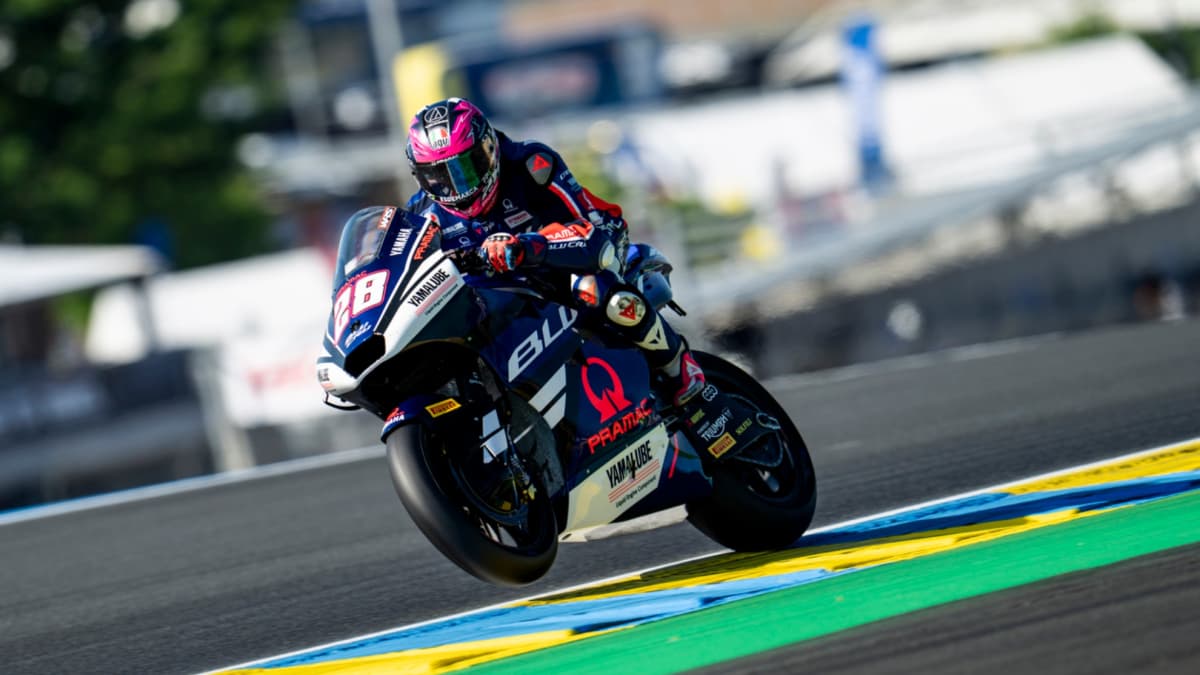
Izan Guevara se lleva la victoria en Moto2 en el GP de Francia, con Manu González y Ortolá en el podio.
Kylian Mbappé will miss the clasico, impacting Real Madrid's title hopes.
See every story in Sports — including breaking news and analysis.
Atlanta Braves manager Bobby Cox spent more than two decades giving inside stories about his team to Forbes.com contributor Terence Moore who spent 25 years through May 2009 as a sports columnist at the Atlanta Journal-Constitution.
Terence Moore
I interacted often with Cox.
He combined with farm director Hank Aaron (yep, the former Braves legend) to acquire talent for that historic run to the playoffs that also produced five pennants and a 1995 world championship. He even returned to the dugout as manager in 1991 and stayed until his retirement in 2010.
His players loved him. They did so, not only for his X’s and O’s that contributed to his accumulation of more all-time victories (2,497) than any manager not named Connie Mack, Tony La Russa or John McGraw, but for his refusal in public to blast players, coaches, team officials or anybody else. That included umpires, which means the following makes no sense.
With dirt flying everywhere from Cox’s kicking and with spit leaving his mouth between words not used by Sunday School teachers, he was ejected from a record 162 games. But his responses in press gatherings to whatever umpires did (or didn’t do) in his opinion were vanilla instead tutti-frutti.
The same went for players.
This was vintage Bobby Cox to postgame questions: Despite a Tom Glavine or a Greg Maddux getting rocked enough on the mound to make Little Leaguers cringe, Cox often responded with a shrug and something like, “He pitched good for me.” Then his interview session usually ended with several reporters grumbling while rolling their eyes on their way to deadline.
I never was among those grumbling.
I knew the secret for reaching the other side of Cox, especially if your livelihood involved writing and broadcasting.
Robert Joe Cox had to trust you. If he did, his cliches vanished ("He pitched good for me"), and he became the king of bluntness. He sought to give you a private understanding of his decision-making process and that of the Braves, so you could form an intelligent 0pinion with accuracy.
Many times as an Atlanta Journal-Constitution columnist, I wrote something that could have been typed from Cox’s fingers.
You also had to get to the ballpark early. Like really early, because for a 7:30 p.m. game, Cox was there at noon. And he would sit in his favorite place on earth, which was not his office, but the weather room near the home dugout, where he would be completely clad in his uniform, from spikes to cap, with his feet up on a ledge, puffing on a cigar and looking at the weather map for hours.
ATLANTA, GA - OCTOBER 28: Bobby Cox of the Atlanta Braves celebrates following Game Six of the World Series against the Cleveland Indians on October 28, 1995 at Atlanta-Fulton County Stadium in Atlanta, Georgia. (Photo by Sporting News via Getty Images via Getty Images)
Sporting News via Getty Images
Unless there was a NASCAR race, Cox’s obsession, which meant you had to be capable of discussing the Doppler radar and Dale Earnhardt.
As a reporter, you couldn’t get into the stadium that early unless you had connections.
I had connections.
Once inside, with Cox puffing away, I always discovered that he was about as tough on folks behind the scenes as Bobby Knight, Bill Parcells and Billy Martin were in the forefront. He told me about players he disciplined or planned to do so. He mentioned the true reason he put this guy on the bench for a game or three, and why another wouldn’t have a uniform with a tomahawk across his chest by Labor Day, maybe the Fourth of July.
He nodded during some of my suggestions, but I’m guessing that was just to get me closer to leaving so he could watch more weather patterns.
Cox also gave me one my favorite responses ever, and he said this one was for the record. It came during a stretch when future Hall of Famer Andruw Jones was slumping at the plate for the Braves. I asked Cox if he considered benching his slick-fielding center fielder.
Cox replied of Jones, “He’s got RBIs in his glove.”
Nothing showed my relationship with Cox more than what occurred during the spring of 1992 in West Palm Beach, Florida, where the Braves used to hold their camps before the season.
Baseball: Pittsburgh Pirates Barry Bonds (24) in dugout before game vs San Diego Padres. San Diego, CA 4/29/1990 CREDIT: Richard Mackson (Photo by Richard Mackson /Sports Illustrated via Getty Images) (Set Number: X39731 TK2 R6 F32 )
Sports Illustrated via Getty Images
I discovered from a high-ranking baseball official that the Braves were working in the shadows to acquire some guy named Barry Bonds, the Pittsburgh Pirates slugger who already flashed signs of Cooperstown. He grabbed National League Most Valuable Player honors in 1990, won a second consecutive Gold Glove in left field and back-to-back Silver Slugger awards.
The year before, the Braves slipped past Bonds and his Pirates to win the NL pennant for a worst-to-first trip to the World Series, but they lost in seven games to the Minnesota Twins. With Bonds, the Braves could finish the deal, and who knows? They could do something like win 14 consecutive division titles, but only with multiple world titles instead of one.
Even though my source was good enough involving the Braves and Bonds, I wanted to see if I could get it great.
I went to Cox. I pulled him away from the batting cage, where he was studying hitters before a spring training game, and I mentioned what my high-ranking baseball official told me about the Braves and Bonds.
“John is trying to get it done,” said Cox, whispering, with a head nod toward Braves general manager John Schuerholz across the way.
So, in a flash, I went from good to great with my sourcing, but I wanted to seal the deal. Even though Schuerholz wasn’t media friendly when it came to his business transactions, I asked him anyway.
Are you trying to trade for Barry Bonds?
“No,” said Schuerholz, barking his response without elaboration, before he rushed away to anyplace on the field that didn’t involve me.
After I told the Atlanta Journal-Constitution editors what I had, they declined to run the column.
They said it was “too speculative.”
Ohhhhkaaayyyy.
From that point through the next 14 years, there wasn’t a hint anywhere about the Barry Bonds/Braves exclsuive I had during the spring of 1992.
Then Schuerholz wrote his 2006 autobiography called “Built to win: Inside Stories and Leadership Strategies from Baseball’s Winningest GM.” One of his chapters was titled “Barry Bonds a Brave – Briefly,” and he discussed in detail how he nearly brought Bonds to town.
I know.
Bobby Cox told me.
This article was originally published on Forbes.com