Sports
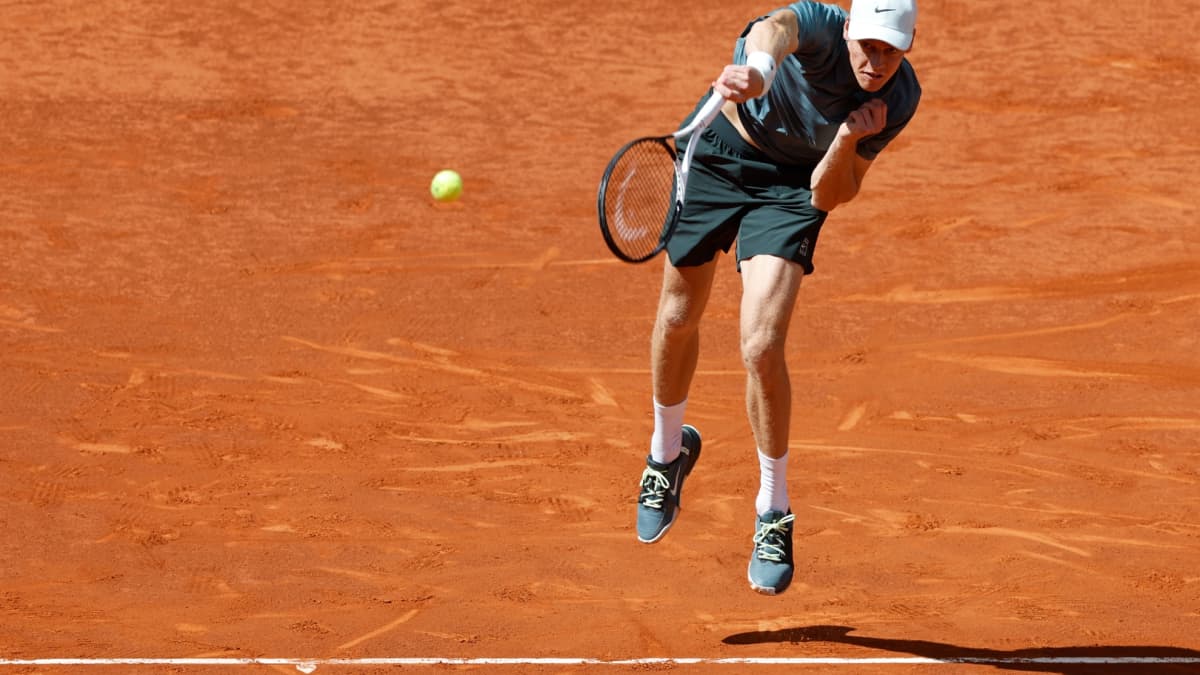
Sinner traslada su dominación a Madrid y se da la oportunidad de lograr una manita para la historia
Marca
The Cowboys successfully revamped their defense this offseason, focusing on significant changes to their defensive line. They replaced former coordinator Matt Eberflus with rising star Christian Parker and made strategic roster adjustments during the 2026 NFL Draft.
Mentioned in this story
After the year the Cowboys had – ranking dead last in scoring, EPA/play, and DVOA on defense – everyone was on the same page about what this offseason needed to be about. It didn’t take long for Brian Schottenheimer to move on from Matt Eberflus, but the head coach took his time finding a replacement. Eventually, he settled on budding star Christian Parker.
In previous seasons, that may have been it. Swap Eberflus for Parker and simply hope that a new voice can turn contaminated water into wine without spending more on the roster than already being done. But the way the Cowboys went about their offseason, which unofficially just wrapped up with a stellar 2026 NFL Draft, proves they understood the assignment.
For several decades now, the Cowboys have had the same approach on the defensive line regardless of scheme or coach. Rod Marinelli ushered in an era of seeking undersized, athletic linemen who could simply run around blockers, but even before then, Jay Ratliff was playing nose tackle while clocking in under 300 pounds. Even when they drafted the hulking Mazi Smith, he was immediately tasked with shedding weight to get under 300 pounds.
Things look fundamentally different now.
Quinnen Williams, Kenny Clark, and Otito Ogbonnia are all comfortably over 300 pounds, with the latter two being above 310 pounds. None of them are so large that they sacrifice any real movement ability, but all three have the heft and strength to hold up against the run. Those are crucial traits in the Vic Fangio-inspired scheme that Parker is bringing to Dallas.
Rashan Gary is also a very different type of EDGE than the Cowboys are used to. He’s nearly as heavy now as was when the Cowboys drafted him to play the 3-technique so many years ago, though Gary will rarely be lining up in the A-gap or B-gap for Dallas. His size and strength allows Parker to play him on all three downs, using Gary as an effective pass rusher who can just as easily set the edge against the run.
The Cowboys replaced defensive coordinator Matt Eberflus with Christian Parker and made strategic roster adjustments, particularly to the defensive line.
Christian Parker is a budding star in coaching, selected to replace Matt Eberflus due to his potential to improve the team's defensive performance.
Last season, the Cowboys ranked last in scoring, EPA/play, and DVOA on defense, highlighting the need for a significant overhaul.
The 2026 NFL Draft is expected to enhance the Cowboys' defensive capabilities, as they made strategic selections aimed at improving their defensive line.

Chiefs' WR duo and other veterans see fantasy value rise after the 2026 NFL Draft.
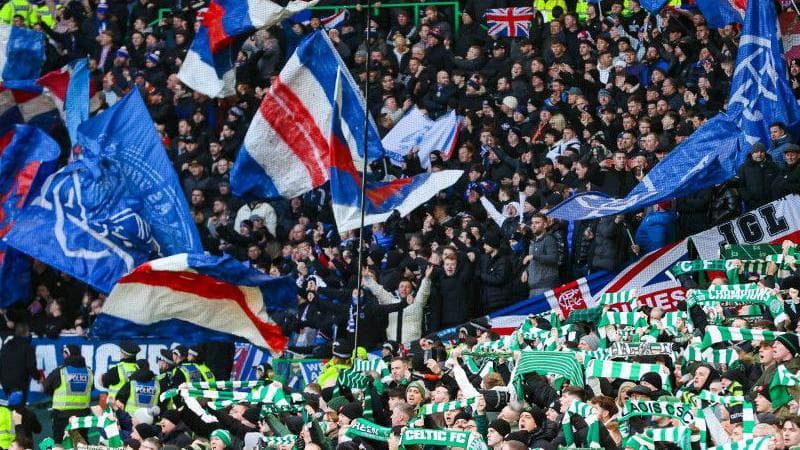
SPFL says Rangers deserve 5% of derby tickets, Celtic not mandated to comply
Saudi Arabia to Launch New Masters 1000 Tennis Event in 2028 Amid Funding Cuts

Detroit Mercy men's basketball coach Mark Montgomery signs contract extension through 2031.
Was Cooper Flagg's Rookie of the Year win truly impressive?
See every story in Sports — including breaking news and analysis.
As for the more prototypical, pin-your-ears-back edge rushers, the Cowboys have three guys to work with. Donovan Ezeiruaku flashed potential as a rookie, finishing second among Dallas EDGEs in pressures, and is expected to make a second-year jump. Malachi Lawrence had the second-highest Relative Athletic Score of any EDGE in this year’s draft class and was ninth in his class in pass rush win rate. And James Houston finished second on the team in sacks this year despite being ninth in pass rush snaps.
Traditionally, the Cowboys’ small-and-athletic approach across the board to the defensive line has resulted in shaky run defense regardless of scheme while only sometimes producing top-level pass rush units. Parker’s scheme calls more for suffocating run defense that can also push the pocket and make quarterbacks uncomfortable.
Without a doubt, Dallas has now supplied Parker with the bodies to run that scheme up front.
Despite a flurry of moves in free agency, the Cowboys did not address the linebacker position, leaving it as the biggest need heading into draft weekend. Of course, the linebacker spot is also the least valuable position on defense, and Dallas seemed uninterested in overpaying there, especially with DeMarvion Overshown’s second contract looming.
After reports of the team’s interest in Texas Tech’s Jacob Rodriguez and Texas’ Anthony Hill, neither were ultimately targeted by the Cowboys. Their trade back from 20 to 23 gave Dallas enough ammunition to move up in the second round for either, but they stood pat. They also did not circle back to trade targets they’d previously been linked to, such as Jordyn Brooks or Patrick Queen.
Instead, they swapped a fifth-rounder for Dee Winters, who started every game this past year for a 49ers defense that exceeded expectations relative to their lengthy list of injuries. Winters, initially a backup, was a big part of that effort, and now he’s expected to slot in as a starter next to Overshown.
More than that, the Cowboys used their late third-round pick on Jaishawn Barham, who’s expected to play a hybrid linebacker role for them early on. Barham was primarily an edge rusher at Michigan this past year, but he’s also worked plenty in an off-ball linebacker role in the past.
The Cowboys openly compared Barham to both Arvell Reese – the hybrid linebacker who just “fell” to the fifth overall pick – and Zack Baun, who became one of the most disruptive linebackers in a similar role for the Eagles. Of course, Parker was front and center for Baun’s emergence, and now he thinks he has another one in Barham.
Add in the presence of second-year pro Shemar James, who finished second among Dallas linebackers in snaps played last year, and the Cowboys suddenly have options at the position. Sure, linebacker is still the biggest question mark on this roster, but that mostly speaks to the job this front office did in shoring up the rest of the defense.
It would be an understatement to say that the Cowboys had holes in their secondary last year. At times, the holes were so large that JaMarcus Russell himself could’ve jumped in from his couch and completed passes against this pass defense.
Parker, a defensive backs coach by trade, naturally demanded changes there. And he got them.
In free agency, the Cowboys said goodbye to longtime starter and team captain Donovan Wilson. And while they held onto Malik Hooker, they also brought in safeties Jalen Thompson and P.J. Locke. Thompson came over from Arizona, where he played for new Cowboys cornerbacks coach Ryan Smith. Locke, meanwhile, came from Denver, where he once played for Parker.
The Cowboys also made moves at cornerback, signing Cobie Durant and Derion Kendrick. Durant has started 14+ games each of the last two years for the Rams, while Kendrick became a starter for that same Rams team back in 2023 before an ACL tear threw him off course.
The expectation is that both DaRon Bland and Shavon Revel will be starters for Dallas, though both have recent injury history that could complicate things. Adding Durant and Kendrick at very team-friendly deals provides known commodities in case either Bland or Revel are unable to start. The Cowboys also still have Reddy Steward, Trikweze Bridges, Caelen Carson, Josh Butler, and Zion Childress, all of whom have flashed promise at one point or another over the past couple years.
Of course, the draft also brought the biggest addition anywhere on defense: Caleb Downs.
The Ohio State star was considered by some draft analysts to be the best player in the entire class, let alone the best defensive back. And the Cowboys got him at 11th overall, only giving up two fifth-round picks to go up and get him.
Downs immediately slots in as the starting nickel for Parker, the most important position in this defense. In that role, Downs will consistently be around the ball both as a ballhawk and a thumper in the run game. Not only did Downs fill a crucial position in this new scheme, but his presence allows other Cowboys players to better define their own roles.
For example, Bland will no longer be the nickel corner. He’ll now go back to being a full-time outside corner, as he did during his record-breaking 2023 season. There’s no guarantee that Bland will immediately start racking up picks again, but the clarity on his position will surely help in both learning this new scheme and in recovering from yet another surgery.
Similarly, Thompson – who alternated between nickel and safety in Arizona – will settle into one of the two starting safety spots rather than being relied upon to fill multiple roles. He was at his best in Arizona when playing deep, so this helps him too. Then there can also be a competition between Hooker and Locke for the other safety spot, rather than needing both players to start if Thompson had to command starting reps in the slot.
All in all, the Cowboys came out of this offseason with significantly more answers than they had a few months ago. When he was hired, Parker knew exactly what he wanted his defense to look like. Now, after three months on the job, his defense certainly looks the way he envisioned it… at least on paper.
All that’s left to do now is see if Parker can actually make it all work on the field.