Sports
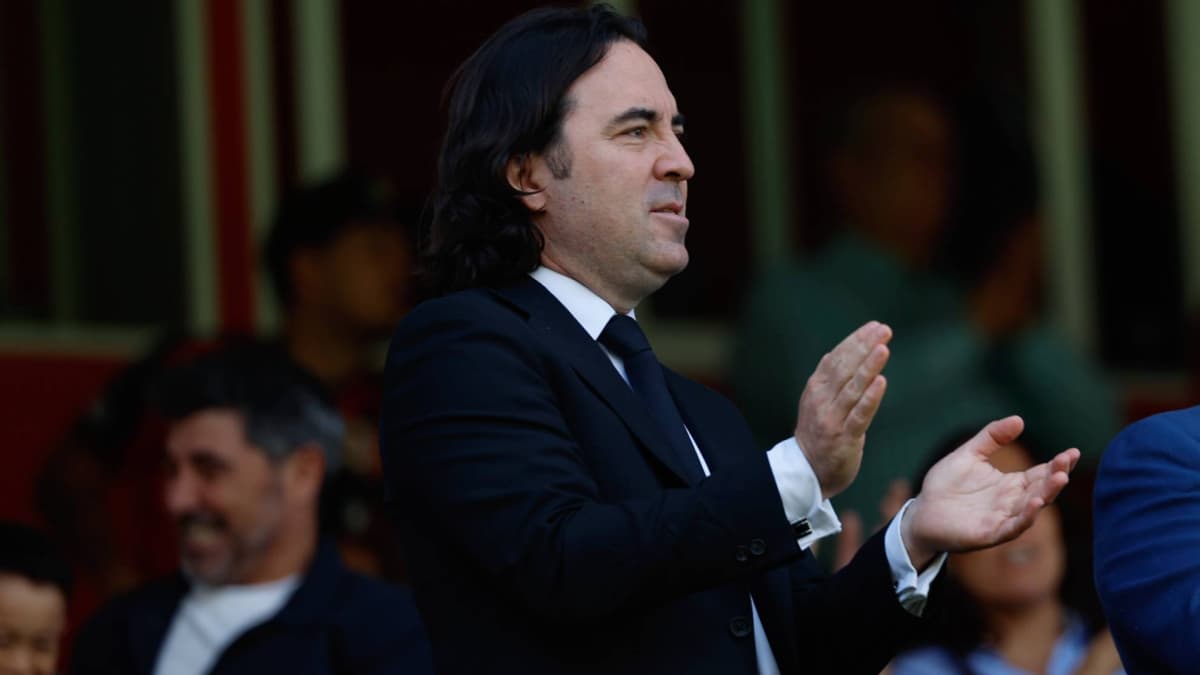
"Es la mayor atrocidad e injusticia que se ha cometido con un equipo en el fútbol español"
Raúl Martín Presa del Rayo Vallecano denuncia una gran injusticia en el fútbol español.
Marca1 min read
Major League Baseball plans to expand to 32 teams, with a focus on market analysis and team re-alignment. The article outlines the timeline and methodology for this expansion process.
Mentioned in this story
MLB Commissioner Rob Manfred has targeted MLB expansion as a legacy to his tenure. (Photo by Michael Chisholm/MLB Photos via Getty Images)
MLB Photos via Getty Images
In the not-too-distant future, Major League Baseball will officially begin the process of expanding the league to 32 teams. Beyond market analysis, each of the major groups was contacted for this report to provide details on their current status and what remains to be done. Here is the list, the methodology, the findings, and the timeline for when the league could not only expand, but re-align.
As the league moves past the early stages of the 2026 regular season, expansion remains at no official stage. Manfred began discussing the expansion of the league in October of 2015, and for over a decade, he has repeatedly said that MLB was a “growth industry” with the target of 32 teams and regional realignment in the future.
Key to any expansion would be to have an agreement with the MLB Players Association on the topic as part of collective bargaining. With the current agreement set to expire on December 1 of this year, it would seem that the next labor agreement for 2027 would be the first step toward a formal process. While the MLB Players Association does not have a say in actual expansion, it does have a say in any impacts on players, such as travel. But conceptually, the union would be amenable to expansion, given that two additional teams would provide jobs for more players, not only on MLB rosters but also for affiliated minor league teams.
With the A’s well underway with ballpark construction in Las Vegas, all eyes are now on the Tampa Bay Rays and the new ownership’s ability to get a new ballpark funded and shovels in the ground. Once that process is underway, MLB commissioner Rob Manfred could then go forward to the owners to seek a formal Expansion Committee.
Once the Expansion Committee was in place, then contenders over pretenders would begin to bubble to the surface. Key to that would be funding not just for a ballpark but also for the expansion fee, which could range from $2 to $2.5 billion per market.
The article provides a detailed timeline for when MLB plans to begin its expansion process, although specific dates are not mentioned.
MLB Commissioner Rob Manfred is spearheading the expansion initiative as part of his legacy.
The expansion process includes market analysis and consultations with major groups involved in the league.
After the expansion, Major League Baseball will increase its total number of teams to 32.
Raúl Martín Presa del Rayo Vallecano denuncia una gran injusticia en el fútbol español.
Real Madrid opens discussions with Toni Kroos about a potential return to the club.
Mel Kiper Jr. doesn't understand the hate for Shedeur Sanders
Shohei Ohtani suffers his first loss with the Dodgers, citing a tough fifth inning.
Texans reward Pro Bowl LB Azeez Al-Shaair with three-year extension
Seattle Mariners' shaky start shouldn't worry fans, experts say.
See every story in Sports — including breaking news and analysis.
Rob Manfred has said that he plans to retire at the end of his current term in January of 2029. Based upon that, and the amount of time it takes to build ballparks, Manfred could announce who is being awarded expansion franchises, but those ballparks would open under his successor's tenure in the 2032 or 2033 timeframe.
Manfred has said that he envisions an additional club in the west and one in the east. But if a market somewhere in the middle of the country stepped forward with the funding and other considerations met, it would be hard for the league to ignore. That means where we are now could potentially change.
“The fact that many cities and regions aspire to have a Major League club is flattering to our sport and a symbol of this terrific current era for Major League Baseball,” Manfred has said. “Over the long haul, I fully expect the game’s continued growth to afford us attractive options in terms of potential expansion. From a scheduling standpoint, there also would be clear benefits to a 32-team structure in the future. I hope that we will accomplish enough in the near future to bring ideas like these even closer to reality.”
For this study, I leaned on the process used for potential relocation candidates for the Montreal Expos. Before I was a journalist, I was involved in a market study by baseball boosters and the Mayor’s Office in Portland, OR, from 2003 to 2005, to present the market to MLB as an option for relocation or expansion. Below shows the data points used for each market:
The population base per franchise and corporate listing are important for looking at dilution of potential ticket sales, and sponsors in a given market.
On top of this methodology, many of the baseball efforts underway in more mature markets at this stage provided additional information for context.
A key factor with each market is where the efforts are in not only determining site location(s) for a ballpark, but where the group stands in terms of their capital stack to meet the billions of dollars in funding for the ballpark and expansion fee.
In the case of Canadian markets, DMA information and population growth were omitted.
Market selection for the study came by way of three primary criteria:
I am not going to go through a personal ranking process with each market, although some final notes at the end give a sense of where we are. The data, location, and market criteria flesh out who is further along or potentially preferred by the league at this point, but the true muster of the ownership stack and potential public funding may not become clear until just before the league selection process. Markets may be used as stalking horses to extract more from other markets. Some markets may see political support shift based on changes in administration. And through it all, the tenuous hold of investor groups through the bumpy ride between now and selection could unravel under pressure.
Here is the list (in alphabetical order)
Efforts were made to reach out to all the well-formed groups, or, in the case of Vancouver, the Mayor’s office, given their recent public proclamations of wanting a team. Repeated requests to Mayor Sim’s office went unreturned. Sacramento has no group pushing for MLB. Charlotte’s group is fan-driven through a Facebook account and currently sees no real organizational structure. Neither Sacramento nor Oakland currently has any organized efforts. All others provided details for this report.
Booster: Charlotte MLB Project (Facebook)
Population: 943,476
Metro population: 3,000,000
Population rank: #14
Population growth: +7.9%
Major Sports Teams: Panthers, Hornets, Charlotte FC, Knights
Population base per franchise: 750,000
TV DMA Size: 1,382,020
Major Corp presence: Bank of America, Lowe's, Honeywell, Nucor, Truist, Honeywell, Sonic Automotive, Duke Energy
Discussions about Charlotte as a home for Major League Baseball have swirled for decades. At one point, it was considered for expansion in 1991 and relocation of the Expos in the early 2000s.
Charlotte is one of the fastest-growing markets in the country. Its size is larger than the likes of Portland and Nashville, and could theoretically support a mid-market attendance of 27,000-30,000 per game. High GDP per capita ($55,802) and finance/tech hubs could promise robust sponsorships and luxury boxes, counter Raleigh's tech focus.
A problem specific to Charlotte is that the market is claimed by four clubs (Braves, Orioles, Reds, and Nationals) as part of their broadcast territory.
The downside is that there are no truly organized efforts on the political or grassroots side to raise investment capital to rally large businesses and the government. To date, the Charlotte MLB effort is largely the domain of a fan-driven Facebook page.
Booster: None
Population: 440,679
Metro population: San Francisco-Oakland-Fremont Metropolitan (4,630,000)
Population rank: 45
Population growth: +3.8%
Major Sports Teams: San Francisco Giants, San Jose Sharks, Oakland Roots SC, Oakland Ballers (Pioneer League)
Population base per franchise: 1,543,333
TV DMA Size: 2,542,480
MLB clubs that claim market area: Giants, A’s
Major Corp presence: Kaiser Permanente, Clorox, Blue Shield of California, G&E, Dryers Ice Cream, Pandora, Port of Oakland
The A’s are playing their second season in Sacramento, as roaming nomads ahead of their permanent home in Las Vegas. The relocation of the Athletics out of Oakland is the most recent – and painful – chapter in MLB’s relocation saga.
So, with the talk of expansion, many in the Bay Area wonder, if it was good enough to support two teams before, why not now?
For over 20 years, the A’s sought a new ballpark in Fremont, San Jose, and Oakland. Whether it was at the current site of the Oakland Coliseum, or the Howard Terminal location, whether it was John Fisher’s ownership, Lew Wolff, the City of Oakland, the pushback from the Giants, or Major League Baseball itself, getting the ballpark finished never came to fruition.
As of now, the odds of an expansion team to fill the void left by the A’s seem a long shot. The city, which has gone through several mayoral administrations, has a bitter taste in its mouth, and it was reported that Commissioner Manfred became so frustrated with then-mayor Sheng Thao that "he will never allow a team in Oakland," according to an official.
Beyond all this, the Giants loom large. In former owner Lew Wolff’s book “Moments”, he claims that the biggest impediment to relocating to San Jose was over territorial rights that were once a no-man's land, which the Giants asked the A’s if they could have when they were looking for their own relocation within the Bay Area. At the time, no one could foresee what would become the lucrative Silicon Valley. Now, the Giants control the entirety of the Bay Area for the purposes of sponsors and fans that could shift their allegiance from the A’s. All of this makes expansion difficult in the current environment.
Booster: Bring MLB to MTL
Population: 1,945,359
Metro population: 4,400,000
Population rank: Would be #4 in the U.S.
Population growth: N/A
Major Sports Teams: Canadians, Alouettes, CF Montréal, Montréal Victoire
Population base per franchise: 1,466,667
TV DMA Size: N/A (Nielsen does not cover Canada)
MLB clubs that claim market area: Blue Jays
Major Corp presence: Air Canada, Bell Canada, Canadian National Railway, Desjardins Group, Couche-Tard, CGI Group, BRP, Bombardier, Saputo, WSP Global
No discussion on MLB expansion can take place without addressing Montreal. The last team to relocate and rename in Major League Baseball (Expos to Washington Nationals), repeated questions about whether the market was shortchanged through either the momentum lost during the 1994 strike, and poor ownership by both Jeffrey Loria and, eventually, the 29 other owners in MLB, have made many wonder whether Montreal deserves another shot.
While fans may still dream of a Labatt Park – the best ballpark that never was – the current state of bringing back MLB would require considerable assistance. Gone are the days of Claude Brochu and Stephen Bronfman, who for years labored to not only keep MLB in Montreal but also to lure it back. In their place, former Expo, Warren Cromartie, has become the lone man holding up the flag for the market. And even then, when I spoke to him, he was living in Japan, where he had spent much of his life after signing with the Yomiuri Giants in 1983.
“From the outset, there has always been interest from both provincial and municipal governments in the return of baseball to Montreal,” Cromartie said. “This continues today, and the nature and extent of their involvement would depend on how an eventual ownership group assesses where each government can help. Advanced discussions took place on various incentives to support the project, and this door remains open.”
Cromartie believes that, from a marketing perspective, the Montreal Expos brand is a turnkey proposition. It is a globally recognized brand, with a rich history, and strong resonance among a huge population base not only in the Montreal area, but across the province of Quebec and Canada, and even the northeastern United States.
“The story of the franchise is never far from the conversation, whether that is a star like Vladimir Guerrero Jr's unique history with it, or the number of Quebec-born players in the Majors being the highest it has ever been,” says Cromartie. “A reborn Expos franchise would immediately be integrated into the baseball world, like the team never left. It is this unique value that is a key element for anyone looking to join the ranks of Major League Baseball as an owner.”
Cromartie sees the value of Montreal as a known quantity, given the history with the Expos and a rich, diverse demographic that would bolster MLB.
“When it comes to baseball, Montreal has both the numbers and the history, two things that don't change.” Cromartie said. “Montreal accelerated the integration of African-Americans in Major League Baseball through its embrace of Jackie Robinson as member of the Montreal Royals when others had closed the door on him. Montreal is one of the largest metropolitan areas in North America without an MLB team, and it already proved it can support baseball. Adding Montreal would deepen the league’s presence in a bilingual, globally connected city. That matters for media rights, sponsorships, and branding—especially as MLB tries to grow beyond its traditional U.S. base.”
Booster: Music City Baseball
Population: 704,963
Metro population: 2,151,715
Population rank: #21
Population growth: +2.2%
Major Sports Teams: Titans, Predators, Nashville SC, Sounds
Population base per franchise: 537,929
TV DMA Size: 1,382,020
MLB clubs that claim market area: Braves, Reds, Cardinals
Major Corp presence: Asurion, HCA Healthcare, Nissan North America, Dollar General, Bridgestone Americas, Tractor Supply Company
With MLB looking for one team in the west and one in the east, Nashville has continually come up in expansion conversations. The league knows the market well, having had the Baseball Winter Meetings hosted at the Opryland Hotel a total of eight times, dating back to 1983.
A key demographic that makes the market enticing: Nashville's metro population tops 2 million, with a median age of 36.8—younger than the U.S. average of 38.5—and 22.7% under 18, making it ideal for MLB's "Forever Fans," who form 70% of its base before adulthood.
More recently, MLB set an all-time regular-season attendance record of 91,032 tickets sold when the first-ever MLB game in Tennessee was played at the Speedway Classic at Bristol Motor Speedway, featuring the Atlanta Braves and Cincinnati Reds.
To add, Music City Baseball is working closely with Bob Kendrick of the Negro Leagues Baseball Museum and is looking to tap into the deep heritage of the Nashville Stars, which the Nashville effort sees as a strong brand for a potential MLB expansion team.
Music City Baseball has partnered with Lincoln Property Co. to evaluate and develop site plans for two downtown locations, with Populous producing renderings of the overall vision for a ballpark district. Mortenson previously did a site market analysis for MCB to help us determine these sites. CSL is actively updating feasibility studies to determine the economic viability of the sites as we make additional progress. The focus now is to secure the real estate at the preferred site to create a mixed-use development/ballpark entertainment district similar to The Battery in Atlanta to help finance a future MLB stadium. Those efforts are well underway.
Music City Baseball is led by former U.S. Attorney General Alberto Gonzales, with real estate developer John Loar conducting day-to-day operations for MCB.
To date, the group has not identified a key ownership group to finance the Nashville effort. When asked about the capital stack for the Nashville MLB effort, they replied that, “given MLB’s clear interest in Nashville, Music City Baseball believes an MLB-approved controlling ownership group will soon emerge,” pointing to the recent sales of the Rays and Padres as examples of the league having deep interest in potential owners.
“Nashville is already a big league city, so our role is to put all of the building blocks in place to make sure Nashville is ready as soon as Major League Baseball is ready to expand,” said Loar in a statement to Forbes. “Securing the ideal site for a potential multi-purpose entertainment venue is the next critical step in that process. To continue to be the leader of the pack, we’ll need even more state and local support around this effort to provide certainty that Nashville is ready to deliver.”
Rendering of a possible ballpark design in Nashville.
Music City Baseball
Booster: Orlando Dreamers
Population: 334,854
Metro population: 5,004,239
Population rank: #58
Population growth: +8.8%
Major Sports Teams: Magic, Orlando City SC, Orlando Pride
Population base per franchise: 1,668,080
TV DMA Size: 1,902,420
MLB clubs that claim market area: Marlins, Rays
Major Corp presence: Darden Restaurants (DRI), AAA, Hilton Grand Vacations, Marriott Vacations, Tupperware Brands, CNL Financial Group
Orlando is one of the fastest-growing markets in the country, seeing population growth of 8.8% from 2020 to 2024. Florida has also tapped into tourism taxation to fund sports facilities, which would, at least conceptually, lower any public tax burden. Of the top 30 metros, Orlando is #1 for population growth, #1 for job growth, and #1 for nominal GDP growth. Orlando is the largest media market (#15) without Major League Baseball.
While Orlando is on the radar for expansion, the market has also touted itself as a possible solution to the Tampa Bay Rays for relocation should a new ballpark not materialize in Tampa Bay/St. Petersburg.
The Dreamers have identified a 35.5-acre parcel located near International Drive attractions as their preferred option for a state-of-the-art domed facility, but have not signed any agreements with the County. They do have over $1 billion under Letter of Intent for the team's portion of stadium construction costs.
When asked about the structure of the capital stack to fund not just the ballpark, but the funds needed to meet the $2 billion to $2.5 billion expansion fee, a source for the Orlando Dreamers said they are not publicly disclosing their funding sources. While not revealing details, the spokesperson said that the Dreamers can confirm that they have both “stadium construction and team acquisition financing under executed letters of intent with highly qualified financial partners.” In an NPR story, the Dreamers reportedly have $1.5 billion committed to team ownership and another $1 billion for a stadium.
Since the passing of former Orlando Magic owner Pat Williams, Baseball Hall of Famer Barry Larkin has taken over the mantle for the Orlando Dreamers, with Johnny Damon also part of the group.
"From infrastructure and funding to market attributes and reach, Orlando is ready for Major League Baseball,” Larkin said for Forbes. “The metrics in Orlando do not lie: this market is equipped to support a Major League Baseball team. Dig in, and you will agree, Orlando is THE pick to be the next great MLB city."
"Orlando is an amazing baseball town,” Damon said for this report. “From Little Leagues to high school ball, there is an electricity that surrounds the local baseball scene. There is an unbelievably rich history here, too, from Babe Ruth and Jackie Robinson to more recent players like myself, Jason Varitek, AJ Pierzynski, Rickie Weeks, Zack Grienke...there are just too many to name. Major League Baseball would THRIVE in Orlando and bring the game to so many more people than any other market. From locals to international visitors, Orlando is the best city to grow the game of baseball."
Proposed ballpark and development rendering in Orlando.
Orlando Dreamers
Booster: Portland Diamond Project
Population: 440,679
Metro population: 4,630,000
Population rank: #45
Population growth: -2.6%
Major Sports Teams: Blazers, Timbers, Thorns, Fire, Hops
Population base per franchise: 502,000
TV DMA Size: 1,277,920
MLB clubs that claim market area: Mariners, Giants, A's
Major Corp presence: OHSU, Nike, adidas America, Columbia Sportswear, Daimler Trucks North America
Portland has been trying to lure MLB to the market since the early 2000s and has had an active MLB booster group for over six years. While Portland would rank 10th in adjusted household income compared to other markets in the league ($86,483), in recent years, Portland’s downtown core has been slow to return to pre-pandemic levels as a large percentage of businesses have moved to telework.
That minus is working as a plus for the MLB to Portland effort, where Mayor Wilson and Governor Kotek both see luring an MLB team to a location on the Willamette River just south of downtown as a way to generate business activity in the city core.
Portland has something some of the other markets have yet to acquire: public funding of up to $800 million using a but-for taxation method in which the players – both home and away – as well as execs of any Portland MLB team that earn over $100,000, would see their state income taxes used to pay the debt obligations. Senate Bill 110 was signed into law, but it does not become active unless an MLB team is awarded to the market.
In 2024, the Portland Diamond Project agreed on terms to buy a 33-acre property at Zidell Yards on the city’s South Waterfront. In an interview with Craig Cheek, the head of the Portland Diamond Project, he said to me that payments are being made on the site that PDP PDP controls.
Initial plans for the site were to have a 32,000-33,000 open-air ballpark. Based on feedback that PDP has received, Cheek said the recommendation was to move to 35,000 seats.
“Our market analysis adviser came back and said that beyond Portland having the fan base to fill it, AEG and Live Nation have been skipping over Portland with larger acts,” Cheek said. The expanded capacity would allow the venue to tap into potentially as many as 20 concerts a year, beyond baseball-related revenue, he said.
As for funding, over the life of the Portland Diamond Project, the individuals who make up the capital stack have never been announced. But unlike Nashville, Cheek said they would not need to go to the league to fully form an ownership group.
“We’re operating under the assumption that we've got to finish our capital stack, and that capital stack has to be able to pay for the expansion fee and finishing out the development of the site -- paying for the rest of the ballpark,” Cheek said. “We're told you need to show proof of funds that your ownership group can cover three years of losses, just to make sure you've got powder and liquidity, and you're not hanging on by a thread. So that's how I say we are three-fourths of the way through our punch list, and the thing that we're working most aggressively on right now is completing and identifying our capital stack, including who's going to be our general partner.”
When could PDP reveal all that information? Cheek said that the final six-month push would likely come sometime around when the Expansion Committee was in place.
Rendering of a possible waterfront ballpark south of downtown Portland.
Portland Diamond Project
Booster: MLB Raleigh
Population: 499,825
Metro population: 1,590,000
Population rank: #39
Population growth: +6.8%
Major Sports Teams: Panthers, Hurricanes, NC Courage, Mudcats
Population base per franchise: 397,500
TV DMA Size: 1,345,840
MLB clubs that claim market area: Orioles, Nationals, Braves
Major Corp presence: Red Hat, Epic Games, WakeMed, First Citizens Bancshares, Martin Marietta, Wolfspeed
While Raleigh has a smaller downtown core than Charlotte, a key demographic is looking at the Raleigh-Durham metro (Triangle region) exceeds 2.5 million residents across Raleigh, Durham, and Chapel Hill, surpassing many MLB markets like Milwaukee or Cincinnati in projected 2037 growth.
While he most recently purchased the Portland Trail Blazers, spokespersons for the MLB to Raleigh effort said that Tom Dundon has been the key driver in bringing MLB to the market.
In an interview with the Sports Business Journal, Dundon said, “You can get a public-private partnership to build a great stadium, and I think the people would support it. The revenues would do really well here, and we could sell tickets and sponsorships to be of value to Major League Baseball.”
With Dundon's comments, it’s clear that while conceptually the idea of bringing MLB expansion to the Triangle is something to push for, the details between him and any potential ownership group, and public subsidy have not yet been worked out, given funding of over $4 billion.
Dundon, who is the investor leading this charge, also has development rights on 81-acres around the Lenovo Center (where the Hurricanes play). They are in phase 1 of that build-out. Meanwhile, the State of North Carolina owns most of the land surrounding those 81 acres, so the site location is well-targeted.
As for government support, Raleigh Mayor Janet Cowell, voiced her support publicly after discussing it in print prior to that. Governor Josh Stein is listing MLB as one of his top priorities during his term.
Rendering of a potential ballpark in Raleigh.
MLB Raleigh
Booster: None
Population: 535,798
Metro population: 2,480,000
Population rank: #35
Population growth: +3.8%
Major Sports Teams: Kings, River Cats
Population base per franchise: 1,240,000
TV DMA Size: 1,345,840
MLB clubs that claim market area: Giants, Athletics
Major Corp presence: Sutter Health, UC Davis Health, VSP Vision Care, Centene, SMUD
While it’s a significant long shot, Sacramento positions itself as an interesting West Coast MLB expansion market to examine, capitalizing on the Oakland A's temporary stay at Sutter Health Park through 2027 and the resulting Northern California void post-2028 Vegas move. Its #20 TV market and proximity to the affluent Bay Area draw make it an interesting wild card, at least conceptually.
The mere fact that Sacramento is currently hosting the A’s gives the city and the league real market data to examine. Is Sacramento far enough away from the Bay Area to not raise the ire of the Giants, or, for that matter, the A’s that may look to capitalize on retaining the market by brand even after the A’s move to Las Vegas? Maybe. But there’s enough growth and interest in the market that it’s not entirely out of hand. Right now, it’s so far-flung that there is no organized effort to bring MLB to the market, nor any government leadership waving the flag to have the league take a look.
Booster: Big League Utah
Population: 217,783
Metro population: 2,800,000
Population rank: #111
Population growth: +9%
Major Sports Teams: Jazz, Mammoth, Real Salt Lake, Royals FC, Bees
Population base per franchise: 260,152
TV DMA Size: 1,163,520
MLB clubs that claim market area: Rockies, Diamondbacks. Some users report that Southern Utah is affected by the same restrictions as the Las Vegas market (Dodgers, Padres, Angels, Giants, Athletics, Diamondbacks).
Major Corp presence: Zions Bancorporation, Extra Space Storage, Maverik, Intermountain Healthcare, and ARUP Laboratories
The Salt Lake City-Provo-Ogden metro spans 2.6–3 million residents, doubling since 1998, with a young median age of 33.6 and high household incomes ($81,307 average). But beyond the market demographics, Big League Utah is a broad-based community coalition led by the Miller family and the Larry H. Miller Company, and that’s the strong suit.
The Miller family has played a foundational role in shaping professional sports in Utah—from decades of ownership of the Utah Jazz and the Salt Lake Bees, to luring other sporting events to Utah.
The Jazz were sold by the Miller Family to tech entrepreneur and Qualtrics co-founder Ryan Smith in October 2020 for a reported $1.66 billion.
This dynamic of the Miller Family, coupled with a deep stable of capital investors and government support up and down the political spectrum, makes Big League Utah the furthest along in terms of funding, site development, and the general partner framework that MLB can easily vet, given the Millers’ longstanding reputation within the NBA.
The Big League Utah Advisory Board is currently the only group that has full transparency to the public and includes the likes of Dave Checketts, Scott Anderson, the CEO of Zions Bank, and Spencer Eccles of The Cynosure Group, a private equity and wealth management firm, just to name a few.
The Miller family, the Larry H. Miller Company and Larry H. Miller Real Estate are leading the redevelopment of approximately 100 acres on Salt Lake City’s west side known as the Power District, which is located directly between the Salt Lake City International Airport and downtown Salt Lake City. According to Jack Sanford, VP of Big League Utah’s communications, the site is fully entitled and under a development agreement with Salt Lake City. Plans include a modern, sustainable mixed-use area with opportunities for office, housing, entertainment and a potential Major League Baseball ballpark.
Construction is underway on the first corporate tenant headquarters, which is scheduled to open in October 2027.
Most recently, the Larry H. Miller Estate announced that architecture firm Field Operations, the designers behind New York City’s Highline and Seattle’s Waterfront, will lead the restoration of a stretch of the Jordan River at the Power District.
The stadium would be public and privately funded through state sales tax revenue and rental car taxes. The district would have the ability to raise the car rental 1.5% for the construction of a baseball stadium only if MLB awards Utah a franchise, with a 2032 deadline for that to happen.
Rendering of a potential ballpark in Salt Lake City
LHM Company
Booster: Mayor Sim
Population: 756,008
Metro population: 2,700,000
Population rank: Would rank #18 in the U.S.
Population growth: N/A
Major Sports Teams: Canucks, Whitecaps FC, BC Lions, Vancouver Canadians
Population base per franchise: 777,235
TV DMA Size: N/A
MLB clubs that claim market area: Blue Jays, Mariners
Major Corp presence: Electronic Arts (EA), Hootsuite, SAP Canada, Slack, Trulioo, Telus Corp, First Quantum Minerals, Teck Resources, Wheaton Precious Metals
Some markets have baseball boosters who then work to pull in political backing. For Vancouver, BC, its mayor is waving the flag, although hinting that his announcement did not “come out of left field.”
Metro Vancouver's 2.7 million residents rank it as Canada's third-largest media market, behind Toronto and Montreal. That has led Vancouver’s Mayor Sim to recently throw his hat into the ring to bring MLB expansion to the market.
The city would provide incredible visuals for a potential ballpark with the mountains, Fraser River to the south, Burrard Inlet to the north, and the Strait of Georgia to the west.
In terms of MLB alignment -- like Portland or Salt Lake City -- Vancouver would allow for a division rivalry, especially with the Mariners.
While repeated requests for comment went unanswered, Sim has made public statements.
"Our city has a strong sports culture and a proven track record of supporting professional teams," said Sim in a statement on April 14. "With the MLB publicly expressing interest in league expansion in the near future, we see an opportunity to position Vancouver as the next home for a franchise."
"An open, transparent, and competitive process ensures we identify a capable partner with the ability to deliver a team that works for our city," continued Sim. "This process allows us to explore a potential new franchise in a thoughtful and responsible way."
To that end, the Vancouver City Council has approved an "expression of interest" process to identify a qualified ownership group interested in pursuing an MLB expansion franchise in Vancouver.
"I want to assure everyone that this motion did not come out of left field," Sim said to the council. "Our office has been approached by serious proponents regarding a potential bid for MLB."
Rumors have swirled that everyone from the ownership of the 49ers to the owners of the Seattle Kraken to actor and co-owner of Wrexham AFC, Ryan Reynolds, has shown interest in bringing MLB to Vancouver.
The timing is interesting given MLS is looking to potentially relocate the Vancouver Whitecaps over BC Place as a facility.
How Vancouver is viewed by MLB, given the difficulties with the Whitecaps, may not be fully known for some time. In the near term, it creates contrasting views.
It’s 2026. We’re nearing the time when MLB will create an Expansion Committee, but it won’t be this year, and 2027 at the earliest. Movement in many of these markets will continue. Some may dry up. New ones may appear. But for the ones still in play at the end, a number of questions will arise.
“Tell us what we need to do, and if we do them, will you award a franchise?”
“How close are we to achieving what you are seeking?”
“If we build a ballpark, will you come?”
If the past is any indicator, the league will never give direct answers to any of these questions. They will continue to encourage each effort to do the maximum they can without divulging where they are leaning. That maximizes as much as possible from each market and uses them to gin up offers from others.
As this report shows, the likes of Salt Lake, Portland, and Nashville may currently have a bit of a leg up compared to the competition. But a lot can happen between now and when MLB officially announces the two markets it will expand into. For now, at least you know key details of how expansion markets are measured. Keep an eye out for more in the future.
This article was originally published on Forbes.com