
NHLRecap
Martinook lifts Canes in 2OT after goal overturn
Martinook lifts Hurricanes in double overtime against Senators
ESPN News1 min read
The Kentucky Derby, a hallmark of American horse racing, relies heavily on horse breeding and genetics. Success begins long before the race, rooted in the breeding process and sales events.
LOUISVILLE, KENTUCKY - Getting a horse to the Kentucky Derby is a major achievement and it all starts with the breeding and at the sales. (Photo by Rob Carr/Getty Images)
Getty Images
The road to the Kentucky Derby culminates on the first Saturday in May, a tradition that has defined American horse racing for 152 years. But the blueprint for a champion is drawn years earlier. From the high-stakes breeding sheds of Lexington to the frantic energy of the Keeneland sales pavilion, creating "poetry in motion" requires a mix of genetic science and old-fashioned luck.
The breeding of Thoroughbred horses is where the journey begins. In a sport rich in speculation, there is no such thing as a sure thing when it comes to putting two horses together and creating a fabulous race horse. Stallions stand at certain farms and bloodstock agents book and recruit females with hopes of creating competitive colts and fillies.
“Everyone dreams of breeding a horse that can win the Kentucky Derby”, says Mark Taylor, president of Taylormade Farms in Lexington, Kentucky. “However, that is not the number one goal. The first thought for most breeders is finding a mate which compliments the mare and will give her the best chance to produce a sound and competitive racehorse.”
Booking these dates between stallions and mares is a challenge for farms and their agents. As is the case with all athletes, these runners have different characteristics. Yes, some of the stud fees can be well into the six-figure range for the more accomplished sires, but like many of the other things in this sport, the mixing of gene pools is a gamble. Higher stud fees and accomplished broodmares are no sure thing when it comes to producing a winner on the track or a Kentucky Derby entrant.
“The first Saturday in May and the Derby is the pinnacle of the sport”, says former Taylormade bloodstock agent and current owner of Maresolutions LLC Shawn Collins. “There are over 16,000 Thoroughbreds foaled each year and to have one that three years later is among the 20 runners in the Kentucky Derby is truly a miraculous achievement.”
Calumet Farm has bred more Kentucky Derby winners than any other as they have made 10 horses that wore the blanket roses. The first was the mighty Whirlaway in 1941 and the latest was Rich Strike in 2022.
Many of the horses that run in the Kentucky Derby are of the homebred variety. That means the owner of the mare organizes the stud (the mother horse) and then raises the foal (the offspring) themselves. Over the years, 66 of these homegrown horses have won the Kentucky Derby with the latest being Mystik Dan in 2024. At times this can be a more cost-effective way to become afflicted with Kentucky Derby fever.
California Chrome is one of the greatest homebred stories in Kentucky Derby history (Photo by Jonathan Newton / The Washington Post via Getty Images)
The Washington Post via Getty Images
California Chrome is one of the greatest homebred stories in the history of the game. Kentucky-bred horses have dominated the landscape on the first Saturday in May as 117 horses foaled in Kentucky have gone to the winner’s circle in the 152-year history of the race. When California Chrome’s hooves hit the ground in California in 2011, few thought this modestly-bred colt would become the winner of the 2014 Derby. Only three previous California-bred runners had made it to the winner’s circle and the last had been way back in 1962 (Decidely).
“We paid $8,000 for our mare Love The Chase and because she didn’t really like to race we decided to try and breed her”, says Steve Coburn. “Our original stallion choice didn’t take so we negotiated a deal with Lucky Pulpit and brought him in for $1500. A few nights before Chrome was born, I had a dream and told my wife the foal was going to be a colt and he would have a white blaze on his face and white socks. He came out just like my dream and me and my partners decided we wanted to do everything we could to give him a chance to be a big-time race horse. The places he took us and the things he did truly was a dream come true and to think it all started the way it did is remarkable.”
California Chrome won the 2014 Kentucky Derby and Preakness. Continuing to race after his three-year-old year, Chrome at one time, was the all-time leading money winner among North American Thoroughbreds ($14,756,250). He once stood as a stallion at Taylormade Farm and is currently standing in Japan. And yes, his stud fee is much greater than $1500.
The Keeneland Sales have produced a plethora of Kentucky Derby entrants and 24 Keeneland Sales graduates have won the world's most famous race
Lisa Brewer
The majority of Kentucky Derby entrants over the years have come from sales. As we know, horse-trading has been conducted throughout written history. Because there is so much money in the breeding, these sales help drive the sport. As the largest auction house in the world, Keeneland has been a major force in the sale of future Kentucky Derby entrants. Either through the yearling or the two-year-old sales, a total of 24 Kentucky Derby champions have passed through Keeneland. The highest priced winner was Fusaichi Pegasus (2000) who brought a whopping $4 million at the yearling sale in 1998. By comparison, Canonero II (1971) sold for just $1200 at the 1969 yearling sale. The most recent Kentucky Derby winner to go through the Keeneland sales was Mage (2023) when he auctioned for $235,000 at the yearling sale in 2021.
“Horses that make it to the Kentucky Derby come in all shapes and sizes and you never can really know when you are buying them”, says Bob Baffert, the hall of fame trainer who has conditioned six Kentucky Derby champions. “The question you want to answer is what will they look like six months after you purchase them. There are different things I look for when trying to find that special horse at the sale because he has to take me to the Kentucky Derby, I can’t take him.”
Over the years, Baffert has had a keen eye and played a major role in purchasing horses for his clients. Higher prices are not always the answer when trying to buy your Derby hopeful. One of Baffert’s greatest acquisitions may have been Real Quiet, the 1998 Kentucky Derby and Preakness champion who earned over $3.2 million on the track. The crafty California-based conditioner bought this son of Quiet American for $17,000 at the Keeneland September yearling sale for Mike Pegram in 1996.
“When I saw him I thought he was beautiful and would go for a lot more money”, says Baffert, who has Derby wins in four different decades. “He was just a little crooked so I guess that scared people off. I didn’t ask for a veterinarian report, I just really liked what I saw and happened to guess right with him.”
The Kentucky Derby will be contested at Churchill Downs on May 2 in Louisville, Kentucky. The overall Derby purse is $5 million with the winner receiving $3.1 million.
This article was originally published on Forbes.com
Genetics significantly influences the potential success of horses in the Kentucky Derby, as breeding choices determine desirable traits.
The breeding process establishes a horse's lineage and physical attributes, which can enhance its performance in the Kentucky Derby.
The Keeneland sales pavilion is crucial for selecting and purchasing horses with the best genetic potential for racing, impacting future Kentucky Derby contenders.
The Kentucky Derby has been a celebrated tradition in American horse racing for 152 years, culminating annually on the first Saturday in May.
Martinook lifts Hurricanes in double overtime against Senators
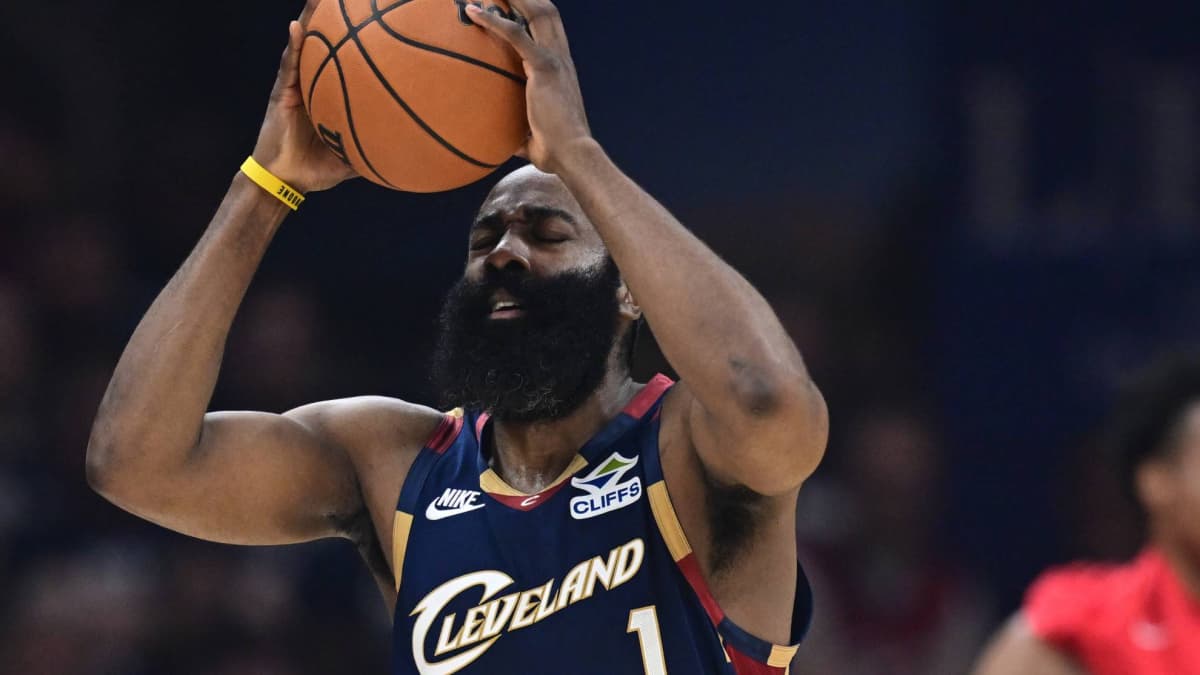
Donovan Mitchell y James Harden brillan con 58 puntos en triunfo de Cavaliers sobre Raptors
See every story in Sports — including breaking news and analysis.