Soccer
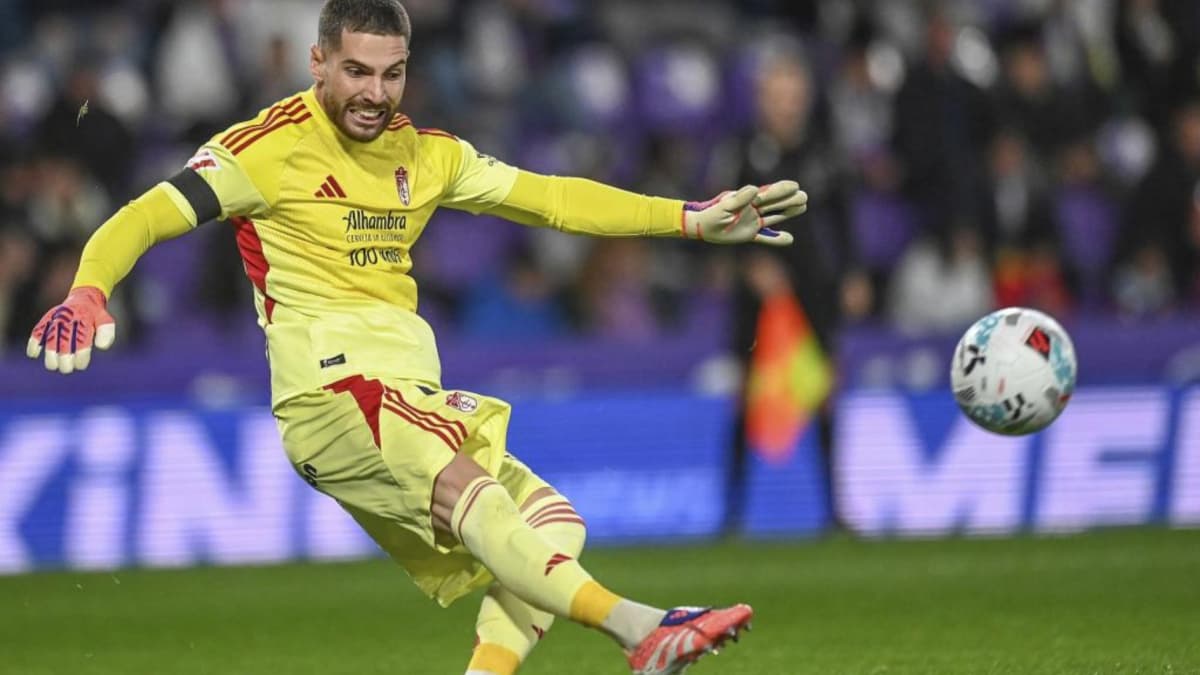
Luca Zidane sufre una fractura de mandíbula y mentón
Luca Zidane sufre una fractura de mandíbula y mentón, afectando su preparación para el Mundial.
Marca1 min read
The Kentucky Derby is a unique event that transcends being just a horse race, offering an unparalleled spectacle. It attracts a diverse crowd and is steeped in tradition and excitement.
“The unspeakable in full pursuit of the unseeable.”
— the Kentucky Derby infield crowd.
“Until you go to the Kentucky Derby you ain’t never been nowhere and you ain’t never seen nothing.”
— Irwin S. Cobb, Humorist, newspaperman from Paducah, KY.
This is the Kentucky Derby. You can’t apply the above quotes to any other horserace. I covered my first in 1963 and this is about the way it was then.
And despite the changes corporate greed has wrought in both its presentation and its income, the Twin Spires of Churchill Downs haven’t been sold off as billboards, the race is still its traditional mile quarter and the tourists still behave like tourists.
This isn’t just a horse race. This is a week-long non-stop equine bacchanalia. There are visiting grifters, ladies of the evening (morning and afternoon) and pickpockets from everywhere test the endurance of naïve celebrities, who dress like the cast of Guys and Dolls, neighboring homeowners, who sell their front lawns as parking lots, and honest horse players, who tell each other `I’ve got the horse right here.’
Where else do 150,000 drunks try to balance their mint juleps (honest booze stuffed with grass) and sing “My old Kentucky Home,” known to visitors from the dark side as Stephen Foster’s hymn to pickpockets?
The morning of my first Derby back in 1963, I had breakfast in the coffee shop of the old Kentucky Hotel. Shortly after my eggs and grits were delivered a guy jumped up on a nearby table and began to recite Casey at the Bat in a voice that would have done honor to Luciano Pavarotti.
He wore no pants.
Nobody with a pencil stub in his hand even looked up from their racing forms. It was Derby day and they had winners to figure out. It was long before the track made money winnings a qualifying factor for the horses. Consequently it was during an era when I saw an animal named Great Redeemer that couldn’t outrun a small Great Dane if he had a two furlong head start. He was 0-6 lifetime, once went off at odds of 92-1 and his trainer quit when the owner proposed a Derby start.
“I’m too embarrassed to go,” the guy said.
“I’m not,” he was told. “I’ll train him myself.”
You could look it up. The year was 1979, he went off at 79-1 and was beaten by a mere 47 lengths.
And then, there was The Alessio Family.
The year was 1964 and the late Jack Murphy — the sports editor of the San Diego Union and the best traveling companion I ever had — and I were out at the Downs the day before the Kentucky Derby. We were trying to figure the winner of the sixth race, but we couldn’t agree.
We took a quick bathroom break before reconvening our discussion.
When we walked in, I saw a guy at a urinal balancing an attaché case handcuffed to his wrist. Another man in a gray suit was helping steady the attaché case. Before I could say anything, Jack motioned me outside.
“What the hell was that?” I asked.
Murphy was so much a part of San Diego they named the stadium after him. If you lived there, he knew you.
“The guy is Tony Alessio, the youngest of six San Diego Alessio brothers who were both famous and infamous,” he said. “John ran the Tijuana Racetrack and the Kentucky Derby Future Book. The briefcase was filled with money that he likely would bet on the longest shot in the race to ease the payout back home if he –God forbid—should win. The guy following him around was an FBI agent on vacation whose job was to protect the money and Tony — in that order.”
And why was the future book originally based in another country? I will explain. The early Vegas mob was long on muscle but short on brains. From the beginning, it hosted every kind of gambling known to high rollers and low rollers —except sports betting. They made a deal with the local mom-and-pop bookmakers ie: you don’t put in slot machines and we won’t take bets.
Long story short: it took a while for the mob to catch on and open sports books. But that’s how I met the Alessio family. We had dinner with him that night. This is the incredible tale he told me.
Dominick Alessio, a coal-mine superintendent in Nutter Fort, West Virginia, developed asthma and moved his family to San Diego, where he opened a pool hall and shoeshine stand. John, the oldest kid, was 14 when he began shining shoes at the corner of Fifth and E Street. One of his customers, a venture capitalist named C. Arnholt Smith, liked his hustle and offered him a job as a messenger in a bank he owned in Mexico. He also pledged to monitor his progress.
Smith owned roughly half of Southern California and all of a number of big-league politicians. John moved up the corporate ladder while hiring his brothers. The bank owned the mortgage on Agua Caliente Race Track which went broke in 1947 and John became its president. He realized people do not go to these places to watch horses run. They go to bet on them. There was no legal Sunday racing in California. John bought some politicians and Sunday Racing came to Tijuana. He invented something called the “5-10,” known today as the “exacta.” Alessio began drawing 40,000 and half the movie stars in Hollywood for weekend races.
And that gave birth to the Tijuana Derby.
Alessio sold mint juleps. He had five or six live races and then the strains of “My Old Kentucky Home” echoed across an empty racing strip. The voice of Clem McCarthy calling the Kentucky Derby by radio filled the air: “The horses for the running of the Kentucky Derby are now on the track.”
And 40,000 people stared at nothing. The tote board blinked the odds. The remote voice dramatically said, “And they’re off!” The joint erupted in a roar. And nobody saw a single horse.
But the biggest of all innovations born of the success of the Tijuana Derby was yet to come. He called it The Future Book, offering derby odds on every colt in the world a month before the real Derby. You got longer odds from his book, but your horse had to get to and win the race. If the horse didn’t run, you lost. If he didn’t win, you lost.
So, what about the mysterious attaché case I saw that long-gone day? The Alessios couldn’t lose on volume of bets alone. But they wanted to insure against even a semi-disaster.
Each year, Tony would be dispatched to Blue Grass Country with enough money to bet on the longest shot in the race as a hedge against any disaster. Along with him, they sent the vacationing guardian of the attaché case.
On Derby day, Tony studied the board and put down $5,000 on a horse named Narusha to win the race at odds of 92-1. Narusha finished last.
Tony and his guardian slapped high fives.
Read the original article on NJ.com. Add NJ.com as a Preferred Source by clicking here.
The Kentucky Derby is celebrated for its rich traditions, vibrant atmosphere, and the diverse crowd it attracts, making it a cultural spectacle.
Irwin S. Cobb, a humorist and newspaperman from Paducah, KY, famously remarked that attending the Derby is an unparalleled experience.
The crowd at the Kentucky Derby is known for its lively and diverse nature, contributing to the event's unique atmosphere and cultural significance.
The Kentucky Derby reflects American culture through its blend of tradition, social gathering, and the celebration of horse racing as a historic pastime.
Luca Zidane sufre una fractura de mandíbula y mentón, afectando su preparación para el Mundial.

See every story in Sports — including breaking news and analysis.