Sports
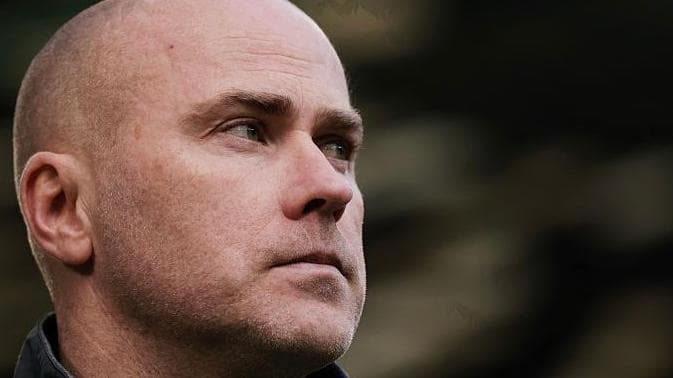
The Premiership kingmaker out to make Motherwell Scotland's Bodo/Glimt
Can Motherwell replicate Bodo/Glimt's success in Europe?
BBC Sport1 min read
The article discusses how immersive mentorship models, akin to medical residencies, are essential for developing effective business leaders. It emphasizes the importance of hands-on experience in leadership training.
NBA Front Office
getty
Medical training for physicians began with a fully immersive apprenticeship experience. The term “residency” developed from the understanding that the physician-in-training would essentially “live” in the hospital to understand the craft. The classroom can only offer a distant picture of what the art of medicine really is, but being around the person you are learning from has been the cornerstone of the model.
Business and leadership are quite similar in that the theoretical understanding of what it takes to lead or make difficult executive decisions is difficult to come by as a passive observer in a classroom.
As a psychiatrist who works with high performers across sports, business, and medicine, I spend a lot of time studying what separates people who reach their professional potential from those who plateau. The credentials matter less than most people assume. What consistently shows up instead is something simpler and harder to manufacture: the quality of the rooms they put themselves in, and what they did once they were there.
The psychology behind this is well established. Albert Bandura’s Social Learning Theory demonstrated that humans learn primarily through observation. Watching others operate, processing what we see, and deciding whether to replicate it is what allows concepts to form deeply. He called this vicarious learning, and decades of research have confirmed its power. I want to use this piece to examine the psychology behind why that gap matters and to point to a program that is doing something genuinely different about it.
The NBA Larry O'Brien Championship Trophy
getty
I recently spent time with the Sports Business Classroom (SBC), a program that has been quietly building something different inside the NBA ecosystem for several years. Its flagship offering, the Business of Basketball Immersive Experience, runs alongside the NBA Summer League in Las Vegas each July and the All-Star game. This year, July 12–18, 2026, it will bring together aspiring and seasoned sports business professionals for a week unlike anything a university offers.
The structure itself is worth examining through a psychological lens. SBC is deliberately organized to mix information, mentorship, and hands-on experience. Participants receive broad exposure across the core areas of the business (the “General Education” sections), and then choose one of three majors for deeper immersion: Athlete Representation, Basketball Operations, or a third concentration tailored to their career goals. The curriculum covers athlete representation and contract negotiation, the NBA salary cap and CBA, scouting, video and analytics, media and broadcast, basketball operations, and the practical mechanics of networking and job acquisition. Past instructors and participants include NBA Commissioner Adam Silver, Rob Pelinka, Rick Carlisle, Mike D’Antoni, and dozens of working front office executives and coaches.
TAKEAWAY: When evaluating a professional development opportunity, assessing the disposition it aims to instill is key. Programs that aim to change how you think and offer real-world exposure to experts are often the ones worth prioritizing.
One of the clearest markers of a well-designed immersive experience is whether it requires participants to make real decisions under realistic conditions. Passive exposure to expertise is valuable. Active participation, where you are the one choosing, building, presenting, and defending, is actually transformative. The cognitive and emotional engagement is categorically different, and so is the retention.
Participants run mock expansion drafts, build rosters from scratch, create jersey and arena mockups, negotiate trades, and present their decisions to rooms full of people who have actually done these jobs. It is worth pausing on what that last detail means: your work is being evaluated by executives who can tell the difference between someone who studied the machine and someone who understands it.
Edwin Valentin, a 25-year entertainment industry veteran using the program to transition into sports, described what it was like to build a mock expansion team.
You really have to think five steps ahead just because we’re building an expansion team. You have to think about the marketing, the sponsorships, all of that. Making mockups of jerseys, making mockups of the arena, you’re really broadening the horizons of the basketball world.
Edwin Valentin, SBC Participant
Bobby Marks, an ESPN analyst and former NBA front-office executive who serves as the SBC’s Lead Instructor, watches participants closely during these simulations. His evaluation criteria are revealing and consistent with what I see separate rising professionals from plateauing ones across every high-performance field I work in.
Bobby Marks
Bobby Marks
The most important thing is to learn how every part of the machine runs. And the other thing is, if you have the ability to get in, do it. It doesn’t matter if it’s not something you don’t want to do right off the bat. Get in the door and then be flexible.
Bobby Marks, ESPN Analyst & Lead Instructor, SBC
He also makes the stakes of professional presentation explicit in a way that most mentors leave implicit.
If you don’t talk to people this week, you are wasting your money. Get out of your shell, network, meet people here. That is really the only way that’s going to lead to opportunities.”
Bobby Marks
Gabriella Wolk, a sports litigator who attended the program to deepen her understanding of basketball’s business architecture, named the specific thing no coursework can replicate.
“It’s easy to know what a job does in theory, but actually hearing from people who are doing it day to day and what brought them there. That’s what sets this apart. There’s a whole other ecosystem that most people never see.”
Gabriella Wolk, Sports Litigator & SBC Participant
TAKEAWAY Don’t wait for the ideal opportunity to get hands-on experience. Find the closest possible version of the work you want to do and get inside it. The learning that comes from doing under real conditions compounds in ways that observation alone never does.
The psychology of modeling is actually distinct from direct instruction. When a mentor tells you how they approach a high-stakes decision, you acquire information. When you watch them actually make one, in real time or even in a simulated environment, you acquire judgment. The difference between those two things is the difference between abstract knowledge and decision-making.
Sergio Millas, Head of Marketing for the NBA Summer League and one of the architects of the SBC, articulated the founding philosophy when I spoke with him. He credits much of his own development to watching his mentor, the late George Raveling, model continuous learning over roughly a hundred shared meals, during which he brought five books to every breakfast and expected a real conversation about them at the next. That habit, accumulated over years, has changed how Millas approaches his own growth and models learning for others.
Sergio Millas, Head of Marketing & Digital | NBA Summer League
Sergio Millas
You pick these things up from people by being around them, by seeing how they operate in the world — not by hearing about it. When you’re paying attention and watching them, and seeing what they’re doing behind the scenes so they’re prepared when the moment comes to execute and be who they need to be — that’s where special things happen. That’s really what we’re trying to do here, not only speak about the things, the skills that need to happen, but model them for people.
Sergio Millas
The research supports the power of this approach. A 2013 meta-analysis published in the Journal of Vocational Behavior found that mentors who engaged specifically in role modeling reported better job performance themselves, while their mentees showed stronger career outcomes. The relationship is bidirectional and mutually reinforcing, which is precisely what Bandura’s framework would predict.
TAKEAWAY: Seek out mentors who let you watch them work, not just hear them speak. And look for environments where the people you admire are not performing for you but working alongside you.
Now entering its second year, the Sports Medicine Series runs July 12–14, 2026, at UNLV, concurrent with the Summer League, and applies the same educational philosophy to one of the most complex and consequential fields in professional sport.
The premise is that performance and player health are, in fact, a team sport that requires the harmony of a delicate ecosystem. Athletic trainers, physical therapists, sport scientists, strength and conditioning coaches, physicians, rehabilitation specialists, and performance psychologists & psychiatrists all influence a player’s availability, longevity, and output. Often working in parallel but rarely in the same room together, the sports medicine series allows multiple disciplines to learn from one another.
What makes this series structurally interesting, as someone who operates at the intersection of performance and mental health, is the intentional cross-pollination of disciplines. The athletic trainer who hears a performance psychologist or sports psychiatrist describe how they approach a player returning from ACL surgery, or the sport scientist who sits with a physician discussing load thresholds, is getting something that a single-discipline conference can never provide: a systems-level view of how elite athlete care actually works.
Danielle Langford, who leads the SBC’s Sports Medicine Series, has thought carefully about what the program is actually trying to cultivate and has carefully crafted the speakers over the years to offer a wide variety of views from players, clinicians, coaches, and leaders.
Danielle Langford, manager of player rehabilitation, Golden State Warriors.
Danielle Langford
“I want them to be able to lead with new ideas that maybe they didn’t see with their own NBA environment, but perhaps they came across it in a different team or sport altogether. How does that transfer into my practice? The creativity and curiosity in the room are what stimulate different cognitive pieces coming together and leading to learning.”
Danielle Langford, Sports Medicine Series Lead, SBC
She also points out that creating a genuine, trusted network among the attendees and speakers is a key goal of the series.
TAKEAWAY: If you work in athlete performance or player health, the most valuable professional development you can seek is not a single-discipline conference. It is a room that puts you in sustained contact with practitioners from adjacent fields who are operating at the level you aspire to reach.
One of the things I have come to appreciate about well-designed immersive experiences is that the peer relationships formed within them are not a byproduct of learning but part of it. Often, the key to career progression is the relationships built over time.
When you have built something hard alongside someone else, solved a problem under pressure, or defended a position in front of people who know more than you do, the relationship that forms is categorically different from one built over a conference cocktail hour.
I sat down with Warren Legarie, Co-Founder of the Las Vegas Summer League and NBA Agent, who explained that the value of the Sports Medicine Series is now reaching across the NBA.
Warren Legarie, Co-Founder of the Las Vegas Summer League and NBA Agent
Warren Legarie
Coaches are seeing the value of this. This is helping their players stay on the court.
Warren Legarie, Co-Founder of the Las Vegas Summer League and NBA Agent
The SBC’s alumni include NBA executives, coaches, and front-office professionals. This shows that the relationships formed in the program remain professionally relevant. Bobby Marks, the program’s Lead Instructor, is explicit about what his commitment to participants looks like after the week ends.
“They all have my email, my phone number. I will vouch for them when they’re going for jobs. I’ll call them when I see an open opportunity that I think would make sense for them. It is an open-ended relationship. It’s like a little family.”
Bobby Marks
For participants, the mentor relationship itself can be the most lasting transformation. Keely Catron, a history major from Arizona State who came to the program uncertain about her direction and left to pursue her sports agent license, described what surprised her most about the program’s leaders.
Before I knew them, I thought that they were just these geniuses, but I also learned that they’re very kind people. They’re not just here as employers, they’re mentors.
Keely Catron, SBC Participant & Aspiring Sports Agent
This matters more than it might appear on the surface. Research consistently shows that a mentor’s perceived humanity, accessibility, and willingness to be known are among the strongest predictors of whether the relationship produces lasting change. Genius alone does not transform people. Genius combined with genuine investment does.
Relationships are at the very heart of any mentorship or educational experience. As Danielle summed it up:
"Being able to have a number that you can call when you're dealing with an injury or crisis that's happening and being able to talk to somebody about it in real time while feeling safe and feeling confident is priceless.”
Danielle Langford
TAKEAWAY Look for experiences that build relationships capable of outlasting the program itself. The peers you struggle alongside and the mentors who invest in your trajectory beyond the room are career assets that compound in ways no resume line can replicate.
This article was originally published on Forbes.com
The mentorship model emphasizes immersive, hands-on experiences similar to medical residencies to effectively train business leaders.
Unlike traditional classroom learning, the mentorship model focuses on real-world experiences and direct observation, which are crucial for understanding leadership.
Immersive training is important because it allows aspiring leaders to learn through practical experience, which is vital for making informed executive decisions.
Business leaders can learn the value of hands-on mentorship and the necessity of being closely involved with experienced mentors to develop their leadership skills.
Can Motherwell replicate Bodo/Glimt's success in Europe?
Viral video of Real Madrid's Valverde being released from hospital is AI-generated and false.
Preview: Sunderland takes on Manchester United at the Stadium of Light.
Fulham hosts Bournemouth in a crucial match for European spots!
Brighton hosts Wolves in a crucial match for European hopes.
Fulham vs Bournemouth: Predicted Lineup and Team News Ahead of Match
See every story in Sports — including breaking news and analysis.