Sports
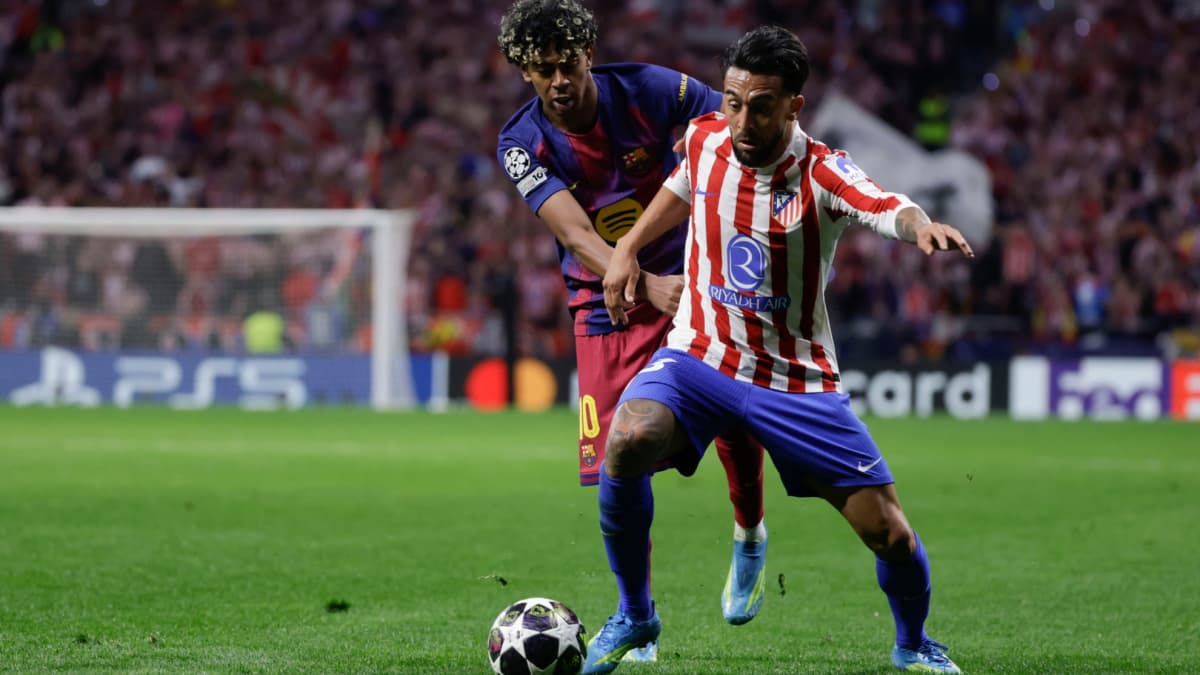
¡Nico se rompe!
Nico Gonzalez se rompe y no jugará las semifinales de Champions contra el Arsenal.
Marca1 min read
The NCAA's Division I board proposed a new tampering solution that presumes violations in cases of impermissible contact with transfer students. If adopted, schools will need to prove they did not tamper to avoid penalties.
Perhaps the taste of common sense was so exotic and so unpleasant that the members of the NCAA’s Division I board had to cleanse their palates. Board members couldn’t simply adjourn a relatively productive meeting without suggesting something that had that old, familiar flavor.
To them, it must have tasted like the delicious cream cheese the NCAA once famously banned.
After pushing forward a potential five-year-to-play-five rule and granting a sensible request from the Big Ten that helps schools execute an aspect of contracts between athletes and the schools, the board decided it was going to tackle tampering once and for all. Here, in all its glory, is the board’s proposed solution:
The board also introduced a proposal that would direct the infractions process to presume violations occurred in cases of impermissible contact with transfer students (i.e., tampering). If the proposal is adopted by the Division I Cabinet in June, schools suspected of tampering with student-athletes prior to their entry into the Transfer Portal would need to demonstrate the violation did not occur to avoid penalties.
You read that correctly. Their solution is guilty-until-proven-innocent.
Your team’s coach tampered with that player before the player entered the portal because someone said your coach tampered. Do enforcement staffers have evidence of said tampering? Maybe, but they don’t need it.
The coach has to prove they didn’t do it. While they’re at it, they probably should prove they didn’t move 700 pounds of black market shrimp through the port over the past week. Did a football coach move 700 pounds of black market shrimp through a port last week? I’m saying one did. By the proposed standard, that’s enough.
The problem with enforcing tampering is that pretty much everyone tampers*. The transfer portal windows are too tight to wait for players to enter and then contact them. The players want to know their options, and the coaches want to know which players might be willing to consider their teams.
*With the exception of service academy coaches because service academies don’t take transfers.
If the standard of guilt is a quasi-credible accusation, then hundreds of coaches will get popped. Did they probably tamper? Sure. Which means the coach who made the accusation is probably next on the hit list, because there is a great chance that the coach tampered, too.
The penalties for tampering include restricting coaches from certain recruiting activities, but they can also include game suspensions. For example, Iowa self-imposed a one-game suspension on football coach Kirk Ferentz and assistant Jon Budmayr during the 2024 season for impermissible contact with then-Michigan quarterback Cade McNamara in 2022.
Ferentz is one of the few coaches who will raise his hand, say “Yep, you got me,” and serve a punishment. That is not how most will handle it.
If this proposal passes, we can probably predict exactly what will happen next. The NCAA enforcement staff will launch multiple investigations into high-profile coaches accused of tampering. Affected coaches will sue. Schools, knowing their coaches are in danger of being suspended, will return fire by enlisting their states’ attorneys general to haul the NCAA into federal court.
Here in America, we tend to prefer that the accuser prove the accused actually did it before dispensing justice. Courts tend to frown on processes in which an unfair system is unilaterally imposed on a particular group without that group’s input. A guilty-until-proven-innocent process — a favorite of dictators and kings throughout history — doesn’t usually fly here.
How is this so easy to predict? Because the NCAA tried something similar and got nuked just three short years ago. Schools were committing the heinous act of using NIL money as a recruiting tool, and the Division I Council’s brilliant solution was to presume guilt:
NCAA Bylaw 19.7.3 Violations Presumed in Select Cases. In cases involving name, image and likeness offers, agreements and/or activities in which related communications and conduct are subject to NCAA regulation, the infractions process (including interpretive requests) shall presume a violation occurred if circumstantial information suggests that one or more parties engaged in impermissible conduct. The enforcement staff may make a formal allegation based on the presumption. The hearing panel shall conclude a violation occurred unless the institution or involved individual clearly demonstrates with credible and sufficient information that all communications and conduct surrounding the name, image and likeness activity complied with NCAA legislation.
Investigations were launched into various high-profile deals. Needless to say, the University of Tennessee didn’t appreciate the possibility of the NCAA messing with then-Volunteers QB Nico Iamaleava’s NIL arrangement, which, of course, had been used as a recruiting inducement because all of them had.
The attorneys general of Tennessee and Virginia sued the NCAA and, in less than a month, obtained an injunction that prevented the NCAA from enforcing those rules. The pair ultimately formed a bipartisan coalition that also included the AGs from Florida, New York, and the District of Columbia. That group settled with the NCAA in 2025, but it was more of a surrender by the NCAA than a settlement. The rules in question would never be used again.
Big Ten commissioner Tony Petitti tried earlier this year to convince NCAA leaders to pause enforcement of tampering rules so they could be modernized to fit the current landscape. The leaders of other conferences preferred to push forward with enforcement based on the rules as written.
This is where the school leaders who make up the Division I board landed.
Perhaps they felt they had no other choice because their colleagues keep demanding enforcement. Perhaps they simply lack the imagination to come up with a more creative solution. Or perhaps they just like the way it feels to keep bashing their heads against the same concrete wall again and again.
The NCAA's new proposal presumes violations in cases of impermissible contact with transfer students, requiring schools to prove they did not tamper.
The NCAA Division I Cabinet is expected to vote on the tampering proposal in June.
Schools found guilty of tampering will face penalties unless they can demonstrate that a violation did not occur.
The NCAA's tampering solution aims to protect student-athletes by holding schools accountable for any impermissible contact before they enter the Transfer Portal.
Nico Gonzalez se rompe y no jugará las semifinales de Champions contra el Arsenal.
Manchester City frustrated by fixture pile-up and scheduling delays
See every story in Sports — including breaking news and analysis.