Sports
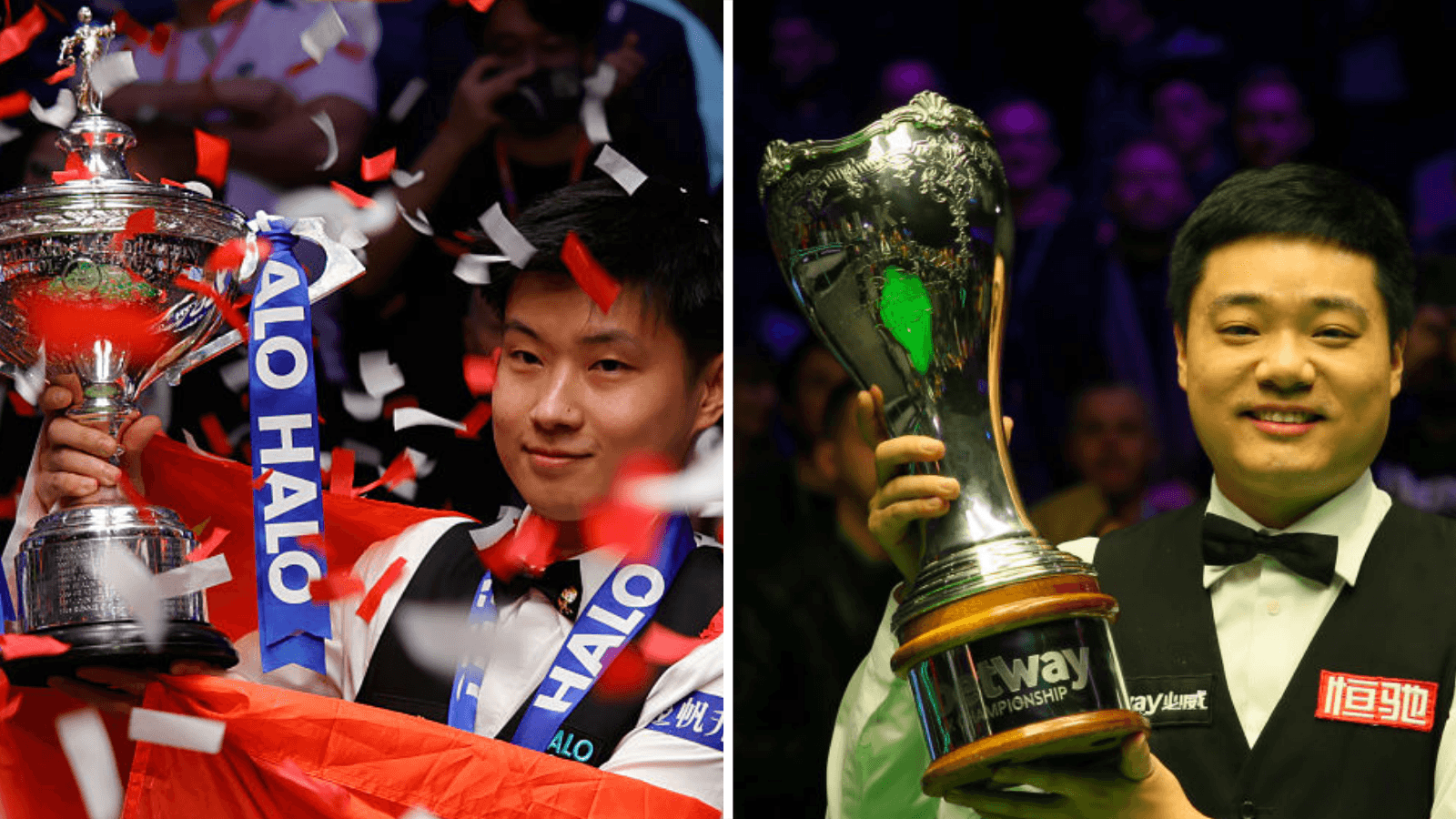
Will Zhao v Ding draw the biggest TV audience in snooker history?
Could Ding Junhui vs Zhao Xintong set a snooker TV audience record?
BBC Sport1 min read
The San Francisco 49ers have experienced a high number of injuries, leading the NFL in games missed since 2017. Fans and players are questioning the reasons behind this trend.
SANTA CLARA, CALIFORNIA - OCTOBER 20: Brandon Aiyuk #11 of the San Francisco reacts to an apparent injury during an NFL Football game against the Kansas City Chiefs at Levi's Stadium on October 20, 2024 in Santa Clara, California. (Photo by Michael Owens/Getty Images)
Getty Images
A torn ACL. A broken ankle. Injuries to groins, hamstrings, shoulders, and more. In the last NFL season, the injuries piled up for the San Francisco 49ers.
Since 2017, the 49ers have led the league in games missed due to injuries, and fans and players wanted to know why.
Online, a theory emerged — and spread. The rash of injuries was not due to bad luck, poor conditioning or the realities of a violent sport. No, the theory was that the nearby power station was emitting radiation that could degrade collagen and make players more susceptible to injury.
Was it plausible? No. Did that stop it from spreading? No. Misinformation and conspiracy theories don’t need to be credible to be influential. They just need to be visible and repeated.
As the theory gained traction — with millions of social media shares, including some by 49ers players — the question for the team’s leadership was not “Could this be true?” It was “Can we afford to ignore it?” For General Manager John Lynch, the answer was no.
The team hired an independent scientist with 45 years of experience studying electromagnetic fields to take measurements throughout the facility.
The San Francisco 49ers have led the NFL in games missed due to injuries since 2017, prompting speculation about the underlying causes.
The 49ers have faced various injuries, including torn ACLs, broken ankles, and issues with groins, hamstrings, and shoulders.
The 49ers' handling of their injury crisis offers valuable lessons for NFL executives on managing player health and team performance.
Injuries significantly affect the 49ers' performance, as missing key players can lead to losses and hinder their chances in the league.
Could Ding Junhui vs Zhao Xintong set a snooker TV audience record?
Lamine Yamal confirms season-ending injury, expresses deep disappointment
In 2007, the Raiders chose JaMarcus Russell over Calvin Johnson, a decision now seen as a major draft blunder.
Are the Patriots set to trade for A.J. Brown or consider alternatives?

Yordan Alvarez defies norms with his stellar performance against left-handed pitchers in 2026.
JR Ritchie shines in MLB debut as Braves beat Nationals 7-2
See every story in Sports — including breaking news and analysis.
The conclusion? Radiation levels in the stadium were 400 times lower than the threshold for an unsafe working environment. The level of exposure was less than a hair dryer or vacuum cleaner would produce.
But the lesson for business leaders is not about radiation levels. The investigation was not about validating the theory. It was about removing uncertainty inside and outside the organization.
Too often, organizations treat false narratives as a communications problem — something to either ignore or correct. But they impact more than reputation, seeping into decision-making environments, shaping perception, and creating doubt where clarity is needed most.
And once doubt emerges inside the system, ignoring it doesn’t make it disappear. It gives it space to grow.
At the same time, overreacting — amplifying every fringe claim by responding to it — comes with its own risk. Attention can confer legitimacy, whether that’s the intent or not.
That’s the line leaders have to walk. If you engage too little, you allow misinformation to metastasize. If you engage too much, you elevate it.
The 49ers quietly and methodically contained it by testing the claim, answering the internal question, and moving on. No spectacle. No prolonged debate. No attempt to win an argument online. They just released findings grounded in evidence.
That may sound obvious. But in many organizations, the instinct is to either dismiss implausible ideas outright or chase them publicly to disprove them. Both approaches miss the point.
The real challenge isn’t determining whether a claim is credible. It’s determining whether it has enough traction to affect how people think and act.
SANTA CLARA, CA - AUGUST 18: General manager John Lynch of the San Francisco 49ers stands on the sidelines prior to an NFL preseason football game against the New Orleans Saints, at Levi's Stadium on August 18, 2024 in Santa Clara, California. (Photo by Brooke Sutton/Getty Images)
Getty Images
In health care, false narratives about treatments influence patient decisions. In public health, rumors can shape behavior faster than official guidance. In corporate settings, speculation can affect employee confidence or investor sentiment.
In each case, the question isn’t whether misinformation exists. It always has. The question is how leaders respond once it enters their system.
The 49ers’ approach points to a useful framework:
That last point matters more than most people realize.
Science isn’t a communications strategy. It’s a decision-making tool.
It doesn’t stop false information from spreading. It doesn’t convince everyone. What it does — at its best — is establish a standard that organizations can rely on when it’s time to act.
In this case, that meant the 49ers could move forward without second-guessing the environment they were operating in.
No lingering doubts. No quiet speculation inside the locker room. No distraction from the work itself. Just clarity.
That’s the outcome leaders should be aiming for.
As the 2026 NFL Draft unfolds this week, every team is making bets on imperfect information. Some of those bets will be grounded in data. Others will be shaped by narratives that sound convincing but haven’t been tested.
Teams don’t lack information, but they sometimes mistake confidence for evidence.
The 49ers faced a version of that problem. Their response wasn’t to debate the narrative — it was to test it, resolve it and move forward.
Judgment calls can cost or save millions of dollars. That kind of discipline isn’t just good process — it’s a competitive advantage.
This article was originally published on Forbes.com