
Sports
Lionel Messi sends heartfelt message to Barcelona after La Liga title triumph
Lionel Messi sends heartfelt message to Barcelona after La Liga triumph
Yahoo Sports1 min read
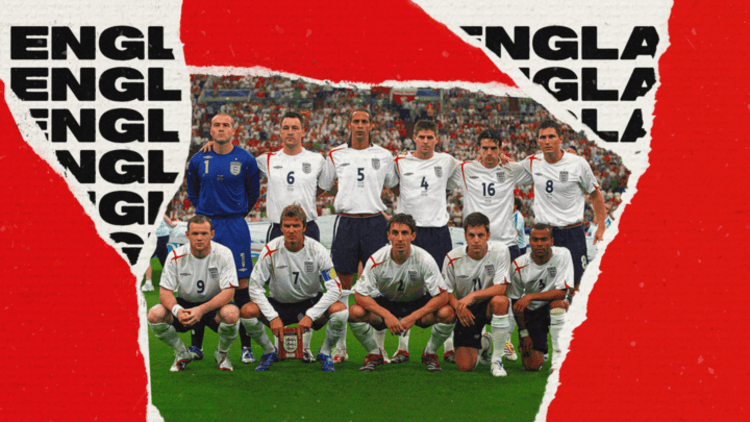
A golden generation of athletes reflects on their lost potential and the disappointment of unfulfilled expectations. The sentiment is marked by a lack of happiness when recalling that period.
Rio Ferdinand
Ask Rio Ferdinand about the phrase ‘golden generation’and he will tell you it was “stupid”.
Actually, he precedes that assessment with an expletive when considering the label in relation to England’s 2006 World Cup team.
“I feel embarrassed when I say it,” the former centre-back says in The Golden Generation, the new BBC documentary looking at why a star-studded team – tipped to end 40 years of hurt since the 1966 triumph – unravelled on the biggest stage.
Your browser does not support this video
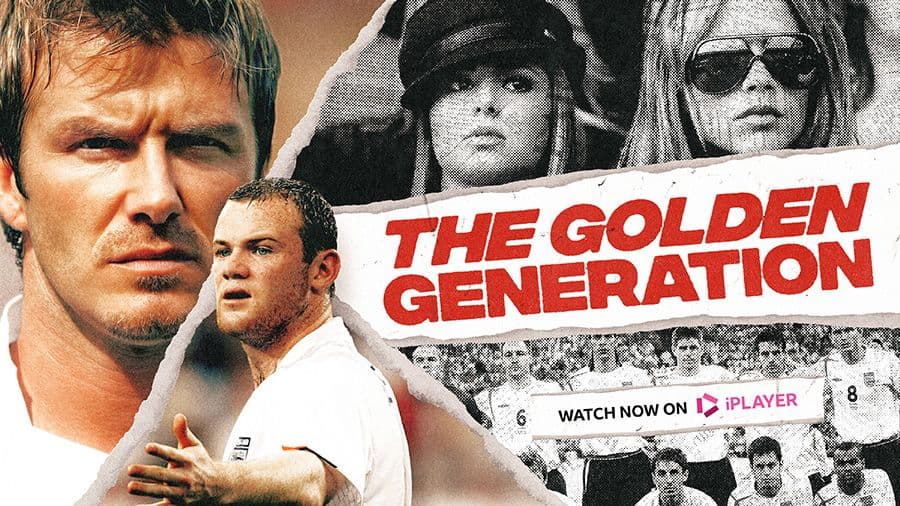
“I don't look back at that time with any type of happiness.”
And yet, these were golden times – both on and off the field.
Generational footballing talents, showbiz wives and girlfriends, a first foreign manager in Sven-Goran Eriksson – with a colourful private life to boot – their every move made the front and back pages of the newspapers at a time when celebrity culture was exploding.
Built up so much, they fell hard, and there were a lot of questions about what went wrong.
Twenty years on, have those involved got any more answers?
(all stats pre 2006 World Cup)
Club: Real Madrid
Major honours: 6x Premier League titles, 2x FA Cups and 1x Champions League (with Man Utd)
Key info: England captain. Known for precise crossing and set pieces. Proven to score goals
Club: Man Utd
Key info: Young star who has just come through the ranks. Known for pace, power and attacking threat
Club: Chelsea
Major honours: 2× Premier League titles and 1x League Cup
Key info: Proven goal-scorer from midfield. Intelligent on the ball
Club: Liverpool
Major honours: 1x Champions League, 2x FA Cup and 2x League Cup
Key info: Captain at Liverpool. Box-to-box threat. Can do it all, defending and attacking
Club: Man Utd
Major honours: 1x Premier League and 1x League Cup
Key info: Vital to England team because of composure, reading of the game and leadership
Club: Newcastle
Major honours: Ballon d’Or 2001, 1x FA Cup and 2x League Cup (with Liverpool)
Key info: Proven goalscorer. Known for his pace
“I just call them a damn good squad of players,” says Steve McClaren, Eriksson’s assistant before taking over as manager, when asked about the ‘golden generation’ label.
The tag had first been applied in 2001 by the Football Association’s then chief executive Adam Crozier following a stunning 5-1 away win over Germany in a World Cup qualifier.
That team went on to lose in the quarter-finals at both the 2002 World Cup and 2004 European Championship. The 2006 World Cup in Germany was seen as the time for this special group of players to deliver.
The main challenge, though, was fitting them into a team. Central to that was the question of whether Frank Lampard and Steven Gerrard should play together – both outstanding attack-minded midfielders but similar in style.“How do you leave out Gerrard, Lampard, [Wayne] Rooney, [David] Beckham?” adds McClaren. “That was the difficulty.”
There was one player’s inclusion in the 23-man squad that raised a lot of eyebrows at the time – Theo Walcott, a 17-year-old who had yet to play for Arsenal following his move from Southampton the previous January.
Eriksson called him his “gamble”, Wayne Rooney branded it a “strange decision”.
“When Theo was announced... you saw mad potential with Theo. The pace was frightening,” says Ferdinand.
“But I still sat there and thought, ‘Jermain Defoe’. If I want a goal, I'm picking Jermain Defoe.”
As it was, Tottenham striker Defoe missed out on selection. McClaren recalls Eriksson had “just wanted youth and energy around the squad” but acknowledged that in hindsight, it might not have been the best move given the injury problems that were to come.
The players had been sent off to Germany in style.
Hosted by captain David Beckham and his Spice Girl wife Victoria at their Hertfordshire mansion, this was a lavish VIP party that could have been mistaken for a World Cup-winning celebration.
Robbie Williams performed, Ozzy and Sharon Osbourne were there, Gordon Ramsay did the cooking.
The paparazzi were at the gates, capturing the A-list arrivals, and the event – which raised money for children’s charities - was splashed across newspapers, magazines and TV news reports.
“It’s almost like an out-of-body experience,” recalls Owen Hargreaves. “You sat back watching the whole thing, just trying to take it all in.”
“I remember the goodie bag was quite good… it was that Motorola flip phone … the Razr … everybody was buzzing off that.”
Earlier that week manager Sven-Goran Eriksson had boldly told the Sunday newspapers: “I think we will win it this time”.
Fans duly decked their houses out with flags and even politicians got involved – Prime Minister Tony Blair was a guest on a BBC football phone-in and future PM David Cameron stuck an England flag on the back of his bicycle.
The festivities were in full swing – and that was before the team got to Baden-Baden, a quiet spa town which would soon become dancing-on-the-tables party central.
Two weeks after the Beckhams’ party, the players headed to Germany, where they were greeted by several hundred fans before being whisked off to their secluded five-star castle-like hotel in the Black Forest.
Further down the hill in the centre of Baden-Baden, the arrival of their wives and girlfriends caused even more of a stir.
Many were celebrities in their own right who just happened to be romantically involved with top footballers, others were girl-next-door types with ordinary jobs seen as living a glamorous dream.
All were lumped together as WAGs – an acronym of ‘wives and girlfriends’ that in years to come was recognised as sexist – and all were eagerly followed as they shopped, partied and sunbathed.
Showbiz reporter Clemmie Moodie explains in the documentary that her brief in Germany was to “ignore the football” and “watch these WAGs, see what they get up to”.
It was easy to keep track because the FA had housed them in the same hotel as many of the journalists.
Your browser does not support this video
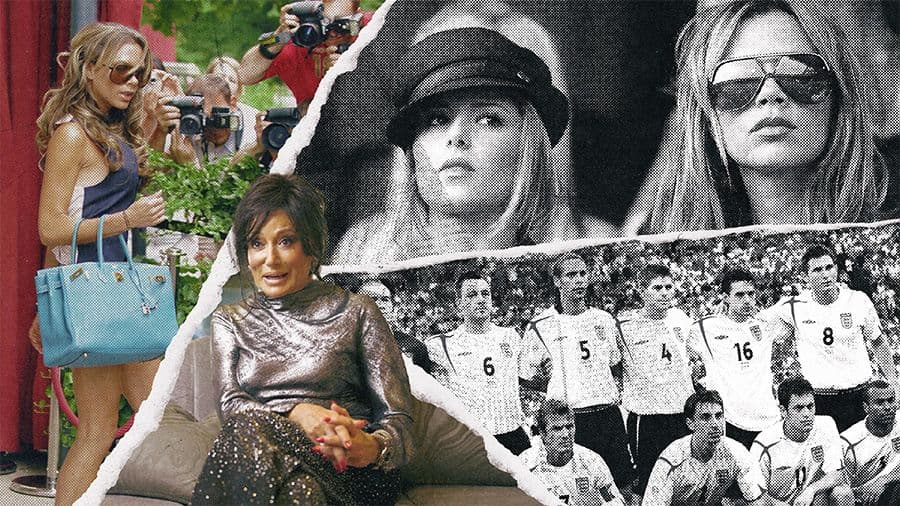
Much of the action happened in Garibaldi’s – an Italian restaurant in the heart of Baden-Baden that had a (paparazzi-friendly) glass front.
“It was 22 WAGs, plus their friends and family, spending thousands of pounds at a time doing limoncello shots and cocktails,” says Moodie, who added that Victoria Beckham had even called this her “attention-seeking era”.
These were the days before Instagram and X – celebrity magazines and newspapers ruled and getting your face in there was one way of building your brand. And this was also before the Leveson Inquiry into the culture and ethics of media practices.
“The hotel staff put up screens to give the wives and girlfriends privacy at the hotel pool, and one of the WAGs, who I won’t name, took it back down,” says journalist Alison Kervin.
Some of the players were not happy with the goings on.
“Baden-Baden was a shambles,” says Ferdinand. “It was a circus act. The media, the paparazzi.
“They don't want us to win… why are they coming and just ruining our time with our families?”
When it all started going wrong on the pitch, some people were quick to blame the “distraction” of the WAGs’ antics.
"The idea that England did not win the World Cup of 2006 because of the wives and girlfriends is like blaming the weather. It is a complete nonsense!" says former FA executive director David Davies, who points out eventual champions Italy also had their partners at the tournament.
For England, there were plenty of issues much closer to home.
Team-mates are not necessarily mates.
And Ferdinand suggests this was particularly acute in the England squad at that time because of club rivalries between players.
“There were cracks with England,” he says. “There just wasn't that togetherness. The bond wasn't as strong as with the club”.
“I’ve got to be honest, there were fake relationships in the England squad.”
The former Manchester United defender was wary of giving club rivals an edge.
“With the Chelsea boys… I grew up with Frank [Lampard at West Ham]. We’ve roomed together from kids… but I don't want to give him anything,” he says. “If we're having a coffee… I can't give him anything that he can take back to Chelsea and use against me”.
Your browser does not support this video
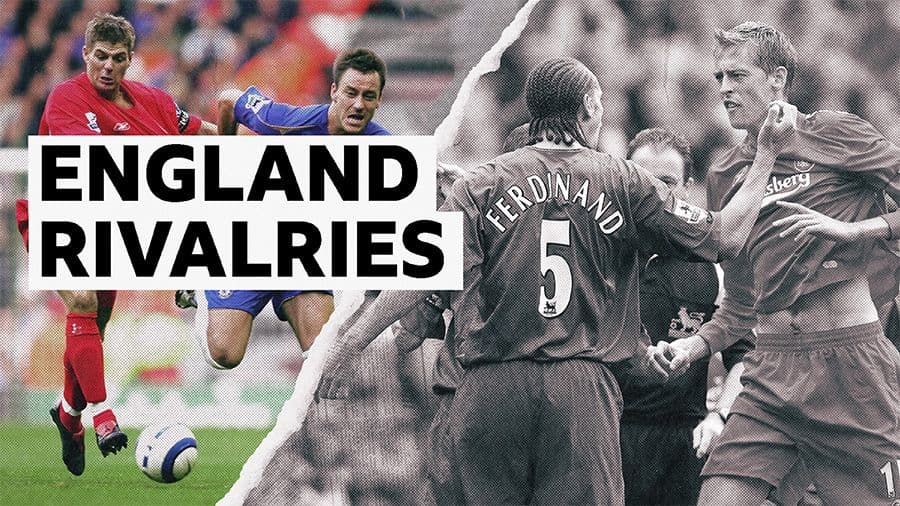
“I honestly believe the disharmony – the rivalries – definitely played a big part in taking us out of the running to win.”
He points to successful teams of the time – the 'golden generations' of Spain, Brazil, France – adding: “They’re close, they’re tight. They were desperate to go to those squads. They were desperate to meet up”.
“That weren't like us. I would like to know who was desperate to go with England.
“I liked going with England – it meant I was going to get another cap, it meant I was going to represent my country. I liked it, I wanted to be a part of the England team. Did I love going to the England squad? If I'm brutally honest… there weren't enough [things] beyond the 90 minutes that made me love being there.”
But Rooney disagrees and says he is “surprised” by talk of rivalries.
“I loved it, I loved playing for England. I loved meeting up and speaking to every player. I didn't see it. I didn’t feel there was rivalries between different players,” the former Manchester United forward says.
McClaren, meanwhile, says that while players felt more comfortable at their own clubs, rivalries were not a deciding factor for England’s poor performances.
“I’ve been in lots of very, very successful dressing rooms with people who didn’t like each other,” he says.
“When they crossed the white line, they came together.”
Eriksson and England were in an unusual position going into the 2006 World Cup.
He knew he was being replaced at the end of the tournament by his assistant McClaren after announcing in January that he would be resigning following a series of controversies.
As the team’s first foreign manager, Eriksson had been under intense scrutiny from the moment he took charge in January 2001, with Davies describing him as "probably the most popular person in England for the first few years of his reign".
His cool and calm demeanour during matches often seemed at odds with his off-field character and private life, which captivated the media.
Italian lawyer Nancy Dell'Olio said the media were “obsessed” about them as a couple – and admits she relished her role as the “first lady of English football**”**.
The papers were filled with details of high-profile affairs he had while he was in a relationship with Dell’Olio and his love life was often the butt of jokes.
Davies recalls Eriksson was always able to "brush aside" many embarrassing stories and "laugh with everybody else" about them.
But the most serious revelation came from a News of the World ‘fake sheikh’ sting that was published six months before the World Cup.
He was recorded telling the undercover reporter that Aston Villa were for sale, that then David Beckham would return from Real Madrid to play in England if Eriksson asked him to and that Michael Owen was not happy at Newcastle.
He also told the reporter that he would quit if England won the World Cup that year.
About a week later, he was issuing a statement to say he would be quitting after the tournament adding that “there was too much circus” around his private life.
And so England headed to Germany knowing that, win or lose, the manager was leaving.
“The timing was all wrong,” says McClaren. “Ideally, I wouldn't have got the job before [the World Cup].”
Another key focus in the build-up had been Rooney’s right foot.
The tabloids urged fans to “pray” for their 20-year-old star striker’s speedy recovery after he fractured his fourth metatarsal during Manchester United’s match against Chelsea just six weeks before England’s opening World Cup match.
Daily updates on his progress – including his work in oxygen tents to speed up his recovery – filled the newspapers. It was seen as nothing short of a miracle when he was passed fit to head to Germany.
He had come through a specialist’s unexpected and crude test to see how his foot held up on impact.
“It was one of the weirdest things I’ve experienced. Out of the blue, the guy just stamped on his foot,” says former England head physio Gary Lewin.
“It took us by surprise – and I wish I’d had a camera to get Wayne’s expression on his face, because it was priceless.”
It was only years later that Rooney would admit what was apparent to anyone watching him play in Germany – he was not fully fit.
“I should never have gone, looking back,” says Rooney, who was also hampered by a groin injury that he had not reported. “But it was my first World Cup, and you never know what's going to happen in it. And I wanted to give myself every chance.”
But he was unable to impose himself on games and have the kind of devastating impact that had made him one of the world’s best strikers. He failed to score at the tournament.
In fact, his World Cup would end with a red card.
England were among the favourites coming into the tournament. And in theory, Group B was ‘easy’.
In practice, it was anything but.
A stuttering 1-0 win over Paraguay – courtesy of an own goal – was followed by a 2-0 victory over Trinidad and Tobago, where late goals from Peter Crouch and Steven Gerrard spared England’s blushes after another underwhelming performance.
There was a marginal improvement against Sweden in a 2-2 draw that put them through to the knockout stage as group winners – but it came at a cost as striker Michael Owen left the pitch on a stretcher with a knee injury that ended his World Cup.
With a below-par Rooney and no Owen, that ‘gamble’ to bring Walcott came even more under the spotlight at the expense of the more experienced cover option of Defoe.
Ecuador were up next in the last 16, with Rooney alone up front, and it came down to a trademark free-kick from Beckham to win the match, a moment of individual brilliance.
“Our team never won games, an individual won it,” says Ferdinand. “That ain't good enough to win you the tournament.”
But it did put them through to a quarter-final with Portugal.
Portugal were familiar foes – they had knocked out England on penalties in the quarter-finals at Euro 2004 and were managed by Luiz Felipe Scolari, whom the FA had courted as a potential successor to Eriksson.
England lost Beckham to injury just before half-time and Rooney was sent off after 62 minutes for a stamp on defender Ricardo Carvalho.
Cue that infamous wink from Rooney’s Manchester United team-mate Cristiano Ronaldo towards the Portugal bench, a lasting image of England’s 2006 World Cup.
England held out for a 0-0 draw until the end of extra time and they were into another penalty shootout, which they lost 3-1 after Lampard, Gerrard and Jamie Carragher saw their efforts saved by goalkeeper Ricardo.
A third quarter-final exit in a row was followed by a brutal inquest into everything that had gone wrong.
Much of the criticism was aimed at Eriksson – his rigid system, which did not make the most of his talented players, his conservative tactics and the celebrity culture around the team and their partners.
An emotional Beckham resigned as captain and McClaren took over as manager.
A new low followed for this group of players with England failing to qualify for Euro 2008.
“Whether you call us a golden generation or whatever you want to call us, we were a group of men trying to be successful for our country,” says Rooney.
“And ultimately fell short.”
Credits
Writer: Sonia Oxley
Sub-editor: Mike Whalley
Designer: Thiago Braz
The summer of 2006 was supposed to be England's moment and the hype was relentless. So, why did a star-studded team's World Cup dream end in on-field agony and off-field acrimony. This documentary hears from some of those who were there.The summer of 2006 was meant to be England’s momenthe summer of 2006 was meant to be England’s moment
The eyes of key figures, including captain Leah Williamson and manager Sarina Wiegman, this documentary relives England’s incredible European Championship triumph in July 2022.
All images subject to copyright. Built with Shorthand.
It refers to a group of athletes who were once considered highly talented but failed to achieve significant success or meet expectations.
Athletes may feel unhappy if they believe they did not reach their full potential or if their successes did not bring them the satisfaction they anticipated.
Unfulfilled expectations can lead to feelings of disappointment, regret, and a negative impact on an athlete's mental health and legacy.
Athletes can cope by focusing on personal growth, seeking support from peers and professionals, and redefining their measures of success.
Lionel Messi sends heartfelt message to Barcelona after La Liga triumph
Gavi opens up about his clash with Vinicius Jr in the Clasico.

West Ham plans to reach out to referees' body after disallowed goal against Arsenal.
Arteta hails Arsenal's phenomenal effort after two big wins!
Liverpool is set to part ways with Alexis Mac Allister, eyeing a £73m replacement.
Today's Papers: More on Malen, less on Milan, and Spalletti's demands.
See every story in Sports — including breaking news and analysis.