Sports
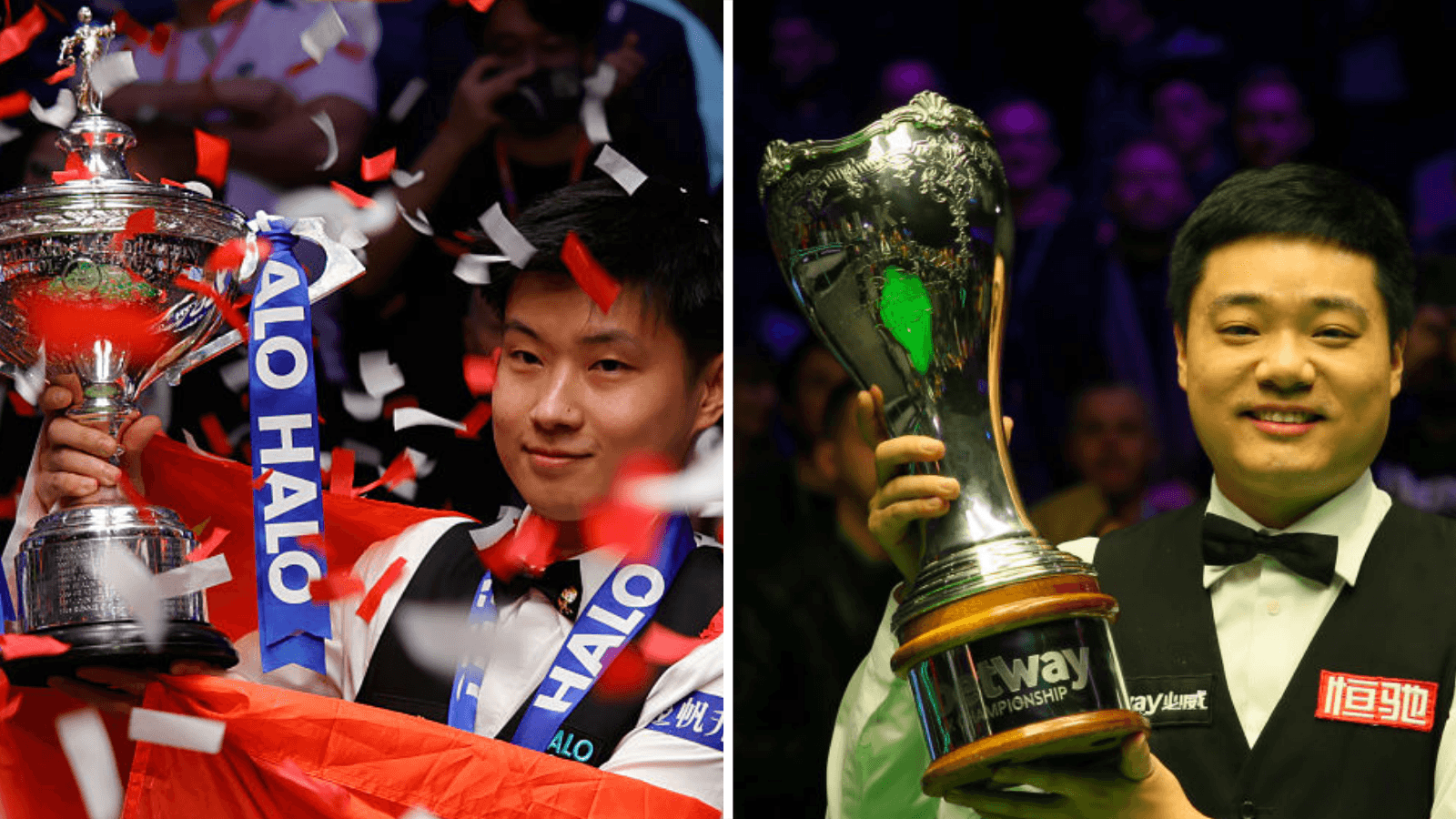
Will Zhao v Ding draw the biggest TV audience in snooker history?
Could Ding Junhui vs Zhao Xintong set a snooker TV audience record?
BBC Sport1 min read
The 2026 Miami Grand Prix will introduce new power unit regulations, prompting a review of their impact after initial races. Drivers have expressed dissatisfaction with the changes, raising concerns about safety and racing dynamics.
Tweaked Rules Mean Miami GP Will Be a New WorldBryn Lennon - Formula 1 - Getty Images
Formula 1’s unscheduled spring break came at a fortunate time, as it allowed the sport to take stock of how 2026 regulations played out over the first three races. There was always going to be a review of the new rules, but the longer gap allowed everyone to focus on what hasn’t worked out, and what can be done better, in meetings and online discussions.
When the discussion kicked off after initial testing in Barcelona and Bahrain, it was mainly about drivers being dissatisfied with what they were now being asked to do at the wheel, and the sea change in how they were expected to drive their cars. The Australian Grand Prix then gave teams the first chance to assess how qualifying and races were impacted. The consensus was that the former needed some work, as it was no longer the traditional test of pure flat-out driving and pushing to the limit; there were mixed views regarding Sunday's big events, with some praising the amount of overtaking and others criticizing the “yo-yo” racing as drivers passed and re-passed each other depending on when and where they had electrical energy to deploy.
The whole debate took on another dimension after Japan, where Oliver Bearman had a huge crash when caught out by Franco Colapinto slowing suddenly up ahead. Drivers had previously expressed concerns about closing speeds, and the incident proved that they were right to be worried; it also put safety at the forefront of the discussions, guaranteeing that there would be some change.
Kym Illman - Getty Images
The results were revealed by the FIA after a meeting of key stakeholders on Monday in the form of a list of 13 bullet points outlining the key changes, or what it preferred to badge as “refinements,” that will be implemented for the Miami Grand Prix. The complexity of most of the items on that list reflected just how difficult it is to understand the technical minutiae of F1 racing in 2026, so I won’t detail them here. To summarize, as the FIA itself said, the main aims were to make qualifying more of a test of performance and, for races, “to reduce excessive closing speeds while maintaining overtaking opportunities and overall performance characteristics.”
The key thing is that, via the GPDA, the drivers had input into the changes. “I still need to go through all the details of all the rules, because I need someone smarter than me to explain what's actually changed,” Oscar Piastri jokingly noted on Wednesday, highlighting how complex it all is. “But I think it's a step in the right direction, for sure. The changes to the boost button, I think there will still be some quirks and situations that are a bit unexpected, but it's generally in the right direction.”
Regarding the potential impact in Miami, Piastri says a wait-and-see attitude is needed to measure the impact across a few different tracks. “We went to China, and we didn't really have that many of these problems; we had some different problems, which I think should be fixed—or as in, I think will be fixed by these tweaks. But then you go to somewhere like Australia or Japan, and we have a completely different set of problems."
"So it will still chop and change a bit from circuit to circuit, but I think, on the whole, it is in the right direction, how far it goes in addressing the problems. We'll have to wait and see until we get on track.”
NurPhoto - Getty Images
Teams and power unit manufacturers are already running simulations in order to assess the impact of the tweaks. Given that Miami is a sprint weekend—with a single FP1 session before straight into the first qualifying—they can only hope that they hit the ground running with a good understanding.
There has been some criticism of the fact that drivers who had sampled the new cars in simulators over the past couple of years had highlighted issues, and yet nothing much appeared to be done about it; the sport appeared like the Titanic heading for an iceberg, with no one willing or able to steer away. The problem is, there is a process that has to be followed once future technical regulations have been published—and even when potential issues arise, it’s not easy to address them, essentially due to a minefield of blocking by those who fear they may lose out.
We’re told that, this time, there was unanimous support for change. It seems everyone has recognized there was a bigger picture issue of the sport potentially losing some of the fanbase built up in the Liberty Media / Drive to Survive era, with the brutally honest comments from some drivers—in particular one Max Verstappen—not sending a positive message.
NurPhoto - Getty Images
FIA F1 chief Nikolas Tombazis is the man ultimately responsible for the rules. While his hands were somewhat tied by governance, and he says he was keen to see how things turned out as originally envisaged, he now concedes that tweaks became inevitable as more information and data became available.
“It is a dynamic document,” he says of the rule book. “We have technology that evolves through time, that makes it necessary to adapt the regulations and so on ... And also, we have eleven F1 teams and five currently participating power unit manufacturers, so 16 entities with maybe 200 engineers each. That's, I think, three thousand-plus engineers working on developing the cars and the engines."
“So ultimately, it is impossible to expect that no bits will be found by these three thousand people working day and night that may need some addressing. That's a normal process, that's been happening ever since I've been in F1.”
Tombazis downplayed the doom and gloom expressed by some critics of the rules that he brought to fruition. "I think it's important to know that no one believed the patient, our sport, was in intensive care," he says. The issues being addressed, he said while extending the metaphor, were more lifestyle than critical: "Maybe the patient needs to exercise a bit more, and eat a couple of apples a day and improve, and take some vitamins.”
McLaren boss Andrea Stella has welcomed the changes, and he believes that the sport should be prepared to implement additional tweaks if needed. "I think the changes that are implemented for Miami are a positive step in the right direction,” he says. “I think F1 as a community should remain quite open—that once we observe the outcome and the effect of this package of changes, we may have learned more about the new regulations, and further tuning may be required. And we should have the openness and the proactivity to study this further improvement and put them in place.”
NurPhoto - Getty Images
Stella also makes it clear that, in the longer term, he’d like to see a bigger contribution from the combustion engine that takes the emphasis off electrical power—although that won’t be for 2026. “There should be a consideration for some hardware changes more for the longer term, such that we can place the operating point of the power unit somewhere where less compromises are required, from a chassis point of view or from a driving point of view," he said. "We think this is possible, and we think that all stakeholders should approach this conversation with the willingness to contribute.”
You Might Also Like
The new power unit rules for 2026 involve significant changes that affect how drivers operate their cars, leading to a review after the first three races.
Drivers have expressed dissatisfaction with the new regulations, particularly regarding the changes in driving dynamics and safety concerns.
Safety concerns were highlighted after a serious crash involving Oliver Bearman, which underscored issues with closing speeds among drivers.
Changes being considered include adjustments to qualifying formats and race dynamics to address driver feedback and improve safety.
Could Ding Junhui vs Zhao Xintong set a snooker TV audience record?
Lamine Yamal confirms season-ending injury, expresses deep disappointment
In 2007, the Raiders chose JaMarcus Russell over Calvin Johnson, a decision now seen as a major draft blunder.
Are the Patriots set to trade for A.J. Brown or consider alternatives?

Yordan Alvarez defies norms with his stellar performance against left-handed pitchers in 2026.
JR Ritchie shines in MLB debut as Braves beat Nationals 7-2
See every story in Sports — including breaking news and analysis.