
SportsRecap
Wings roll past Fever in preseason matchup behind Paige Bueckers' 20 first-half points
Wings roll past Fever 95-80 in preseason, Bueckers shines with 20 points
Yahoo Sports1 min read
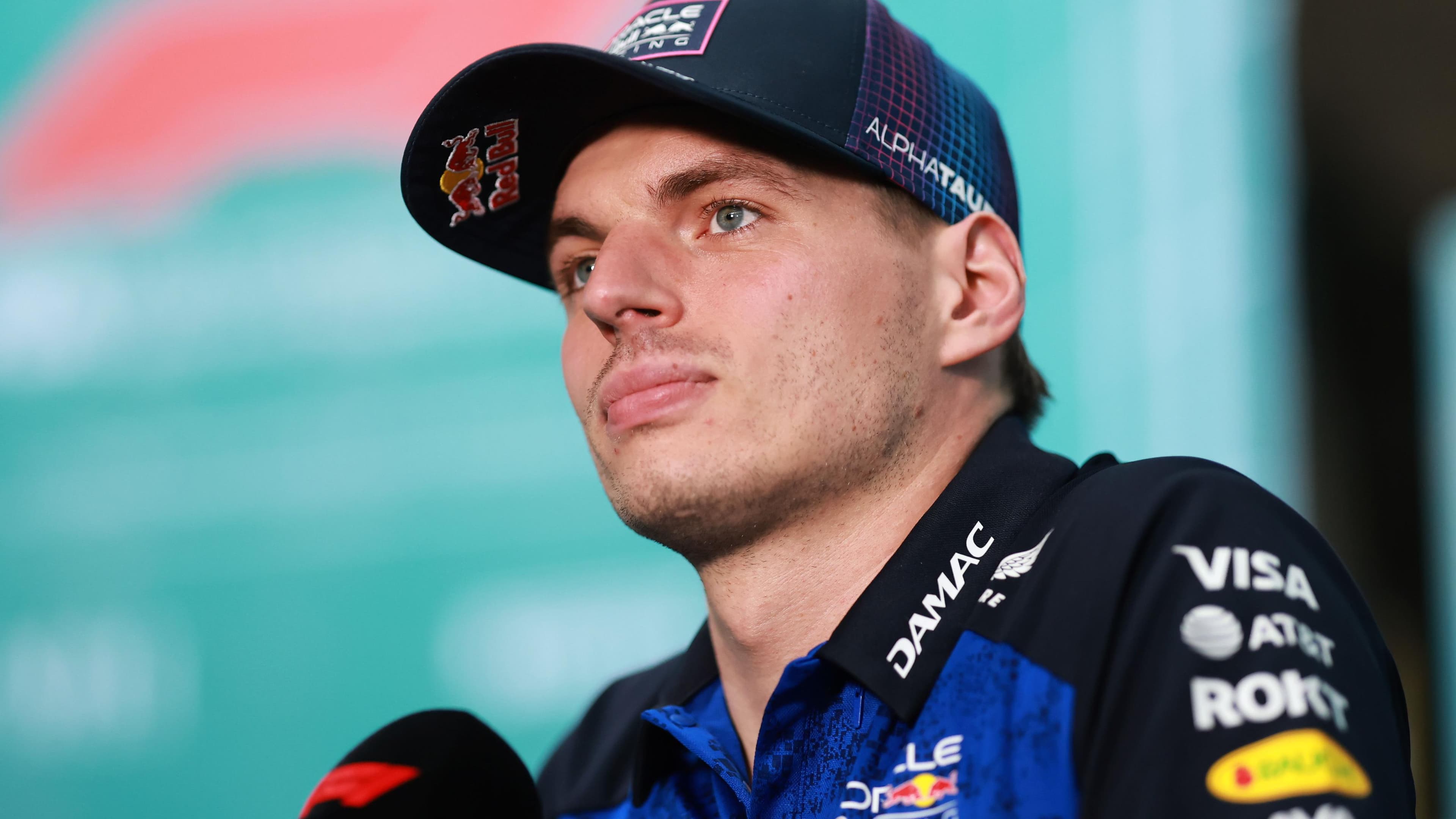
Max Verstappen criticizes recent F1 rule changes as insufficient, calling them 'a tickle.' Meanwhile, George Russell and Lando Norris express more positive views on the adjustments aimed at improving racing dynamics.
Mentioned in this story
Red Bull's Max Verstappen says the changes to Formula 1's rules amount to "a tickle" in terms of addressing his and other drivers' concerns about the new style of racing.
However, championship contender George Russell described the changes as "good" and world champion Lando Norris said the drivers "have to be happy" with what had been done.
A series of complex technical tweaks have been made with two main aims - to return qualifying to a more flat-out challenge for the drivers, and to reduce closing speeds during racing.
Verstappen, who has said the new cars have made him question his future in the sport, said: "It's a tickle. It's not what we need yet to really make it flat out. Like I said, it's complicated to get everything to agree. I just hope that next year we can make really big, big changes."
McLaren's Norris added: "It's tough to go that much further. There's only so much you can do with the rules that you have to keep things within. We would all have liked more in the direction that they've gone.
"The race really isn't going to be that different. So some things are not going to change that much, and the qualifying should be a bit more flat-out qualifying-style laps, which is a nice thing. It's what we want [as] the drivers, so I think we have to be happy with the amount of changes that they've done."
The new engines have a near 50-50 split between internal combustion and electrical power, and require significant energy management.
The changes have been targeted at reducing what have been described as "counter-intuitive" driving techniques, such as lifting off and coasting before corners in qualifying to charge the battery.
The other key focus was reducing the likelihood of speed differentials caused when one car is deploying all its 350kW (470bhp) of electrical power and another is deploying none because it is charging its battery.
Norris said: "We've done a good job in trying to improve things. The bigger things and the things we want more in the future are the things I'm going to take more time on."
Norris was referring to the belief expressed by both his team principal Andrea Stella and Red Bull counterpart Laurent Mekies that hardware changes to the engine are needed to reduce the need for energy management further.
Specifically, that means changing the ratio between internal combustion and electrical power by increasing the power of the engine, probably by increasing the permitted fuel flow.
That cannot happen before next year because it has reliability implications with the current engines, and needs to be agreed by four of the five engine companies, as well as governing body the FIA and F1.
Verstappen said he had made no decisions on his future: "I still have time, and I'm taking my time."
Max Verstappen described the changes as 'a tickle,' indicating they do not adequately address drivers' concerns.
George Russell called the changes 'good,' while Lando Norris stated that drivers should be happy with the adjustments made.
The main goals are to make qualifying a more flat-out challenge and to reduce closing speeds during races.
Yes, Verstappen has mentioned that the new cars have made him question his future in the sport.
Wings roll past Fever 95-80 in preseason, Bueckers shines with 20 points
Curt Cignetti leads Indiana to historic national title, pressuring other coaches.
Caitlin Clark leaves preseason game against Wings with ankle injury
Analyst suggests Zion Young may outperform Mike Green for Ravens
Caitlin Clark and Indiana Fever lose 95-80 to Dallas Wings in preseason game.
Cole Wisniewski is gaining attention as a potential standout for the Eagles defense.
See every story in Sports — including breaking news and analysis.
Figure caption,
'I love the competition'
The debate about this year's rules has widened out into what might be the ideal rule-set for the future.
Aston Martin's Lance Stroll, the son of team owner Lawrence Stroll, said the new rules were "fundamentally just so flawed", adding: "We're still far away from proper F1 cars, and pushing flat-out without thinking about batteries."
Two years ago, FIA president Mohammed Ben Sulayem was pushing for a return to V8 or V10 naturally aspirated engines, and he is known to still be keen on the idea.
However, at the time, the engine manufacturers killed his plan.
And Russell explained that the decision was more complicated than it appears on the surface.
The Mercedes driver said: "There's a lot of talk about going back to a V8. That would obviously be pretty cool, the sustainable fuel topic is a fantastic one, and I think would be great for Formula 1. We need to find ways to reduce the cars even more, because [reducing] the weight of the cars has been a positive impact in terms of the racing and the drivability, being able to fight close with one another.
"If you look at the 'glory days' of Formula 1 20 years ago where everyone says they were the best cars ever - and I still agree they were probably the coolest cars we ever saw in Formula 1 in the early 2000s - there was no overtaking at all. So it's something we need to remember and we need to think about for the next time."
Drivers have expressed concerns about safety in the event of predicted wet and thundery weather for race day on Sunday.
F1 and the FIA are keeping an eye on the weather forecast but no serious discussions have yet been held about changing the schedule, even if it always remains open as a possibility.
Among the rule changes was one aimed at addressing concerns about speed differentials in the wet by reducing maximum levels of electrical deployment.
But drivers retain concerns about closing speeds with the reduced visibility inherent in the rain.
Ferrari's Charles Leclerc said: "The weird thing about these cars in the wet is that you might end up going much faster at the end of the straight in wet conditions than you do on the dry conditions because you don't have that engine cut because you're not using as much energy.
"You can find yourself in tricky situations, especially if drivers are driving with different power unit strategies. You've got very little visibility. So that's the trickiness of these rules and something that we need to get to understand a way out of that. Because in the wet, we are really passengers.
"In the rain, it's not about being brave or not. You stay flat out and you hope that no cars in front of you are slower than you and you just assume they are on the same speed as you.
"That was kind of easy to assume that in the past years. Now it's not the case any more. So we'll go flat out and let's see how it goes. So it's not such a nice feeling. This is something we need to still work a way around."