
News
US Supreme Court paves way for dismissal of Steve Bannon conviction
BBC News
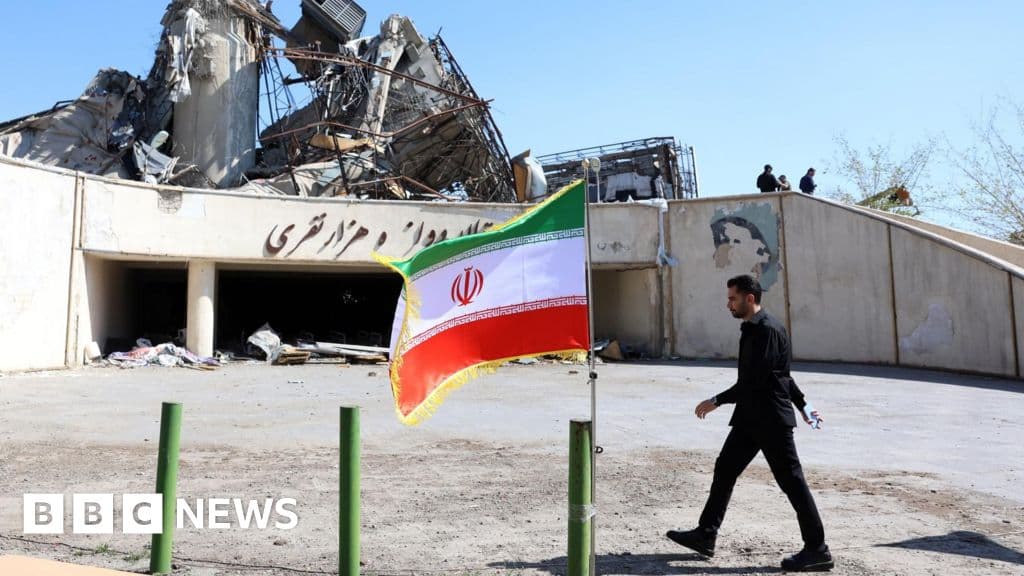
Ordinary Iranians have been responding to US President Donald Trump's threat to destroy Iran's power plants and bridges unless it opens the Strait of Hormuz.
Trump said in an expletive-laden post on social media on Sunday that "Tuesday will be Power Plant Day, and Bridge Day, all wrapped up in one, in Iran. There will be nothing like it!!!."
Iranian officials have mocked his 20:00 ET (01:00 BST Wednesday) deadline, with a presidential aide saying his "insults and nonsense" were out of "sheer desperation and anger".
The BBC has managed to talk to several Iranians - all opposed the current establishment - even though it is very difficult to contact people inside Iran due to an internet blackout imposed by the authorities more than five weeks ago.
Their names have been changed for their own safety.
Kasra, who is in his 20s and lives in Tehran said: "It feels like we're sinking deeper into a swamp. What can we do as ordinary people? We can't do anything. We can't stop him [Trump]. I keep thinking about a scenario where, in a month, I'm sitting with my family with no water, no electricity, nothing. And someone blows out the candle and we go to sleep."
While Iranian state TV has been showing videos of well-stocked grocery shops, the BBC has heard that some people are stockpiling and are worried that the water supply might be disrupted as well.
"My mum is filling every bottle she can find in the house with water," said Mina, also in her 20s and from Tehran.
"I've no idea what we're going to do now. I think more and more in Iran have realised that Trump doesn't care about them at all. I hate him from the bottom of my heart, and hate those who support him too."
In January, when deadly anti-establishment demonstrations swept the country, Trump said that "help is on its way" to the protesters. But he did not intervene when Iranian security forces launched an unprecedented crackdown, killing at least 6.508 protesters and arresting 53,000 others, according to the US-based Human Rights Activists News Agency (Hrana).
Some of those who the BBC has been talking to initially saw the US-Israeli strikes as the help that had been promised to them. But most of them now see attacks on energy infrastructure as a red line.
"I've thanked Israel and the US for almost all of what they've hit so far," said Arman, in his 20s and from Karaj, west of Tehran. Iranian media said 13 people were killed and almost 100 injured when a bridge under construction in Karaj was bombed on Thursday.
"They must have had good reasons for them [sites which have been hit]. But I swear, hitting a power station just paralyses the country. It just plays into the Islamic Republic's hands. I live about a kilometre away from the biggest power station in Karaj, and if they hit it, it'll be nothing but misery for me."
Radin, also in his 20s and living in Tehran, said: "About them hitting energy infrastructure, using an atomic bomb, or levelling Iran. My honest reaction is that I'm OK with all of these.
"Or anything else they might have in mind. If attacking targets in the country brings down the Islamic Republic, I'm fine with that. Because if the Islamic Republic survives this war, it will stay forever."
Many of those that the BBC talked to are worried about the economic impact the war.
Bahman, who is in his 20s and lives in Tehran, said: "I think Trump is scared of what Iran is going to do. I'm sure that Iran will hit everywhere in the region in retaliation."
"When it comes to me, I don't have a routine anymore, and I can't even go to work with the situation because I'm a building superintendent engineer and no-one is building anything right now. Some smaller companies have started to lay off their employees already."
Jamshid, who is in his 30s and runs a restaurant in Tehran, said his business was "not the same as before [the war]. I'm not optimistic about the situation. I estimate that I can hold this up for a month, maybe two, at most. The rent is breaking my back. It's 200m tomans a month [approx. $1,270; £960; €1,100]."
That is high compared to the average monthly salary, which is estimated to be between $200 and $300.
Most of the people that the BBC has talked to are still paying hefty prices for access to the internet. The main route has been via sharing connections through those who have satellite internet Starlink systems.
But, using or possessing Starlink in Iran carries a punishment of up to two years in prison, and authorities have reportedly been searching for the dishes to stop people from connecting.
Internet access is being sold on the Telegram messaging app for around $6 for 1GB of data.
"I feel like I'm losing my mind. I didn't even renew my internet package that I'm paying so much for," said Marjan, in her 20s and from Tehran.
"What's the point if Trump hits energy infrastructure? I'm distressed. My parents too… they argue over the smallest things now. I keep telling myself I'm fine, but I've had three mental breakdowns already today."
Share this article
Iranians are worried because Trump threatened to destroy Iran’s power plants and bridges unless it opens the Strait of Hormuz. People interviewed by the BBC fear this could lead to water and electricity outages, as well as wider disruption to daily life. Many said ordinary citizens would be the ones suffering most.
Iranian officials have mocked the deadline and dismissed Trump’s remarks. A presidential aide called his comments “insults and nonsense” and said they came from “sheer desperation and anger.” The government has also continued to restrict internet access, making it harder for people inside Iran to communicate.
People in Tehran fear that strikes on power plants could cause blackouts and leave families without basic services. One resident said he imagined a future with “no water, no electricity, nothing,” while another said her mother was filling bottles with water in case supplies are disrupted. Several said hitting energy infrastructure would make life much harder for civilians.
No, the article says reactions are mixed, even among people opposed to Iran’s current establishment. Some initially saw the strikes as possible help against the Islamic Republic, but many now view attacks on energy infrastructure as a red line. Others said they would support almost any attack if it brought down the government.
The war is disrupting work, business, and mental health for many people. One man said construction had slowed so much that he could not work normally, while a restaurant owner said his business was suffering and he could only last a month or two with current costs. Internet access is also expensive and limited, with some people relying on Starlink or buying data through Telegram.


See every story in News — including breaking news and analysis.