Sports
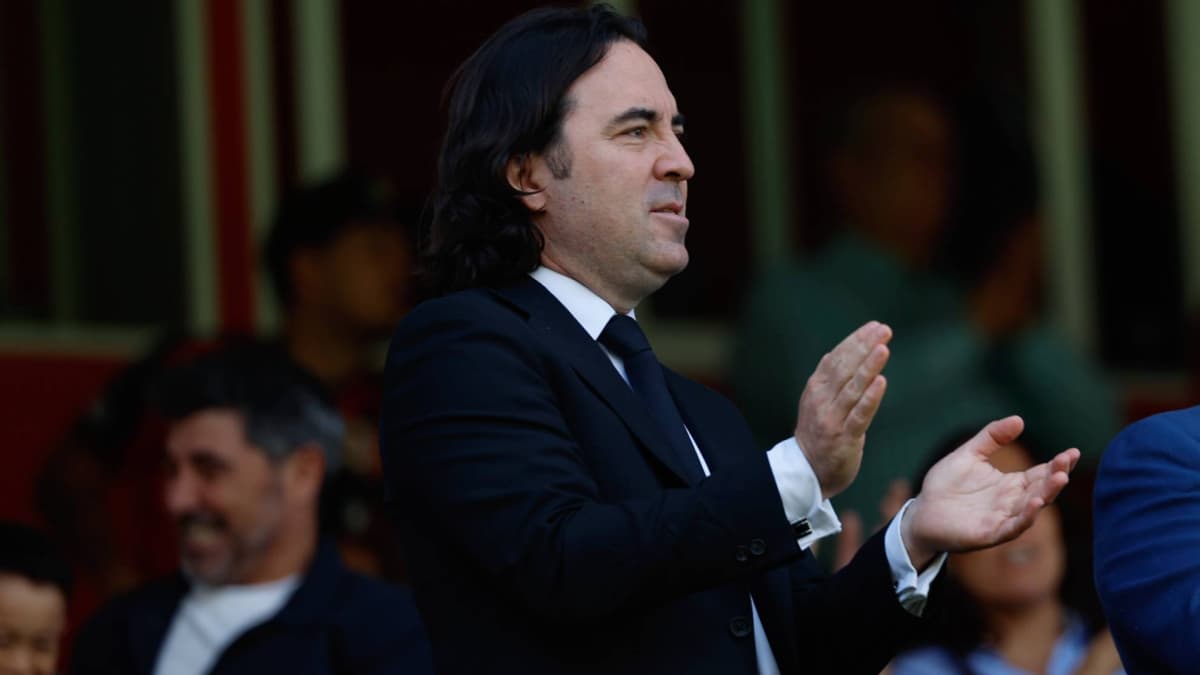
"Es la mayor atrocidad e injusticia que se ha cometido con un equipo en el fútbol español"
Raúl Martín Presa del Rayo Vallecano denuncia una gran injusticia en el fútbol español.
Marca1 min read
Formula 1's 2026 season introduces major changes with a lighter chassis and a power unit that balances electrical energy and internal combustion. These regulations aim to enhance performance but have sparked controversy among teams and fans.
Motorsport photo
Formula 1 has embarked on a new era in 2026 with what is arguably its biggest regulation overhaul in history, as both the chassis and power unit have changed.
The chassis is now lighter and nimbler with the minimum weight reducing by 32kg, while the power unit features more electrical energy with a near-50:50 split against the internal combustion engine.
This has been contentious to say the least, because while the chassis changes have been regarded as a positive considering weight management became an increasing problem for F1, the move towards more electrical power units has not gone down well.
Read Also:
How F1 teams are exploring 2026's bargeboard reforms
All in all, it has created a vastly different product this year, with what is known as ‘yo-yo racing’ dominating conversations post-race. So, what is that and what has been the reaction across the grid?
There were many intentions behind the 2026 regulations, but one of them was to improve the racing spectacle. This was because wheel-to-wheel contests had become increasingly hard to come by as cars kept getting bigger and heavier. In 2025, for example, the regulated minimum weight was 800kg, which marked a 180kg increase from 2010 so that was a problem in itself.
What it led to were very static races, where DRS trains would often form and very few could make an overtake - in spite of how quick and powerful the machines had become. So, F1 attempted to overcome that with the new regulations, but it effectively had one hand tied behind its back due to the direction of the automotive industry in 2022, when the new regulations were signed.
Lewis Hamilton and Charles Leclerc, Ferrari
“When we discussed the current regulations, the automotive companies who were very involved told us that they’re never going to make another [new] internal combustion engine,” said FIA single-seater director Nikolas Tombazis. “They were going to phase out and by whatever year, they were going to be fully electrical.”
This inspired the championship to opt for a more electrical ruleset, hoping manufacturers like Audi and Honda would sign up - which they did - and although that was a positive, it took the style of racing to a whole new level that wasn’t initially intended.
Now, grands prix are defined by energy management where drivers must maintain sufficient battery power to complete a lap as quickly as possible. To do so, cars may downshift along a straight, lift and coast into corners or enter a form of super clipping - when the battery is harvesting while at full throttle - and this results in ‘yo-yo racing’ which refers to the constant back-and-forth nature of the battles, witnessed across every round so far in 2026.
In the past, when an overtake was made, that would usually be it as the attacking car would stay ahead and look towards who is next. Very rarely would the driver behind manage to stay with his rival and regain position. But now, with varying battery levels throughout a lap, the wheel-to-wheel battles usually continue and China was an example of that where an overtake was often made heading into the Turn 14 hairpin, only for a driver to regain position down the start-finish straight. This would continue into Shanghai’s sector two as well.
So, cars passing and re-passing are constantly happening in 2026 and it has led to the number of overtakes in F1 increasing from 2025; there were 120 overtakes at the 2026 Australian Grand Prix, compared to ‘just’ 45 the year before.
Whether this is good or not is debatable and in a recent interview with Motorsport.com, F1 CEO Stefano Domenicali revealed that the championship must never let its competitors influence the direction of the regulations again - especially because the focus on electric engines is not as high in the automotive industry as it was four years ago.
Stefano Domenicali, CEO of F1
“Look what they did at Renault,” said Domenicali, referring to how the French engine supplier suddenly decided to depart F1 at the end of 2025. “Renault was part of the table in deciding this kind of engine and then they took a decision to leave.
“That’s what I’m saying. We cannot be in a situation where the crisis of the market can bring certain difficult decisions for the manufacturer to give priority to other initiatives. Therefore, we have to protect that.”
Regardless, these power units have presented a new style of racing not witnessed in F1 before. It is instead more akin to Formula E, which also has constant overtakes and wheel-to-wheel battles thanks to its all-electric engines, meaning energy management, good strategy and driver aids often dictate who wins.
The 2026 regulations are arguably the most divisive in F1 history. One may look at the increased number of overtakes and view it as a positive, because it means more exciting wheel-to-wheel battles causing action that one cannot take their eyes off.
However, many make the argument that these manoeuvres are ‘artificial’ because lots are done simply as a result of the driver ahead harvesting battery power, causing an overtake to be ‘worth’ less.
This was witnessed in Suzuka when Lando Norris was forced into backing off the throttle to avoid the back of Lewis Hamilton’s Ferrari at 130R. He then received more power than expected upon hitting the accelerator again, forcing him into overtaking the seven-time world champion but having his battery power depleted during the process. So, the McLaren driver immediately lost position again.
“I didn’t even want to overtake Lewis,” said Norris. “It’s just that my battery deploys, I don’t want it to deploy, but I can’t control it. So, I overtake him and then I have no battery left, so he just flies past. This is not racing, this is yo-yoing. Even though he says it’s not, it is yo-yoing.”
Lando Norris, McLaren, Max Verstappen, Red Bull Racing, Oliver Bearman, Haas F1 Team
The reigning world champion was referring to how Hamilton spoke positively about the new regulations, claiming “if you go back to karting, it’s the same thing”.
“People are going back and forth, back and forth, you can never pull away,” he added. “No one has ever referred to go-karting as yo-yo racing. It’s the best form of racing. And Formula 1 has not been the best form of racing in a long, long time.
“Out of all the cars that I’ve driven in 20 years, this is the only car that you can actually follow through high-speed [corners] and not completely lose everything that you have. You can stay behind.”
So the opposing views held by Norris and Hamilton just show how the grid is split in their opinion of the new regulations. The biggest critic of all is arguably Max Verstappen, who caused a stir in pre-season when he labelled the new rules as “anti-racing” and “Formula E on steroids”.
Read Also:
Max Verstappen demolishes "anti-racing" and "not fun" 2026 F1 cars
The four-time world champion’s criticism has continued through the year, claiming the ruleset is “fundamentally flawed” and “if someone likes this, then you really don’t know what racing is about”. Verstappen also denied assumptions that he only dislikes the regulations because his Red Bull team has started on the back foot - it is sixth after three rounds - and it is only drivers fighting at the front who are supportive.
That last point is somewhat true, because Hamilton is enjoying a much stronger start to the season than years gone by. Meanwhile, the top two in the championship, Mercedes team-mates Kimi Antonelli and George Russell, also speak positively about this year’s racing.
Miami
The concerns raised by drivers has caused F1 and its governing body the FIA to already make changes to the regulations ahead of round four in Miami this weekend. One of the tweaks involved qualifying, because in 2026 it has not been on the limit as much as in previous years so the harvesting cap on a Saturday has been reduced from eight megajoules to seven.
But it is the super clipping tweak which may impact ‘yo-yo racing’, as that will be increased from 250 to 350 kilowatts meaning drivers can recover more energy while at full throttle. It is a change McLaren boss Andrea Stella had already called for during pre-season and although it should not remove all concerns, the racing is likely to be safer without the unexpected lift and coast.
Read Also:
F1 rule changes ahead of Miami GP explained: What’s changing and why
This safety element became the priority after Oliver Bearman’s crash during the Japanese Grand Prix. He was approximately a second behind Franco Colapinto through sector two, but suddenly closed as the Alpine suffered from a lack of energy and with a speed differential of nearly 50km/h, he was forced into avoidant action. The Haas therefore jolted to the left but suddenly was on the grass, subsequently spinning into the barriers at 50G.
Now with the changes leaving fewer lift and coast situations, the speed differentials should be less resulting in fewer ‘yo-yo’ style situations. But, crucially, to a certain degree, it is still expected to feature in grands prix.
To read more Motorsport.com articles visit our website.
The 2026 regulations include a lighter chassis with a weight reduction of 32kg and a power unit that features a near-50:50 split between electrical energy and internal combustion.
The shift towards more electrical power units has faced criticism, as some believe it may compromise the traditional aspects of racing and performance.
The new chassis design makes F1 cars lighter and nimbler, which is expected to improve handling and overall performance on the track.
The regulations aim to enhance competition and performance but may also lead to debates about the future direction of the sport and its reliance on electrical power.
Raúl Martín Presa del Rayo Vallecano denuncia una gran injusticia en el fútbol español.
Real Madrid opens discussions with Toni Kroos about a potential return to the club.
Mel Kiper Jr. doesn't understand the hate for Shedeur Sanders
Shohei Ohtani suffers his first loss with the Dodgers, citing a tough fifth inning.
Texans reward Pro Bowl LB Azeez Al-Shaair with three-year extension
Seattle Mariners' shaky start shouldn't worry fans, experts say.
See every story in Sports — including breaking news and analysis.