
SoccerFeature
Arteta: If you lose a match, they destroy you - you have to enjoy it
Mikel Arteta tells Arsenal players to love the pressure of the title race.
Sky Sports1 min read
A hot start in April can significantly impact a player's season performance, with only 34 out of 101 players maintaining their strong OPS through the year. The Diamondbacks' Pavin Smith exemplifies the challenges of sustaining early success due to injury.
CHICAGO, ILLINOIS - MAY 01: Ildemaro Vargas #6 of the Arizona Diamondbacks singles during the first inning of the game against the Chicago Cubs at Wrigley Field on May 01, 2026 in Chicago, Illinois. (Photo by Zoe Davis/Getty Images) | Getty Images
There’s a baseball maxim that says, “You can’t win the division in April, but you can lose it.” I couldn’t find who the quote is originally attributed to, but there are plenty of former players and managers that could have said something like that. It also has the added benefit of being both internally consistent and being backed by evidence. Of the 12 eventual playoff teams, a whopping nine were in such position at the end of April last year. The year before, it was the exact same ratio with nine of the eventual playoff field in playoff position at the end of the first month of play. Obviously, if you start out hot, it gives your team more room for error for the inevitable injuries and poor play that comes with a 162-game marathon. It also demonstrates that if you’re on the outside looking in a month in, it’s more likely that you’re going to miss out than you’ll be able to climb over the teams that are above you. There are certainly exceptions: the 2024 Astros had the second-worst record at the end of April that year, but finished the year going 78-54 to secure their division and the number one seed in the American League. But that’s likely the exception that proves the rule in my opinion. Regardless, we’re not talking about the playoffs (yet). Instead, that exercise had me wondering if the same is true for individual players whose statistics can obviously fluctuate even more wildly than a team’s over the course of the season. In other words, how much does a hot (or not so hot) start matter for an individual player and for the D-Backs who fall into those categories?
Only 34 out of 101 players who had an above-average OPS in April were able to maintain that performance through the end of the season.
The league averaged a .707 OPS in April, which is the lowest OPS of any month in the season.
Pavin Smith had the largest gap in OPS among the 78 players who ended the season with an above-average OPS, primarily due to injury.
A hot start in April can provide a team with more room for error, as nine out of twelve playoff teams last year were in playoff position at the end of April.
Mikel Arteta tells Arsenal players to love the pressure of the title race.
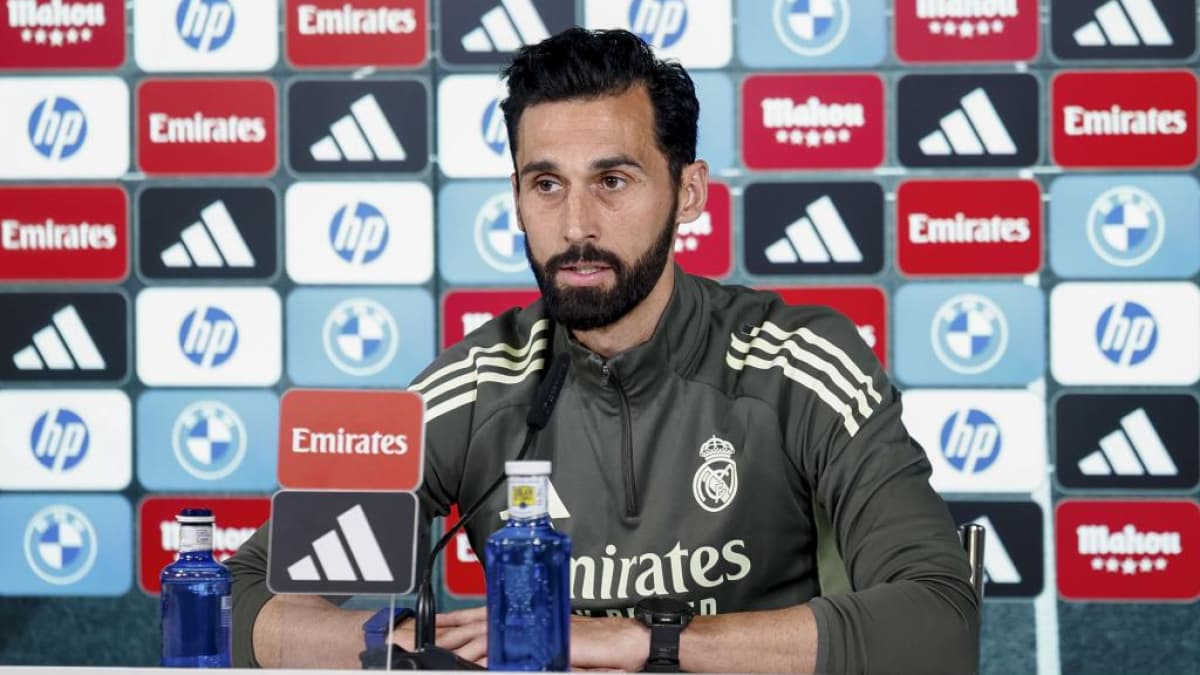
Arbeloa comenta sobre la indisciplina de Ceballos en rueda de prensa
Chelsea confirms Joao Pedro is not for sale despite Barcelona's interest.
Charlton Athletic's coach Karen Hills is proud ahead of the final match against Birmingham City, with promotion on the line.
Crucial 2. Bundesliga clash: Elversberg takes on Paderborn!
Barcelona opens door to sell Roony Bardghji for just €10 million this summer.
See every story in Sports — including breaking news and analysis.
Since there are no direct comparisons for “playoffs” for individual players, I’ve decided to modify the criteria slightly to look at those players who had an above-average OPS in the first month and then compare to see how those players did by the end of the season. I’m going to leave the pitchers for another week as teasing out the statistical noise will be particularly difficult when dealing with relievers and starters. For the first month of last season, the league averaged a . 707 OPS, unsurprisingly the lowest OPS of any month in the season. There were a little over 100 players who had 90 or more plate appearances in March/April (and would therefore qualify for rate stats) and had an OPS greater than or equal to .707 out of the 177 who accumulated the necessary 3.1 PA per game during that stretch regardless of their OPS. Of those 101 players from the first part of the query, only 34 were able to hold their OPS steady from the end of that first month through the end of the season while the rest saw their OPS drop to varying degrees. In other words, the vast majority of the players who have a hot start to the season will watch that start evaporate over the course of the season. And if we further constrain the list to those players who also ended the season with an above-average OPS for the season of .719, we’re left with just 78 candidates. Sadly, the player with the biggest gap in that 78-person list? Our very own Pavin Smith who was limited by injury and couldn’t sustain his volcanic-hot start. That is a limitation of this query too: I can’t limit the number of PA the player has by the end of the season so a player could theoretically start hot, have a bad week, and then either get injured or demoted to the minors which would hide that noise. But even with that qualification, I think this process at least gives us a directional understanding of what a hot start means for a player.
So what does this all mean for the Diamondbacks other than a hot start is better than a cold one? Well, there’s at least one D-Back who couldn’t be having a better start to the season. Is there any player in the league hotter than Ildemaro Vargas right now? After this afternoon’s 4-for-4 today, and thus extending his franchise-record hitting streak in a big way, his batting average has climbed all the way to .404 and his OPS to 1.131 which currently slots him in at third in the majors above Aaron Judge, Mike Trout, and Kyle Schwarber. While he’s indisputably been the Diamondback with the most fun storyline to follow in the early going of the season, I sincerely doubt he’s suddenly become an Arizona incarnation of Ted Williams or an upper-tier MVP candidate. As always, the question will be, how steep is the reversion back to the mean? For the team’s sake, we have to hope it’s not too steep or painful.