
NBAPreview
Today's top games to watch, best bets, odds: Three NBA Game 3s, Cam Schlittler takes the Fenway mound and more
Tonight's top games: NBA playoffs and Yankees vs. Red Sox!
CBS Sports Headlines1 min read
The FIA has extended Free Practice 1 at the Miami Grand Prix to 90 minutes to accommodate significant mid-season regulatory changes. This adjustment allows teams more time to adapt to the new technical regulations before Sprint Qualifying.
Mentioned in this story
The FIA has confirmed that Free Practice 1 at this season’s Miami Grand Prix will run for 90 minutes rather than the standard 60, with the session kicking off at noon local time and wrapping at 1:30 p.m. Sessions scheduled ahead of FP1 will move forward by 30 minutes accordingly.
On the surface it looks like a minor scheduling tweak. It isn’t.
Miami is the first race where a substantial package of mid-season regulatory changes takes effect. These are changes the FIA agreed on with teams and drivers after a turbulent opening three rounds in Australia, China, and Japan.
The extra practice time exists for this very reason, and the teams genuinely need it because the changes are far from just cosmetic. The 2026 technical regulations have been rewritten in several ways, and every engineer on the pitlane will want as many laps as possible to understand how their car now behaves before Sprint Qualifying locks in the grid on Saturday.
The timing is also a factor here. Miami follows a five-week gap since the Japanese Grand Prix. Factor in a Sprint weekend format that by its nature strips away two full practice sessions, and the argument for an extended FP1 is barely an argument anymore.
The regulation adjustments fall into three areas: energy management, race pace, and safety at the start.
On energy management, the maximum harvesting limit per lap has been cut from 8MJ to 7MJ. The intent is to ease the amount of lifting and coasting drivers were forced to do – a criticism that ran throughout the first three races of the season.
Free Practice 1 was extended to 90 minutes to help teams adapt to substantial mid-season regulatory changes.
The new technical regulations for 2026 have been rewritten, impacting car behavior and performance.
Free Practice 1 starts at noon local time and ends at 1:30 p.m.
Sessions scheduled before Free Practice 1 will move forward by 30 minutes to accommodate the extended practice time.
Tonight's top games: NBA playoffs and Yankees vs. Red Sox!
Saints eye wide receiver and defensive line for 2026 NFL Draft.
Meet DeVonta Smith, Notre Dame's NFL Draft prospect with the same name as Eagles' WR
MS Dhoni remains absent from IPL 2026; Ruturaj Gaikwad acknowledges him at the toss vs Mumbai Indians.
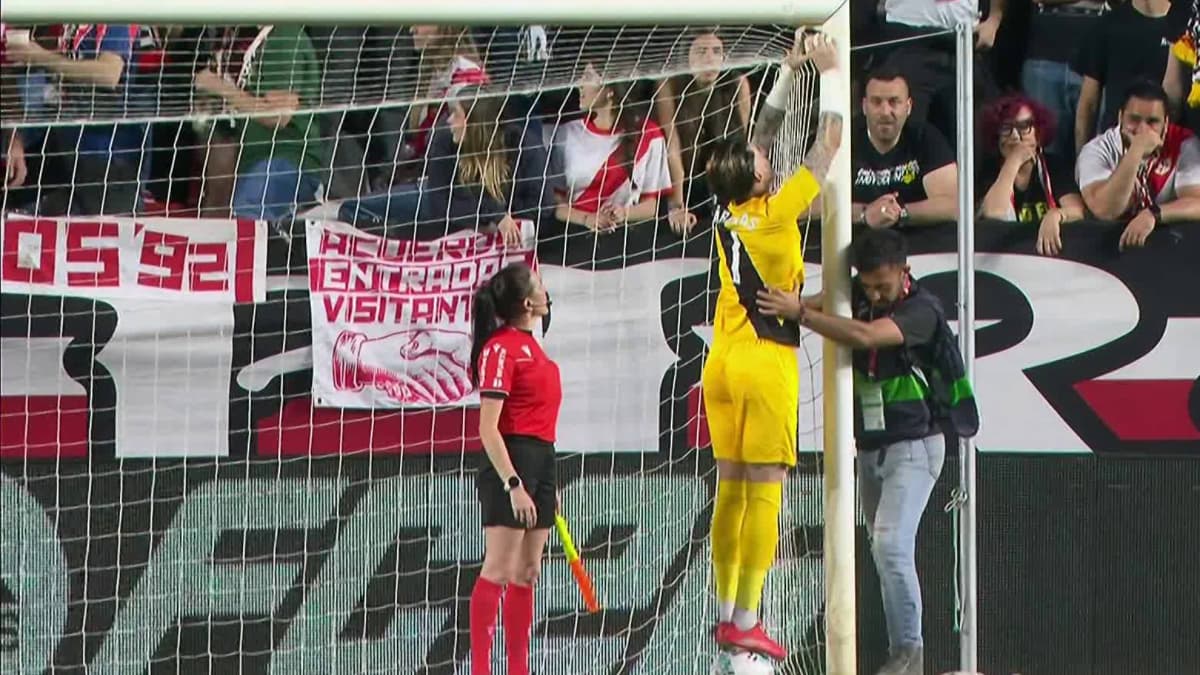
Cárdenas soluciona un problema en la portería de Vallecas con cinta americana.
Max Fried's early struggles against the Red Sox lead to frustration but no runs allowed.
See every story in Sports — including breaking news and analysis.
Superclipping power, the peak output available while harvesting at full throttle, rises from 250 kW to 350 kW, though the window in which drivers can use it shrinks to just two to four seconds per lap.
The FIA has also expanded from 8 to 12 the number of race weekends where it can apply track-specific lower energy limits, giving the governing body more flexibility across venues with different circuit characteristics.
To improve the racing itself, a boost cap of +150 kW has been introduced to prevent the jarring speed differentials that made some overtaking attempts genuinely dangerous. MGU-K deployment is now tiered: full 350 kW remains available through acceleration zones and into braking points, but output is capped at 250 kW elsewhere on the lap, making sure cars can still pass while also reducing the danger involved.
The safety changes at race starts may be the most technically novel. A new automated detection system will identify any car that fails to accelerate normally off the clutch. If triggered, it will automatically fire the MGU-K to bring the car up to a minimum threshold of acceleration, reducing the risk of a slow car being collected from behind. Warning lights, both rear and lateral, will flash simultaneously to alert the drivers sat behind.
Separately, the energy counter will now reset at the start of the formation lap, correcting a glitch that caused inconsistencies in earlier races.
In wet conditions, ERS deployment will be automatically moderated to smooth out torque delivery on a slippery track, and the rear light arrangement has been simplified to cut through spray more effectively.
Every team arrives in Florida carrying real questions about how their car interacts with rules that have moved beneath them. The calibration work that would normally be spread across three practice sessions now has to be crammed into one extended hour-and-a-half window and whatever data teams can extract from Sprint Qualifying before the race.
Ninety minutes won’t feel like enough. But it’s what they’ve got.