Enos Slaughter, born on April 27, 1916, was a Hall of Fame baseball player known for his aggressive playing style. He played for the St. Louis Cardinals and the New York Yankees, winning four World Series championships during his career.
Key points
Enos Slaughter was born on April 27, 1916, in Roxboro, NC.
He played for the St. Louis Cardinals and New York Yankees.
Slaughter won four World Series championships.
He was a 10-time All-Star during his career.
The 'Mad Dash' play in 1946 is one of his most famous moments.
Enos SlaughterSt. Louis CardinalsNew York YankeesWorld Series
Bubble gum card (from Bowman) features baseball player Enos Slaughter, of the New York Yankees, as he holds a baseball bat, Philadelphia, Pennsylvania, 1955. (Photo by Transcendental Graphics/Getty Images) | Getty Images
Bubble gum card (from Bowman) features baseball player Enos Slaughter, of the New York Yankees, as he holds a baseball bat, Philadelphia, Pennsylvania, 1955. (Photo by Transcendental Graphics/Getty Images) | Getty Images
Some players are remembered for elegance. Others are remembered for effort. Enos Slaughter belongs in the second category. He built a Hall of Fame career on aggression, hustle, and a willingness to play every moment at full speed, helping create the old baseball belief that the dirtier your jersey was by the end of the game, the better you had done your job.
That reputation helped define Slaughter’s legacy. Long before hustle and grit became their own baseball mythology, Slaughter was already charging through the game with a style that later influenced players like Pete Rose. Yet like many stars from earlier eras, his story is layered with championship glory and personal controversy.
**Enos Bradsher Slaughter**
Born: April 27, 1916 (Roxboro, NC)
Died: August 12, 2002 (Durham, NC)
Yankees Tenure: 1954-55, 1956-59
Slaughter was raised on a 90-acre farm in Allensville, where physical labor helped build the strength and toughness that would later define his playing style. However, after the family took their horse and buggy to watch the minor-league Durham Bulls play, a young Slaughter quickly began dreaming of a life beyond the farm. At Roxboro High School, Slaughter starred in both football and baseball.
Slaughter reportedly passed on a scholarship to Guilford College because professional baseball had already long been the dream. Instead of attending school, he moved to Durham to work in a textile mill by day and played semipro ball at night.
Slaughter’s play got the attention of the St. Louis Cardinals, who—thanks to pioneering executive Branch Rickey—had a farm club in Greensboro. They offered him a 10-day tryout and eventually signed him. Slaughter then spent the next several years working his way through the Cardinals’ system.
Slaughter debuted with in 1938 and quickly became a fixture in the outfield. The Cardinals were nearing the end of the Gashouse Gang era, which won two championships in the years before his debut while valuing aggression, pressure, and emotional edge. However, Slaughter’s playing style made him a natural fit and a true bridge between that post-Depression era and the hustle era of the 1960s and 1970s.
In 1941, Slaughter made his first All-Star team while helping power one of baseball’s strongest clubs, which narrowly lost the pennant to the Brooklyn Dodgers. Coming off his first All-Star season Slaughter was even more impressive in 1942 making another Midsunner Classic and finishing second in the MVP race to teammate Mort Cooper. This time, St. Louis surpassed Brooklyn, and Cardinals would beat the Yankees in the 1942 World Series while Slaughter posted an .837 OPS in the five-game victory. That would be the first of four rings Slaughter would win and the only time that a Joe DiMaggio-led pennant winner lost the Fall Classic.
Slaughter’s first Cardinals run was interrupted by military service during World War II, costing him three prime seasons. That lost time likely kept him from even larger career milestones, as he still finished with 2,383 hits and a .300 batting average despite the interruption. Along with DiMaggio, Slaughter was among the notable figures missing from the 1943 Yankees/Cardinals World Series rematch, which went the Yankees’ way.
Slaughter’s time in the military was spent as a physical education instructor, as he was colorblind. In his last year of enlistment along with a few other big names of the era Joe Gordon, Birdie Tebbetts, and Howie Pollet were amongst a group that toured the Pacific playing games in Iwo Jima, Guam, Tinian, and Saipan.
Slaughter returned to the Cardinals in 1946. Picking up right where he left off, he had an All-Star season, finishing third in the MVP race. St. Louis won its fourth pennant in five years, and Slaughter delivered the most famous moment of his career while hitting .320/.433/.560 in the World Series. In Game 7 against the , he took advantage of a brief moment of hesitance from second baseman Johnny Pesky, scoring from first on a single in the play remembered forever as the “Mad Dash.”
That play helped secure another championship for St. Louis and it remains one of baseball’s defining hustle plays. Slaughter remained with the Cardinals through 1953, earning All-Star honors in each season and cementing himself as one of the era’s most feared and relentless players. Overall, the man was a 10-time All-Star in St. Louis. Depending how you count the three-year military gap, Slaughter either made 10 consecutive All-Star teams, or made in a row beginning in his age-30 season.
In 1954 the Cardinals traded Slaughter to the New York Yankees for Emil Tellinger, Mel Wright, and future Yankee skipper Bill Virdon. The Cardinals were making room for top prospect Wally Moon and entering a rebuild. The Yankees were hoping to get a steady veteran to keep the good times rolling — just as they had with another future Cardinals Hall of Famer in recent years with Johnny Mize. The move was made just days before the season opener, and after spending his entire career in the Cardinals organization, the move was heartbreaking for Slaughter.
This would kick off the first of his two stints with the Yankees. The 1954 campaign was less than ideal after he broke his wrist and missed over a month. Slaughter only appeared in 69 games on the season. It ended his All-Star streak, and then a few games into the 1955 season, the Yankees traded Slaughter with Johnny Sain to the Kansas City Athletics for Sonny Dixon and cash.
Slaughter got healthy and rebounded with . Then in August of 1956 he was placed on waivers and claimed by the Yankees. This move further deepened the feelings around the country that Kansas City was simply a minor-league team for New York. Between 1955 and 1959, the two clubs made 16 trades, involving 61 players. The real outcry was the connection between , who owned the Kansas City Athletics and previously owned Yankee Stadium until he bought the then-Philadelphia Athletics, moving them to the Midwest.
Slaughter would be on the Yankees for the next three seasons. Including the Yankees championship clubs in 1956 and 1958, adding two more rings in his second chapter that connected two of baseball’s most decorated organizations. In total Slaughter was on the Yankees across six seasons, appearing in 350 games with 168 hits. He shined brightest in the 1956 World Series made famous by Don Larsen, as Slaughter hit .350/.440/.500 against Brooklyn in 25 plate appearances.
Slaughter’s legacy is also tied to more difficult conversations. He was associated with reported attempts to resist integration, including allegations that Cardinals players discussed boycotting games against Jackie Robinson and the Dodgers. Slaughter denied those reports and argued that his “Country” nickname made him an easy figure to cast in that role.
Gas was poured onto that fire in 1947 when Slaughter spiked Robinson on a play that has been debated as fair or foul ever since. Many called it a dirty slide with the intention and success of hurting Jackie. Slaughter defended his actions on the play as how he always played the game and saying it was not a dirty play. Years later, Slaughter also went as far as to defend himself legally from the allegations, furthering attempting to defend himself from the racist label.
That tension often follows discussions of stars from baseball’s earlier generations. Slaughter was unquestionably accomplished, unquestionably tough, and unquestionably important to the sport’s history. He was also a product of an era, where greatness and ugliness often sat side by side.
For what it is worth, fellow Cardinals great Lou Brock—inducted into the Hall of Fame alongside Slaughter in 1985—said at his funeral, “History finds us together. That is one thing that binds me to him. And, I’ll tell you this, the name of Enos Slaughter will be spoken for generations to come. Players like Enos and Stan Musial really helped me to see what being a Cardinal meant. He’s been my friend for a long time.”
If nothing else, Enos Slaughter remains one of baseball’s original all-out players. Additionally, he lived to see himself enshrined into the Hall of Fame and have his No. 9 retired by the Cardinals. Before hustle became branding and before Rose made full-speed play iconic for another generation, Slaughter was already barreling through baseball at maximum effort and inspiring generations to come.
*See more of the “Yankees Birthday of the Day” series* .
Q&A
What were Enos Slaughter's major achievements in baseball?
Enos Slaughter was a 10-time All-Star and won four World Series championships, notably contributing to the Cardinals' victory in 1942 and the famous 'Mad Dash' play in 1946.
How did Enos Slaughter's military service impact his baseball career?
Slaughter's military service during World War II cost him three prime seasons, which likely affected his overall career statistics and milestones.
What teams did Enos Slaughter play for during his MLB career?
Enos Slaughter played primarily for the St. Louis Cardinals and later for the New York Yankees, with his tenure at the Yankees spanning from 1954 to 1959.
What is the significance of the 'Mad Dash' play by Enos Slaughter?
The 'Mad Dash' play, where Slaughter scored from first base on a single in Game 7 of the 1946 World Series, is considered one of baseball's defining hustle moments and exemplifies his aggressive playing style.
Related Articles
NFL·Feature
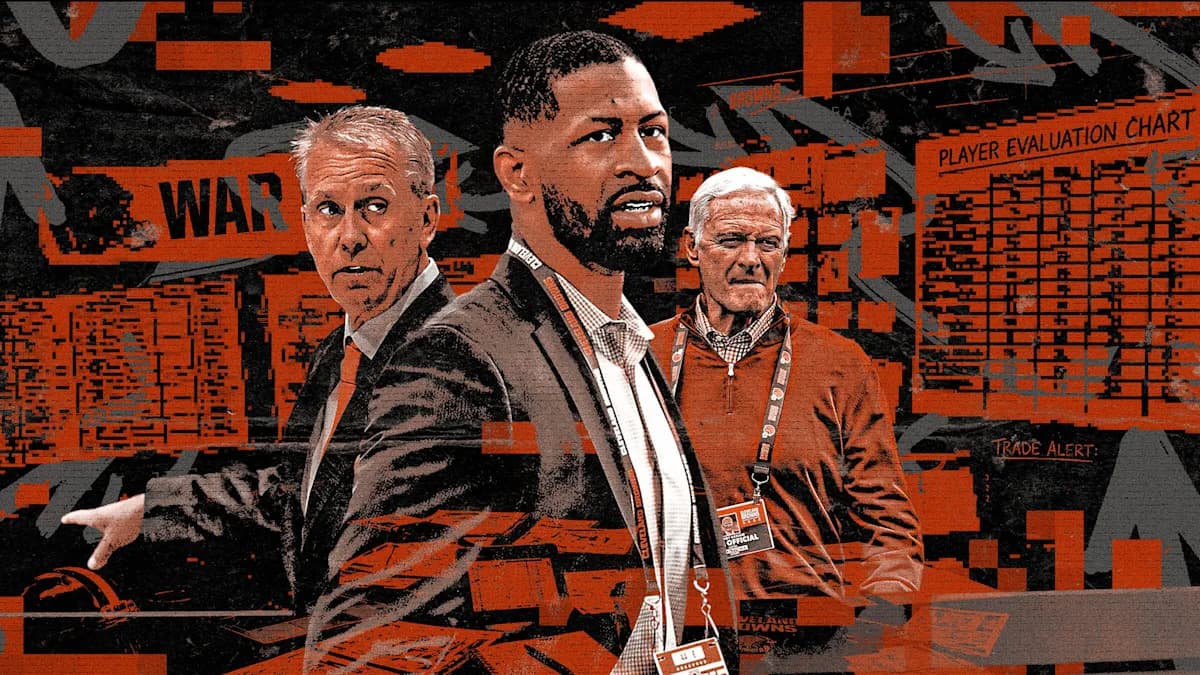
Inside Cleveland Browns’ NFL Draft room, where trade calls keep ringing and high-speed databases whir
Explore the Cleveland Browns' dynamic NFL Draft room and their trade strategies.
Yahoo Sports··1 min read
Sports·Recap
Where did Texas A&M land in the USA TODAY Sports poll after going 2-1?
Texas A&M baseball ranked No. 21 after series win against Florida
Yahoo Sports··1 min read
Sports
Northwestern continued to struggled against Big Ten opponents, this time dropping three to Minnesota. Read @DonovanW6013’s recap of the weekend series:
Northwestern struggles, loses all three games to Minnesota in weekend series.
Yahoo Sports··1 min read
MLB·Feature
Cincinnati Reds: Defense shining through first month of the season
Cincinnati Reds' infield defense, led by Ke'Bryan Hayes, is key to their early season success.
Yahoo Sports··1 min read
NBA·Injury Update
Wolves confirm Edwards has no structural damage in his knee, but he'll be out for at least a week
Timberwolves' Anthony Edwards sidelined for a week due to knee injury, but no structural damage found.
Yahoo Sports··1 min read
Sports
Serie A | Cagliari 3-2 Atalanta: Magical Mendy full debut stuns Dea
Cagliari stuns Atalanta 3-2 with Mendy's brace on debut!