
Crypto
Stablecoin Trading Volume Could Skyrocket to $1.5 Quadrillion by 2035: Chainalysis
Decrypt

Bitcoin surged past $72,000 as buyers returned to the market, indicating renewed demand. The key challenge for bulls is to maintain the $70,000 support level amidst potential selling pressure from short-term traders.
Bitcoin (BTC) rallied above $72,000 on Tuesday as BTC order book and derivatives data showed buyers returning to the market.
Bitcoin’s recent trading history suggests that holding the $70,000 level is the first task bulls need to master, but previous BTC price rallies were capped by short-term traders selling into the bullish momentum. Will this time be different?
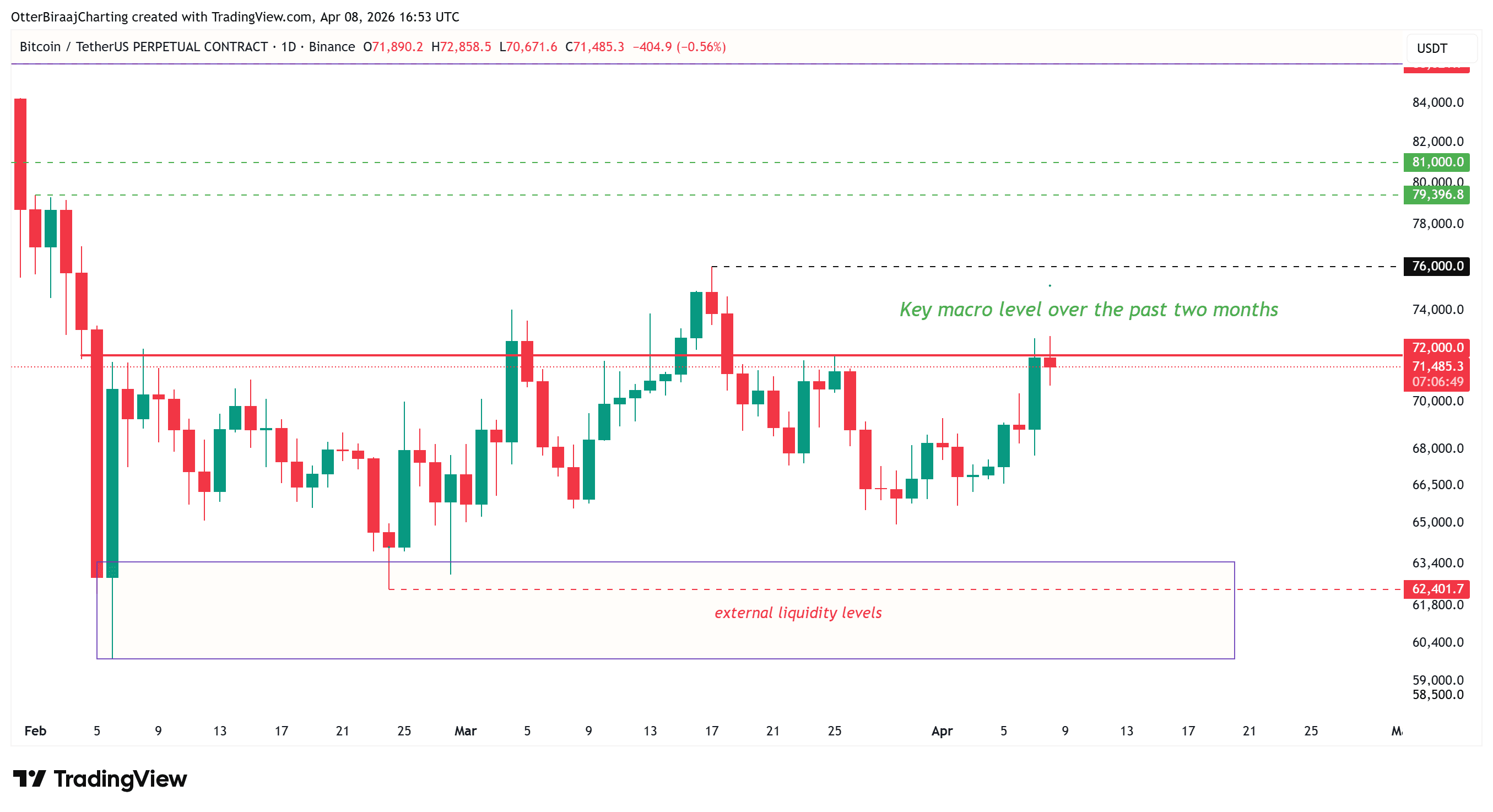
BTCUSDT on the one-day chart. Source: Cointelegraph/TradingView
Bitcoin held above $71,300 on Wednesday as the spot market demand strengthened over the past few days. The order flow across major exchanges shows a clear shift toward investor accumulation.
The 30-day spot net volume delta for Bitcoin, which tracks the net difference between market buys and sells, has turned positive on both Binance and Coinbase after persistent selling in February.
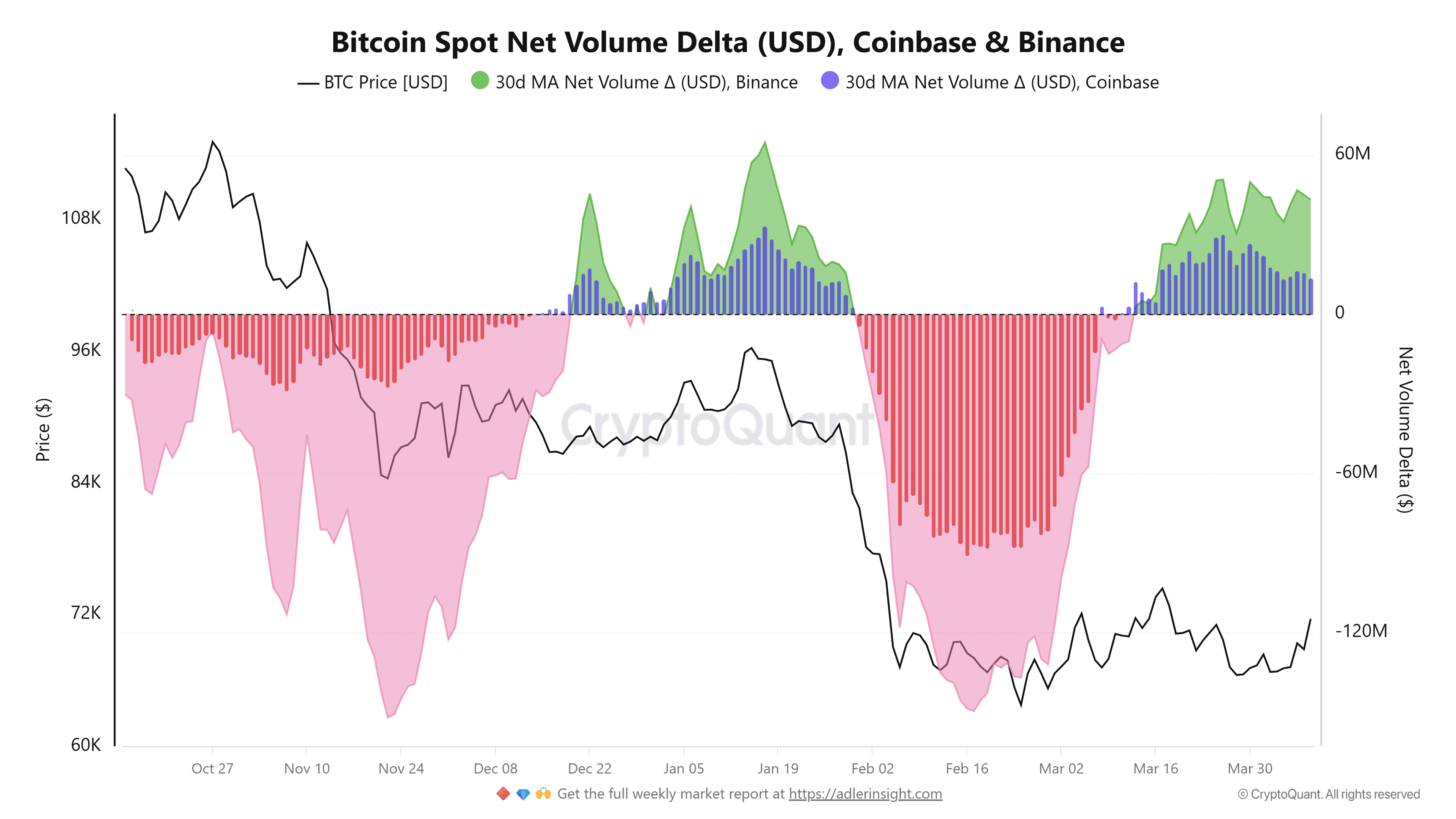
Bitcoin’s spot net volume delta on Coinbase and Binance. Source: CryptoQuant
Binance’s 30-day net volume moving average stands at $43.2 million, while Coinbase records $13.88 million. This marks a coordinated shift in behavior across the key crypto exchanges.
The derivatives data adds weight to the move. CryptoQuant data shows Binance’s cumulative volume delta (CVD) has increased to $5.6 billion on Wednesday, up $3.3 billion in April. The CVD measures the aggressive market orders, and the recent rise tracks an increase in taker-buy volume following Bitcoin’s brief drop below $65,000 on March 30.
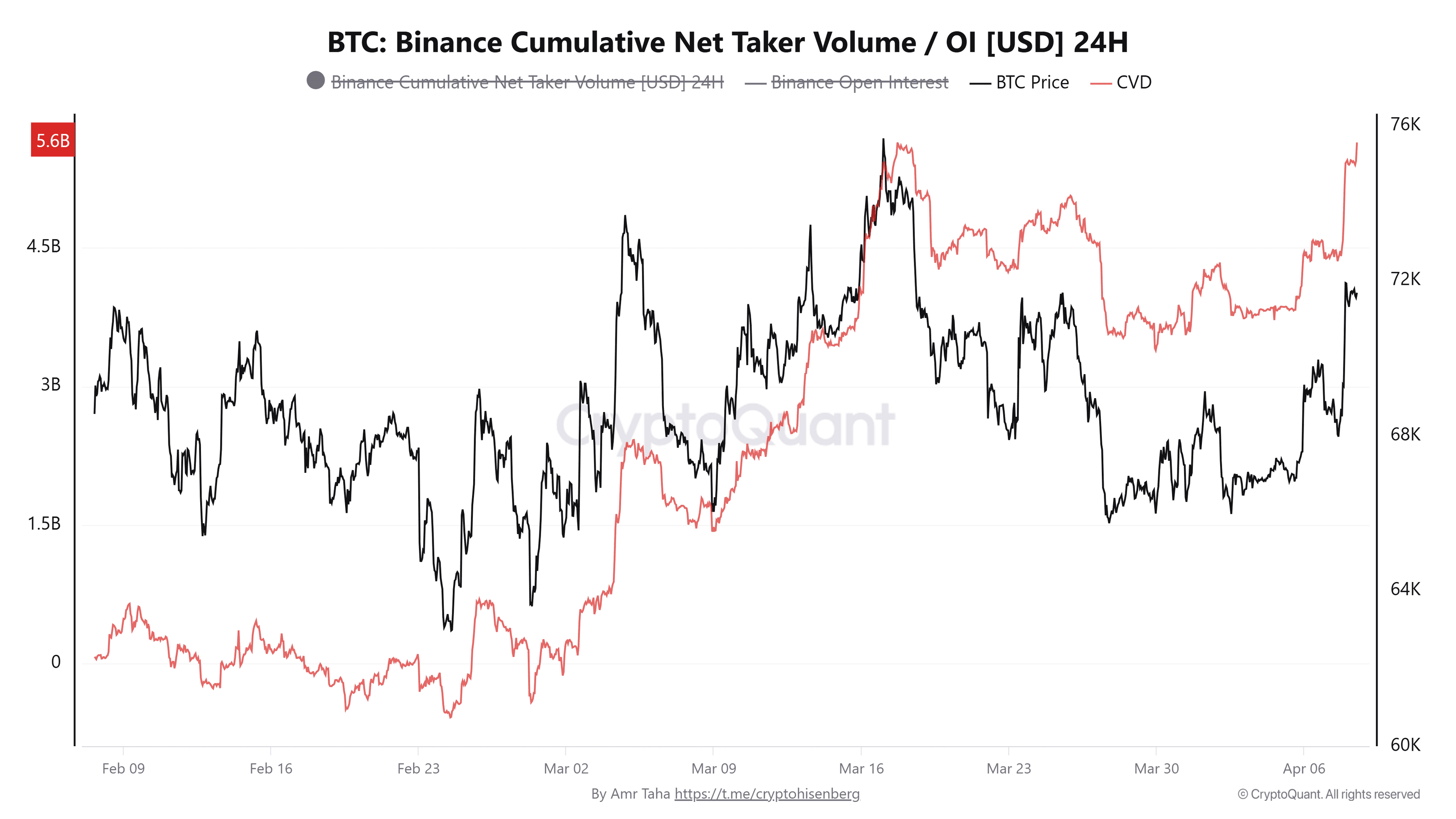
BTC: Binance Cumulative Net Taker Volume. Source: CryptoQuant
The current cumulative net taker volume on Binance has reached its highest level since early February, when CVD stood near $74 million. This indicates stronger buyer conviction than the muted activity seen during the previous consolidation phase.
Related: Bitcoin fades three-week highs as BTC price shrugs off Iran war ceasefire
Bitcoin’s interaction with $72,000 continues to shape its short-term positioning. The level has acted as a resistance since Feb. 4, with failed attempts to reclaim it on March 4 and March 16. Both rallies were met with sharp selling from the short-term holders, who sold roughly 26,000 BTC and 31,000 BTC, respectively.
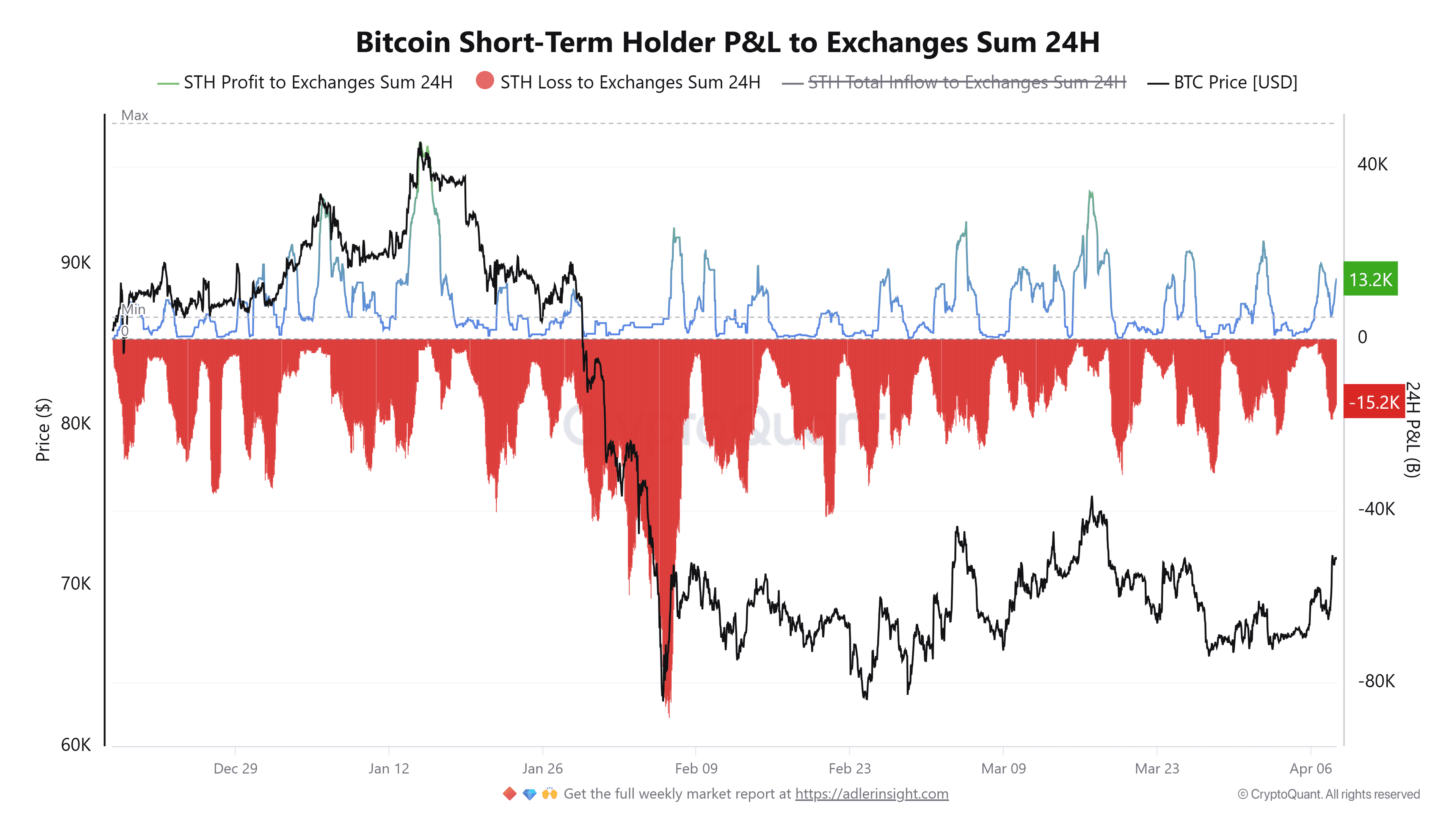
Bitcoin short-term holder P&L to exchanges. Source: CryptoQuant
The current behavior shows a different pattern. After BTC’s rally to $72,000 on Tuesday, data shows short-term holder capitulation of nearly 3,000 BTC. The reduced selling pressure signals less urgency to exit positions at the current levels than in prior attempts.
The profitability metrics are also stabilizing. Bitcoin’s net realized profit/loss seven-day moving average sits at -$109 million, recovering from a low of -$2 billion on Feb. 7. The metric is approaching a positive bias for the first time since Jan. 22, indicating a gradual reduction in realized losses.
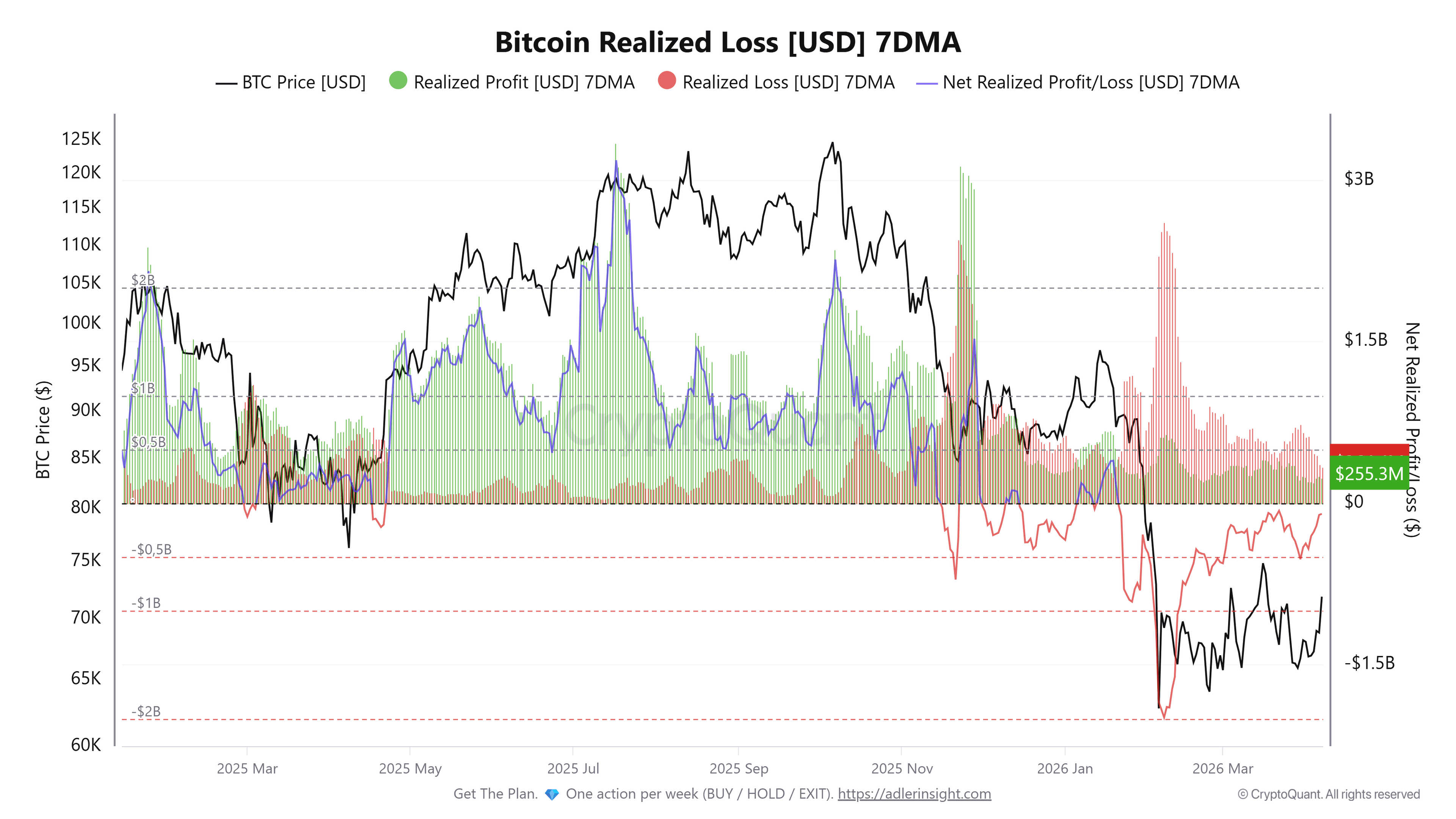
Bitcoin Net Realized Profit/Loss [USD]. Source: CryptoQuant
The reduced selling pressure and rising profitability point to a more balanced market in which buyers are gradually absorbing available supply. For a bullish expansion to occur, the trend needs to continue and the buyers need to defend the $70,000 to $72,000 zone over the next few days.
Related: Cango sells 2,000 BTC, cuts Bitcoin production cost by 19% in March
Share this article
Bitcoin is currently trading above $72,000.
Maintaining the $70,000 level is crucial for bulls to establish a strong support base and avoid potential sell-offs.
The return of buyers to the market, as indicated by order book and derivatives data, is driving the recent increase in Bitcoin demand.
Short-term traders have historically capped Bitcoin price rallies by selling into bullish momentum, creating challenges for sustained price increases.





See every story in Crypto — including breaking news and analysis.